• Following Us

  • Categories

  • Check out the Archives


  • Awards & Nominations

Star Trek: Enterprise – The Expanse (Review)

Next year, Star Trek is fifty years old. We have some special stuff planned for that, but – in the meantime – we’re reviewing all of Star Trek: Enterprise this year as something of a prequel to that anniversary. This April, we’re doing the second season. Check back daily for the latest review.

And, finally, everything changes.

It feels inevitable. Maybe not in this particular form, maybe not in this particular way, but Star Trek: Enterprise needed something. The show needed to stop feeling like a relic of the early nineties – a great song played on loop to the point where it became nothing more than generic white noise. The Expanse gives the show a clear sense of direction and a clear sense of purpose. It is not a direction that is unanimously loved, and it is not a purpose that is realised as well as it might be, but it finally feels like Enterprise is boldly going in its own direction.
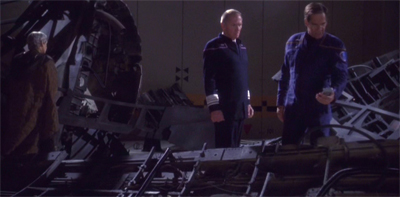
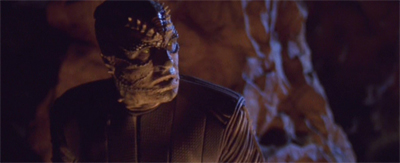
A walk among the wreckage...

A walk among the ruins…

In many respects, the obvious point of comparison for The Expanse is an episode like The Jem’Hadar or A Call to Arms. It is an episode that is clearly written to reach an ending so that the show can start doing something new. These episodes tend to tease a brave new future, one utterly unlike anything that Star Trek has done before, but they play like extended forty-five minute trailers. Watching The Expanse, it feels like show runners Rick Berman and Brannon Braga are thinking more about the direction than the destination. That’s not a bad thing at this point.

Polarising as it might be, and occasionally awkward as it might be, The Expanse was utterly necessary. Enterprise is a Star Trek show that exists in the shadow of 9/11. That horrific terrorist attack has reverberated throughout the series. The War on Terror informs and distorts narratives like Shadows of P’Jem, ShockwaveThe SeventhCease FireThe CrossingJudgmentRegeneration and Cogenitor. However, there is a sense that Enterprise never accepted that heavy pull of gravity.
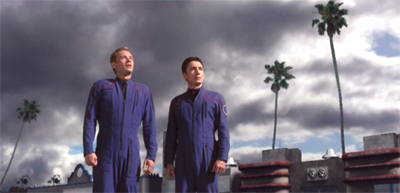
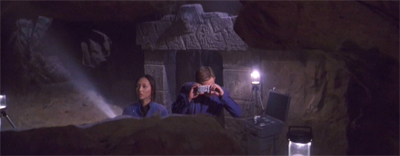
Homecoming...

Homecoming…

Sometimes it worked; Judgment, Regeneration and Cogenitor are all examples of the series trying to apply its own morality to a more complicated and confusing geopolitical climate. However, the War on Terror made it hard to reconcile Jonathan Archer as both an explorer and a paranoid reactionary. The unquestioning trust in authority in The Seventh, to the point where he did not question the Vulcan High Command’s mindwipe of T’Pol? The all-consuming dread upon meeting something different in The Crossing? These do not fit well within Star Trek.

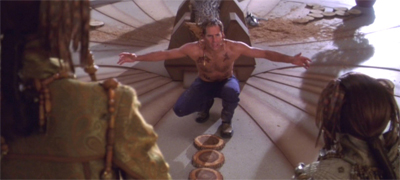
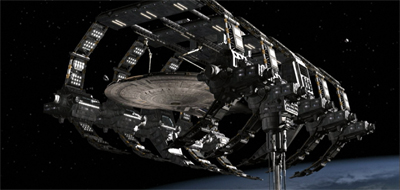
So The Expanse pushes all that to the front. The opening teaser features a strange alien ship appearing and carving a large scar in the surface of the planet – a very visual representation of the damage done to the utopian optimism of Star Trek. Now that the scar had been literalised, it could be discussed and explored. The Expanse made sure that nobody was talking around the elephant in the room; everybody was now charging right at it.

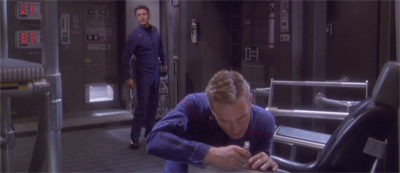
The way ahead is cloudy...

The way ahead is cloudy…

Continue reading

Star Trek: Enterprise – Regeneration (Review)

Next year, Star Trek is fifty years old. We have some special stuff planned for that, but – in the meantime – we’re reviewing all of Star Trek: Enterprise this year as something of a prequel to that anniversary. This April, we’re doing the second season. Check back daily for the latest review.

It seems like a bit of an understatement to describe Regeneration as highly controversial.

The blu ray release of the second season of Star Trek: Enterprise includes two commentaries for the episode, a sure sign that there is a lot to talk about. On a track recorded in 2005, writers Mike Sussman and Phyllis Strong describe the episode as “infamous.” On a track recorded in 2013, John Billingsley describes how certain segments of fandom considered it a “jumping the shark” moment for the show. That last statement illustrates one of the perverse qualities of Star Trek fandom; one would assume that the viewers turned off by Regeneration would have already tuned out with Acquisition.

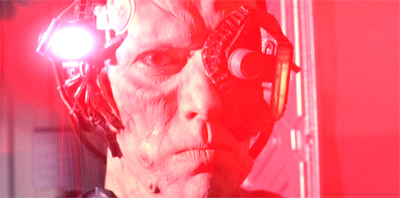
We are Borg.

We are Borg.

After all, the decision to bring back the Ferengi in Acquisition is hard to explain. Nobody was clamouring for more Ferengi episodes after Star Trek: Deep Space Nine had gone off the air. Outside of Deep Space Nine, the most enduring impression of the Ferengi was that they had begun their life as “villains that didn’t quite work” and bad quickly been transformed into “comic relief that didn’t quite work.” As such, it is hard to account for the decision to bend continuity in order to introduce the Ferengi into the first season of a prequel show designed to escape the baggage of the larger Star Trek franchise.

On the other hand, it made a great deal of sense to bring back the Borg. After all, the Borg were one of the few Star Trek aliens created after 1969 to make a genuine impression on popular culture. The Borg will never be as iconic as Klingons or Vulcans, but they will always be more iconic than Cardassians or Bajorans. They were also stars of the best-loved Star Trek movie starring the cast of Star Trek: The Next Generation. The Borg are a big deal; there is a reason that Star Trek: Voyager ran them into the ground.

"Assimilate this!"

“Assimilate this!”

It is no wonder that the Borg are frequently cited in discussions around the future of JJ Abrams’ Star Trek reboot. Asked if the creative team would consider bringing the Borg to the rebooted twenty-third century, Roberto Orci answered, “I think we would think about it.” Damon Lindelof was even blunter in his assessment, “You can’t talk about Trek and not talk about the Borg.” While they have undoubtedly been over-exposed and over-used since they first appeared in Q Who?, the Borg are the most distinctive and most successful addition to the Star Trek mythos outside the classic show.

While common sense and experience seemed to weigh against bringing back the Ferengi in Acquisition, it seems that continuity is the only thing holding the Borg back from making an appearance on Enterprise. That said, Sussman and Strong find a clever way around that issue, by remembering the suggestion in Broken Bow that Enterprise is as much a sequel to Star Trek: First Contact as a prequel to the rest of the Star Trek universe.

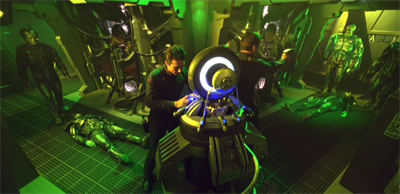
"Oh no, Cap'n, they've discovered the mood lightin' settin'."

“Oh no, Cap’n, they’ve discovered the mood lightin’ settin’.”

Continue reading

Star Trek: Enterprise – Stigma (Review)

Next year, Star Trek is fifty years old. We have some special stuff planned for that, but – in the meantime – we’re reviewing all of Star Trek: Enterprise this year as something of a prequel to that anniversary. This April, we’re doing the second season. Check back daily for the latest review.

It’s been a long road.

Continuing the effort in Dawn to refocus Star Trek: Enterprise on franchise core values, Stigma offers a good old-fashioned allegory episode. It is a script clearly designed to stand alongside earlier iconic Star Trek shows like A Taste of ArmageddonErrand of MercyLet That Be Your Last BattlefieldToo Short a SeasonThe High GroundHalf a LifeEthics, The Outcast, Rejoined and Distant Origin. This is a big and important episode, dealing with big and important themes. In this case, the stigma associated with HIV/AIDS and (whisper it) homosexuality.

It's just not in the show's DNA at this point...

It’s just not in the show’s DNA at this point…

Of course, it arrives well over a decade too late. Writer David Gerrold had pitched his own allegory about HIV/AIDS and homosexuality with Blood and Fire during the first season of Star Trek: The Next Generation. The script was a little clunky, but – rather than rework it – the producers decided to shut it down completely. During that show’s third season, David Livingston was on hand to stop the show from providing the franchise’s first glimpse of a homosexual couple in The Offspring. What queer content made it into Star Trek seemed somewhat haphazard.

The decision to allow Lal to chose her own gender in The Offspring is remarkable, because it goes almost unremarked. Dax’s deduction that Pel has a crush on Quark in Rules of Acquisition comes before Pel reveals that she is a female passing herself off as male. The sincerity of The Outcast was somewhat undermined by the decision to cast a female performer in the role of genderless alien who is attracted to Riker. The good work of Rejoined is undercut by the crassness of Profit and Lace and The Emperor’s New Cloak.

Meditating on a contemporary issue...

Meditating on a contemporary issue…

There was a time when an episode like Stigma would have seemed cutting edge and provocative. Broadcast during the first (or even the second) season of The Next Generation, the episode would have challenged a number of the underlying public assumptions about the spread of HIV/AIDS and attacked a very real (and very frank) homophobic policy from the government. The biggest problem with Stigma is that it features Captain Jonathan Archer instead of Captain Jean-Luc Picard.

Of course, this suggests a very tangible issue with Enterprise at this stage of its life-cycle. It still feels like a show stuck in the past. This is still Star Trek as it was being produced in 1989, despite the fact that it is now 2003. It is a problem that has haunted Enterprise since the broadcast of Fight or Flight, but one which is really emphasised not only by the plotting of Stigma, but also in its political targets.

"You know, given how often I seem to risk removal from the ship, I should probably just keep this packed..."

“You know, given how often I seem to risk removal from the ship, I should probably just keep this packed…”

Continue reading

Star Trek: Enterprise – Dawn (Review)

Next year, Star Trek is fifty years old. We have some special stuff planned for that, but – in the meantime – we’re reviewing all of Star Trek: Enterprise this year as something of a prequel to that anniversary. This April, we’re doing the second season. Check back daily for the latest review.

Dawn arrives at a very delicate moment in Star Trek history.

Star Trek: Nemesis had hit cinemas the weekend before The Catwalk aired. It had been an immediate and humiliating disaster for Paramount. It arrived in a stuffed Christmas season, amid a relentless onslaught of big budget blockbuster fare – competing for space against Harry Potter and the Chamber of Secrets, Die Another Day and Lord of the Rings: The Two Towers. It was the first Star Trek film not to open at the top of the United States box office, landing second to Maid in Manhattan.

Engineering a solution...

Engineering a solution…

The prognosis for Star Trek as a franchise had not been particularly optimistic for quite some time. The ratings had been in decline since Star Trek: The Next Generation went off the air. Star Trek: Enterprise was airing on a dying network. Changing management at UPN was less friendly to the franchise than it had been. However, the spectacular failure of Star Trek: Nemesis was perhaps the most public blow the franchise had taken. The critics now had ammunition; the vultures were circling; the franchise was on the ropes for the world to see.

The Catwalk had aired a few days after Nemesis crash-landed, when the franchise was still reeling. The first episode of Star Trek to air in 2003, Dawn was broadcast after the franchise and the public had time to properly process the disaster. It goes without saying that there was a lot of pressure on the episode.

Alien nation...

Alien nation…

Continue reading

Star Trek: Enterprise – Vanishing Point (Review)

Next year, Star Trek is fifty years old. We have some special stuff planned for that, but – in the meantime – we’re reviewing all of Star Trek: Enterprise this year as something of a prequel to that anniversary. This April, we’re doing the second season. Check back daily for the latest review.

Vanishing Point continues the “remix” formula that we’ve come to expect from the second season of Star Trek: Enterprise. In particular, Vanishing Point is a rather heady Star Trek: The Next Generation cocktail. It has shades of Remember Me, Realm of Fear, The Next Phase and even The Inner Light – with a healthy dose of Brannon Braga’s questions about the nature of reality. All of these elements blend together to form Vanishing Point, an episode that feels overly familiar and rote despite an intriguing set-up.

It is a shame that it doesn’t work better. Vanishing Point brings us back to the idea that Archer and his crew are pioneers in space exploration. The teaser reminds us that the crew of the Enterprise still don’t take the transporter for granted – that it is still something of a mystery to them, despite the audience’s familiarity with the device. Vanishing Point feels like the first time that Enterprise has emphasised this sense of novelty and inexperience since the first season.

Reflections...

Reflections…

However, the episode feels like something of a disappointment. The entire story turns out to be a gimmick and a twist. There is nothing wrong with this sort of storytelling. After all, the franchise has played these sorts of games before. Indeed, some of Braga’s best scripts – Frame of Mind and Projections come to mind – touch on similar ideas with similar twists. The problem with Vanishing Point is that these twists seem a bit too loose or too disconnected to properly resonate.

Vanishing Point feels like the rough sketch of a good episode doodled quickly on the back of a napkin, a collection of connective clauses all designed to keep the story ticking for forty-five minutes before ending on a fairly stock twist. There is a great deal of potential here, but Vanishing Point never quite delivers on it.

Trip Tucker: Space Tourist...

Trip Tucker: Space Tourist…

Continue reading

Star Trek: Enterprise – Singularity (Review)

Next year, Star Trek is fifty years old. We have some special stuff planned for that, but – in the meantime – we’re reviewing all of Star Trek: Enterprise this year as something of a prequel to that anniversary. This April, we’re doing the second season. Check back daily for the latest review.

Star Trek: The Next Generation casts a pretty long shadow.

Singularity aired over eight years after All Good Things… and it still feels like an attempt to re-capture the mood and atmosphere of that second-generation Star Trek spin-off. Singularity feels like it might have made for a passable seventh-season instalment of The Next Generation, airing somewhere between Phantasms, Masks and Genesis. You would probably only have to tweak Singularity ever-so-slightly for that earlier cast.

"Hai!"

“Hai!”

Of course, this fixation on The Next Generation is not unique to the second season of Star Trek: Enterprise. After all, Star Trek: Voyager spent a significant portion of its run trying to re-capture the magic associated with The Next Generation. There were lots of generic aliens- and anomalies-of-the week. The second season of Enterprise is just interesting in this regard because it is really the last gasp of this sort of nostalgic storytelling on so wide a scale.

It would not be easy. It would take the box office failure of Star Trek: Nemesis, a change of management at UPN, falling ratings and the threat of cancellation. Nevertheless, Enterprise would eventually manage to exorcise the ghost of The Next Generation. In the meantime, Singularity offers a reminder of just how closely Enterprise was hewing to The Next Generation.

"Are you sitting comfortably? Then we'll begin."

“Are you sitting comfortably? Then we’ll begin.”

Continue reading

Star Trek: Enterprise – A Night in Sickbay (Review)

Next year, Star Trek is fifty years old. We have some special stuff planned for that, but – in the meantime – we’re reviewing all of Star Trek: Enterprise this year as something of a prequel to that anniversary. This April, we’re doing the second season. Check back daily for the latest review.

A Night in Sickbay may be the most divisive episode of Star Trek: Enterprise ever broadcast.

On the one had, it seems like fans hated the episode with an incredibly passion. The Agony Booth described A Night in Sickbay as “the worst episode of one of the most cringe-worthy shows of the last ten years.” The episode is frequently included in those very popular “worst episodes ever!” polls that the internet loves so much. The only episode that seems more certain to provoke fan vitriol is These Are the Voyages…, the series finalé which has little to say about the actual series.

"I am THIS sorry..."

“I am THIS sorry…”

However, the hatred for A Night in Sickbay is not universal. It was one of two Enterprise episodes to make the shortlist for the 2003 Hugo Award for Best Dramatic Presentation in the “short form” category. More than that, A Night in Sickbay actually polled ahead of the other nominated episode of Enterprise, Carbon Creek. Even in commercial terms, A Night in Sickbay was a success, earning the highest ratings (and share) of the show’s second season.

It seems that A Night in Sickbay exists in a rather strange grey area. It enjoys the support and appreciation of members of the cast and even those outside Star Trek fandom, while it provokes nothing but hatred from hardcore fans. This immediately makes A Night in Sickbay a fascinating watch; any show that can provoke such a polarising response must have some interesting aspects.

Smile!

Smile!

Continue reading

Star Trek: Enterprise – Season 1 (Review)

Next year, Star Trek is fifty years old. We have some special stuff planned for that, but – in the meantime – we’re reviewing all of Star Trek: Enterprise this year as something of a prequel to that anniversary. This January, we’re doing the first season. Check back daily for the latest review.

The first season of Star Trek: Enterprise is caught at a crossroads.

On the hand, it needs to be something new and exciting. The first Star Trek show of the new millennium, Enterprise has to find a way of updating the franchise and pushing forward. It has to find a way to challenge audience expectations and demonstrate that – after fourteen consecutive years and twenty-one overlapping seasons – Star Trek still has something fresh and exciting to offer fans. After all, the television landscape had changed significantly since the late eighties. It was time for Star Trek to change with it.

ent-brokenbow3

On the other hand, there’s a clear desire to seek familiar comforts. Star Trek has been on the air consistently for over a decade now. That wouldn’t be the case if the franchise didn’t have its own merits. There’s a sense that the first season of Enterprise is drawn to the idea that it can keep doing what worked before, offering generic Star Trek stories with a new cast and a new theme tune. This is still Star Trek, after all. There’s nothing gained by changing it to the point where it is unrecognisable.

Throughout the first season, these two impulses seem to be at odds with one another, leading to a surreal sense of whiplash. Episodes that feel as unique as Breaking the Ice, Dear Doctor or Shuttlepod One sit alongside generic shows like Civilisation, Sleeping Dogs or Rogue Planet. The show frequently pushes itself in interesting directions, only to pull relent as it approaches the point of committal. The result is a first season that is uneven, but intriguing, one that has great potential – if not necessarily the will to fulfill it.

ent-shockwavepart1m Continue reading

Star Trek: Enterprise – Shockwave, Part I (Review)

Next year, Star Trek is fifty years old. We have some special stuff planned for that, but – in the meantime – we’re reviewing all of Star Trek: Enterprise this year as something of a prequel to that anniversary. This January, we’re doing the first season. Check back daily for the latest review.

Re-watching a television show with the benefit hindsight is a particularly intriguing experience. Knowing that certain plot lines or character threads will or won’t pay off can be a liberating experience. While a disappointing ending to a particular story can undermine a lot of what came before, foreknowledge of the inevitable anticlimax allows the viewer to manage their expectations and temper their enthusiasm. It stops the viewer from getting too involved with threads that lead to dead ends, and heightens appreciations for those that pay dividends.

The Temporal Cold War plot on Star Trek: Enterprise never went anywhere. This is rather obvious in hindsight, given that it has been a decade since the end of the show. However, it’s worth acknowledging that many viewers correctly predicted as much on the initial airing of Broken Bow in late 2001. None of the questions raised will be answered, none of the plot threads will be resolved. It will just sit there, nestled snugly in the heart of this Star Trek spin-off, possibly embodying the show’s unfulfilled potential.

Enterprise isn't quite going to make it to seventh (season) heaven...

Enterprise isn’t quite going to make it to seventh (season) heaven…

While the Temporal Cold War lacks a clear resolution, it does provide the impetus for some pretty good storytelling on its own terms. In many respects, the plot works best when it exists as a driving force in the background of an episode – rather than being pushed to the fore. This is probably why Cold Front and Shockwave, Part I work much better than episodes like Shockwave, Part II – episodes that use the Temporal Cold War as a jumping off point to character work and development, rather than an end of itself.

Shockwave, Part I is notable for ending the first season of Enterprise on a cliffhanger. This was the first time that the opening season of a Star Trek had show had closed on a cliffhanger. The other shows closed out their freshman season with open-ended stand-alone stories, with the last episodes in the first seasons of Star Trek: Deep Space Nine and Star Trek: Voyager emphasising how far their cast had come. In contrast, Shockwave, Part I closes the first year of Enterprise on an honest to goodness “to be continued.” And a good one at that.

Seeking a friend at the end of the world...

Seeking a friend at the end of the world…

Continue reading

Star Trek: Enterprise – Acquisition (Review)

Next year, Star Trek is fifty years old. We have some special stuff planned for that, but – in the meantime – we’re reviewing all of Star Trek: Enterprise this year as something of a prequel to that anniversary. This January, we’re doing the first season. Check back daily for the latest review.

Acquisition feels like a misstep for the first season of Star Trek: Enterprise.

It’s not the worst episode of the season. In fact, it falls rather comfortably into the show’s “big middle” – the random and generic episodes that take Star Trek clichés and execute them in a competent manner while overlooking the opportunity to do something a bit more novel and exciting. Acquisition ranks with failures like Civilisation or Sleeping Dogs or Rogue Planet. It is competently executed and contains a few moments of merit, but there’s a feeling that this has all been seen before.

"Take us to your leader."

“Take us to your leader.”

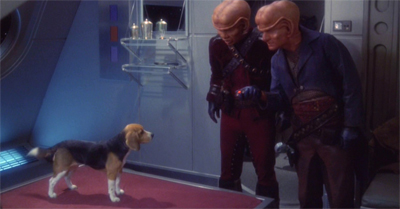
Of course, Acquisition serves to foreground a number of pressing concerns about the production of Enterprise. It’s something of a lightening rod to certain aggressive elements of fandom. Bringing back the Ferengi for a guest appearance proves that the show is more of a prequel to Star Trek: The Next Generation than to the original Star Trek. Glossing over continuity issues by refusing to name these marauding aliens demonstrates that the show clearly doesn’t care about continuity at all. Trying to do a comedy episode featuring the Ferengi demonstrates the producers have no idea what does and doesn’t work in Star Trek production.

All of this is, of course, nonsense. Acquisition isn’t a bad episode because it plays with continuity, or because it features the Ferengi. It’s a bad episode because it’s a comedy adventure that isn’t particularly funny or exciting.

"Hey, at least we got here before the Borg..."

“Hey, at least we got here before the Borg…”

Continue reading