• Following Us

  • Categories

  • Check out the Archives


  • Awards & Nominations

Doctor Who: The Face of Evil (Review)

To celebrate the fiftieth anniversary of the longest-running science-fiction show in the world, I’ll be taking weekly looks at some of my own personal favourite stories and arcs, from the old and new series, with a view to encapsulating the sublime, the clever and the fiendishly odd of the BBC’s Doctor Who.

The Face of Evil originally aired in 1977.

The Evil One!

Well, nobody’s perfect, but that’s overstating it a little.

– Leela and the Doctor make a great first impression

The Face of Evil is probably the most underrated story of the entire Hinchcliffe era, and it’s not hard to see why. For one thing, it is positioned in the middle of a run of classic stories. Any story sitting between The Deadly Assassin and both Robots of Death and The Talons of Weng-Chiang is probably going to be written off for being anything less than a perfect piece of Doctor Who.

More than that, though, The Face of Evil feels like it arrive a bit too early. Doctor Who is a show that can be many things at many different times, and The Face of Evil eschews the gothic horror evident throughout the Hinchcliffe era for the more intellectual and abstract science-fiction of Tom Baker’s final year. The Face of Evil feels more like a companion to Warriors’ Gate or Full Circle than to Planet of Evil or Brain of Morbius.

Still, it’s a triumph for the show, and one highly recommended. A wealth of good ideas, a great execution and the introduction of one of the show’s more iconic companions.

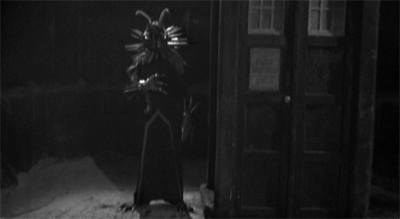
Face to face with evil...

Face to face with evil…

Continue reading

Doctor Who: Smith & Jones (Review)

To celebrate the fiftieth anniversary of the longest-running science-fiction show in the world, I’ll be taking weekly looks at some of my own personal favourite stories and arcs, from the old and new series, with a view to encapsulating the sublime, the clever and the fiendishly odd of the BBC’s Doctor Who.

Smith & Jones originally aired in 2007.

It’s only roentgen radiation. We used to play with roentgen bricks in the nursery. It’s safe for you to come out. I’ve absorbed it all. All I need to do is expel it. If I concentrate I can shake the radiation out of my body and into one spot. It’s in my left shoe. Here we go, here we go. Easy does it. Out, out, out, out, out. Out, out. Ah, ah, ah, ah! It is, it is, it is, it is, it is hot. Hold on.

Done.

You’re completely mad.

You’re right. I look daft with one shoe.

– the Doctor and Martha get off to a good start

I’d argue that Smith & Jones is Russell T. Davies’ most successful season-opener of Doctor Who. By its third year, Davies had firmly established the format of the show, to the point where he could successfully lose both of his leading actors. Christopher Eccleston had been replaced by David Tennant at the end of the first season, and Billy Piper had departed at the end of the second. Davies had demonstrated that the series could survive a cast rotation like that, and there’s a sense of looseness about Smith & Jones that suggests the show has really found its comfort zone.

The reason that Smith & Jones works so very well is not that it has an abundance of ambition. Its goal is relatively modest: to tell an enjoyable modern day adventure while introducing a new companion to the show. The beauty is in the execution. Smith & Jones races along, barely pausing to catch its breath, relying on Tennant’s abundant charisma, a constant flow of clever high concepts and a charming new companion to carry it through.

It works surprisingly well.

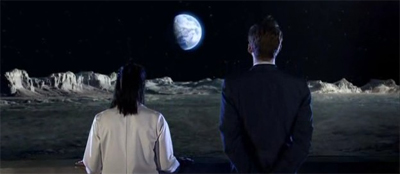
Standing in the Earthlight...

Standing in the Earthlight…

Continue reading

Doctor Who: The Rescue (Review)

To celebrate the fiftieth anniversary of the longest-running science-fiction show in the world, I’ll be taking weekly looks at some of my own personal favourite stories and arcs, from the old and new series, with a view to encapsulating the sublime, the clever and the fiendishly odd of the BBC’s Doctor Who.

The Rescue originally aired in 1965.

Oh, but Doctor, the trembling’s stopped.

Oh, my dear, I’m so glad you’re feeling better.

No, not me, the ship.

– Barbara and the Doctor

The Rescue is a surprisingly sturdy two-parter, following directly on from The Dalek Invasion of Earth. Despite the fact it’s noticeably brief, the adventure is fairly important in the grand scheme of Doctor Who, representing the first time that the show has a recruited a new companion since our bunch of time-travelers departed Earth. However, it’s also a well-told little story, and one which emphasises the relatively subtle shift in the Doctor’s character and role in the story.

While An Unearthly Child and The Daleks presented the character as a cantankerous and untrustworthy trickster, the show has gradually pushed the character into the role of the hero, culminating in the Doctor’s successful attempt to save the whole planet Earth in The Dalek Invasion of EarthThe Rescue continues this trend, presenting the Doctor as a genuinely sympathetic and compassionate old man, pretty far from the grump we first met.

The version of the Doctor we see in The Rescue feels a lot more like the character we’d come to love over the rest of the show’s fifty-year history.

Here' there be monsters...

Here’ there be monsters…

Continue reading

Doctor Who: The King’s Demons (Review)

To celebrate the fiftieth anniversary of the longest-running science-fiction show in the world, I’ll be taking weekly looks at some of my own personal favourite stories and arcs, from the old and new series, with a view to encapsulating the sublime, the clever and the fiendishly odd of the BBC’s Doctor Who.

The King’s Demons originally aired in 1983.

Do our demons come to visit us? Bid them attend us.

Demons? Very odd indeed.

Makes a nice change for you not to take everything in your stride, I must say.

– King John, the Doctor and Tegan set the mood

The show’s twentieth anniversary deserved better than this. Okay, there are a number of qualifications that can made, excuses that can be offered. The King’s Demons was never intended to close out the season, and was instead intended as a two-part episode to bridge into the triumphant return of the Daleks, a return that ended up postponed a year and reworked into Resurrection of the Daleks. There’s also the fact that The King’s Demons wasn’t the last piece of Doctor Who to air as part of the show’s twentieth anniversary year, even if it was the season finalé. The Five Doctors would be broadcast later in the year to celebrate the anniversary.

However, none of these excuses take away from the fact that The King’s Demons is an exceptionally weak piece of television, and a demonstration of everything wrong about how John Nathan Turner and the Doctor Who production staff approached the show’s twentieth season.

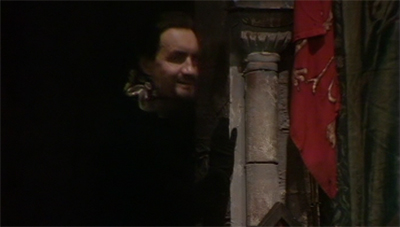
Hardly a Master piece...

Hardly a Master piece…

Continue reading

Doctor Who: Enlightenment – Special Edition (Review)

To celebrate the fiftieth anniversary of the longest-running science-fiction show in the world, I’ll be taking weekly looks at some of my own personal favourite stories and arcs, from the old and new series, with a view to encapsulating the sublime, the clever and the fiendishly odd of the BBC’s Doctor Who.

Enlightenment originally aired in 1983. It was the third and final instalment in the Black Guardian Trilogy.

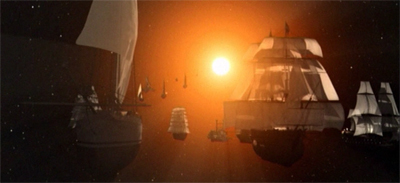
Enlightenment is easily among the very best adventures to feature Peter Davison in the role of the Doctor. It helps that it has a story that seems to perfectly suit his version of the character, one that’s arguably more cerebral and fanciful than it is dark and horrific or adventurous and action-packed. Enlightenment features one of the most quintessentially British storylines in Doctor Who, capturing the quirky appeal of the series almost perfectly, with a boat race in space… with pirates! It’s fun, it’s clever and the special effects aren’t ground-breaking, but they’re stylish enough to pull it off.

No matter how you cut it, Enlightenment is a win.

Sailing into the sunset...

Sailing into the sunset…

Continue reading

Doctor Who: Terminus (Review)

To celebrate the fiftieth anniversary of the longest-running science-fiction show in the world, I’ll be taking weekly looks at some of my own personal favourite stories and arcs, from the old and new series, with a view to encapsulating the sublime, the clever and the fiendishly odd of the BBC’s Doctor Who.

Terminus originally aired in 1983. It was the second instalment in the Black Guardian Trilogy.

Tegan?

What?

If ever you had to kill someone, could you do it? Could you?

No. I don’t know. If it was important, to save my friend, to defend myself.

But cold-bloodedly?

You’re weird, Turlough.

– Turlough does seem to “get” Tegan, does he?

Terminus gets a bit of a bad wrap, and I can understand why. It’s a very “eighties” production, in all the wrong ways. There’s too much soap opera, there’s bad acting, there’s a wealth of high concept ideas that are never properly exploited, the monster looks absolutely terrible, and the budget shows in the worst possible manner. Still, despite all these (very significant) flaws, I still kinda like it, admiring the story more for the ambition than for the execution.

The serial has some pretty big garn-damn problems...

Continue reading

Doctor Who: Mawdryn Undead (Review)

To celebrate the fiftieth anniversary of the longest-running science-fiction show in the world, I’ll be taking weekly looks at some of my own personal favourite stories and arcs, from the old and new series, with a view to encapsulating the sublime, the clever and the fiendishly odd of the BBC’s Doctor Who.

Mawdryn Undead originally aired in 1983. It was the first instalment in the Black Guardian Trilogy.

Oh look, it’s all a long time ago, Doctor. I mean, surely what’s past is —

Very much in the present, Brigadier. You never did understand the interrelation of time.

– Brigadier and the Doctor have a bit of time travel trouble

Mawdryn Undead is a bit of a strange beast. It’s written by director Peter Grimwade, who last wrote the script for the unbelievably bad Time-Flight, which is a serious contender for the worst Doctor Who adventure of the eighties – no small accomplishment in a decade that gave us The Twin Dilemma and Timelash. Still, Mawdryn Undead is an entertaining little romp with a clever central concept that is somewhat overshadowed by the fact that Grimwade seems to have been given a laundry-list of tasks to accomplish with his script. With the serial featuring the Brigadier, introducing Turlough and kick-starting The Black Guardian trilogy, you can understand why the rather nifty little time-travel story tends to get overshadowed a bit.

Faithful companion?

Continue reading

Non-Review Review: Summer in February

Summer in February is a lazy and contrived piece of pretentious twaddle. Exploring the true story of a colony of artists living off the coast of England in the early years of the twentieth century, it never offers anything more than a fleeting sketch of its characters and the world they inhabit. Benjamin Wallfisch’s powerhouse period score does a lot of heavy lifting, but it can’t do anything to keep the movie afloat. At one point, early in the film, artist AJ Munnings settles a hefty bar tab with an improvised drawing on the back of a bill. This film feels like it would be hard-pressed to pay for a glass of tap water.

summerinfebruary3

Ride away from the cinema! Away!

Continue reading

Doctor Who: Snakedance (Review)

To celebrate the fiftieth anniversary of the longest-running science-fiction show in the world, I’ll be taking weekly looks at some of my own personal favourite stories and arcs, from the old and new series, with a view to encapsulating the sublime, the clever and the fiendishly odd of the BBC’s Doctor Who.

Snakedance originally aired in 1983.

I know exactly what you want.

Do you?

Yes, you’ve come to pester me with some extravagant theory you’ve dreamed up concerning the Mara, and should I, the Director, fail to take sufficient notice of your colourful improbabilities, it will be the end of civilisation as we know it at least. How am I doing so far, hmm?

– Ambril and the Doctor

I think it’s quite a compliment to the concept of the Mara, introduced the previous season in Kinda, that the relatively new alien menace was chosen to take part in the celebration of classic villains that was Peter Davison’s second season. It was only a year old at the time, and hadn’t exactly been stunningly realised, so it seems like a massive vote of confidence in the monster to see it measured against foes like Omega in Arc of Infinity and the Master in The King’s Demons. Common knowledge will tell you that Snakedance is a perfectly entertaining serial, but can’t really measure up to one of the better stories of Davison’s first season. I’m not so convinced, and think that the two stories actually complement one another perfectly.

Don't let this get out of hand...

Continue reading

Doctor Who: Arc of Infinity (Review)

To celebrate the fiftieth anniversary of the longest-running science-fiction show in the world, I’ll be taking weekly looks at some of my own personal favourite stories and arcs, from the old and new series, with a view to encapsulating the sublime, the clever and the fiendishly odd of the BBC’s Doctor Who.

Arc of Infinity originally aired in 1983.

We know who you are.

That changes nothing.

– the Doctor and Omega set one thing straight

There really should be a bare minimum threshold of enjoyment for a Doctor Who story set on Gallifrey. I mean, these are beings who claim to control the whole of time and space. Their guards look like they modelled themselves on Adam Strange, replacing his jetpack with a cape, and there’s always an excuse for some good old-fashioned science-fiction ray-gun-related fun. How hard can it be to entertain an audience for four episodes in that particular setting?

Unfortunately, Arc of Infinity answers that question. Quite boring indeed, it seems.

Going around in circuits...

Going around in circuits…

Continue reading