• Following Us

  • Categories

  • Check out the Archives


  • Awards & Nominations

Doctor Who: Planet of the Dead (Review)

To celebrate the fiftieth anniversary of the longest-running science-fiction show in the world, I’ll be taking weekly looks at some of my own personal favourite stories and arcs, from the old and new series, with a view to encapsulating the sublime, the clever and the fiendishly odd of the BBC’s Doctor Who.

Planet of the Dead originally aired in 2009.

Hello, I’m the Doctor. Happy Easter!

– the Doctor sets the mood

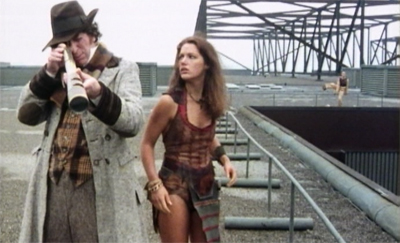
Planet of the Dead is light-weight Doctor Who. That wouldn’t normally be a problem. In fact, there’s a significant portion of each season devoted to light-weight run-around adventures. The problem is that it didn’t air as part of a season. It aired as the first piece of Doctor Who since Christmas and the next aired around Halloween. This was something of an attempt to tide fans over, to remind everybody that Doctor Who was still on the air while Steven Moffat and Matt Smith prepared to take over the TARDIS, the BBC got used to filming in HD and David Tennant pursued his career beyond the show.

As a result, the special feel a little funny. In a way, they seem like an attempt to truncate a standard season of Davies’ Doctor Who. The Next Doctor fits the mould of Christmas special quite well. It even snows! The Waters of Mars is the darker second two-parter of the season, dealing with bigger ideas and adult fears. The End of Time is very much a spiritual successor to Journey’s End. All of this is a way of pointing out that Planet of the Dead is clearly designed to serve as the bombastic family-friendly adventure two-parter that typically aired after the first two episodes of a given season.

As such, the logical point of comparison is Rise of the Cybermen, The Sontaran Stratagem or Daleks in Manhattan. Indeed, Planet of the Dead is conspicuous for its gratuitous location shooting; the last time the production team went abroad to film a story was Daleks of Manhattan, even if the cast stayed at home that time. The problem is that those light two-parters are tolerable in the context of a longer series. On its own, Planet of the Dead is far from satisfying.

Egging him on...

Egging him on…

Continue reading

Doctor Who: The Happiness Patrol (Review)

To celebrate the fiftieth anniversary of the longest-running science-fiction show in the world, I’ll be taking weekly looks at some of my own personal favourite stories and arcs, from the old and new series, with a view to encapsulating the sublime, the clever and the fiendishly odd of the BBC’s Doctor Who.

The Happiness Patrol originally aired in 1988.

Think I’ll hang out here for a while, Doc. See if I can teach this planet the blues again.

Yes, thank you for giving them back to us, Doctor.

– Earl and Susan shouldn’t be so surprised that the Doctor is fond of blue

The Happiness Patrol is an absolutely fascinating piece of Doctor Who. On the surface, it’s another example of the series’ rapidly falling budget and the production values point towards the show’s impending cancellation. While nowhere near as dodgy as Warriors of the Deep, The Happiness Patrol looks like a very cheap piece of television, struggling to realise a futuristic colony on a tiny budget. On a purely superficial level, The Happiness Patrol is really the kind of show that Michael Grade could point to and argue that Doctor Who was a show that desperately needed to be put out of its misery.

However, if the viewer is willing to pull back the layers a bit, and to peer beneath the somewhat rough trappings of The Happiness Patrol, the adventure is really everything that eighties Doctor Who could ever want to be. There is a reason that the serial has, somewhat improbably, endured. In 2010, The Happiness Patrol became headline news in Great Britain, with national newspapers astounded by the audacity of Andrew Cartmel’s vision for the show. The following year, the Archbishop of Canterbury casually name-dropped it in an Easter Sermon.

These references aren’t derogatory. These are proof that The Happiness Patrol, despite its dodgy special effects and the limitations of its production design, is one of the most important Doctor Who adventures of the eighties.

He's perfectly sweet!

He’s perfectly sweet!

Continue reading

Doctor Who: The Sun Makers (Review)

To celebrate the fiftieth anniversary of the longest-running science-fiction show in the world, I’ll be taking weekly looks at some of my own personal favourite stories and arcs, from the old and new series, with a view to encapsulating the sublime, the clever and the fiendishly odd of the BBC’s Doctor Who.

The Sun Makers originally aired in 1977.

Why did you come here, then?

Because my new little chum here seemed unhappy about something.

Mandrell discovers all he needs to know about the Doctor

The Sun Makers was reportedly written as a result of a disagreement between writer Robert Holmes and the British Revenue and Customs. That’s the oft-cited background to the story, so well known that it’s even included on the notes included in the DVD release. With that summary, you’d expect The Sun Makers to be a condemnation of the tax system, and a protest at the government’s funnelling off of money from the individual to pay like pesky things like roads or schools or hospitals.

Instead, Holmes has crafted The Sun Makers as something altogether more compelling and instructive. Rather pointedly, while The Sun Maker is a story about excessive taxation, the episode casts a large interstellar corporation as the villain of the piece. The episode’s primary antagonist isn’t a state official, it’s a single-minded number-crunching accountant who operates a large corporation that has managed to turn light itself into a financial commodity. This isn’t the story about individuals fighting for the right not to pay tax, it’s people fighting for decent working and living conditions.

Indeed, it’s quite easy to read The Sun Makers as a rather socialist piece of Doctor Who, ending with the massive organisation of the working class to resist their greedy capitalist overlords. That’s quite a radical shift from the story you’d expect given the background. In that respect, it seems almost like a call-forward to the pointed subversive social commentary of the Cartmel and even Davies eras.

I see the future...

I see the future…

Continue reading

Doctor Who: The Day of the Doctor (Review)

Waste no more time arguing about what a good man should be. Be one.

– Clara sums up the Moffat era in a nutshell

The Day of the Doctor was a suitable anniversary celebration for Doctor Who, feeling like Moffat had borrowed more from The Three Doctors than The Five Doctors in piecing it together, allowing for multi-Doctor interaction grafted over a fairly generic Pertwee-era alien invasion tale. (“Not now!” the Eleventh Doctor protests as the multi-Doctor tale intrudes on his paintings mystery. “I’m busy!”) In terms of scale and spectacle, The Day of the Doctor falls a little bit short. While it looks lavish and clearly had more than a little bit of money thrown at it, the episode lacks a strong central narrative thread.

Instead, it serves as a meditation on who the Doctor is and what that means in the grand scheme of things – looking at the tapestry of his life and character, and trying to reconcile everything that the show was and ever could be. It’s the story of the War Doctor in the Time War, of the death of the classic show and the birth of the new, suggesting that the rift left by the cancellation can finally be healed, that the bridge can be crossed and that wounds might finally be closed.

Well, most of them, anyway.

doctorwho-thedayofthedoctor11

The Three Doctors…

Continue reading

Doctor Who: The Two Doctors (Review)

To celebrate the fiftieth anniversary of the longest-running science-fiction show in the world, I’ll be taking weekly looks at some of my own personal favourite stories and arcs, from the old and new series, with a view to encapsulating the sublime, the clever and the fiendishly odd of the BBC’s Doctor Who.

The Two Doctors originally aired in 1985.

That is the smell of death, Peri. Ancient musk, heavy in the air.

– welcome to the Colin Baker era

The Two Doctors is an oddity. It’s the only story of the Nathan Turner era that runs over two hours, unless you choose to count The Trial of a Time Lord as a single story. It’s also the only “multi Doctor” story that wasn’t filmed on one of the show’s significant anniversaries. (Time Crash was, after all, filmed in the show’s forty-fifth year.) It’s also notable for the fact that it completely eschews the charmingly impish portrayal of the Second Doctor that fans have come to know and love over the course of reunion stories like The Three Doctors or The Five Doctors.

Indeed, The Two Doctors is almost the exact opposite of the show that you would expect it to be. The low opinion in which fans seem to hold the serial confirms that writer Robert Holmes has delivered a story that is markedly different from what those waiting for a team-up between Colin Baker and Patrick Troughton would have been expecting. Far from a nostalgia-packed love-in, The Two Doctors is written with Holmes’ trademark cynicism. This time the writer is directing that cynicism towards the show itself.

Patrick Troughton! In colour!

Patrick Troughton! In colour!

Continue reading

Doctor Who: Blood of the Daleks (Review)

To celebrate the fiftieth anniversary of the longest-running science-fiction show in the world, I’ll be taking weekly looks at some of my own personal favourite stories and arcs, from the old and new series, with a view to encapsulating the sublime, the clever and the fiendishly odd of the BBC’s Doctor Who.

Blood of the Daleks originally broadcast in 2006-2007.

Blood of the Daleks is an interesting piece of Doctor Who lore. It isn’t the first of Paul McGann’s audio adventures in the role of the Doctor. While McGann wasn’t the first of the performers to work with Big Finish, he recorded his first performance in 2001, half a decade before he recorded Blood of the Daleks. He’d gone through years of audio adventures and even a couple of companions before Blood of the Daleks.

Paul McGann been working on the character since before Russell T. Davies had had a chance to structure and plan the revival, and he has been a fixture of the line throughout the tenures of Christopher Eccleston, David Tennant and Matt Smith in the role. However, Blood of the Daleks marks something of a big moment for the character, a definite step forward for his version of the character, and a bold endorsement of his interpretation by the BBC.

Blood of the Daleks didn’t debut on audio CDs in collectible shops. It broadcast on BBC7, less than a week following the broadcast of The Runaway Bride.

doctorwho-bloodofthedaleks

Continue reading

Doctor Who: The Five Doctors (Review)

To celebrate the fiftieth anniversary of the longest-running science-fiction show in the world, I’ll be taking weekly looks at some of my own personal favourite stories and arcs, from the old and new series, with a view to encapsulating the sublime, the clever and the fiendishly odd of the BBC’s Doctor Who.

The Five Doctors originally aired in 1983.

There was one chap we tried to get hold of. What was his name? Used to be your scientific advisor.

Oh, the Doctor.

Yes that’s right.

Wonderful chap. All of them.

– Crichton and the Brigadier get into the spirit of things

The Five Doctors is a big anniversary celebration for the franchise, reuniting all five… er, four… er, three of the actors to play the lead role and one guy in a dodgy wig. Written by Terrance Dicks, The Five Doctors is 100 minutes of pure celebration, without too much in the way of depth or drama or development. It’s a beautifully packaged “greatest hits” collection for the franchise, to the point where the generally nostalgic atmosphere of the rest of the twentieth season (pairing up the Doctor with foes from his twenty-year history) can’t help but feel a little a little shallow in comparison.

Producer John Nathan Turner and script editor Eric Saward tended to fixate a bit too heavily on the show’s history and its continuity, with stories often becoming oppressively burdened with in-jokes and references to events that took place decades ago. In contrast, Dicks is able to craft a healthy slice of nostalgia that remains accessible and enjoyable, giving everybody their moment in the sun.

Well, everybody but the Cybermen.

Terrance Dicks does not care for the Cybermen...

Terrance Dicks does not care for the Cybermen…

Continue reading

Doctor Who: Night of the Doctor (Review)

To celebrate the fiftieth anniversary of the longest-running science-fiction show in the world, I’ll be taking weekly looks at some of my own personal favourite stories and arcs, from the old and new series, with a view to encapsulating the sublime, the clever and the fiendishly odd of the BBC’s Doctor Who.

Night of the Doctor originally aired in 2013.

I’m a Doctor. But probably not the one you’re expecting.

– isn’t that the truth?

Paul McGann. The “sort of” Doctor; the version of the character that is highly contested by fan and casual viewer alike. With only a single televised story to his credit, produced and filmed in America, McGann was always a controversial part of Doctor Who lore. Before his face appeared in a notebook in Human Nature, there was even debate about whether or not the movie “counted” in the grand pantheon of Doctor Who.

Ironically, McGann’s Doctor has gone on to have one of the most prolific lives of any Doctor. He has appeared in Big Finish audios, webcasts and even a series of audio plays broadcast on BBC radio. McGann has had an impressive volume of output, even without counting the tie-in novels and comics featuring his character, made without his input. The state of limbo in which the character seemed to hover seemed monumentally unfair, a quirk of fate that was the result of powers far beyond those of McGann himself.

So The Night of the Doctor is a pleasant surprise, conferring the ultimate legitimacy upon Paul McGann’s interpretation of the character, effectively confirming the Eighth Doctor as the version who held the flame for the classic series, and whose regeneration marks a turning point for the show.

He really eights himself...

He really eights himself…

Continue reading

Doctor Who: The Three Doctors (Review)

To celebrate the fiftieth anniversary of the longest-running science-fiction show in the world, I’ll be taking weekly looks at some of my own personal favourite stories and arcs, from the old and new series, with a view to encapsulating the sublime, the clever and the fiendishly odd of the BBC’s Doctor Who.

The Three Doctors originally aired in 1973.

Well, Sergeant, aren’t you going to say it that it’s bigger on the inside than it is on the outside. Everybody else does.

It’s pretty obvious, isn’t it?

– the Doctor and Benton

The Three Doctors never seems entirely sure what it’s supposed to be. It knows what it has to accomplish. This was the first serial of the tenth season of Doctor Who, so it has to feature the three versions of the character to date. It also wants to radically shake-up the status quo of the series and to allow Jon Pertwee’s Doctor to take to the cosmos. Those are really the two primary objectives of The Three Doctors, and writers Bob Baker and Dave Martin accomplish them quite well.

The problem is that the story itself isn’t sure what it wants to be. Pertwee-era script editor Terrance Dicks would be a lot more confident when juggling The Five Doctors, conceding that the whole thing was a gigantic nonsensical spectacle. The Three Doctors seems almost like a regular story with the tenth anniversary grafted on to it – it’s easy enough to imagine a rough outline of this story that could work with only Jon Pertwee and without the end of his exile.

As a result, the two strongest beats in The Three Doctors feel almost like afterthoughts, grafted on to the outline of a generic and somewhat bland Doctor Who adventure.

Why does the Doctor hate himself...?

Why does the Doctor hate himself…?

Continue reading

Doctor Who: Vengeance on Varos (Review)

To celebrate the fiftieth anniversary of the longest-running science-fiction show in the world, I’ll be taking weekly looks at some of my own personal favourite stories and arcs, from the old and new series, with a view to encapsulating the sublime, the clever and the fiendishly odd of the BBC’s Doctor Who.

Vengeance on Varos originally aired in 1985.

It’s a question of re-imprinting their identities, of establishing again who they are.

– Colin Baker spots the problems with the Colin Baker era

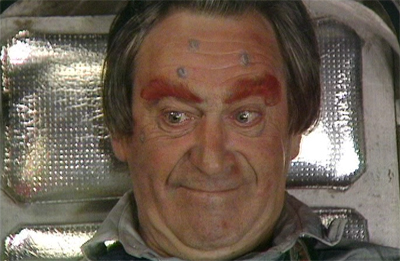
Vengeance on Varos is a serious contender for the best Colin Baker Doctor Who story. Not that there’s too much competition. It’s either this or Revelation of the Daleks. I’m also reasonably fond of The Two Doctors, but I’ll accept that I’m in the minority on that one. Colin Baker’s first season is an absolute mess. It has a scattering of half-decent ideas (paired with some atrocious ones, to be fair) executed in a rather slapdash manner.

The season is obsessed with violence and politics and power and the Doctor’s strange ability to accrue large body counts while nominally remaining a pacifist. Like the last year of Peter Davison’s tenure, there’s a sense that the show doesn’t really like its protagonist. Attack of the Cybermen seems willing to trade him for a murderous sociopath. Still, there’s the nugget of an interesting idea there; it’s telling that the revived series would explore some of these ideas in a more insightful and intelligent manner.

However, Vengeance on Varos and Revelation of the Daleks stand apart from the rest of the season because they explore these issues with nuance and sophistication. Vengeance on Varos is wicked social satire that still stings today, an indictment of reality television that was broadcast almost two decades before the format took over television.

It's okay, the audience seems to actually like this one...

It’s okay, the audience seems to actually like this one…

Continue reading