• Following Us

  • Categories

  • Check out the Archives


  • Awards & Nominations

Doctor Who – The Shakespeare Code (Review)

To celebrate the fiftieth anniversary of the longest-running science-fiction show in the world, I’ll be taking weekly looks at some of my own personal favourite stories and arcs, from the old and new series, with a view to encapsulating the sublime, the clever and the fiendishly odd of the BBC’s Doctor Who.

The Shakespeare Code originally aired in 2007.

Goodnight, Doctor.

Nighty night, Shakespeare.

– talk about your British icons

The Shakespeare Code is the third season’s opening trip into British nostalgia, a celebrity historical where the Doctor journeys back in time to meet a famous character and to deal with alien menaces masquerading as something altogether more sinister. This time, the Doctor and Martha travel back to meet William Shakespeare. It’s a little on the nose, but perhaps that’s not a bad thing. After all, teaming the Doctor up with Queen Victoria in Tooth and Claw did seem a little cynical when the show opened with a gag at the expense of Margaret Thatcher.

The rather safe and occasionally quite “postcard-y” portrayal of British history aside, The Shakespeare Code is more interesting as a rather novel form of arc-building for the show. “Saxon” was the arc word for the show’s third season, but restricted to those episodes set in the present. However, The Shakespeare Code winds up offering major thematic foreshadowing of the season ahead.

Where there's a Will...

Where there’s a Will…

Continue reading

Doctor Who: The Reign of Terror (Review)

To celebrate the fiftieth anniversary of the longest-running science-fiction show in the world, I’ll be taking weekly looks at some of my own personal favourite stories and arcs, from the old and new series, with a view to encapsulating the sublime, the clever and the fiendishly odd of the BBC’s Doctor Who.

The Reign of Terror originally aired in 1964.

Hush, child. Say your goodbyes and remember, we shall be leaving almost immediately

– the Doctor, about two minutes into the first part of a six parter

The Reign of Terror represents a fairly disappointing conclusion to a reasonably solid first season of Doctor Who. I won’t argue that the show’s first year can be ranked among the finest in the fifty-year history of the show, but I do think that the stories generally did quite a decent job of introducing the characters and concepts and setting them up so that they could support a lot more. It’s interesting to compare the title character introduced in An Unearthly Child to the version presented in The Sensorites.

While The Sensorites is still a story far too long and far too generic for its own good, it still feels like it solidifies a version of the character who – broadly speaking – resembles the Doctor we know and love. While I’d argue the Doctor was only absolutely solidified as a hero in The Dalek Invasion of Earth, there’s a very clear through-line from An Unearthly Child to The Sensorites which charts the evolution of the character. The Sensorites would make a decent (if unspectacular) place to end the first season.

Unfortunately, the first season continues on for one more episode. The Reign of Terror is just as over-long and just as padded out as The Sensorites, but it suffers because it feels like a massive step backwards in a season that has been very clearly moving forwards.

An animated sort...

An animated sort…

Continue reading

Jameson Cult Film Club: interMission

The Jameson Cult Film Club screening of interMission was a wonderful evening, as usual. Converting a warehouse at the end of Hanover Quay into the film’s MegaMart, the gang provided the usual celebratory screening atmosphere. Appropriately enough, brown sauce seemed to be the theme of the event, with crates serving as make-shift tables, bottles served along with tasty grub for those looking to customise their burgers.

(I will confess, though, that I did not see anybody mixing brown sauce with their Jameson, although I’m sure some adventurous soul out there made an attempt.)

Click to enlarge...

Click to enlarge…

Continue reading

Doctor Who: Vincent and the Doctor (Review)

To celebrate the fiftieth anniversary of the longest-running science-fiction show in the world, I’ll be taking weekly looks at some of my own personal favourite stories and arcs, from the old and new series, with a view to encapsulating the sublime, the clever and the fiendishly odd of the BBC’s Doctor Who.

Vincent and the Doctor originally aired in 2010.

But you’re not armed.

I am.

What with?

Overconfidence, this, and a small screwdriver. I’m absolutely sorted.

– Vincent and the Doctor

One of the strengths of the revived series has been a willingness to engage with a variety of writers. While Andrew Cartmel may have tried in vain to convince Alan Moore to write for the final years of the classic show, Russell T. Davies and Steven Moffat have managed to draw a wealth of diverse talent to write for the revived series. Sometimes this didn’t always work out (Life on Mars creator Matthew Graham wrote Fear Her), but it did mean that the series could boasts scripts from figures as diverse as Neil Gaiman and Richard Curtis.

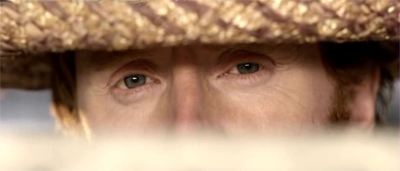
There’s something to be said for the diversity the format of the show allows. Vincent and the Doctor is really unlike any other story the show has ever tried to tell, but it still manages to feel like Doctor Who. Which is something pretty spectacular, and worth celebrating. Doctor Who works best as a vehicle for any and all kinds of stories, where the audience isn’t always exactly sure what it is going to get.

An artist's eyes...

An artist’s eyes…

Continue reading

Doctor Who: Timelash (Review)

To celebrate the fiftieth anniversary of the longest-running science-fiction show in the world, I’ll be taking weekly looks at some of my own personal favourite (and not-so-favourite) stories and arcs, from the old and new series, with a view to encapsulating the sublime, the clever and the fiendishly odd of the BBC’s Doctor Who.

Timelash originally aired in 1985.

I don’t trust you. You’re being too reasonable.

– Peri’s on to him

Timelash is on the short list of serials broadly agreed to be “the worst Doctor Who stories ever.” Given how prone science-fiction fans are to bickering about absolutely everything, and how impossible it is to find consensus, that’s really saying something. More than that, it ranks with quite a few Colin Baker stories among that list. I can’t help but wonder if part of the problem with Baker’s tenure isn’t a lack of classic episodes (Revelation of the Daleks and Vengeance on Varos surely count), but the batting average skewed by so many truly terrible stories.

Any season containing Timelash would be ridiculed, but it’s hard to imagine that any year of television containing Attack of the Cybermen, Timelash and The Mark of the Rani couldn’t help but raise questions about the show’s future at the BBC.

The face of evil...

The face of evil…

Continue reading

Doctor Who: The Gunfighters (Review)

To celebrate the fiftieth anniversary of the longest-running science-fiction show in the world, I’ll be taking weekly looks at some of my own personal favourite stories and arcs, from the old and new series, with a view to encapsulating the sublime, the clever and the fiendishly odd of the BBC’s Doctor Who.

The Gunfighters originally aired in 1966.

Everything excepting that rattlesnake friend of yours Holliday blew in this mornin’. Who’re your friends, Wyatt?

Well I, er–

Oh, quite, quite so. Allow me, sir, to introduce Miss Dodo Dupont, wizard of the ivory keys, and er Steven Regret, tenor. And lastly sir, your humble servant Doctor Caligari.

Doctor who?

Yes, quite right.

– Masterson, Wyatt Earp and the Doctor

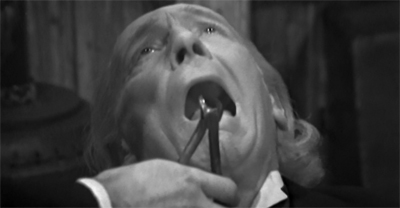
I am hesitant to turn my trip into the history of Doctor Who into a series of articles about fan opinion or consensus. If I like a story, or dislike a story, I have my reasons that I will often try to explain away. However, sometimes it’s nice to have a bit of context. It is handy, for example, to know that I like The Talons of Weng-Chiang just a little bit less than most fans seem to. The Gunfighters is an oft-maligned serial. It is part of the show’s troubled third season, building – as it did – off the show’s generally quite solid second year. However, I actually enjoy The Gunfighters for what it is, which is a knack I seem to have for a lot of the stories from William Hartnell’s era.

People would try to convince you that it's like pulling teeth...

People would try to convince you that it’s like pulling teeth…

Continue reading

Doctor Who – School Reunion (Review)

To celebrate the fiftieth anniversary of the longest-running science-fiction show in the world, I’ll be taking weekly looks at some of my own personal favourite stories and arcs, from the old and new series, with a view to encapsulating the sublime, the clever and the fiendishly odd of the BBC’s Doctor Who.

School Reunion originally aired in 2006.

You can tell you’re getting older. Your assistants are getting younger.

– Sarah Jane to the Doctor

Coming at the start of the revived show’s second season, School Reunion changed the way that the show related to its long and complex history, explicitly confirming what had been implied at least as early as Dalek and Aliens of London, that this was indeed the same Doctor who had had all of those adventures for all those years on British television. Bringing back the iconic pepper pots was one thing, as was name-dropping the paramilitary outfit from early in the original show’s run.

However, bringing back the most fondly remembered companion of the classic television show and affirming that she had travelled with this man for several years provides a firm anchor to the past. Looking back now, it’s hard to appreciate how dramatic a shift this was, and just what it represented. However, it’s hard to imagine that Doctor Who could get to the point where the Doctor could recruit a Silurian detective and her Sontaran butler in Victorian England without School Reunion.

It changed the game.

(Anthony Stewart) Head master...

(Anthony Stewart) Head master…

Continue reading

Doctor Who: The Face of Evil (Review)

To celebrate the fiftieth anniversary of the longest-running science-fiction show in the world, I’ll be taking weekly looks at some of my own personal favourite stories and arcs, from the old and new series, with a view to encapsulating the sublime, the clever and the fiendishly odd of the BBC’s Doctor Who.

The Face of Evil originally aired in 1977.

The Evil One!

Well, nobody’s perfect, but that’s overstating it a little.

– Leela and the Doctor make a great first impression

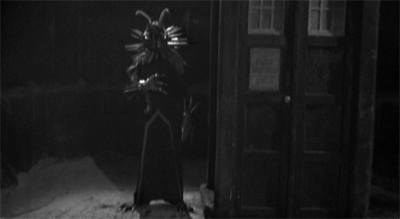
The Face of Evil is probably the most underrated story of the entire Hinchcliffe era, and it’s not hard to see why. For one thing, it is positioned in the middle of a run of classic stories. Any story sitting between The Deadly Assassin and both Robots of Death and The Talons of Weng-Chiang is probably going to be written off for being anything less than a perfect piece of Doctor Who.

More than that, though, The Face of Evil feels like it arrive a bit too early. Doctor Who is a show that can be many things at many different times, and The Face of Evil eschews the gothic horror evident throughout the Hinchcliffe era for the more intellectual and abstract science-fiction of Tom Baker’s final year. The Face of Evil feels more like a companion to Warriors’ Gate or Full Circle than to Planet of Evil or Brain of Morbius.

Still, it’s a triumph for the show, and one highly recommended. A wealth of good ideas, a great execution and the introduction of one of the show’s more iconic companions.

Face to face with evil...

Face to face with evil…

Continue reading

Doctor Who: Smith & Jones (Review)

To celebrate the fiftieth anniversary of the longest-running science-fiction show in the world, I’ll be taking weekly looks at some of my own personal favourite stories and arcs, from the old and new series, with a view to encapsulating the sublime, the clever and the fiendishly odd of the BBC’s Doctor Who.

Smith & Jones originally aired in 2007.

It’s only roentgen radiation. We used to play with roentgen bricks in the nursery. It’s safe for you to come out. I’ve absorbed it all. All I need to do is expel it. If I concentrate I can shake the radiation out of my body and into one spot. It’s in my left shoe. Here we go, here we go. Easy does it. Out, out, out, out, out. Out, out. Ah, ah, ah, ah! It is, it is, it is, it is, it is hot. Hold on.

Done.

You’re completely mad.

You’re right. I look daft with one shoe.

– the Doctor and Martha get off to a good start

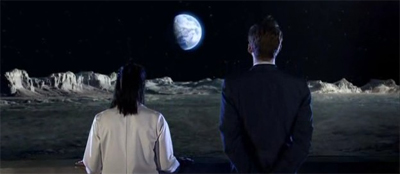
I’d argue that Smith & Jones is Russell T. Davies’ most successful season-opener of Doctor Who. By its third year, Davies had firmly established the format of the show, to the point where he could successfully lose both of his leading actors. Christopher Eccleston had been replaced by David Tennant at the end of the first season, and Billy Piper had departed at the end of the second. Davies had demonstrated that the series could survive a cast rotation like that, and there’s a sense of looseness about Smith & Jones that suggests the show has really found its comfort zone.

The reason that Smith & Jones works so very well is not that it has an abundance of ambition. Its goal is relatively modest: to tell an enjoyable modern day adventure while introducing a new companion to the show. The beauty is in the execution. Smith & Jones races along, barely pausing to catch its breath, relying on Tennant’s abundant charisma, a constant flow of clever high concepts and a charming new companion to carry it through.

It works surprisingly well.

Standing in the Earthlight...

Standing in the Earthlight…

Continue reading

Doctor Who: The Rescue (Review)

To celebrate the fiftieth anniversary of the longest-running science-fiction show in the world, I’ll be taking weekly looks at some of my own personal favourite stories and arcs, from the old and new series, with a view to encapsulating the sublime, the clever and the fiendishly odd of the BBC’s Doctor Who.

The Rescue originally aired in 1965.

Oh, but Doctor, the trembling’s stopped.

Oh, my dear, I’m so glad you’re feeling better.

No, not me, the ship.

– Barbara and the Doctor

The Rescue is a surprisingly sturdy two-parter, following directly on from The Dalek Invasion of Earth. Despite the fact it’s noticeably brief, the adventure is fairly important in the grand scheme of Doctor Who, representing the first time that the show has a recruited a new companion since our bunch of time-travelers departed Earth. However, it’s also a well-told little story, and one which emphasises the relatively subtle shift in the Doctor’s character and role in the story.

While An Unearthly Child and The Daleks presented the character as a cantankerous and untrustworthy trickster, the show has gradually pushed the character into the role of the hero, culminating in the Doctor’s successful attempt to save the whole planet Earth in The Dalek Invasion of EarthThe Rescue continues this trend, presenting the Doctor as a genuinely sympathetic and compassionate old man, pretty far from the grump we first met.

The version of the Doctor we see in The Rescue feels a lot more like the character we’d come to love over the rest of the show’s fifty-year history.

Here' there be monsters...

Here’ there be monsters…

Continue reading