• Following Us

  • Categories

  • Check out the Archives


  • Awards & Nominations

The X-Files – Demons (Review)

This February and March, we’re taking a trip back in time to review the fourth season of The X-Files and the first season of Millennium.

The fourth season of The X-Files is an oddity.

That is particularly true when it comes to the show’s mythology. Not only has any sense of narrative progression stalled after the “to be continued…” hook of Talitha Cumi, the fourth season seems to branch the mythology out in multiple directions that never really get anywhere. Tunguska and Terma introduce a Russian conspiracy that quickly becomes a footnote. Tempus Fugit and Max focuses on private military contractors who are never mentioned again. Memento Mori gives Scully cancer halfway through the season, and the rest of the year tries to catch up.
A cigarette-smoking spectre...

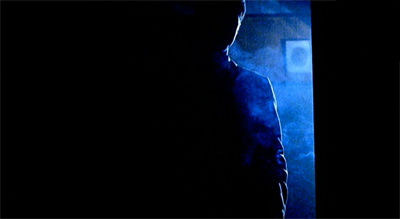
A cigarette-smoking spectre…

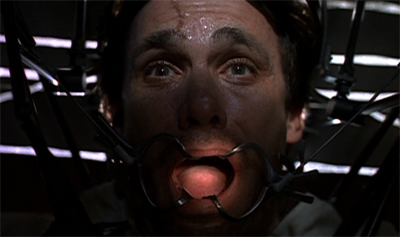
Demons is an episode that sits rather awkwardly as the penultimate episode of the season. An episode about Mulder undergoing aggressive therapy to recover lost memories seems a little out of place with everything else going on around him. After Memento Mori, you would imagine he would be worried about Scully. After Zero Sum, you imagine he would be wary about putting himself in a vulnerable position. Demons feels very much like it would make a good first season episode, a product of the time when Samantha Mulder was our lead’s primary driving motivation.

Instead, Demons sits awkwardly before the big season finalé with its own clear agenda. Scully’s closing monologue is clearly designed to lead into Gethsemane as almost a four-part season-bridging epic. However, the execution feels a little too haphazard, a little too casual, a little too disorganised. Demons feels less like the lead-in to an earth-shattering story and more like a script designed to plug a gap late in the season.
"Hey, look on the bright side, this time next year, you'll be in a psychiatric institution."

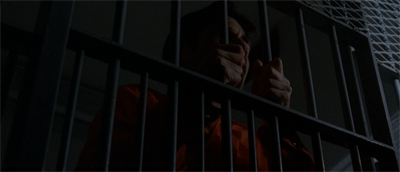
“Hey, look on the bright side, this time next year, you’ll be in a psychiatric institution.”

Continue reading

The X-Files – Season 2 (Review)

This August (and a little of September), we’re taking a trip back in time to review the second season of The X-Files. In November, we’ll be looking at the third season. And maybe more.

The first few seasons of a television show are very much about defining the show – figuring out what works and what doesn’t, and what form the show will take. After all, a lot of discussion and planning takes place during development, but all of that is on paper. It’s only once you’ve worked with the cast and had a chance to gauge audience response that it is possible to truly understand a television show.

The first two seasons of The X-Files seem like an attempt to map out the show, to mark the boundaries and do some fine calibration. The show had been a sleeper hit in its first season, popular enough to secure a second season on Fox. However, the second season had seen the series become a breakout hit. It climbed rather dramatically in the ratings, and the show would continue that ascent through to the fifth season in the lead-in to the feature film. However, the second season still feels like it’s a learning curve.

xfiles-onebreath6

There are exceptional episodes in the second season. The season provides a wealth of classic stories. Fresh Bones and Our Town stand out as two of the best monster-of-the-week stories that the show had done by this point in its life-cycle. Even outside of that, there are classics like One Breath or Humbug or The Host or F. Emasculata. However, there are also quite a few misfires like Fearful Symmetry or Excelsis Dei or 3.

There are a lot of points in the second season where it feels like The X-Files is experimenting, trying new things that would ultimately become part of the show’s unique identity. Not all of these elements worked, but that is the luxury of a second season. It allows the production team to do that sort of experimentation so they might find their groove.

xfiles-duanebarry16 Continue reading

Doctor Who: The Ark in Space (Review)

To celebrate the fiftieth anniversary of the longest-running science-fiction show in the world, I’ll be taking weekly looks at some of my own personal favourite stories and arcs, from the old and new series, with a view to encapsulating the sublime, the clever and the fiendishly odd of the BBC’s Doctor Who.

The Arc in Space originally aired in 1975.

I’ll have to link in my own cerebral cortex. That’s the only thing.

That is highly dangerous.

I know. Two more leads, Rogin.

The power could burn out a living brain!

I agree. An ordinary brain. But mine is exceptional.

– the Doctor demonstrates his tremendous ego to Vira

It really is amazing how quickly Philip Hinchcliffe and Robert Holmes established their mark on Doctor Who. Barry Letts finished up his time as producer working on Tom Baker’s first serial, Robot. The Ark in Space was the second adventure to star the Fourth Doctor, and certainly a lot more indicative of the shape of things to come. While you could argue that Holmes and Hinchcliffe did improved over the following years – for one thing, this first season still has the odd pothole – it is clear that they immediately knew what they were doing.

Hinchcliffe and Holmes would cast a tremendous shadow over Doctor Who, and it’s no coincidence that so much of that influence can be traced back to The Ark in Space, the first indication of their plan for Doctor Who.

The Wirrn really bug the Doctor...

The Wirrn really bug the Doctor…

Continue reading

Non-Review Review: Team America – World Police

There’s a strong argument to be made that Team America: World Police is perhaps the best comedy made in the past decade. It’s certainly the most politically astute, and certainly one of the more thoughtful commentaries on American foreign policy to emerge in the wake of 9/11. Like a lot of the work of Stone and Parker, it’s tone is incredibly juvenile and even puerile, with the pair never meeting a bad-taste gag that they don’t love. However, this decidedly low-brow sense of humour is coupled with a more sophisticated and sharp political wit that allows the movie to be topical without seeming preachy, observant without being heavy-handed, and veryfunny without ever being too earnest. That’s a winning combination.

Patriot Games…

Continue reading