• Following Us

  • Categories

  • Check out the Archives


  • Awards & Nominations

Star Trek: The Next Generation – The Survivors (Review)

This January and February, we’ll be finishing up our look at the second season of Star Trek: The Next Generation and moving on to the third year of the show, both recently and lovingly remastered for high definition. Check back daily for the latest review.

Michael Wagner remains something of a forgotten figure among Star Trek fans. While anybody familiar with the behind-the-scenes workings on Star Trek: The Next Generation is aware of the contributions made by the wonderful Michael Piller, and quite a few would be familiar with the work of Maurice Hurley during the first two seasons, Wagner’s four-episode tenure as executive producer and head writer is something of a mystery.

Situated right in the middle of that four-episode run, and the only Star Trek script on which Wagner does not share a credit, The Survivors seems like the most obvious indicator of what Wagner’s version of The Next Generation might have looked like. Of course, it’s impossible to extrapolate from a single episode of television, let alone a single episode of an era that was over before it already began, but it is interesting to look at how Wagner’s work here differs from the style that would be imposed by Piller.

The Survivors is a decidedly high-concept science-fiction mystery, feeling almost like an episode of an anthology featuring the regular cast. Built around a guest star, The Survivors is very much radically opposed to Piller’s vision of character-driven Star Trek.
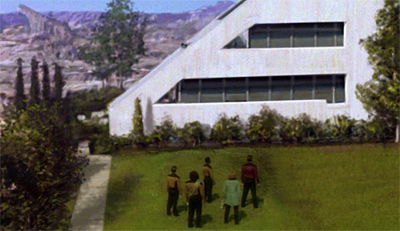
"Nice house. Can't see much about the neighbourhood, though."

“Nice house. Can’t see much about the neighbourhood, though.”

Continue reading

Star Trek: The Next Generation (DC) Annual #3 – The Broken Moon (Review)

This January and February, we’ll be finishing up our look at the second season of Star Trek: The Next Generation and moving on to the third year of the show, both recently and lovingly remastered for high definition. Check back daily for the latest review.

We’ll be supplementing our coverage of the episodes with some additional materials – mainly novels and comics and films. This is one such entry. This is actually supplementary to the first season of the Next Generation, specifically the episode Conspiracy.

If you were to construct a list of the most niggling unresolved plot threads in the history of the Star Trek franchise, “what was up with those things from Conspiracy?” would likely rank up there alongside “so, did Bajor ever join the Federation?” Funnily enough, author S.D. Perry would tie those two dangling plot points up in her Deep Space Nine relaunch book, Unity.

However, several other writers have tried to figure out what exactly was going on with those mind-controlling parasites who appeared at the end of the first season of Star Trek: The Next Generation and were never heard from again. According to Ronald D. Moore on Inside the Writers’ Room on the third Next Generation blu ray box set, various writers for the show tried to revisit the idea, but Roddenberry hated that episode so much nothing was ever developed.

The Broken Moon, the third annual for DC’s Next Generation comic book series, offers its own take on the mind-controlling parasites. While writer Michael Jan Friedman wisely avoids revealing too much about these creatures, the story suffers because it never figures out anything interesting to do with them.

It always bugged me...

It always bugged me…

Continue reading

Non-Review Review: The Armstrong Lie

The Armstrong Lie is about a lot of things. It’s nominally about Lance Armstrong’s attempted come back in 2009, and then about how it was all one big lie once the doping allegations became impossible for the athlete to deny. Those are, in a way, the least interesting aspects of Alex Gibney’s documentary. Instead, the film works best as an exploration of power and vested interest, as well as an exploration of narrative and how that narrative is manipulated and shaped to suit agendas.

thearmstronglie1

Continue reading

Star Trek: The Next Generation – The Ensigns of Command (Review)

This January and February, we’ll be finishing up our look at the second season of Star Trek: The Next Generation and moving on to the third year of the show, both recently and lovingly remastered for high definition. Check back daily for the latest review.

The Ensigns of Command is a Data-centric script from Melinda Snodgrass, the writer responsible for The Measure of a Man. It was the first episode produced in the show’s third season, even if it was the second to air. As with so many third season episodes, The Ensigns of Command was beset by behind-the-scenes difficulties. These issues plagued the episode through all stages of production – from the script through to post-production.

It is a wonder that The Ensigns of Command turned out watchable. While it certainly can’t measure up to Snodgrass’ earlier Data-centric story, it is an intriguing character study that benefits from a focus on character and an understanding of Star Trek: The Next Generation works. While far from an exceptional or defining episode of The Next Generation, it’s a demonstration of how far the show has come that even an episode as troubled as this could look so professional and feel so satisfying.

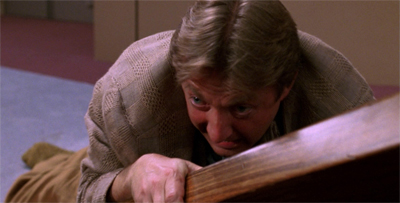
A fun shoot...

A fun shoot…

Continue reading

Star Trek: The Next Generation – The Ensigns of Command by Melinda Snodgrass (Review)

This January and February, we’ll be finishing up our look at the second season of Star Trek: The Next Generation and moving on to the third year of the show, both recently and lovingly remastered for high definition. Check back daily for the latest review.

We’ll be supplementing our coverage of the episodes with some additional materials – mainly novels and comics and films. This is one such entry.

One of the benefits of the internet age is the wealth of material that it makes available with comparative ease. Interviews are widely distributed, clips are circulated, and it’s often not too hard to find primary or well-sourced secondary materials available with a simple search. As such, it’s a lot easier to pry into the history and legacy of cult film and television than it has ever been before. Leaping back in Star Trek: The Next Generation more than two decades after it originally aired allows the viewer more insight than they would ever have had back then.

The third season of The Next Generation is widely (and rightly) regarded as one of the strongest seasons in the history of the franchise. Only the first two seasons of the original Star Trek, a few more seasons of The Next Generation and couple of years of Star Trek: Deep Space Nine can claim to compete on a level of quality and consistency with this twenty-six episode rejuvenation of the series that had faltered in its first two years.

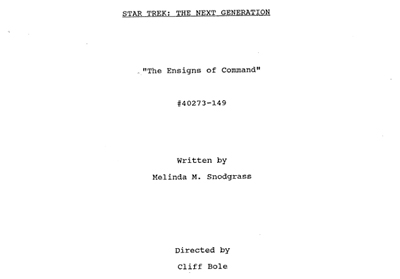
Watching The Ensigns of Command, it’s hard to fathom how deeply troubled the production was. The episode was plagued by problems from scripting through to post-production. Writer Melinda Snodgrass has made no secret of her dissatisfaction with the episode. Although her name appears on the finished script, the episode had been heavily re-written. Snodgrass has made her original script available on-line via her website, and it makes for an interesting glimpse at what might have been.

tng-theensignsofcommand22

Continue reading

Star Trek: The Next Generation – Evolution (Review)

This January and February, we’ll be finishing up our look at the second season of Star Trek: The Next Generation and moving on to the third year of the show, both recently and lovingly remastered for high definition. Check back daily for the latest review.

Evolution kicks off the third season of Star Trek: The Next Generation, and marks the point at which the spin-0ff really comes into its own. It’s remarkable how consistent in quality the third season is, despite the trouble brewing behind the scenes. It’s also remarkable how quickly the show finds its footing after two years of stumbling clumsily in the right direction. Within the first five episodes of the third season, The Next Generation has clearly found its voice.

However, a change is obvious even from Evolution. Michael Piller would take over the reigns four episodes into the season, but he also co-wrote the script to the season premiere. While Piller polished quite a few of the scripts passing through The Next Generation‘s third season, it is interesting that his credited work book-ends the season, setting the tone and leaving a clear impression.

While Evolution is not the strongest episode of the season to come, it does have a much stronger sense of self and purpose than anything that has really come before. It isn’t a bold or ground-breaking script by any measure; it’s actually a relatively simple story. It just tells that story with a wonderful resonance, clarity and efficiency, commodities that have been sorely lacking from The Next Generation to date.

Hold on, it's time for a change...

Hold on, it’s time for a change…

Continue reading

Star Trek: The Next Generation (DC Comics, 1989) #1-2 – Return to Raimon/Murder, Most Foul (Review)

This January and February, we’ll be finishing up our look at the second season of Star Trek: The Next Generation and moving on to the third year of the show, both recently and lovingly remastered for high definition. Check back daily for the latest review.

We’ll be supplementing our coverage of the episodes with some additional materials – mainly novels and comics and films. This is one such entry.

DC Comics’ limited six-issue tie-in to the launch of Star Trek: The Next Generation might have made an interesting read, but it was a success for the company. It was such a success that the company decided to launch an on-going monthly series tying into Star Trek: The Next Generation. It launched in October 1989, just as the show’s third season was starting on television. It continued throughout the show’s run, wrapping up eighty issues later in February 1996, when Marvel bought the license.

For the bulk of its run, The Next Generation was written by Michael Jan Friedman. Barring a couple of fill-ins scattered across the six-and-a-half year run, Friedman churned out monthly stories with remarkable consistency. Indeed, DC’s second volume of Next Generation would be the most consistent comic book tie-in published during any of the spin-off shows, with the licence for the franchise bouncing around Marvel, Malibu, Wildstorm and IDW in the late nineties and early years of the twenty-first century.

There’s something strangely appropriate about publishing Return to Raimon in tandem with the launch of The Next Generation‘s third season. The third season of The Next Generation is generally regarded as the point where the show really came of age, and the season that laid the foundation for that entire generation of Star Trek spin-offs. It was the point at which the vision of Star Trek proposed by The Next Generation finally came into its own, so it seems fitting that it’s also the point at which one of the franchise’s most consistent and long-running tie-ins begins.

New worlds...

New worlds…

Continue reading

Non-Review Review: Mr. Peabody & Sherman

Mr. Peabody & Sherman is solid family entertainment. Too scattershot and inconsistent to really rank among the best of the Dreamworks animated feature films, it does benefit from an endearing energy and momentum – as well as a charming central performance from Ty Burrell as the eponymous super-inventor dog genius. It’s perfectly inoffensive fun that manages to get quite a few laughs, even if it doesn’t tug the heart strings quite as well as it might want to.

A dog and his boy...

A dog and his boy…

Continue reading

Star Trek: The Next Generation – Season 2 (Review)

This January and February, we’ll be finishing up our look at the second season of Star Trek: The Next Generation and moving on to the third year of the show, both recently and lovingly remastered for high definition. Check back daily for the latest review.

Although, as Rick Berman argues in the documentary Making It So, the first season of Star Trek: The Next Generation “was at least in syndicated ratings terms, extremely successful”, there was trouble brewing behind the scenes. The show lost two-thirds of its regular female cast members, and the season ended with a whimper rather than a bang as the 1988 Writers’ Strike cutting into the development of the final couple of scripts.

The second season was no less plagued by problems, even as the show proved a ratings and commercial success. The show’s writers’ room was in disarray, with conflicts erupting between Tracy Tormé and Maurice Hurley over scripting for the show – leading to the use of both of Tormé’s WGA-approved pseudonyms on consecutive scripts from the writer. Episodes were coming over budget and behind schedule, necessitating a clip show to round out the season.

tng-qwho17

Even on the set itself, new cast member Diana Muldaur had difficulty fitting in the cast, and did not wish to return after the second season. Katherine Pulaski would disappear from the show (and the franchise) with little fuss – her last appearance being in the rather disappointing Shades of Grey. While The Next Generation was successful by just about any objective external measure, it had yet to really find its own internal balance.

Still, the second season of The Next Generation did show hints of improvement. The show was finding its feet. While the average quality of the episodes was nothing like what it would become in the show’s third season, even the more middling instalments of the show’s second season (like Contagion or Where Silence Has Lease or Peak Performance) were leaps and bounds ahead of where the show had been in the first season. It was getting where it needed to go, but not nearly fast enough.

tng-timesquared19

Continue reading

Star Trek: Deep Space Nine – The Lives of Dax: Sins of the Mother (Audrid) by S.D. Perry (Review)

This January and February, we’ll be finishing up our look at the second season of Star Trek: The Next Generation and moving on to the third year of the show, both recently and lovingly remastered for high definition. Check back daily for the latest review.

We’ll be supplementing our coverage of the episodes with some additional materials – mainly novels and comics and films. This is one such entry. This is actually supplementary to the first season of the Next Generation, specifically the episode Conspiracy.

The Star Trek: Deep Space Nine relaunch was the first truly successful attempt to continue a Star Trek television show past its final episode. Of course, there had been novels written before taking place after the finalés of the various shows, but the Deep Space Nine relaunch was the first conscious attempt to directly build upon the events of the series and structure the novels as something of an “eighth season” to the show. If I get through the seven years of Deep Space Nine, I am seriously considering covering the novels.

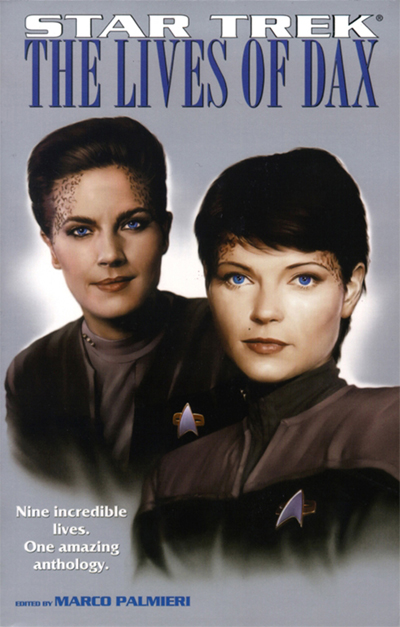
What’s interesting is that the novels didn’t quite come to be in an instant and decisive sort of way. There was a hazy grey period where books were published after What You Leave Behind, but not necessarily structured as part of that “eighth season.” Two of those books, The Lives of Dax and A Stitch in Time were retroactively welcomed into the relaunch. Indeed, this short story from S.D. Perry proves to pretty essential to the relaunch as a whole.

Like Deep Space Nine itself, the novels picked up and developed on particular themes and plot threads. The entrance of Bajor into the Federation is the most obvious, a plot point set up in Emissary and never completely resolved in the show. However, one particular plot thread seems to have emerged from out of nowhere, stretching back to an aborted arc from the very season of the second generation of Star Trek television shows. The relaunch built heavily on Conspiracy.

ds9-thelivesofdax1

Continue reading