• Following Us

  • Categories

  • Check out the Archives


  • Awards & Nominations

The X-Files – The Goldberg Variation (Review)

This November, we’re taking a trip back in time to review the seventh season of The X-Files and the first (and only) season of Harsh Realm.

Jeffrey Bell does whimsical very well.

The Rain King and The Goldberg Variation are perhaps Bell’s two strongest contributions to The X-Files, and they stand as some of the show’s most light-hearted episodes. In a way, Bell was the perfect new writer for a show moving from moody Vancouver down to sunny Los Angeles, with his best contributions to the show managing to preserve the weirdness that fans had come to know and love while turning up the brightness at the same time. They were episodes that felt much more applicable to the show’s new home in California.

Eye see...

Eye see…

The Rain King and The Goldberg Variation are bright episodes, and not just in a literal sense. There is an optimism that runs through both scripts, suggesting that maybe the world is not an inherently hostile place and maybe not every X-file is plotting to eat your liver or carve out your cancer. Strange things happen in the world on every day, and some times those strange things can be wondrous as well as terrifying. While quite far removed from the aesthetic of the first five seasons, The Rain King and The Goldberg Variation are no less true to the spirit of the show.

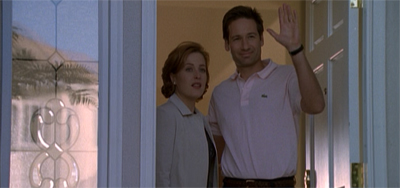
The Goldberg Variation is light entertainment. It is so light that there are points where it almost seems ready to float away. That may not be such a bad thing.
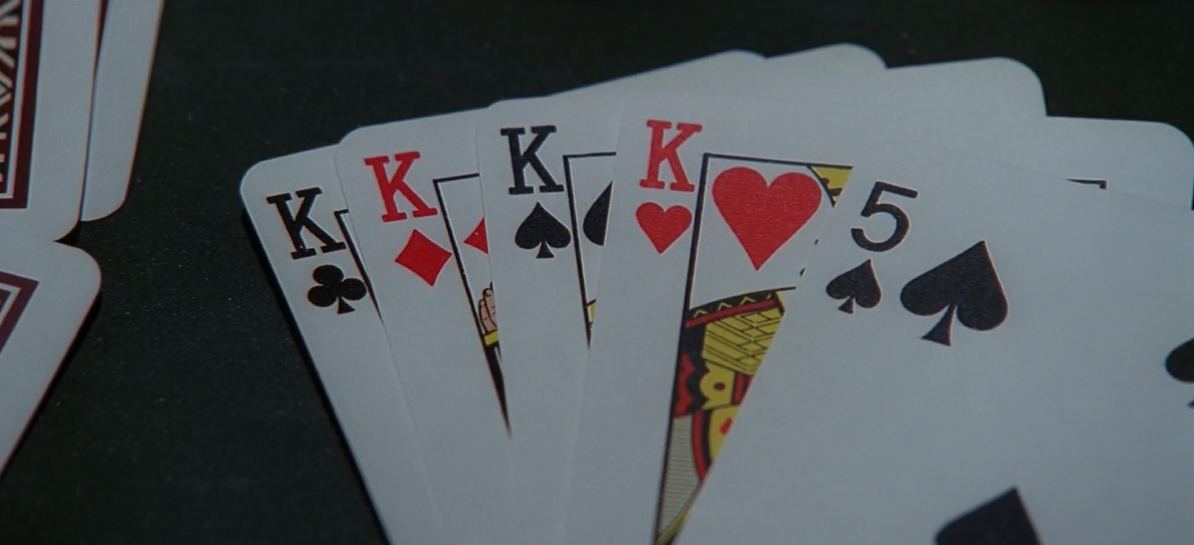
Sometimes you have to play the hand you're dealt...

Sometimes you have to play the hand you’re dealt…

Continue reading

The X-Files – Rush (Review)

This November, we’re taking a trip back in time to review the seventh season of The X-Files and the first (and only) season of Harsh Realm.

When did The X-Files get so old?

As with a lot of the seventh season, Rush is an episode that seems consciously aware of the series’ advancing age. Whether watching Mulder’s life go by in The Sixth Extinction II: Amor Fati or battling zombies in Millennium, the seventh season is acutely aware of the fact that any prime-time drama that has been on the air for seven years is rapidly approaching obsolescence. What was once young and fresh becomes old and tired. There is a sense that the series really wouldn’t mind the prospect of retirement, now that it’s well past the syndication mark.

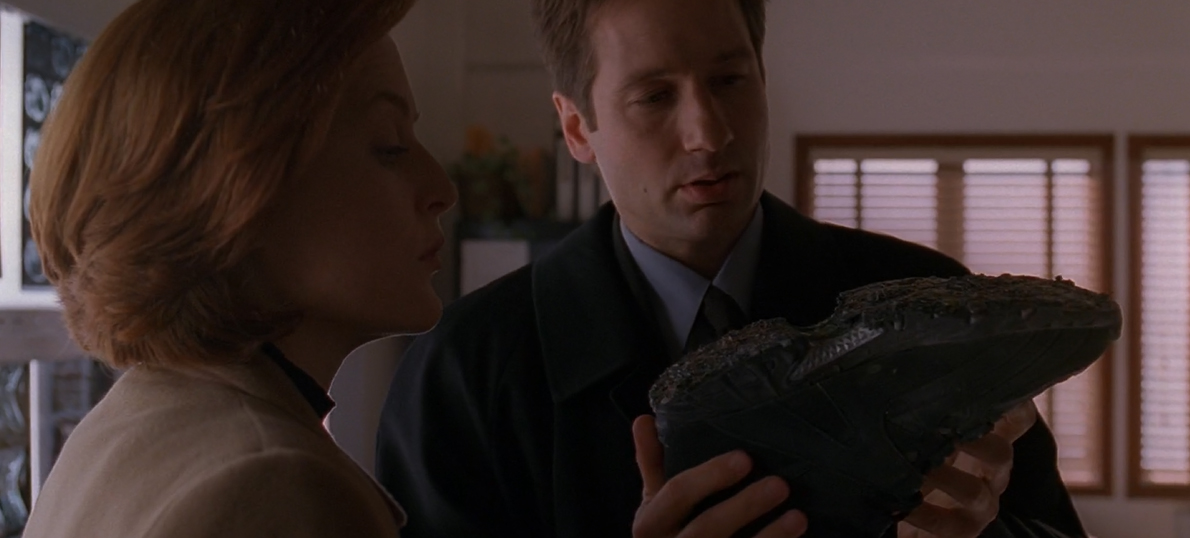
"He wore sneakers... for sneaking."

“He wore sneakers… for sneaking.”

Rush emphasises the advancing years of the show, often awkwardly putting its tongue in its cheeky as it suggests that Mulder and Scully are really lumbering dinosaurs trying to navigate the fast-paced world of high school. David Amann’s script is occasionally a little too wry and self-aware for its own good; this is an episode based around a laboured pun about how “speed” is also a drug, after all. Rush often demotes Mulder and Scully to passive observes, quipping and flirting from the sidelines as the plot unfolds around them.

Rush lacks the charm and dynamism that define the show’s (and the season’s) standout hours, but it is a well-constructed and enjoyable standalone adventure on its own terms. As with Hungry, it feels like a conscious effort to get “back to basics” with the series. If the seventh season is going to fixate on the series’ status as a televisual lame duck counting down its last few episodes, this is not such a bad way to do it.

Scully'll take a run at this...

Scully’ll take a run at this…

Continue reading

The X-Files – Millennium (Review)

This November, we’re taking a trip back in time to review the seventh season of The X-Files and the first (and only) season of Harsh Realm.

There are any number of ironies around the cancellation of Millennium.

The show was cancelled by Fox to make room for Harsh Realm, hoping that Chris Carter’s new show would perform better in the Friday night slot. Of course, that did not turn out to be the case; Harsh Realm was cancelled after only three episodes had been broadcast, all failing to even match the already low numbers of the third season of Millennium. A show in its third season was cancelled to make room for a hip new show that was pretty much dead on arrival. However, that is not the only irony.

Frank Black's return...

Frank Black’s return…

Millennium concluded with Goodbye to All That in May 1999. The show fell seven months shy of its own deadline. If Fox had commissioned only eight new episodes, the creative team would have been able to take the show right up to the turn of the millennium itself. (Well, in a way that would make sense to most viewers. “Nobody likes a maths geek, Scully.” Even one who is technically correct.) It seems like Frank Black would not get to see the arrival of the date that had defined his show. (It was the title, after all.)

If Christmas is the season of goodwill to all men, then it is a nice gesture that The X-Files invited Frank Black to ring in the new year (and the new millennium) with them. It might not be much more, but it is a nice gesture.

... is just one thing that fans remember about this episode.

… is just one thing that fans remember about this episode.

Continue reading

The X-Files – Hungry (Review)

This November, we’re taking a trip back in time to review the seventh season of The X-Files and the first (and only) season of Harsh Realm.

Hungry is an underrated episode of The X-Files.

Although it was the third episode of the season to air, it was actually the first episode produced, allowing David Duchovny and Gillian Anderson to ease themselves back into the demanding shooting schedule. As with Vince Gilligan’s script for Unusual Suspects, the idea was to write an episode that required as little of Mulder and Scully as possible. However, rather than building Hungry around an established member (or members) of the supporting cast, Gilligan decides to introduce a new character and make them the focus of the episode.

"I am sharkboy, hear me roar..."

“I am sharkboy, hear me roar…”

Hungry is not quite as experimental as X-Cops, but there is something deliciously subversive about telling a “monster of the week” story from the perspective of the monster. Gilligan is arguably building upon the work done by David Amann in Terms of Endearment, but Hungry is very much its own story. It pushes Mulder and Scully to the very edge of the narrative in a way that distorts many of the underlying assumptions about what The X-Files is and how it is supposed to work.

Hungry is proof that The X-Files still has legitimately great stories in it, even if the seventh season has a decidedly funereal atmosphere.

Brains...

Brains…

Continue reading

The X-Files – The Sixth Extinction II: Amor Fati (Review)

This November, we’re taking a trip back in time to review the seventh season of The X-Files and the first (and only) season of Harsh Realm.

My formula for greatness in a human being is amor fati: that one wants nothing to be different, not forward, not backward, not in all eternity. Not merely bear what is necessary, still less conceal it—all idealism is mendacity in the face of what is necessary—but love it.

– Friedrich Nietzsche, Ecce Homo

Everything burns...

Everything burns…

Continue reading

The X-Files – The Sixth Extinction (Review)

This November, we’re taking a trip back in time to review the seventh season of The X-Files and the first (and only) season of Harsh Realm.

The fate of individual human beings may not now be connected in a deep way with the rest of the universe, but the matter out of which each of us is made is intimately tied to processes that occurred immense intervals of time and enormous distances in space away from us. Our Sun is a second- or third-generation star. All of the rocky and metallic material we stand on, the iron in our blood, the calcium in our teeth, the carbon in our genes were produced billions of years ago in the interior of a red giant star. We are made of star-stuff.

– Carl Sagan’s Cosmic Connection

Sea of blood...

Sea of blood…

Continue reading

The X-Files – Season 6 (Review)

This July, we’re taking a trip back in time to review the sixth season of The X-Files and the third (and final) season of Millennium.

The sixth season of The X-Files is notable for many different reasons. It was the first season after the release of The X-Files: Fight the Future. It was the first season following the move to Los Angeles. It saw the “end” (at least nominally) of the show’s conspiracy mythology in the massive Two Fathers and One Son two-parter. It was the first season to begin closer to the end of the show’s nine-year run than to the beginning. It was also the first season to open past the hundred-episode mark.

That last landmark is important, because it marks the point at which The X-Files could effectively be sold into syndication. One hundred episodes meant that a network could air the show five nights a week for twenty weeks, filling up almost half a year’s worth of broadcasting slots. Reaching the one hundred episode mark meant that a show was a bona fides success, and that anything else was really just gravy on top. The bulk of the work had been done. The X-Files would be a rare prime-time drama to pass two hundred episodes.

xfiles-howtheghostsstolechristmas2a

Of course, times have changed. By 2011, the number of episodes required for a syndication deal had slipped from one hundred to a mere eighty-eight, with the goal being four seasons of twenty-two episodes. (This trend happened while The X-Files was on the air, with the show dropping from twenty-four or twenty-five episodes in a season at the start of its run to twenty-two or twenty towards the end.) Even then, streaming has changed the media landscape, making it more possible than ever to syndicate show with shorter runs, like Community.

So syndication beckoned for The X-Files. In fact, syndication would pose no shortage of trouble for the show in the years ahead. During the seventh season, David Duchovny would file a lawsuit against Fox alleging that the company’s syndication policy had cost him financially. After the show went off the air, Carter would find himself embroiled in a similar lawsuit over syndication rights, delaying production of The X-Files: I Want to Believe. There are worse ways to argue that The X-Files was a victim of its own success than to look at the syndication of the show.

xfiles-arcadia7

Nevertheless, it was clear that The X-Files had accomplished everything that it could ever want by the start of the sixth season. Chris Carter had his five seasons and a movie. Fox had a show they could syndicate. David Duchovny had forced the production to move to Los Angeles so that he could spend time with his family. Although nobody knew it at the time, the fifth season secured the highest rankings that a season of The X-Files would enjoy in the Nielsen Ratings. So going into the sixth season of The X-Files, there was only one question hanging in the air.

What now?

xfiles-therainking25

Continue reading

The X-Files – Biogenesis (Review)

This July, we’re taking a trip back in time to review the sixth season of The X-Files and the third (and final) season of Millennium.

‘When Alexan­der saw the breadth of his domain, he wept for there were no more worlds to con­quer.’ Ben­e­fits of a clas­si­cal education.

– Hans Gruber, Die Hard

In hindsight, “ending” the mythology with a two-parter in the middle of the season was always a risky proposition.

Airing Two Fathers and One Son during February Sweeps was a logical decision. Ending the mythology that had been running through the show for five-and-a-half seasons was certain to grab the attention of casual viewers, reeling them in to boast up ratings. The X-Files had always aired mythology two-parters during Sweeps, putting them forward as examples of the best that the series could do and cementing the show’s claim to be “blockbuster television.” Choosing to wrap up the mythology during February Sweeps was just an extension of that approach.

Look what just washed up...

Look what just washed up…

And it worked. Two Fathers earned the second highest Nielsen score of the sixth season, landing just behind The Rain King. Two Fathers was the last time that The X-Files would rate so highly. As such, the decision to “close off” the mythology in the middle of the season was a very shrewd decision. However, it did raise questions about what the show would do at the very end of season. After all, The X-Files liked to bookend its seasons with mythology episodes, counting on a mythology cliffhanger to carry viewers across the long gap between seasons.

How do you tell a mythology story when you’ve just worked so hard to tidy it all away?

Behind the curtain...

Behind the curtain…

Continue reading

The X-Files – Field Trip (Review)

This July, we’re taking a trip back in time to review the sixth season of The X-Files and the third (and final) season of Millennium.

Field Trip works well as the penultimate episode of the sixth season.

It returns to a lot of big ideas threaded through the sixth season, particularly as they relate to endings and mortality. It also pushes the bond between Mulder and Scully to the fore; it feels like something of a spiritual successor to both Bad Blood and Folie á Deux in its portrayal of the dynamic between Mulder and Scully, charting a rough arc in how Mulder and Scully come to see themselves and each other. Even beyond all that, it contains another surrogate romantic relationship for Mulder and Scully, this time in Wallace and Angela Schiff.

A lot to digest...

A lot to digest…

More to the point, Field Trip seems to hit on the core anxieties at the heart of the sixth season. It is a meditation on the show’s success and the status quo that has to be so careful maintained to keep the show from tipping over. As with TriangleDreamland IDreamland II, How the Ghosts Stole Christmas and Monday, our heroes find themselves trapped in something of a weird alternate reality. The climax of Field Trip hinges on both Mulder and Scully deducing that their world operates according to the logic of a television show.

However, Field Trip is perhaps most intriguing in the way that it proposes two separate endings to The X-Files. The humongous fungus at the heart of Field Trip offers both Mulder and Scully a conclusion to their six-year journey, an opportunity for closure and satisfaction. In doing so, Field Trip suggests that it is the central tension at the heart of The X-Files that keeps the show young. There is no way to end the show without absolutely and definitively declaring that one of the characters is right and the other is wrong.

Down the rabbit hole...

Down the rabbit hole…

As such, the endings seem mutually exclusive. Field Trip suggests that endings designed to satisfy Mulder and Scully and mutually exclusive and irreconcilable – recalling the implication in Bad Blood that both Mulder and Scully filter the same events through different lenses. However, Field Trip is rather more optimistic in its assessment of the dynamic between Mulder and Scully. While it might not be able to provide an ending to the show that satisfies both, Field Trip suggests that the duo have reconciled themselves to each other.

Whereas Bad Blood seemed to state that Mulder and Scully would never share the same perspective, Field Trip suggests that both characters have evolved and matured to the point where they can see the world through the eyes of the other. Bad Blood featured the two characters positing wildly different accounts of the same event, but Field Trip only resolves when Mulder and Scully come to share each other’s perspective. It feels entirely appropriate to close out the sixth season suggesting a new harmony between the two leads.

It's a dirty job...

It’s a dirty job…

Continue reading

The X-Files – Three of a Kind (Review)

This July, we’re taking a trip back in time to review the sixth season of The X-Files and the third (and final) season of Millennium.

Unusual Suspects is perhaps an underrated episode.

The third episode broadcast of the fifth season is a light adventure that offers viewers an origin story of the Lone Gunman. Byers, Langley and Frohike have been around since E.B.E. towards the end of the first season, and have become an integral part of the show’s ensemble cast. Unusual Suspects is frequently written off as a piece of fluff designed to work around the limited availability of David Duchovny and Gillian Anderson due to on-going production work on The X-Files: Fight the Future.

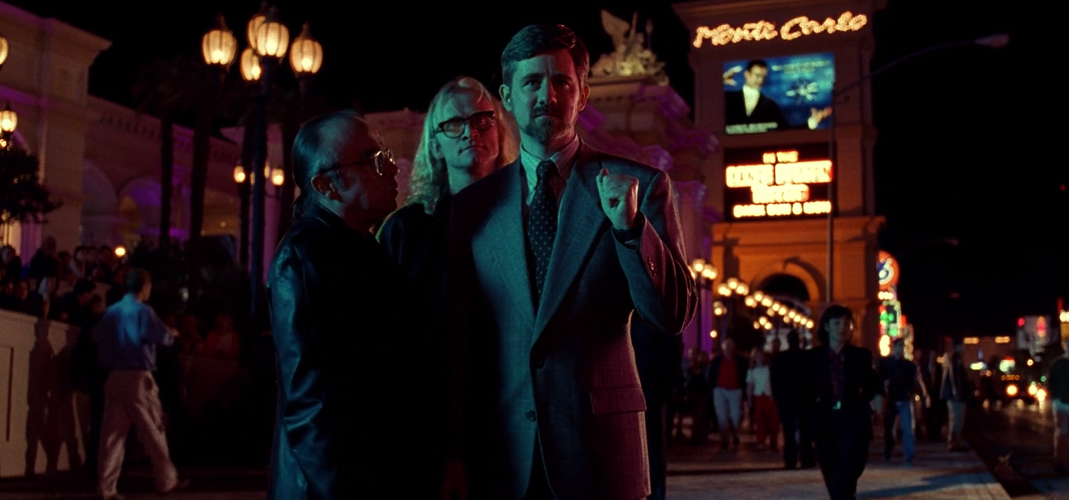
Viva Las Vegas...

Viva Las Vegas…

This seems dismissive of Vince Gilligan’s paranoid origin story, which is one of the few times that Gilligan engages directly with the themes that underpin the sprawling mythology at the heart of the show. Unusual Suspects is not a “mythology episode” in the way that gets episodes repackaged on DVD collections, but it does explore the idea of conspiracy and paranoia as a personal narrative. Unusual Suspects is a very sweet story about a lost and heartbroken man who builds a conspiracy mythology around himself because he has nothing else to do.

Three of a Kind is very much a sequel episode to Unusual Suspects, focusing again on the Lone Gunmen and bringing back Susanne Modeski. However, it is a much lighter and more disposable story. Barring the beautifully crafted prologue, Three of a Kind is an entirely disposable episode of television. It feels like filler. It is neither a beginning nor an end to the story of Byers or the Lone Gunmen. It is just a long middle, with the characters ending up back where they began. In a way, this makes it feel very much like a standard sixth season episode.

A man alone...

A man alone…

Continue reading