• Following Us

  • Categories

  • Check out the Archives


  • Awards & Nominations

Millennium – Gehenna (Review)

This February and March, we’re taking a trip back in time to review the fourth season of The X-Files and the first season of Millennium.

Written by Chris Carter and directed by David Nutter, Gehenna feels very much like a continuation of The Pilot.

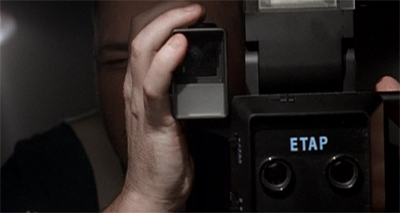
More to the point, it feels like a restatement of many of the key themes of The Pilot, an attempt to reinforce many of the core ideas in that first episode, and hint at something larger. In many ways, it is about ensuring that Millennium retains its identity as it transitions from a pilot that had a relatively relaxed schedule and high budget into a weekly (well, eight-day) production schedule. Gehenna is about Carter and Nutter proving that Millennium can do what it wants and needs to do week-in and week-out, while also indicating towards larger threads.
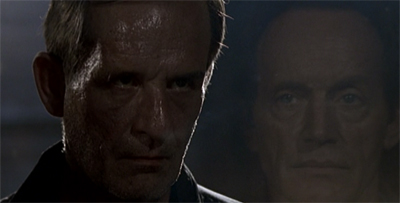
Touching (or, at least, seeing) evil...

Touching (or, at least, seeing) evil…

This isn’t a bad way to approach the first regular episode of a television series. Indeed, Carter had done something similar with The Pilot and Deep Throat on The X-Files, structuring the episodes as a one-two punch of reinforced themes and world-building. Gehenna is very much about convincing the audience that The Pilot was not just a flash in the pan, and that the series has a long clear arc ahead of it. Much like Deep Throat really sketched the outline of the alien conspiracy only hinted at in The Pilot, Gehenna features more than a few nods towards a larger evil at work in Frank’s world.

There are points where Gehenna feels a little bit too forced, and a little bit too eager to restate and repeat the themes and ideas of The Pilot. However, it is an interesting episode that does hint towards the show’s future in a number of interesting ways.
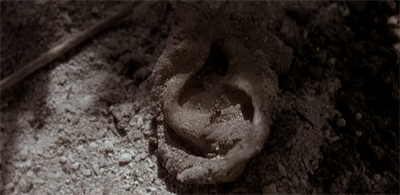
Ear today...

Ear today…

Continue reading

The X-Files (Topps) – The Silent Blade (Review)

This February and March, we’re taking a trip back in time to review the fourth season of The X-Files and the first season of Millennium.

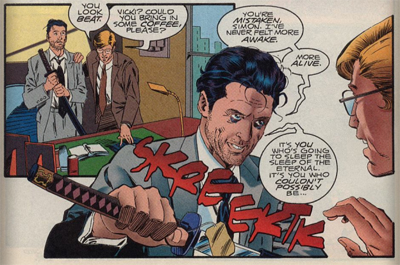
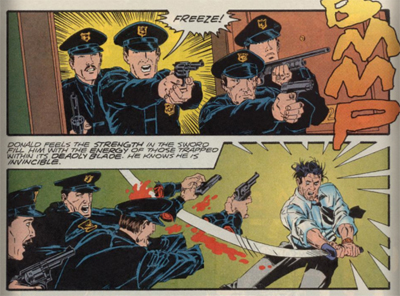
The Silent Blade is filler – one of those short stories that Topps produced as promotional material for wider consumption. In this case, as with The Pit, The Silent Blade was written as a short story to feature in the summer issue of The X-Files Magazine.

Writing a short story is tough. In some respects, writing a nine-page comic strip with a clear beginning, middle and end is harder than plotting a full-length issue or an entire arc. There is only so much space available, particularly when dealing with an exposition-heavy franchise like The X-Files. It can be tough to fit all the necessary ingredients in, let alone to put a novel twist on them. The temptation is to try to do too much with so little.

He won't be drawn on the matter...

He won’t be drawn on the matter…

Writer Stefan Petrucha and artist Charles Adlard had generally done well by their short stories, treating them as light and throwaway. They were not the strongest stories of the run, but they were aware of the limitations of the format and the expectations of the target audience. They were functional pieces of writing, aware of the limitations of the form. John Rozum’s first (and only) abridged X-Files story strains against those limitations.

After all, Rozum’s script for Thin Air had tried to fit too much into a full-length issue, so it makes sense that The Silent Blade is also a little too busy for its own good. This would be the last feature that Topps would produce for The X-Files Magazine, and the last of these sorts of short stories.

You have to do a lot of cutting to make a story this tight...

You have to do a lot of cutting to make a story this tight…

Continue reading

The X-Files – Unruhe (Review)

This February and March, we’re taking a trip back in time to review the fourth season of The X-Files and the first season of Millennium.

Unruhe was the first episode of The X-Files to air on Sunday nights.

The show had vacated its traditional Friday evening slot to make room for Millennium. It had been moved to Sunday evenings. Although the production team were initially quite cautious about the move, it would ultimately pay dividends for the show. The show had already become a mainstream hit, but the Sunday night slot would help to push it into the stratosphere. Airing alongside Fox’s other long-running success story, The Simpsons, the show would secure its highest ratings ever less than six months after moving into its new slot.

Photo copy?

Photo copy?

Of course, this also draws attention to another interesting facet of Unruhe. This was the first episode of The X-Files to air after Millennium hit the air. Unruhe aired two days after the pilot. The impact of Millennium has already been keenly felt on the fourth season of The X-Files in a number of ways; deadline and production issues hindered Herrenvolk, while James Wong and Glen Morgan had been drafted back to The X-Files to help shore up the fourth season. However, Unruhe seems to directly (and perhaps pointedly) acknowledge Chris Carter’s younger series.

Unruhe is an episode that would probably have been quite at home on Millennium. It is an episode that could easily have been re-worked or re-tooled for Carter’s new show – with only a few minor changes. With its serial offender, fascination with forensic psychology, and its grim reflection on mankind’s capacity for evil, it feels like an story that could comfortably have been told using Frank Black. While it serves to welcome Millennium to the genre neighbourhood, it also seems to suggest that Millennium might be a little redundant.

A walk among the tombstones...

A walk among the tombstones…

Continue reading

Millennium – Pilot (Review)

This February and March, we’re taking a trip back in time to review the fourth season of The X-Files and the first season of Millennium.

You think you’re protecting me but you make it worse, Frank. You can’t shut the world out for me. You can’t ask me to pretend that I don’t know what you do.

Everyone pretends. We all make believe. These men I help catch – make us.

We’re raising a daughter, Frank. The real world starts to seep in. You can’t stop it.

I want you to make believe that I can.

Fade to Black...

Fade to Black…

Continue reading

The X-Files (Topps) #18-19 – Night Lights (Review)

This February and March, we’re taking a trip back in time to review the fourth season of The X-Files and the first season of Millennium.

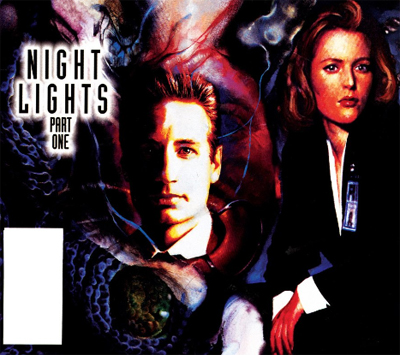
With Night Lights, incoming X-Files writer John Rozum teams up with veteran X-Files artist Charles Adlard. While Stefan Petrucha’s involvement in the line was pretty much finished, pending the release of Afterflight, Adlard would work as part of the book’s rotating art team for a while longer.

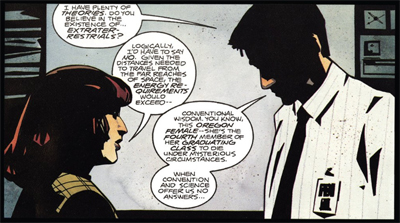
Thin Air made it quite clear that Rozum was going to be writing a more traditional X-Files comic book than his predecessor. Stefan Petrucha seemed happy to stretch the series as far as possible, to tease out big ideas about The X-Files and to play with the show’s sacred cows. The result was always intriguing, even if it sometimes went a little beyond what readers would have expected from a comic book based on The X-Files.

We will be gods, on night lights...

We will be gods, on night lights…

Rozum’s stories tend to be a bit more straightforward. They are very much conventional X-Files stories. They hue closer to the standard formula, and feature a whole host of expected ingredients. Thin Air was a very conventional and fairly rote X-Files story, particularly following on from stories like Falling or Home of the Brave. Rozum appeared to have some teething troubles, particularly when it came to pacing and characterisation.

While Night Lights feels a little too jumbled and confused to really work, it does seem a lot more confident and assured. The comic has a host of good ideas, and moves considerably smoother than Thin Air did. In fact, there is a rather brilliant idea nestled at the heart of the story. Rozum just buries it a little too well.

Keep watching the skies...

Keep watching the skies…

Continue reading

The X-Files – Teliko (Review)

This February and March, we’re taking a trip back in time to review the fourth season of The X-Files and the first season of Millennium.

The very premise of Teliko is something that should probably have big flashing warning lights around it.

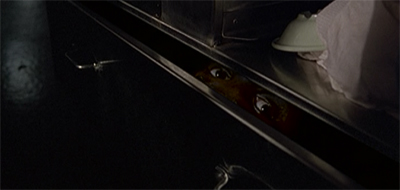
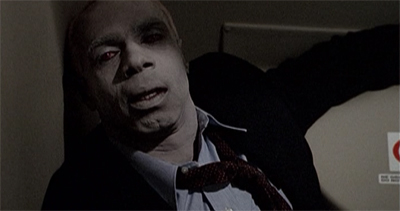
Teliko is an episode about an immigrant from Burkina Faso who celebrates his arrival by murdering within the African-American community. As such, it is the kind of story that the production team has to be very careful in handling. It could easily become a horrendously xenophobic anti-immigration story, a warning about the dangers of opening the borders to foreigners from cultures that are different to our own. And that is even before the episode decides to have the monstrous murderers turn his African-American victims white.

Top drawer...

Top drawer…

Writer Howard Gordon has navigated this sort of minefield before. Fresh Bones was a voodoo story set within a Haitian refugee camp. As such, it came with many of the same sorts of latent issues. It would be very easy to put a foot wrong, to turn the story into a collection of unpleasant and reactionary stereotypes that painted the foreign as inherently and undeniably horrific. Gordon’s script for Fresh Bones cleverly side-stepped a lot of these problems, becoming one of the strongest scripts of the second season.

While Teliko makes a conscious effort to avoid these potential hurdles, it isn’t quite as quick on its feet.

It's okay. Everybody gets a little airsick.

It’s okay. Everybody gets a little airsick.

Continue reading

The X-Files (Topps) #17 – Thin Air (Review)

This February and March, we’re taking a trip back in time to review the fourth season of The X-Files and the first season of Millennium.

By all accounts, this was the kind of creative team that Ten Thirteen Productions probably wanted on Topps’ X-Files comic since the start.

Stefan Petrucha and Charles Adlard had done a phenomenal amount of work on The X-Files comic line. They had written sixteen issues of the monthly series, an annual, two digests and a slew of short stories scattered across various forums. However, it was quite clear that their approach to the comic was not quite what Ten Thirteen had hoped for when they licensed the comic to Topps. Petrucha’s scripts were ambitious, bold and playful; they were occasionally downright cheeky. Adlard was a master of mood and expression; he was less suited to likeness.

Here come the men in black...

Here come the men in black…

This had caused no small amount of friction between the production company and the creative team. By all accounts, the working relationship between Petrucha and the production company was quite strained. Eventually they fired him from the comic, making Home of the Brave the last story written by Stefan Petrucha and Charles Adlard on Topps’ The X-Files comics. Given the two had been with the comic from the start, this was quite a radical change.

However, this did allow Topps to put a team more agreeable to Ten Thirteen’s demands on the comic.

"I call it blue steal..."

“I call it blue steal…”

Continue reading

The X-Files – Home (Review)

This February and March, we’re taking a trip back in time to review the fourth season of The X-Files and the first season of Millennium.

Home is a big one.

It is an episode that is frequently ranked among the best that the show ever produced. It is an episode that many viewers remember quite clearly, even if they only saw it once years earlier. It was the first episode of the show to receive a viewer discretion warning on initial broadcast and was famously never repeated on the Fox Network. “It had one airing and then it was banned,” writer Glen Morgan quipped. “Jim and I don’t get rerun money for that.” It is also one of the rare episodes of The X-Files that is not explicitly paranormal in its subject matter, instead wandering into the macabre and the taboo.

Here there be monsters...

Here there be monsters…

Home also marks the return of writers Glen Morgan and James Wong to the series, following the cancellation of Space: Above and Beyond. With the debut of Millennium looming, the production team on The X-Files was under pressure. Fox had convinced Morgan and Wong to return to Ten Thirteen in return for producing a pilot for The Notorious Seven, one the duo’s long-gestating ideas. Morgan and Wong would produce four episodes of the fourth season of The X-Files and three episodes of the first season of Millennium.

Home is the first of their four scripts for the fourth season of The X-Files, and it sets the mood quite well. Returning from Space: Above and Beyond, the two seemed to be bristling with an electric energy and a palpable frustration. While not all four scripts are unqualified masterpieces, they each serve to push The X-Files further than it has gone before. Perhaps the most surprising thing about Home is that it is the most conventional of these four explosive scripts.

The mother of all problems...

The mother of all problems…

Continue reading

The X-Files: Season One (Topps) #0 – Pilot (Review)

This February and March, we’re taking a trip back in time to review the fourth season of The X-Files and the first season of Millennium.

Given the success of the monthly comic book series, it made sense for Topps to try to capitalise on The X-Files as much as possible. The series was exploding into the mainstream. Chris Carter was launched a second television show, Millennium, to capitalise on the success. Fox were planning to move the series to Sunday nights. There was already talk about a possible movie franchise. This was a great time to be publishing X-Files comics.

Topps had already used the series to sell “digests” packed with unrelated comics, and had published annuals to get a little extra sales revenue into the fiscal year. However, there was a clear desire to publish more X-Files work with more consistency. Ideas began to percolate – Kevin J. Anderson would pen a miniseries based on his Ground Zero novel during the show’s fifth season, for example. The company also decided to publish a series of comic books adapting early episodes of the series.

The truth is out there...

The truth is out there…

The series didn’t properly launch until the following year, with a series of monthly adaptations of first season episodes running from the start of the fifth season through to the month following the release of X-Files: Fight the Future. Conveniently titled Season One, these comics were only cancelled when Topps folded its comic book division – vanishing quite suddenly from the stands, with little warning.

The adaptation of The Pilot was actually released a year earlier than the monthly series – it was re-packaged and re-released once Topps committed to a monthly series of adaptations. As such, it makes for a strange teaser of things to come.

This could be the start of a beautiful friendship...

This could be the start of a beautiful friendship…

Continue reading

The X-Files – Herrenvolk (Review)

This February and March, we’re taking a trip back in time to review the fourth season of The X-Files and the first season of Millennium.

After Talitha Cumi, Herrenvolk cannot help but seem like a little bit of a disappointment.

Towards the end of the episode, the Alien Bounty Hunter hunts down Jeremiah Smith. Mulder begs for mercy, but the Bounty Hunter will hear nothing of it. “He shows you pieces, but tells you nothing of the whole,” the Bounty Hunter remarks to Mulder. It feels like that sentiment encapsulates Herrenvolk in a nutshell. Mulder goes on the run with Jeremiah Smith and sees a collection of vague but compelling things that may or may not tie into colonisation.

"Now you're thinking, 'I hope that's shepherd's pie in my knickers!'"

“Now you’re thinking, ‘I hope that’s shepherd’s pie in my knickers!'”

Like a lot of the mythology in the fourth and fifth seasons, it feels like a holding pattern. Talitha Cumi was surprisingly candid in its revelations. The aliens were plotting to colonise Earth in collaboration with the human conspirators. The date had been set, the plot was in motion. That was a pretty big bombshell, confirmed in unequivocal terms. It was arguably the clearest and most transparent that the conspiracy arc would ever be. There was a clear goal, a deadline, and a sense of purpose.

Almost immediately, Herrenvolk works to muddy the water. It stalls, it procrastinates, it delays, it evades. It is a plot structured around a collection of ominous conspiracy buzz words (DNA, smallpox, colonies, clones) without a clear purpose or objective.

A bloody mess...

A bloody mess…

Continue reading