• Following Us

  • Categories

  • Check out the Archives


  • Awards & Nominations

Millennium – Saturn Dreaming of Mercury (Review)

This July, we’re taking a trip back in time to review the sixth season of The X-Files and the third (and final) season of Millennium.

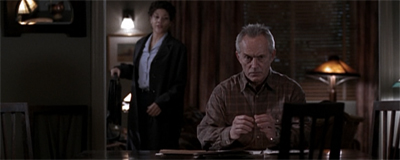
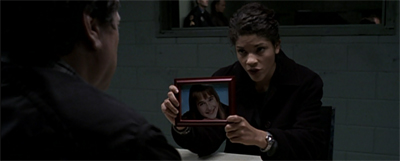
That’s an intense little girl you’ve got there.

Intensity’s fine.

– Emma and Frank discuss how Jordan takes after her father

"Quiet. I'm trying to figure out the title."

“Quiet. I’m trying to figure out the title.”

Continue reading

Millennium – Forcing the End (Review)

This July, we’re taking a trip back in time to review the sixth season of The X-Files and the third (and final) season of Millennium.

In its own odd way, Forcing the End is reassuring.

Not in any way that makes Forcing the End a good piece of television. In fact, Forcing the End is a terrible piece of television. It is poorly written, awkwardly staged, horribly muddled and needlessly convoluted. It wastes two potentially interesting guest stars in Julie Landau and Andreas Katsulas, and doesn’t give our characters anything interesting to do. The best that can be said bout Forcing the End is that it has some interesting ideas and striking imagery, but never seems to be able to fashion them into a functioning story.

"Wait. What."

“Wait. What.”

However, Forcing the End is reassuring because it stands as a monument to the second season of Millennium. The second season of Millennium was a gloriously odd and ambitious piece of television, one that floated ideas and concepts that often seemed insane or ridiculous. It was unlike anything else on television, and holds up rather well. However, the second season of Millennium is interesting because it invites the viewer to wonder whether to is fueled and sustained by its high concepts and big ideas, rather than its scripting and plotting.

Forcing the End answers that question rather clearly. It confirms that the second season works as well as it did because it was well written and beautifully constructed; carefully put together and meticulously crafted. It is not enough to just throw crazy apocalyptic concepts and imagery at the screen and see what sticks. The fact that Forcing the End is so packed with weird eschatological imagery and themes, and yet so stubbornly refuses to work, demonstrates that it is not enough for television to be odd. It has to be good.

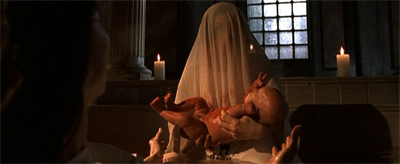
Veiled threats...

Veiled threats…

Continue reading

Millennium – Matryoshka (Review)

This July, we’re taking a trip back in time to review the sixth season of The X-Files and the third (and final) season of Millennium.

It seems like every time that the third season of Millennium takes a step forward, it is simply preparing to take a tumble backwards.

After spending over a third of the season trying to rewrite the events of the second season, it seemed like the show was finally accepting the changes that had been made by Glen Morgan and James Wong over the course of the sophomore year. Omertà, Borrowed Time, Collateral Damage and The Sound of Snow had all seen the show trying to make its peace with the loss of Catherine Black and the changes to the Millennium Group stemming from the second season finalé. It looked like the show was working through its conflicted feelings, and was ready to move on.
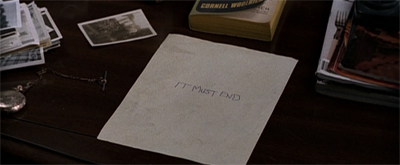
Perhaps it must...

Perhaps it must…

However, both Antipas and Matryoshka represent a very clear step backwards. Antipas feels like an attempt to return to the mood and aesthetic of the late first season (and first season characterisation of Lucy Butler) with no regard for what came afterwards. Matryoshka attempts to reintroduce the sort of clumsy revisionist rewriting of Millennium‘s internal continuity in a manner that evokes The Innocents or Exegesis or Skull and Bones. It presents a secret history of the Millennium Group that heavily contradicts The Hand of St. Sebastian.

There is a host of potentially interesting stuff buried under all of this, but – as with a lot of the third season – it is very hard to care about a show more invested in playing ping-pong with its own history than in trying to tell a new and compelling story. It seems like the most striking thing about most third season episodes is how they engage with what came before, more than what they are actually trying to do. Watching the third season, it seems like the Millennium writing staff is just as divided as the Millennium Group was in Owls and Roosters.
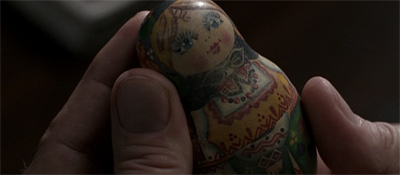
Nesting dolls...

Nesting dolls…

This approach is self-defeating on a number of levels. The second season was admittedly divisive among fans, but it seems like the third season simply cannot get past The Fourth Horseman and The Time is Now in any meaningful fashion. Fans who enjoyed the second season will inevitably feel frustrated by the repeated efforts to minimise or over-write it. Fans who disliked the second season will grow increasingly annoyed that the show is still fixated upon it. Any viewers without a working knowledge of the history of the show are likely to just be confused and befuddled.

Matryoshka is not the worst offender for this sort of confused self-contradiction and self-fixation, but there is a sense that Millennium‘s fascination with the continuity (or lack thereof) of the second season has already passed to point of diminishing returns. Much like the script for Matryoshka, it seems like the third season of Millennium is trapped in the past.
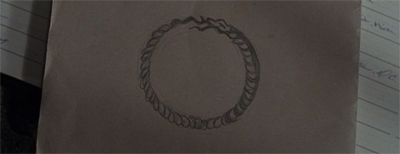
Eating its own tale...

Eating its own tale…

Continue reading

Millennium – Antipas (Review)

This July, we’re taking a trip back in time to review the sixth season of The X-Files and the third (and final) season of Millennium.

Antipas is the second of three scripts written by Chris Carter and Frank Spotnitz over the third season of Millennium. It is also the first of Lucy Butler’s two appearances during the third season, although she has little more than a cameo in Saturn Dreaming of Mercury. This is actually the second time that Chris Carter has written for the character of Lucy Butler, having scripted her début back in Lamentation towards the end of the first season. Antipas feels like a conscious effort to connect back to that first appearance.

To be fair, Lucy Butler has been radically different in each appearance. It is difficult to get a read on the character or to suggest a “definitive” take. Finding the “real” Lucy Butler is as difficult as identifying the “real” Millennium Group or as arbitrary as naming the “real” version of Millennium. That said, there are thematic throughlines. Four of her five appearances are tied into children, for example; the show fairly consistently portrays Lucy as a demonic mother figure in contrast to Frank as a loving father.

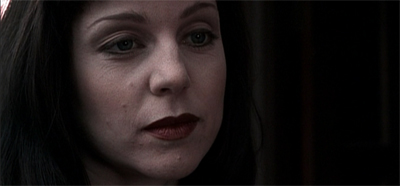
Here's Lucy!

Here’s Lucy!

While the idea of Lucy as a creepy mother ties Antipas into A Room With No View just as much as Lamentation, the script seems to hark more firmly back to Lucy’s character motivation in Lamentation than to her scheming in A Room With No View. In Antipas, Lucy is once again obsessed with biological motherhood, trying desperately to conceive – and even to claim another child as her own. In Lamentation, she sought to mother a child with Doctor Ephraim Fabricant; in Antipas, she seems to aspire towards Frank Black.

Along the way, Antipas is packed with fevered dream imagery and uncanny visuals. As with a lot of the episodes around it, Antipas feels like a very odd piece of television. When Carter wrote Lamentation, this oddness was enough of a break from the norm to power an entire episode. Antipas lacks the sort of strong centre that a piece of television like this needs to ground it. The result is an intriguing and unsettling, if not quite compelling and engrossing, episode of television.

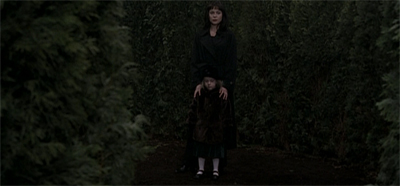
A-mazing nanny...

A-mazing nanny…

Continue reading

Millennium – The Sound of Snow (Review)

This July, we’re taking a trip back in time to review the sixth season of The X-Files and the third (and final) season of Millennium.

“Our pasts are what we are,” Alice Severin explains to Emma Hollis and Bob Giebelhouse towards the climax of The Sound of Snow. It seems as if she might be talking for Millennium itself.

The Sound of Snow is a literal homecoming for Frank Black and Millennium as a television show. It is the last time that a number of crucial elements of Millennium appear in the show. It is the last appearance of Detective Bob Giebelhouse, the Seattle police officer who has been around since The Pilot. It is the last appearance of the yellow house, although it has since been painted a less striking white. It is also the last appearance of Catherine Black, who was a regular character for the show’s first two seasons.

...............

……………

The Sound of Snow features Frank Black returning to Seattle. This is not a big deal of itself. After all, Frank visited Seattle during TEOTWAWKI. However, The Sound of Snow sees Frank wading through memories. He flashes back to the events of The Fourth Horseman and The Time is Now, and visits the yellow house. He even takes a trip out to visit the cabin where he tried to wait out the end of the world with his wife and daughter. The Sound of Snow is about reconciliation, allowing Frank one last conversation with his beloved.

The Sound of Snow is also about reconciliation for the show itself. Since Omertà, the show has been trying to deal with the legacy of a second season that the first eight episodes of the year had tried minimise or ignore. The Sound of Snow is the culmination of that approach, with the third season finally picking up from where the second season let off.

...............

……………

Continue reading

Millennium – Collateral Damage (Review)

This July, we’re taking a trip back in time to review the sixth season of The X-Files and the third (and final) season of Millennium.

Collateral Damage continues the weird healing process at work in the third season.

After spending so much time pretending that the second season never actually happened, the third season has finally accepted that there were story developments flowing from that season that the show needs to deal with. In some respects, Collateral Damage can be seen as a process of healing and integration for the third season of Millennium, constructing a story that manages to tie together all three seasons of Millennium together into something resembling a cohesive whole.

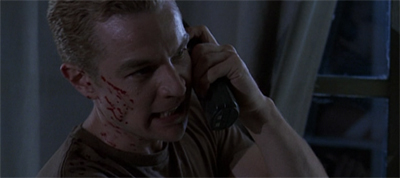
"A bloody fine mess you've gotten me into!"

“A bloody fine mess you’ve gotten me into!”

From the first season, Collateral Damage takes its introduction and basic premise. Collateral Damage begins in a manner similar to many early Millennium episodes. A sinister attacker stalks their victim and brutally strikes. We are then treated to a few extended suspense-filled sequences as the attacker’s designs become increasingly uncomfortable and nefarious. It is not too hard to imagine Collateral Damage as the kind of “serial killer of the week” episode that populated the early first season.

For the second season, Collateral Damage inherits its fascination with the Millennium Group and its depiction of Peter Watts. Collateral Damage marks the first point in the third season where Peter Watts feels like the character that we watched grow and evolve over the second season. This is a version of Peter who has so repressed his doubts and uncertainties that they threaten to explode if they are even acknowledged. It is a much more compelling character than the knock-off conspirator featured in episodes like Exegesis and Skull and Bones.

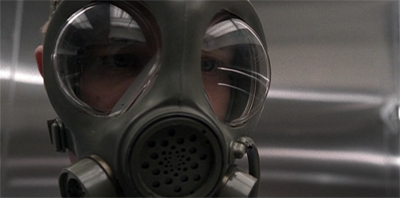
"Don't be afraid."

“Don’t be afraid.”

From the third season, Collateral Damage takes its fixation on the link between the Millennium Group and conspiracies involving the American government. Collateral Damage suggests that the Millennium Group is responsible for Gulf War Syndrome. It feels like a plot point from an episode of The X-Files – and arguably makes it an ideal third season element. The result is perhaps the most all-encompassing episode of the show ever produced. Collateral Damage is not the best episode of Millennium ever produced, but it is perhaps the broadest representation of the show itself.

If you were to pull back and examine Millennium from a distance, it might look a lot like Collateral Damage.

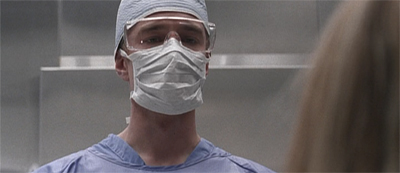
"Surgical strike."

“Surgical strike.”

Continue reading

Millennium – Borrowed Time (Review)

This July, we’re taking a trip back in time to review the sixth season of The X-Files and the third (and final) season of Millennium.

The third season of Millennium is all over the map.

Due to a variety of factors, the show veers wildly in just about every direction. The transition from the second season to the third season was tough on everybody involved, but even the third season itself went through considerable issues. Michael Duggan was brought in to steady the ship, but his approach didn’t really work out. He departed the show a third of the way through the season. As a result of all of this, the third season can often seem disjointed and uneven. It is hard to tie it all together.

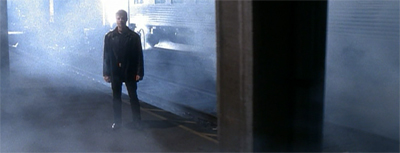
Angel of mercy?

Angel of mercy?

At the same time, there are certain recurring motifs and ideas that recur through the twenty-two episode season. A lot of these can be traced back to writer Chip Johannessen (with a great deal of help from Ken Horton). Johannessen was the consistent voice across all three seasons of Millennium, and an executive producer for the entirety of the third season. Although given a seemingly impossible task, Johannessen did work really hard to impose something resembling order upon the chaotic third season.

Borrowed Time hits on a lot of the ideas running through the third season. It is a story that suggests Millennium is about the fragile balance between life and death, and that death is not as much of an absolute as earlier seasons might have suggested. Borrowed Time is a little uneven and messy in places, but it is underscored by a host of bold and interesting ideas. It finds Johannessen engaging with the religious and mystical themes that informed early scripts like Force Majeure and Maranatha.

Countdown...

Countdown…

Continue reading

Millennium – Omertà (Review)

This July, we’re taking a trip back in time to review the sixth season of The X-Files and the third (and final) season of Millennium.

It might not feel like it – particularly while actually watching the episode – but Omertà does represent something of a shift in the third season of the show.

Although it was the ninth episode of the third season to be broadcast, it was the eighth produced. It was held back so that it could be broadcast closer to Christmas, in keeping with the themes of the show. As a result, it was the first episode of the third season not to be produced by Michael Duggan. Chip Johannessen is the only “executive producer” listed before Chris Carter at the end of the episode. In a way, shuffling Michael Duggan’s script for Human Essence back earlier in the broadcast order might have been a good thing; it makes for a cleaner break.

"Merry Christmas, Mr. Black."

“Merry Christmas, Mr. Black.”

Omertà is not a great piece of television, by any measure. It is not even a good piece of television, by most measures. However, it does mark a point of transition for the third season of Millennium. Omertà begins a run of episodes that deal substantively with the legacy of the show’s second season, and which engage with grand themes of death and spiritual rebirth. The third season of Millennium is a thematic mess, but Omertà represents a point where it seems like the creative team might finally be getting a grip on things, almost half-way through the year.

None of this makes Omertà any easier to watch, but it does provide an intriguing prism through which the episode might be viewed.

"Tonight, we're gonna party like it's 1989!"

“Tonight, we’re gonna party like it’s 1989!”

Continue reading

Millennium – Human Essence (Review)

This July, we’re taking a trip back in time to review the sixth season of The X-Files and the third (and final) season of Millennium.

Human Essence is the second (and final) script from Michael Duggan. It is also, notably, the first episode of the third season not to credit Duggan as an “executive producer” before the final credits.

Human Essence is a terrible episode of television. However, it is interesting to note that it is mostly terrible in ways that generic television can be terrible. The third season of Millennium is often terrible because of decisions or realities imposed by or resulting from creative decisions relating to the show itself. In the case of something like Through a Glass Darkly, the terribleness results from a perfect storm of vices associated with Millennium as a show. The Innocents and Exegesis are hobbled by choices made about the direction of the show.

Here there be monsters...

Here there be monsters…

Human Essence is terrible in a much more generic way. It would be a terrible episode of just about any television show. One of the problems with the episode is that it feels like it could easily be a terrible episode of just about any television show. With some light revisions, Human Essence could easily become a terrible episode of The X-Files or a terrible episode of Law & Order. Change the character names, tweak the dialogue a little. It wouldn’t take more than some light scrubbing to remove any hint of Millennium from the script.

However, it would take significantly more scrubbing to get the smell of crap off the script.

Yeah. We're hip.

Yeah. We’re hip.

Continue reading

Millennium – Through a Glass Darkly (Review)

This July, we’re taking a trip back in time to review the sixth season of The X-Files and the third (and final) season of Millennium.

Through a Glass Darkly is a terrible piece of television.

There is no nice way to say it. There is no excusing it. Through a Glass Darkly is an absolutely wretched script directed in a cloying manner. It is cliché, it is clumsy, it is trite. It is manipulative and cynical. There are no redeeming features to Through a Glass Darkly beyond the fact that it makes Human Essence and Omerta look significantly better than they actually are. This is an abysmal production, and one of the worst forty-five minutes of television that Ten Thirteen has broadcast to this point. It is up there with Excelsis Dei.

"You are a paedophile, you are a nonce, you're a perv, you're a slot badger, you're a two pin din plug, you're a bush dodger, you're a small bean regarder, you're an unabummer, you're a nut administrator, you're a bent ref, you're the crazy world of Arthur Brown, you're a fence foal, you're a free willy, you're a chimney bottler, you're a bunty man, you're a shrub rocketeer..."

“You are a paedophile, you are a nonce, you’re a perv, you’re a slot badger, you’re a two pin din plug, you’re a bush dodger, you’re a small bean regarder, you’re a unabummer, you’re a nut administrator, you’re a bent ref, you’re the crazy world of Arthur Brown, you’re a fence foal, you’re a free willy, you’re a chimney bottler, you’re a bunty man, you’re a shrub rocketeer…”

Child sex abuse is an absolutely horrific reality. The world is not always a nice place, and the world is not always a safe place. In the late nineties, film and television were growing more comfortable with exploring and addressing issues of child abuse. However, it was something that needed to be handled with a great deal of care and skill. Millennium had already learned how difficult it could be to tell a story about child abuse, with Chris Carter’s well-intentioned but clumsy The Well-Worn Lock.

Through a Glass Darkly manages to retroactively make The Well-Worn Lock seem like a work of genius.

 "...this paedophile has disguised himself as a school in Sheffield."

“…this paedophile has disguised himself as a school in Sheffield.”

Continue reading