• Following Us

  • Categories

  • Check out the Archives


  • Awards & Nominations

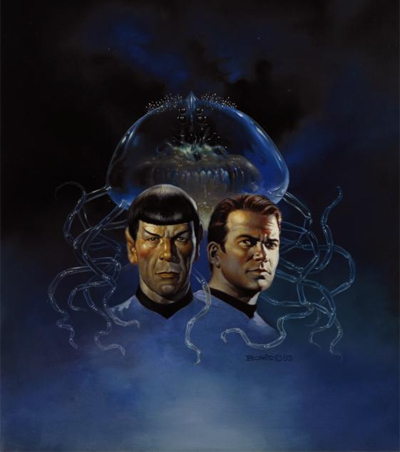
Star Trek – The Entropy Effect by Vonda N. McIntyre (Review)

This June, we’re taking a look at some classic Star Trek movie tie-ins and other interesting objects. Check back daily for the latest reviews and retrospectives.

The Pocket Books Star Trek line has to be one of the most stable and successful tie-in book ranges in the world. While the comic book license has bounced from publisher to publisher, Star Trek prose has remained firmly rooted at Pocket Books through the highs and the lows of the Star Trek franchise. This is undoubtedly because Pocket Books is a subsidiary of Simon and Schuster, which has been owned by the company that has owned Star Trek since 1975.

As such, from 1979 until the present day, Pocket Books has produced an incredible amount of tie-in material to support the Star Trek franchise. From reference material through to novels set within the fictional universe, the line has published a wealth of material across all the shows and all the time frames. Indeed, Pocket even launched their own separate spin-off brands run by authors like Peter David or Keith R.A. DeCandido.

While Gene Roddenberry’s novelisation of Star Trek: The Motion Picture was the first official Star Trek novel published by Pocket Books, and the line had published a number of reference books in the interim, Vonda N. McIntyre’s The Entropy Effect is the first original novel published by Pocket Books. In many ways, the influence of McIntyre’s work is still being felt, as she demonstrated how best to approach a Star Trek tie-in novel.

theentropyeffect

Continue reading

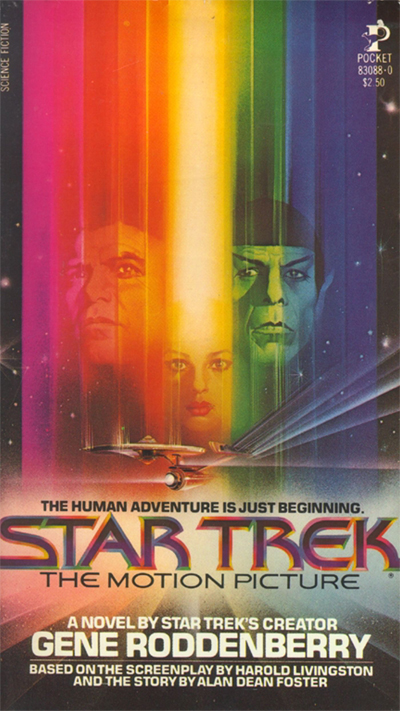
Star Trek: The Motion Picture by Gene Roddenberry (Review)

This June, we’re taking a look at some classic Star Trek movie tie-ins and other interesting objects. Check back daily for the latest reviews and retrospectives.

Star Trek: The Motion Picture is heavily influenced by Gene Roddenberry. It’s a piece of work that serves as an example of Roddenberry’s vision of the franchise – what he felt Star Trek should look like in the late seventies and beyond. Much like the first and second seasons of Star Trek: The Next Generation, there’s a sense that this is the perfect distillation of Roddenberry’s later-day version of Star Trek, distinct from the versions that existed before and afterwards.

Although Roddenberry doesn’t have a writing or story credit on The Motion Picture, his influence is keenly felt; right down to hiring a bona fides science-fiction writer (Alan Dean Foster) to provide the story. (After hearing pitches from other authors like Ray Bradbury, Harlan Ellison and Theodor Sturgeon.) This was in keeping with his work on the early seasons of the show, where he tried to convince published science-fiction authors to contribute to Star Trek.

While Roddenberry doesn’t have a writing credit on the film, he did write the novelisation of the screenplay, which serves as a direct insight into how Roddenberry approached the franchise and how he saw Star Trek in 1979.

st-tmp-roddenberry

Continue reading

Star Trek: Phase II (1978) – In Thy Image (Review)

This June, we’re taking a look at some classic Star Trek movie tie-ins. Check back daily for the latest reviews and retrospectives.

It’s interesting to imagine what might have happened if Star Trek: Phase II had actually made it to television.

The aborted attempt to produce a sequel live-action television show in the late seventies was ultimately scuppered by the success of films like Star Wars and Close Encounters of the Third Kind. Prompted by the success of these big-screen science-fiction epics, Paramount pushed for the franchise to move to the big screen. Star Trek: Phase II was abandoned and the pilot – In Thy Image – was reimagined as the script for Star Trek: The Motion Picture.

Many, including Judith and Garfield Reeves-Stevens, have argued that this was for the best. They wonder whether Phase II could have competed in the saturated science-fiction market of the late seventies. After all, one of the factors that lead to the decline of the franchise in the late nineties was the abundance of similar material out there. Given that the plan was to use Phase II to launch a television network, the obvious point of comparison as Star Trek: Voyager, which is not a favourable comparison.

Still, despite all this, it’s hard not read In Thy Image and wonder at what might have been.

st-iti7

Continue reading

Star Trek/X-Men: Star TreX (Review)

This January and February, we’ll be finishing up our look at the second season of Star Trek: The Next Generation and moving on to the third year of the show, both recently and lovingly remastered for high definition. Check back daily for the latest review.

We’ll be supplementing our coverage of the episodes with some additional materials – mainly novels and comics and films. This is one such entry.

Being honest, I’m surprised that it took this long for one of the comic book publishers working with a Star Trek license to come up with the idea of crossing over Star Trek with one of their comic book properties. After all, Barbara Hambly’s Ishmael crossed the franchise over with Here Come the Brides, another piece of cult sixties television. Crossing Star Trek over with a decidedly pulpy comic book franchise was really the next logical step.

Indeed, while DC Comics would eventually get involved in the publication of a crossover with The Legion of Superheroes, I remain surprised that they never tried to cross the franchise over with Green Lantern while they were publishing monthly Star Trek comic books. Both franchises are products of a sixties outlook on space travel and on America’s post-war role in the wider world (and, well, universe), and they’d be tailor-made to fit together.

However, it wasn’t until Marvel managed to secure the Star Trek license in 1996 that our heroes had their first encounter with a proper superhero franchise.

X-over...

X-over…

Continue reading

Star Trek – Sarek by A.C. Crispin (Review)

This January and February, we’ll be finishing up our look at the second season of Star Trek: The Next Generation and moving on to the third year of the show, both recently and lovingly remastered for high definition. Check back daily for the latest review.

We’ll be supplementing our coverage of the episodes with some additional materials – mainly novels and comics and films. This is one such entry.

One of the more interesting things about the expanded Star Trek universe is the diversity. It is possible for supporting characters and guest stars to carry their own narratives and stories within the grand sweeping tapestry of the Star Trek universe. Despite his importance to the mythos, Mark Lenard’s Sarek only made a handful of appearances across the history of the franchise. He only appeared once in the entire classic Star Trek television show, in Journey to Babel.

It is a testament to Mark Lenard’s dramatic abilities and D.C. Fontana’s writing that Sarek would recur across Star Trek: The Animated Series, Star Trek: The Next Generation and even the original Star Trek movies. The character – despite only appearing in a supporting role across four televised episodes and four feature films – remains one of the most intriguing supporting characters across the franchise.

A.C. Crispin’s Sarek offers a fascinating glimpse at one of the show’s most compelling guest stars, even if the novel does suffer a bit trying to “fix” some of the problems that the author seems to see in Star Trek VI: The Undiscovered Country.

tos-sarek

Continue reading

Star Trek: Phase II (1978) – Kitumba, Parts I & II (Review)

This January and February, we’ll be finishing up our look at the second season of Star Trek: The Next Generation and moving on to the third year of the show, both recently and lovingly remastered for high definition. Check back daily for the latest review.

We’ll be supplementing our coverage of the episodes with some additional materials – mainly novels and comics and films. This is one such entry.

Sins of the Father represented Star Trek‘s first venture to the Klingon home world, and the franchise’s first truly in-depth exploration of Klingon culture and values. Of course, there was precedent for this. John Ford’s rather wonderful novel, The Final Reflection, offered a glimpse into Klingon heritage and tradition in 1984. However, it’s interesting to think that we may have been offered an on-screen exploration of the Klingon Empire much earlier, had the planned Star Trek: Phase II ever gone to air.

Written by John Meredyth Lucas, a veteran of the classic Star Trek show, Kitumba would have aired as a two-part adventure in the first season of the aborted Star Trek: Phase II series. Not only were thirteen episodes plotted and outlined, most were also scripted – allowing a glimpse at what might have been. An early look at the workings of Klingon culture, Kitumba is obviously radically different from the version of Klingon society that developed and evolved on Star Trek: The Next Generation and Star Trek: Deep Space Nine.

However, it remains a fascinating look at what might have been.

kitumba

Continue reading

Star Trek: Phase II (1978) – The Child (Review)

This January and February, we’ll be finishing up our look at the second season of Star Trek: The Next Generation and moving on to the third year of the show, both recently and lovingly remastered for high definition. Check back daily for the latest review.

We’ll be supplementing our coverage of the episodes with some additional materials – mainly novels and comics and films. This is actually supplementary to the second season of the Next Generation, specifically the episode The Child.

The Child is not one of the strongest episodes of Star Trek: The Next Generation. In fact, it’s not even one of the strongest episodes of the show’s troubled second season. There’s a valid argument to be made that the script – hastily cobbled together from a draft originally planned for Star Trek: Phase II back in 1978 in order to get something to air despite the 1988 Writers’ Guild Strike – is one of the weakest ever produced by the franchise. A combination of casual sexism and trite life lessons, wrapped up and presented as an optimistic space-age fable.

To be fair, pulling The Child into production was an act of sheer desperation from the producers of The Next Generation. The writing staff was clearly groping in the darkness and grabbed the first thing they could think to use. In this case, it was a completed script planned for the first season of the aborted 1978 Star Trek spin-off, Phase II. Reading the script, it’s hard not to pity Maurice Hurley the task of reworking the story into something that could be produced for prime time television in 1978. While the finished episode is nothing to be proud of, it still represents a vast improvement on the original script.

tng-thechild12

Continue reading

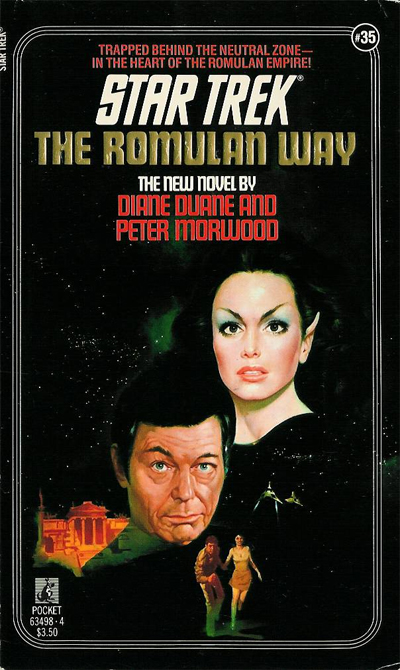
Star Trek – The Romulan Way by Diane Duane and Peter Morwood (Review)

This January and February, we’ll be finishing up our look at the second season of Star Trek: The Next Generation and moving on to the third year of the show, both recently and lovingly remastered for high definition. Check back daily for the latest review.

We’ll be supplementing our coverage of the episodes with some additional materials – mainly novels and comics and films. This is one such entry.

The Romulan Way is the second book in Diane Duane’s “Rihannsu” cycle – although the first book in the series, My Enemy, My Ally was only retroactively distinguished from standard Star Trek tie-ins. Much like My Enemy, My Ally had been roughly contemporaneous with John M. Ford’s The Final Reflection, Duane’s follow-up was published around the same time as Ford’s own sequel to his earlier work, How Much for Just the Planet? Expanding on My Enemy, My Ally, The Romulan Way sees Duane delving more thoroughly into Romulan history and culture.

The Romulan Way was published amid a sea of change at Paramount and Pocket Books in the late eighties, with shifting mandates and objectives for these tie-in books that represented a conscious effort to hem in some of the more creative tendencies of mid-eighties Star Trek novelist. To demonstrate how rapidly things were changing, both The Romulan Way and How Much for Just the Planet? were both published within three years of their predecessors. After this point, it would take Duane another thirteen years to write the third volume in her saga, and John M. Ford would never write another Star Trek tie-in again.

It’s very hard to condone any publishing philosophy that leads to results like that.

tos-theromulanway

Continue reading

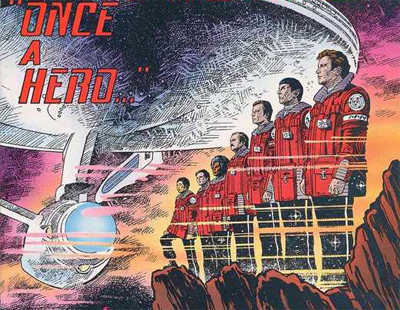
Star Trek (DC Comics, 1989) #19 – Once a Hero… (Review)

This January and February, we’ll be finishing up our look at the second season of Star Trek: The Next Generation and moving on to the third year of the show, both recently and lovingly remastered for high definition. Check back daily for the latest review.

We’ll be supplementing our coverage of the episodes with some additional materials – mainly novels and comics and films. This is one such entry.

Once a Hero… is a notable story for a number of reasons. The most obvious is that it’s Peter David’s last issue of DC’s monthly Star Trek comic, departing the comic book after a pretty bitter disagreement with Richard Arnold, who was overseeing Star Trek licensing at the time. Given that David wrote The Incredible Hulk for twelve years and remains a prolific and well-liked comic book creator among the comic community, as well as a guiding light in Star Trek tie-in fiction, that’s a pretty damning indictment of Richard Arnold right there.

However, Once a Hero… is also notable for being an in-depth exploration and reflection on the “red shirt” narrative convention that the franchise loved so dearly.

A grave adventure...

A grave adventure…

Continue reading

Star Trek – The Wounded Sky by Diane Duane (Review)

This January and February, we’ll be finishing up our look at the second season of Star Trek: The Next Generation and moving on to the third year of the show, both recently and lovingly remastered for high definition. Check back daily for the latest review.

We’ll be supplementing our coverage of the episodes with some additional materials – mainly novels and comics and films. This is one such entry. This is actually supplementary to the first season of the Next Generation, specifically the episode Where No One Has Gone Before.

Diane Duane remains one of the most influential Star Trek tie-in writers ever to work on the franchise. She has been involved in publishing tie-in books pretty consistently since the early days of the publishing line. The Wounded Sky, her first tie-in novel, was lucky number thirteen in the “Pocket TOS” range, published in 1983. Her most recent tie-in novel, The Empty Chair, was published in 2006. As well as a distinguished career outside of Star Trek, she has written novels and comics for the franchise. She even has a television credit, for her work on the teleplay for Where No One Has Gone Before.

There’s a reason that Duane’s contributions to Star Trek fiction are held in such a high regard, and those reasons are quite clear on reading The Wounded Sky. It’s a beautiful and thoughtful piece of prose set within the Star Trek universe, one more concerned with continuing and advancing the spirit of exploration established in the television show than meddling in continuity minutiae or offering generic adventures starring James Tiberius Kirk.

It’s a whole-hearted recommendation for any fan of the original series.

tos-thewoundedsky

Continue reading