• Following Us

  • Categories

  • Check out the Archives


  • Awards & Nominations

The X-Files: Season 10 (IDW) #1-5 – Believers (Review)

This June, we’re going to be taking a look at the current run of The X-Files, beginning with the IDW comic book revival and perhaps taking some detours along the way. Check back daily for the latest review.

Five years can be a long time.

To be fair, there was a six-year gap between the broadcast of The Truth and the release of The X-Files: I Want to Believe, so the gap was not unprecedented. Nevertheless, the fact is that Mulder and Scully had been retired for five years since their last film and eleven years since their last television episodes. Even the most hardcore fans of The X-Files had begun to doubt that the show would ever return in any tangible form. However, the show was entering its twentieth anniversary year, and forces were stirring in the background.
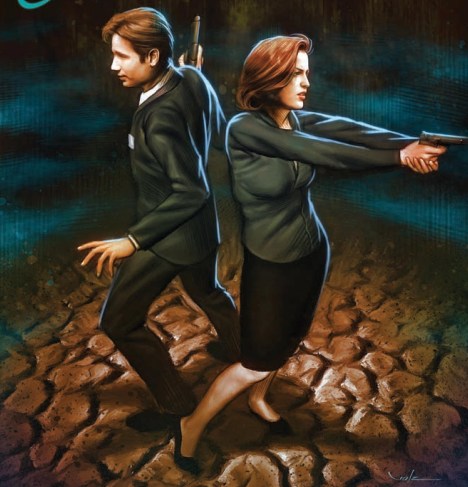
X-appeal.

X-appeal.

Occasionally interviews would surface with David Duchovny or Gillian Anderson mooting the possibility of doing a third feature film. After all, despite the promise made in the opening of The Truth, 2012 had come and gone without an alien invasion or a global apocalypse. The franchise had set its own alarm clock and slept through it. There were still fitful stirrings, suggestions of possible future developments. As the franchise passed what many regarded as its “best before” date, Frank Spotnitz even speculated that fans might be treated to a reboot.

In many ways, the revival of The X-Files began somewhat innocuously. In January 2013, comics publisher IDW announced that they would be publishing a monthly series focusing on the continuing adventures of Mulder and Scully. This was not necessarily news of itself. IDW had a long history of managing licensed properties, such as the JJ Abrams Star Trek reboot and the Russell T. Davies Doctor Who relaunch. That was very much their market niche in the comic book industry, especially with nostalgic titles like Ghostbusters or Teenage Mutant Ninja Turtles.
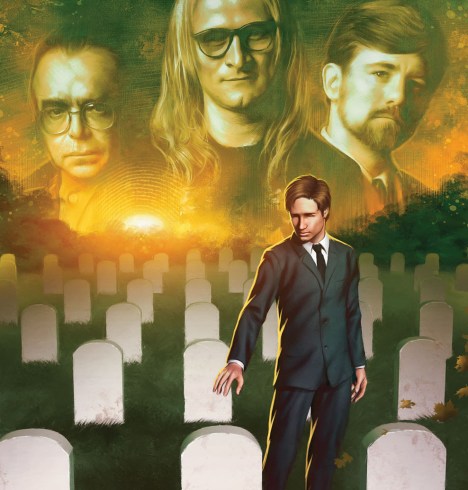
How the years 'shroom by...

How the years ‘shroom by…

While the launch of the title did suggest that there was an audience for stories featuring Mulder and Scully, it did not necessarily lead to the promise of greater things. Indeed, the announcement that IDW would be publishing The X-Files: Season 10 consciously and clearly evoked the approach that the publisher Dark Horse had adopted towards Buffy: The Vampire Slayer and Angel, running entire seasons of comic book stories that served as the new “canon” for the characters. But nobody was expecting Sarah Michelle Gellar to reprise the role of Buffy Summers.

However, the IDW comic book launch served to bring Chris Carter out of semi-retirement and back into the media spotlight. Joss Whedon had consulted with Dark Horse on Buffy: Season Eight, the prolific television writer and producer was also working on his own concurrent projects that included directing episodes of The Office and preparing Doctor Horrible’s Sing-Along Blog. In contrast, Chris Carter had been largely silent since the release of I Want to Believe. The launch of the comic book brought him back.
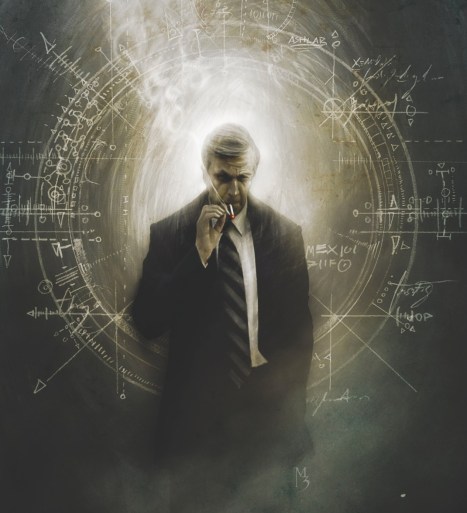
Where there's smoke...

Where there’s smoke…

Continue reading

Star Trek: Enterprise – Demons (Review)

This May, we’re taking a look at the fourth (and final) season of Star Trek: Enterprise. Check back daily for the latest review.

In some ways, Star Trek: Enterprise ends where it should have began.

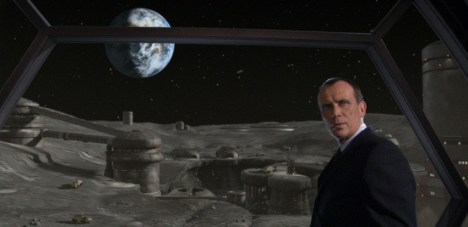
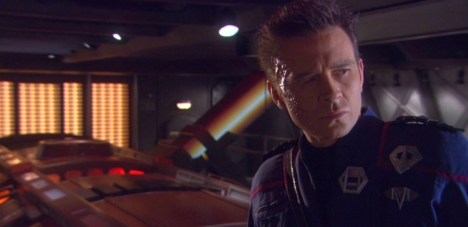
A lot of the final stretch of the final season seems dedicated to exploring the show’s original sin, the flaws that came baked into the premise as early as Broken Bow. After all, Bound had taken the cringe-inducing adolescent fixation on “sexiness” that informed ideas like the “decontamination gel” and pushed them to their sexist extremes. Similarly, In a Mirror, Darkly, Part I and In a Mirror, Darkly, Part II offered the revenge of the two members of the ensemble all but forgotten in subsequent years while pushing the show’s early reactionary tendencies to eleven.

Under the Earthlight. The serious Earthlight.

Under the Earthlight. The serious Earthlight.

Even These Are the Voyages… seemed to confirm fears that the show had been built as a sequel to Star Trek: The Next Generation and Star Trek: First Contact rather than a prequel to the original Star Trek, a fear shared by many fans frustrated by elements like the design of the ship or the appearance of the Nausicaans in Fortunate Son or the Ferengi in Acquisition. That final episode left open the (admittedly remote) possibility that the entire show was nested inside the holodeck of Picard’s ship.

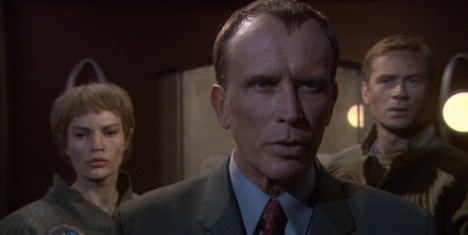
Demons and Terra Prime touch on the same introspective ideas, by taking the show’s final two-parter (if not its de facto finale) and using it to tell a story that probably should have been told half-way through the first season. It seems like the production team have finally decided to grapple with the core themes of Enterprise. Just at the last possible minute.

"Dead or alive, you're coming with me."

“Dead or alive, you’re coming with me.”

Continue reading

Star Trek: Enterprise – In a Mirror, Darkly, Part II (Review)

This May, we’re taking a look at the fourth (and final) season of Star Trek: Enterprise. Check back daily for the latest review.

In a Mirror, Darkly, Part I and In a Mirror, Darkly, Part II are an indulgence.

That goes almost without saying, this indulgence standing as one of the most searing critiques of the two-parter. After all, Star Trek: Enterprise had only five episodes left at this point in its run. One of those episodes would be given over to Rick Berman and Brannon Braga to bring in Jonathan Frakes and Marina Sirtis as a way to allow Star Trek: The Next Generation to put a cap on the eighteen years of the Berman era. Devoting two of the remaining four episodes to the mirror universe was a choice that left the show open to criticism.

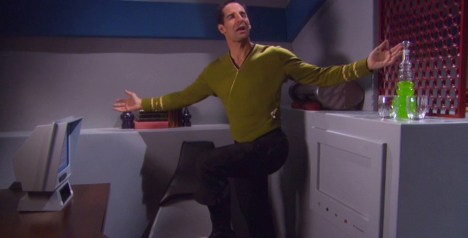
Archer's cosplay went down a treat.

Archer’s cosplay went down a treat.

After all, it is not as if the audience at home was crying out for more mirror universe episodes. Even hardcore Star Trek fans were still recovering from the trauma of The Emperor’s New Cloak, the seventh season episode of Star Trek: Deep Space Nine that had the audacity to combine a mirror universe episode with a Ferengi episode. Discounting the somewhat divisive (and mirror universe free) Resurrection, the last time that a mirror universe episode really worked had been Crossover, which had been broadcast before Star Trek: Voyager was on the air.

So In a Mirror, Darkly, Part I and In a Mirror, Darkly, Part II are both episodes that feel excessive and gratuitous. And, for all their flaws, that is a huge part of the charm.

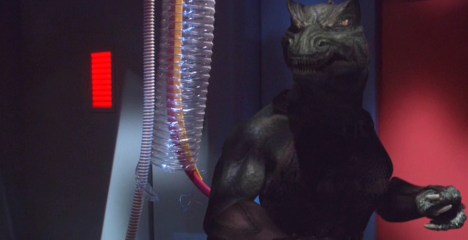
Gorn again.

Gorn again.

Continue reading

Star Trek: Enterprise – In a Mirror, Darkly, Part I (Review)

This May, we’re taking a look at the fourth (and final) season of Star Trek: Enterprise. Check back daily for the latest review.

In a Mirror, Darkly, Part I and In a Mirror, Darkly, Part II are very strange pieces of television.

They represent the fifth- and fourth-to-last episodes (and third-to-last story) of Star Trek: Enterprise. They come towards the tail end of the Berman era as a whole, positioned right before Star Trek took a decade-long absence from television. With the fourth season rather consciously building towards integrating the series with the larger shared universe and trying to lay the foundation for the Federation, it would make sense for the final stretch of the season to channel its energy into that particular avenue.

A vigourous constitutional...

A vigourous constitutional…

However, rather than trying to tell a story essential to this particular show or to the franchise as a whole, the production team opted to construct a two-parter that would feature none of the show’s primary cast and which served as a prequel to an episode of television broadcast in October 1967 and a sequel to an episode of television broadcast in November 1968. The two-parter serves to wrap up plot threads that had been left dangling so long that nobody really cared about them any longer. Given how obsessive Star Trek fans are, that is impressive.

This puts Enterprise in the rather strange position where three of its final five episodes (or two of its final three stories) do not feature any of the primary cast, instead focusing on doppelgangers or holograms. Perhaps this is a reflection on the show’s attitude towards its place within the canon. Perhaps Enterprise fears that it will be a secret history, a forgotten story populated by spectres and echoes.

Engines of destiny.

Engines of destiny.

Continue reading

Star Trek: Enterprise – Bound (Review)

This May, we’re taking a look at the fourth (and final) season of Star Trek: Enterprise. Check back daily for the latest review.

Bound is, for all intents and purposes, the last standalone episode of Star Trek of the Rick Berman era.

There are five more episodes following Bound, but they consist of two two-parters and the official series finale. Bound is very much the last “regular” episode of Star Trek: Enterprise to be produced, the last episodic adventure in the series. In fact, given the trends in contemporary television that are nudging the format towards serialisation and long-form storytelling, it seems entirely plausible that Bound could be the last standalone episode of Star Trek ever produced.

Strike a pose.

Strike a pose.

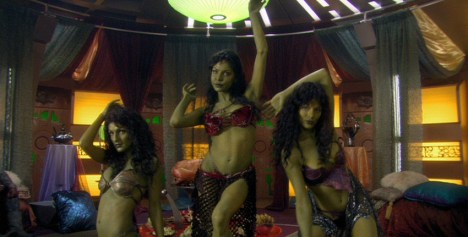
As such, it is a shame that Bound is a complete and utter disaster. It is an embarrassment to the series and to the franchise. More than that, it is an embarrassment that was written by the fourth season showrunner and which feels very much like the big ideas of the fourth season carried to their logical conclusion. Bound recalls the horrible sexism of episodes like Precious Cargo and Bounty, cloaking its objectionable sexual politics in the guise of nostalgia. Arguably the best things about Bound is that it makes Rajiin seem well-constructed in comparison.

Bound is easily the worst episode of the season and a strong contender for one of the worst episodes of the series. What better way to remember Enterprise?

Nostalgic sexism, hoy!

Nostalgic sexism, hoy!

Continue reading

Star Trek: Enterprise – Divergence (Review)

This May, we’re taking a look at the fourth (and final) season of Star Trek: Enterprise. Check back daily for the latest review.

Given the general directions and interests of the fourth season, an episode like Divergence was inevitable.

Before Affliction and Divergence aired, the subject of “Klingon foreheads” was of great interest to a fandom that had noted the change in Klingon make-up between the broadcast of The Time Trap in November 1973 and the release of Star Trek: The Motion Picture in December 1979. In the years following the debut of the “forehead ridges” during the introductory sequence of The Motion Picture, the ridges became a source of curiousity and fascination for the fandom.

Things come to a forehead...

Things come to a forehead…

This curiousity was stoked by the franchise itself, most notably Star Trek: Deep Space Nine. Perhaps owing to the show’s engagement with its franchise roots, the production team teased out the dilemma on a number of occasions. Three classic Klingons – Kor, Koloth and Kang – actually gained ridges between their appearances on the original Star Trek and their reappearance in Blood Oath. Encountering flat-headed Klingons during Trials and Tribble-ations, the crew pushed Worf for an explanation. “We do not discuss it with outsiders,” he responded.

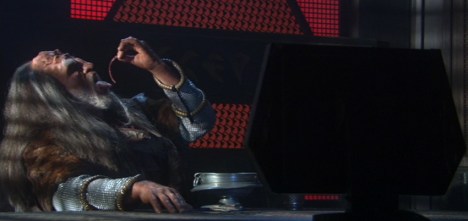
Given that the fourth season of Star Trek: Enterprise has been so fixated upon issues of continuity and history, it seems like it was only a matter of time before one of the season’s multi-episode arcs would be devoted to explaining what had originally been a quirk of make-up design and had evolved into one of the franchise’s most fun (and admittedly trivial) riddles.

Food for thought...

Food for thought…

Continue reading

Star Trek: Enterprise – Affliction (Review)

This May, we’re taking a look at the fourth (and final) season of Star Trek: Enterprise. Check back daily for the latest review.

The shift from episodic storytelling to a more serialised format poses all manner of challenges for the Star Trek production team.

By the time that Star Trek: Enterprise embraced long-form storytelling with The Expanse at the end of its second season, the franchise was dangerous behind the curve. During the nineties, genre shows like The X-Files, Buffy: The Vampire Slayer and Babylon 5 had demonstrated the potential of serialisation as a narrative tool. Even within this particular franchise, Star Trek: Deep Space Nine had managed to strike a reasonable balance between standalone stories and the larger narrative framework.

Nothin' but Trip...

Nothin’ but Trip…

This is say nothing of the revolution taking place on a wider scale. HBO had allowed its production team to embrace the potential of long-form storytelling on late nineties shows like Oz or The Sopranos. Within a few years, the cable broadcaster had attracted considerable mainstream attention by embracing serialisation on shows like The Wire, Deadwood and Rome. In the meantime, Star Trek: Voyager had steadfastly refused to move beyond the episodic model. When Ronald D. Moore left the franchise, any experience with serialisation left with him.

As such, it is no surprise that the franchise struggled with some of the challenges posed by a serialised storytelling model. In particular, Enterprise struggled a little bit with integrating its entire ensemble into its new serialised storytelling model. Affliction and Divergence feel like an attempt to rectify this issue, with mixed results.

It's all coming together...

It’s all coming together…

Continue reading

Star Trek: Enterprise – The Aenar (Review)

This May, we’re taking a look at the fourth (and final) season of Star Trek: Enterprise. Check back daily for the latest review.

The United trilogy does not flow as well as the Kir’Shara trilogy did.

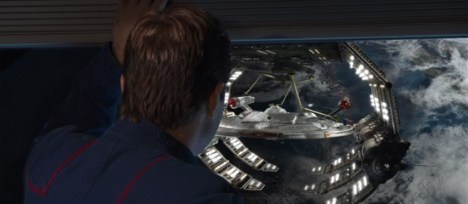
In fact, it is debatable whether these three episodes are best described as a single three-parter or instead as a two-parter with a coda tacked on. After all, the bulk of the action and drama unfolds in Babel One and United, with the penultimate scene of United finding Archer sitting down with the Andorians and Tellarites to begin laying the groundwork for the United Federation of Planets. Even the subplots are neatly tidied up between those two episodes; Trip and Reed get stranded on the Romulan drone in Babel One and rescued by Enterprise in United.

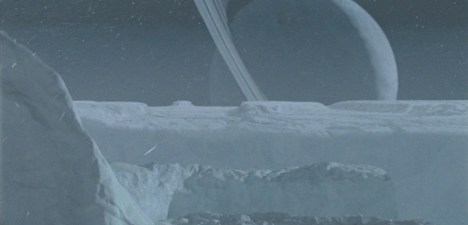
This blue world.

This blue world.

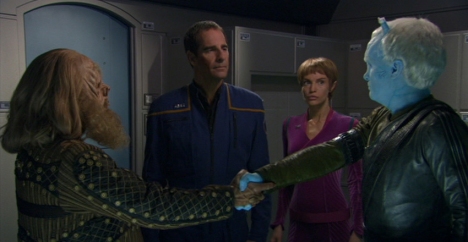
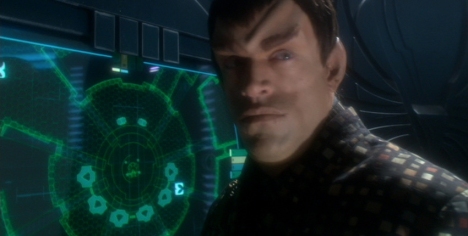
It would be perfectly reasonable to close off the story at that point. The Romulans had been scared off, and Senator Vrax had already made it clear that an embarrassing failure would mean the end of his career and that of Valdour. Even the closing scene of United, revealing an albino Andorian operating the drone ship from Romulus, feels almost tacked on after the previous sequence that had memorably pulled out from the meeting room on Enterprise to emphasise the union of Starfleet, the Vulcans, the Andorians and the Tellarites.

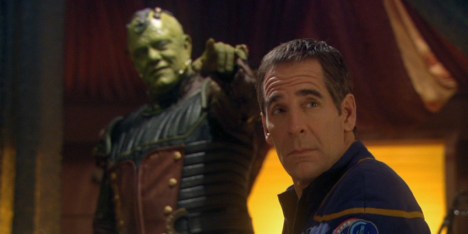
Using that cliffhanger at the end of UnitedThe Aenar pivots away from that to focus on a trip to Andoria. It affords Archer (and Star Trek: Enterprise) one last opportunity to visit Shran’s homeworld.

A cold reception.

A cold reception.

Continue reading

Star Trek: Enterprise – United (Review)

This May, we’re taking a look at the fourth (and final) season of Star Trek: Enterprise. Check back daily for the latest review.

The Romulans are a very curious species.

They have a long history within the Star Trek franchise. They were introduced less than half-way through the first season of the show, in Balance of Terror. The Klingons would not show up until Errand of Mercy, towards the end of that first year. The Romulans have appeared in just about every iteration of the franchise, their reappearance in the final episode of the first season of Star Trek: The Next Generation serving to connect the show to its legacy. Appearing in both Star Trek: Nemesis and Star Trek, they appeared on both sides of the film franchise reboot.

This could be the start of a beautiful friendship...

This could be the start of a beautiful friendship…

Still, the Romulans have never truly been defined. Unlike the Klingons or the Cardassians, the Romulans have never been developed into a fully-formed culture. There are great episodes built around the Romulans, from Balance of Terror and The Enterprise Incident to Face of the Enemy and In the Pale Moonlight. However, there has never been recurring Romulan character afforded the depth of Worf, Martok, Quark, Dukat, Damar or Garak; if populating that list with Star Trek: Deep Space Nine characters feels like cheating, no Romulan measures up to Soval or Shran.

Although they only appear in four episodes of the season, exerting influence over another two, it feels like the fourth season of Star Trek: Enterprise affords more attention to the Romulans than they have received in a long time.

"All right, who arranged the bridge power display to form a smiley face?"

“All right, who arranged the bridge power display to form a smiley face?”

Continue reading

Star Trek: Enterprise – Babel One (Review)

This May, we’re taking a look at the fourth (and final) season of Star Trek: Enterprise. Check back daily for the latest review.

It seems entirely appropriate that the United trilogy sits in the middle of the fourth season.

The three-parter is not the strongest of the season’s multi-episode epics, abandoning the clean three-act structure that made the Kir’Shara trilogy so successful in favour of a disjointed two-parter-and-coda format that prevents the story from feeling as cohesive as it might. It jolts and starts, never really finding the proper flow for the story that it wants to tell. There is a sense that the production team’s desire to do both a “birth of the Federation” story and a “visit to Andoria” story within the same three-part narrative ultimately hinders the storytelling.

"What do you mean I'm not in the third part?!"

“What do you mean I’m not in the third part?!”

However, there is something satisfying in watching Star Trek: Enterprise commit to the idea of the birth of the Federation. It could be argued that this is an example of the fourth season’s continuity pandering, but the Federation is far more fundamental to the fabric of the franchise than something like Klingon foreheads or that ghost ship from that third season episode. If Enterprise is to be a prequel, it should devote some attention to building the fabric of the shared universe. The Federation is an essential part of the idealistic future of Star Trek.

However, the most compelling aspect of the United has nothing to do with continuity and history. Instead, it is simply reassuring to see Enterprise embracing the franchise’s utopianism and hope for the future, particularly in the context of January 2004.

Shran, Shran, he's our Andorian...

Shran, Shran, he’s our Andorian…

Continue reading