












This July and August, we’re celebrating the release of Star Trek Beyond by taking a look back at the third season of the original Star Trek. Check back every Monday, Wednesday and Friday for the latest update.
The third season of Star Trek was always doomed.
NBC had wanted to cancel the show after the second season, but a massive outpouring of fan support (and no small amount of press coverage) convinced them to renew the series for a third year. However, this was not a pardon. It was at best a temporary reprieve. The budget was slashed. Key creative personnel were lost. Outsiders with minimal experience in science-fiction television were drafted. The show was exiled to the graveyard shift of late Friday nights, when its target audience would either be in bed or out on the town.
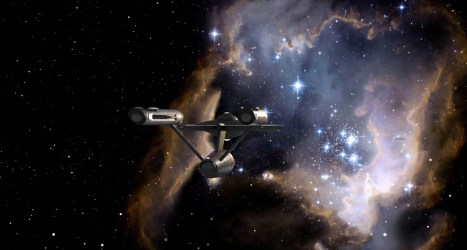
With all of that in mind, it is no wonder that history has been cruel to the third season. The third season is generally regarded as a massive step down in quality from the first two years of the series, and that is certainly true. Without a strong producer like Gene L. Coon or a quality script editor like Dorothy Fontana, Star Trek would struggle to match the consistency of those first two years. Even before factoring in budget cuts and other constraints, the third season cannot compete with the prior two seasons on an episode-to-episode basis.
However, there is also a recurring sense that the third season of Star Trek is odd. It feels tangibly different from the two seasons that came before it. However, it also feels markedly different from the twenty-four live action seasons that followed. There is a strange tone to the season, one that feels distinct from that of the larger Star Trek franchise. The third season is populated by ghost stories and dying worlds, by mythology and folklore. Repeatedly, the logic that drives plots seems more magical than rational.
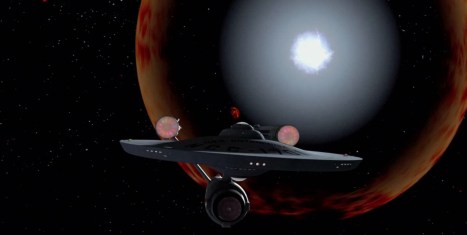
This lends the third season an almost mystical and irrational quality. While Star Trek has flirted with irrationality and dream logic before, most notably in the episodes credited to writer Robert Bloch and instalments like Shore Leave or The Immunity Syndrome, the third season grabs these concepts with both hands. There is a sense that all of the assumptions underpinning the Star Trek universe are up for grabs, that nothing can truly be known for certain, and that relaity itself is coming undone.
Coupled with a recurring motif of dying races and dead worlds, this irrationality serves to cast a shadow over the entirety of the third season. For all that the third season embraces the utopian ideals that would become a staple of the franchise, the third season is permeated by an apocalyptic dread. There is a sense that doomsday is approaching, that death is an inevitability, that all might be lost. In a very real way, this perfectly captures both the production realities of the third season and the general mood of the time around it.
Filed under: The Original Series | Tagged: star trek, the original series | 7 Comments »










 the m0vie blog