• Following Us

  • Categories

  • Check out the Archives


  • Awards & Nominations

New Podcast! The X-Cast – Season 3, Episode 24 (“Talitha Cumi”)

I’m back on The X-Cast this week, covering Talitha Cumi with the one and only Tony Black, a nice companion piece to last week’s episode covering Wetwired.

Talitha Cumi is a controversial and divisive episode, particularly among fans of the series. It is relatively unique as far as season-finales go, in that it is perhaps the only season finale in The X-Files that could not also serve as a series finale as well. It is very poetic and very lyrical story, but also one that largely eschews a lot of the structures and rhythms that audiences expect from narratives. I have always had a soft spot for it, and I think I get a chance to articulate why on the podcast. As little sense as the actual plot of Talitha Cumi makes on a beat-by-beat basis, it works very well as a thematic piece meditating on big ideas.

It was, always, a pleasure and an honour to discuss the episode with Tony. I’m always flattered to be asked back. There were a few recording hitches with the episode that meant we had to record it, and some of that giddiness shines through a little bit. I hope it’s enjoyable to listen to, as it was one of my favourite podcasting experiences. We also talk a little bit about the third season of the series as a whole, about whether it is the best season and even how we measure such things. It’s quite an extended episode, but I hope you enjoy it.

The truth is in here. You can listen to the episode here, or click the link below.
Continue reading

Doctor Who: Demons of the Punjab (Review)

“What have you done? Who’s coming?”

“The future.”

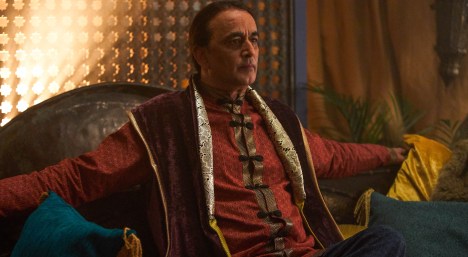
Demons of the Punjab is in many ways a companion piece to Rosa, touching on and developing the core themes.

It is interesting, in large part because Demons of the Punjab feels like a much more confident execution of many of the same ideas. It is a lot cannier in how it chooses to construct its central story, avoiding a lot of the smaller and finer details that haunted Rosa. It helps that Demons of the Punjab is a much less showy story. It is not a “celebrity historical” in the same way as Rosa was, avoiding the temptation to cast Lord Mountbatten as a companion. It also avoids setting its closing credits to a triumphant pop song as systemic racism endures.

Flagging enthusiasm.

Of course, the fundamental issue with Rosa remains. Demons of the Punjab is very much of a piece with Rosa when it comes to reconfiguring who the Doctor is and the function that she serves. The Doctor is no longer a time travelling radical or an anarchist. She is not a “mad woman with a box.” She is instead somebody who travels through time to “bear witness”, to acknowledge suffering that has occurred rather than trying to heal it. The Doctor is no longer a triage surgeon or a concerned medic, instead more of a cosmic mortician. There is something rather bleak in that.

That said, Demons of the Punjab is a very effective and very powerful piece of television. If Doctor Who is to embrace this approach to the Doctor as a character, this is certainly the best way to go about it.

The Four Horsemen.

Continue reading

New Podcast! The X-Cast – Season 3, Episode 23 (“Wetwired”)

I’m back on The X-Cast this week, covering Wetwired with the one and only Tony Black. We took you into this season, and we can take you out of it too.

Wetwired is a curious beast. It’s an episode that a lot of people compare to Blood, but I’ve always seen it as being a lot closer to the first half of Anasazi. Which perhaps makes sense, if you consider it part of the third season finale in spirit. Wetwired is also an episode about which my opinion has shifted a great deal in recent years. I thought it was pretty fine when I reviewed it a few years ago, but – like a lot of The X-Files – it seems increasingly prescient in the modern context.

The truth is in here. You can listen to the episode here, or click the link below.

Continue reading

New Podcast! The X-Cast – Todd VanDerWerff and Zack Handlen on “Monsters of the Week”

This was fun.

I occasionally guest on The X-Cast with Tony Black, discussing The X-Files. I’ve been very proud to be part of the show’s discussion of individual episodes and also to participate in its ambitious beginning-to-end podwatch. However, this episode is particularly exciting for me, because it’s an interview that I managed to organise with critics Todd VanDerWerff and Zack Handlen on their new book Monsters of the Week.

Todd and Zack wrote about The X-Files at The A.V. Club over the past decade, and their reviews are some of the most engaging and insightful examinations of the series ever written. They were hugely influential on my own work, and are still a joy to read. Indeed, I had access to an early review copy of Monsters of the Week for the interview, and it is a joy to read.

The interview itself is broad. We cover everything from Todd and Zack’s early history with the show, through to debating its place in the television canon and even discussing a little bit about the current state of television criticism as a whole. Along the way, we discuss the show’s legacy, the challenges in approaching it in the current era, and how the Trump administration as made a surprisingly convincing case for the show’s status as an enduring television classic.

I’m very happy with the interview, and very thankful for Todd and Zack’s generosity with their time. You can check it out here, click the link below, or just play it from this post.

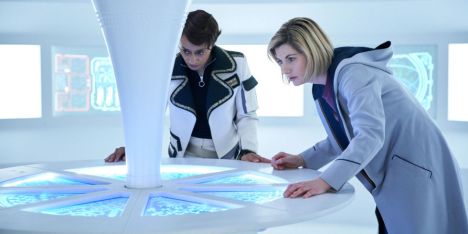
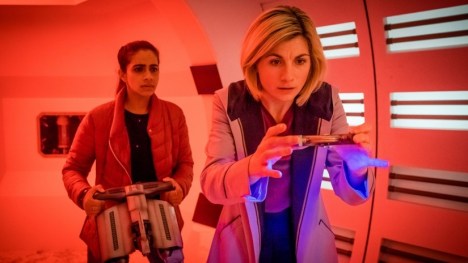
Doctor Who: The Tsuranga Conundrum (Review)

The Tsuranga Conundrum is a very strange episode, in large part because it is perhaps the first episode of the revived Doctor Who that feels like the product of a writers’ room.

In that, The Tsuranga Conundrum feels very much like an episode assembled to fulfill a checklist of requirements that were due before the end of the season. The primary plot is a stylish futuristic science-fiction adventure with a monster that serves as a solid mid-level threat for the primary cast. At the same time, the secondary plot exists to further the arc of one (arguably two) of the show’s credited leads in a way that is clearly positioning the character for a satisfactory resolution at the end of the year.

Pilot error.

The two threads in The Tsuranga Conundrum don’t necessarily gel with one another in the way that the plots of best episodes do, where several story threads all develop from the same unified idea and move in parallel, as would be more likely if a single writer had pitched and developed the episode from scratch. Instead, the various elements of The Tsuranga Conundrum seem to exist because there has to be a story like this among the ten episodes in the season order, and there wasn’t room to split the two elements into separate stories or there weren’t any other stories in which these elements might be integrated.

The Tsuranga Conundrum feels like a script that went through several passes inside a writers’ room, with each writer working on each draft emphasising a different aspect of the story to the point that whatever had originally been the central focus of the episode has been lost in the process. This would be worrying enough of itself, but The Tsuranga Conundrum is very pointedly not the product of a writers’ room. It is a script credited to a single writer, the head writer on the series. The Tsuranga Conundrum is a Chris Chibnall script that feels like it has passed through several different hands before hitting the screen.

Seeing red.

Continue reading

Doctor Who: Arachnids in the U.K. (Review)

I’ve heard you’re only running because you’ve hated Trump for decades.

Please don’t mention that name.

Arachnids in the U.K. is perhaps the best episode of the eleventh season of Doctor Who to date.

Arachnids in the U.K. feels like a nostalgic throwback to the Russell T. Davies era, which makes it feel of a piece with the first three episodes of the season. Executive producer Chris Chibnall has executed his spin on the traditional “present-past-future” triptych that was a hallmark of the early seasons of the revival, and so it is time to return to the contemporary United Kingdom in order to better develop the supporting cast and make some very broad political commentary about the modern world.

Finding its (eight) legs.

It is interesting to reflect on how far Doctor Who has come since its resurrection that this idea seems almost quaint, a nostalgic “back-to-basics” approach that seems lifted from thirteen years earlier. It is a valid and worthy approach to Doctor Who, and reflects Chibnall’s desire to make the show more populist and mainstream than it was during the more esoteric tenure of Steven Moffat. There is a reason that Davies was able to transform Doctor Who from a failed cult curiosity into one of the biggest things on British television using this template, after all.

At the same time, there’s something just a little worrying when the stand-out episode of the eleventh season feels like a perfectly serviceable mid-tier episode from the first four.

“Who is this Harriet Jones? I feel like we could make a deal with her. A tremendous deal.”

Continue reading

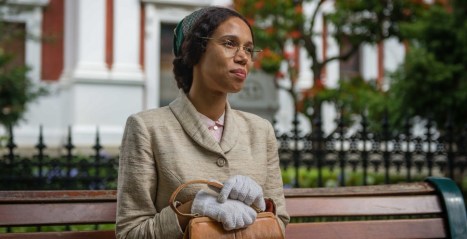
Doctor Who: Rosa (Review)

“We don’t serve negroes.”

“Well, that’s good. Because I don’t eat them.”

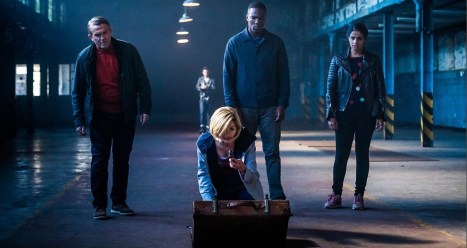
Rosa is undoubtedly well-intentioned and timely.

It is hard to imagine a more relevant or important episode of Doctor Who at this moment in time than one which acknowledges the history of racism within the United States, and the horrors inflicted upon its minority populations within living memory. (A “Brexit” episode might be closer to home, though.) This is, after all, a point in history where the President of the United States has been endorsed by the Ku Klux Klan, described nations with black populations as “sh!thole countries” and argued that Mexico is exporting rapists and murderers to the United States.

Park it here.

Of course, this isn’t just an American issue. The Brexit referendum in the United Kingdom was driven by racial anxiety, to the point that the “Leave” campaign unveiled billboards that evoked Nazi propaganda. In countries like Hungary, a resurgent ethno-nationalism is on the rise. Even on the day that Rosa was broadcast, there was a prominent news story about a white man on a Ryanair flight who insisted that a woman of Jamaican descent could not sit next to him. Rosa is certainly very timely and very relevant. It is important for children (and adults, frankly) to hear this.

There are problems, however. Rosa is a very worthy episode of television with a lot of very important things to say. In particular, its handling of Ryan and Yaz’s experiences in both the fifties and the present are very illuminating and insightful. That said, the episode runs into the same problems that haunt most of the series’ big “fixed point in history” narratives, in that it adopts a fundamentally conservative approach to history and predetermination, arguing that things can only be as they ever were. This may not be the best approach to a story about Rosa Parks.

Suitcase of the week.

Continue reading

Re-“Born Again”: Daredevil, Season Three, and the Limits of Textual Fidelity…

One of the more interesting aspects of the modern boom in geek culture is the increased emphasis on textual fidelity.

Much has been written about the high volume of adaptations, sequels, remakes and reboots that dominate contemporary popular culture. The trend is strong, even among this year’s prestige releases. A Star is Born is the third remake of the film, and there are many more stories besides. First Man is a story that covers well-worn ground, a modern American myth, albeit from a unique perspective. Suspiria is a remake of a beloved cult classic. Widows is an adaptation of a British television series. If Beale Street Could Talk… is taken from a James Baldwin novel.

However, it is also very revealing that so many modern adaptations of beloved properties are very much fixated on the idea of fidelity. “Faithfulness” has become a watchword for these adaptations, not just in terms of easter eggs, but in terms of basic construction. In its own way, this may perhaps be an extension of the emphasis on comic books and graphic novels as a key inspiration for modern blockbusters. Given how many comic book artists also work as storyboard artists in film, it is tempting to treat the source material as a storyboard, to adapt a panel into a still image.

This is an interesting approach, but one which often overlooks the actual act of adaptation as an art of itself. It is not enough to cobble together a film from a collection of familiar static images, and can occasionally lead to a very surreal and uncomfortable disconnect, with a filmmaker lifting very literally from their inspiration while also making something that bears little resemblance to the source material in any non-visual manner. The third season of Daredevil runs into this problem repeatedly, largely as a muddled attempt to bring Frank Miller and David Mazzucchelli’s Born Again to the screen.

Note: This article contains minor spoilers from the third season of Daredevil.

Continue reading

Doctor Who: The Ghost Monument (Review)

The Ghost Monument feels almost worryingly safe.

To be fair, it is almost churlish to complain about this. The Woman Who Fell to Earth seemed designed to assure audiences that the Chibnall Era would be a safe pair of hands, a stylishly produced piece of televisual science-fiction that visually upped the ante in terms of how Doctor Who looked and felt on the small screen. It was consciously designed to be safe and accessible to new viewers, to avoid anything that could be considered weird or strange.

Artful appearance.

By all accounts, this approach paid off. Reviews for the episode were largely positive. The ratings were spectacular, with Jodie Whittaker premiering to a larger audience than any Doctor since Christopher Eccleston and earning the series its highest ratings since the end of the Davies Era. There is a lot to recommend this relatively safe approach to Doctor Who, particularly following the ambition and experimentation of the Moffat Era.

Chibnall is very much adopting a back-to-basics approach. The Woman Who Fell to Earth demonstrated the way such an approach could work. This is the function of premiere episodes, particularly following a regeneration or a significant change behind the scenes. The goal is to comfort audiences still curious whether Doctor Who is the show that they love and to welcome those viewers who might be dipping their toes into the water. Rose and The Eleventh Hour did this as well, constructing tightly-wound accessible thrill rides.

Piecing it together.

However, the question then becomes “what about the second episode?” What happens after the premiere? Having welcomed both old and new audiences into the fold, what does a showrunner do next? In the case of both Davies and Moffat, the answer was to produce something ambitious and messy, something that showcased just how weird and strange the series could be. If the premieres lured viewers in, the following episodes suggested what that audience might be in for; consider the gonzo weirdness of The End of the World or The Beast Below.

The Ghost Monument is a much cleaner and much more streamlined episode than either of those two. It is an efficient action adventure that carries over a lot of the more effective elements of The Woman Who Fell to Earth. However, The End of the World and The Beast Below also suggested just how bizarre and wonderful Doctor Who could be, underneath their messiness. The Ghost Monument is simply effective.

Things went South (Africa) very quickly.

Continue reading

New Podcast! The X-Cast – Season 3, Episode 19 (“Hell Money”)

I’m back on The X-Cast this week, covering Hell Money with the great Carl Sweeney.

This is an interesting one. Everybody has their own personal underrated favourites, whether in film or on television or in any other media. Pieces of art on which we feel much more strongly than the consensus, and in which we see a bit more than our fellow audience members. In my case, this is true of quiet a few episodes of The X-Files, typically episodes that meet with a shrug from the collective audience, but with which I’ve fallen head-over-heels in love. Hell Money is one of those episodes.

The truth is in here. You can listen to the episode here, or click the link below.

Continue reading