• Following Us

  • Categories

  • Check out the Archives


  • Awards & Nominations

Doctor Who: The Androids of Tara (Review)

To celebrate the fiftieth anniversary of the longest-running science-fiction show in the world, I’ll be taking weekly looks at some of my own personal favourite stories and arcs, from the old and new series, with a view to encapsulating the sublime, the clever and the fiendishly odd of the BBC’s Doctor Who.

The Androids of Tara originally aired in 1978. It was the fourth part of The Key to Time saga.

Ah! That takes me back… or forward… that’s the trouble with time travel, you can never remember…

– The Doctor

There are some things that I know I should probably feel guilty about – cases where my opinion is so clearly distinct from the general consensus that I feels some sense of obligation to apologise for my radical and far-out ideas. While it falls just short of that mark, I honestly enjoy The Androids of Tara as the best story of The Key to Time. I’ll concede it isn’t as masterfully written as The Ribos Operation, nor as full of wonderfully clever constructs as The Pirate Planet, but The Androids of Tarais a refreshingly small-scale adventure that manages to accommodate the awkward humour that this era of the show is accustomed to, while remaining an excellent adventure in its own right.
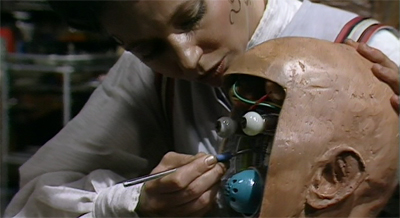
Eyes without a face...

Continue reading

Doctor Who: Stones of Blood (Review)

To celebrate the fiftieth anniversary of the longest-running science-fiction show in the world, I’ll be taking weekly looks at some of my own personal favourite stories and arcs, from the old and new series, with a view to encapsulating the sublime, the clever and the fiendishly odd of the BBC’s Doctor Who.

Stones of Blood originally aired in 1978. It was the third part of The Key to Time saga.

Doctor, might I ask you  a personal question?

Well, I don’t see how I could stop you from asking.

Are you from outer space?

No.

Oh.

I’m more from you’d call inner time.

Ah.

– Professor Rumford and the Doctor clarify things

Stones of Blood was a bit of a landmark for the television show. Not only was it the 100th Doctor Who story broadcast, but it also aired remarkably close to the show’s fifteenth anniversary. The Three Doctorshad demonstrated that the show could celebrate its anniversaries in style, but producer Graham Williams seemed to want a more restrained celebration of the show’s run – vetoing an early scene in the TARDIS where Romana and K-9 give the Doctor a birthday cake and a present (a new scarf). Instead, it was decided that the show would celebrate its time on the air by returning to two of its more defining genres, blending those two distinct types of story into one four-part adventure. So we end up with a story that is half gothic horror and half outer space adventure.

A celebration, out of the blue!

Continue reading

Doctor Who: The Pirate Planet (Review)

To celebrate the fiftieth anniversary of the longest-running science-fiction show in the world, I’ll be taking weekly looks at some of my own personal favourite stories and arcs, from the old and new series, with a view to encapsulating the sublime, the clever and the fiendishly odd of the BBC’s Doctor Who.

The Pirate Planet originally aired in 1978. It was the second part of The Key to Time saga.

Excuse me, are you sure this planet’s meant to be here?

– The Doctor

I have to admit, I admire The Pirate Planet for its lofty aim. Douglas Adams’ script is vast and impressive and epic, incorporating and number of brilliant high concept ideas, traditional science-fiction story-telling devices, and healthy sense of humour into one Doctor Who story. Unfortunately, the production is restricted both by the technical limitations of the time, but also by the sense that there’s simply too much going on over the course of this four-episode adventure. Still, it’s as bold, fun and imaginative as any Doctor Whostory, and showcases the series at its most ambitious. There’s nothing wrong with that.

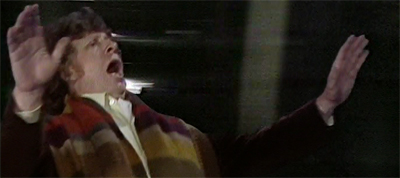
Pulling a fast one...

Continue reading

Doctor Who: The Ribos Operation (Review)

To celebrate the fiftieth anniversary of the longest-running science-fiction show in the world, I’ll be taking weekly looks at some of my own personal favourite stories and arcs, from the old and new series, with a view to encapsulating the sublime, the clever and the fiendishly odd of the BBC’s Doctor Who.

The Ribos Operation originally aired in 1978. It was the first part of The Key to Time saga.

Your name!

What about my name?

It’s too long… by the time I’ve called out “Look out Romanadv…” – what’s your name again?

Romanadvoratrelundar!

By the time I’ve called that out you could be dead! I’ll call you Romana.

I don’t like Romana!

It’s either Romana or Fred!

All right, call me Fred!

Good! Come along Romana!

The Key to Time was a rather ambitious project for the time – the idea being that an entire series of the show would centre around one core arc, suggested in the first story, developed through the rest of the season, and tied up at the end of the year. It helps, when you’re doing something like that, to have an experienced hand at the reins. While The Ribos Operation doesn’t stand as Robert Holmes’ finest contribution to the series, it’s a suitable introduction to the adventure.

Time Lord and Lady...

Continue reading

Doctor Who: Hide (Review)

Say we actually find her. What do we say to her?

We ask her what she is, how she came to be.

Why?

Because I don’t know and ignorance is… what’s the opposite of bliss?

Carlisle.

Yes, Carlyle. Ignorance is Carlyle.

– the Doctor and Clara

Hide is the best episode of Doctor Who to air since The God Complex, almost two years ago. Writing an affectionate tribute to gothic horror Doctor Who, Hide allows even the most skeptical member of the audience to forgive writer Neil Cross for his somewhat clunky script for The Rings of Akhaten. It’s a nostalgic and atmospheric trip back in time, and a reminder of just exactly what this show is capable of, offering a creepy haunted house horror that manages to morph into an epic love story by the time the credits have rolled.

What lies beyond?

What lies beyond?

Continue reading

Doctor Who: The Last of the Time Lords (Review)

To celebrate the fiftieth anniversary of the longest-running science-fiction show in the world, I’ll be taking weekly looks at some of my own personal favourite stories and arcs, from the old and new series, with a view to encapsulating the sublime, the clever and the fiendishly odd of the BBC’s Doctor Who.

The Last of the Time Lords originally aired in 2007.

I just need you to listen.

No, it’s my turn. Revenge!

– the Doctor and the Master

I like quite a lot of The Last of the Time Lords. I think, for example, that Russell T. Davies does an exceptional job creating a version of the Master that manages to remain true to the character’s pantomime roots, while also seeming a credible threat and dark mirror to the Doctor. I also think that Martha’s character arc has a fairly logic and fluid conclusion. On the other hand, there’s a great deal about the resolution to The Last of the Time Lords that feels a bit rushed, a bit convenient, a bit tidy.

I’m quite fond of Davies’ writing style, but I’ll concede that he tends to favour theme and character over plot and structure. The Last of the Time Lords does an excellent job illustrating this, providing a bunch of fascinating thematic and character-based moments, but positioning them in a plot that doesn’t really work.

You know, for once I actually feel sorry for the Master...

You know, for once I actually feel sorry for the Master…

Continue reading

Doctor Who: Planet of the Daleks (Review)

To celebrate the fiftieth anniversary of the longest-running science-fiction show in the world, I’ll be taking weekly looks at some of my own personal favourite stories and arcs, from the old and new series, with a view to encapsulating the sublime, the clever and the fiendishly odd of the BBC’s Doctor Who.

Planet of the Daleks originally aired in 1973.

You know, for a man who abhors violence, I must say I took great satisfaction in doing that.

– The Doctor on demolishing a Dalek

The combined Frontier in Space and Planet of the Daleks serials were intended to mark the tenth anniversary of Doctor Who with a twelve-part epic that could be measured against the lost Daleks’ Master Plan. I’m quite fond of The Frontier in Space, and I’d argue that it stands as the best space-opera of the Pertwee era, but I’ll concede that the story is severely weakened by the links it shares with this little adventure, which is conclusive proof that Daleks were quite stale long before Davros was invented.

Not all Dalek stories are gold…

Continue reading

Doctor Who: The Deadly Assassin (Review)

To celebrate the fiftieth anniversary of the longest-running science-fiction show in the world, I’ll be taking weekly looks at some of my own personal favourite stories and arcs, from the old and new series, with a view to encapsulating the sublime, the clever and the fiendishly odd of the BBC’s Doctor Who.

The Deadly Assassin originally aired in 1976.

I deny this reality.

– the Doctor

The Deadly Assassin is a rather boldly experimental episode of Doctor Who. It’s the first story told without a companion character, and it also ventures quite forcefully into the realm of surrealism. It offers a rather bold deconstruction of the Time Lords, a rather cynical depiction of the aliens who had seemed all-powerful in stories like The War Games or The Three Doctors. More than that, though, The Deadly Assassin feels – appropriately enough – like a treatise on the inevitable death of Doctor Who.

Located in the middle of the fourteenth of twenty-six seasons, and broadcast thirteen years from both the start and the end of the show’s initial run, The Deadly Assassin seems to be positioned at the very heart of Doctor Who.

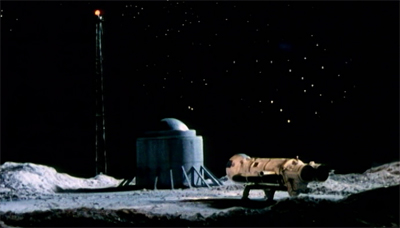
A rough outline of what's going on...

A rough outline of what’s going on…

Continue reading

Doctor Who: Frontier in Space (Review)

To celebrate the fiftieth anniversary of the longest-running science-fiction show in the world, I’ll be taking weekly looks at some of my own personal favourite stories and arcs, from the old and new series, with a view to encapsulating the sublime, the clever and the fiendishly odd of the BBC’s Doctor Who.

Frontier in Space originally aired in 1973.

To celebrate the tenth anniversary of the show, the four-part serial The Three Doctors was produced. However, it was also decided that Jon Pertwee’s fourth season in the role should also contain something quite a bit grander than the average Doctor Who serial. Clearly intended to rival the epic (and lost) Daleks’ Master Plan in terms of scale and scope, an epic twelve-part adventure was conceived that would run across two back-to-back serials. It would open with Frontier in Space, before easing gently into Terry Nation’s Planet of the Daleks.

Unfortunately the adventure was never quite able to measure up to the series’ earlier Dalek epic, primarily due to problems with the second serial. Still, though somewhat weakened by the necessity to dovetail into the story directly following, Frontier in Space remains a rather wonderful example of the series on its largest scale, offering epic space opera with large-scale consequences.

Lost in space…

Continue reading

Ultimate Comics: Divided We Fall, United We Stand – Spider-Man (Review/Retrospective)

To get ready for Iron Man 3, we’ll be taking a look at some Iron Man and Avengers stories, both modern and classic. We hope to do two or three a week throughout the month, so check back regularly for the latest update.

I have to admit, I am very surprised that Marvel have yet to start issuing oversized hardcovers of writer Brian Michael Bendis’ latest Ultimate Spider-Man run. The author has been writing the writing the series since the first issue appeared on stands in October 2000. The series has been re-launched twice, for three volumes as part of the same story. The first two runs are collected in their entirety, but only bits and pieces of the third run have been collected so far. The prelude Fallout was collected with Bendis’ The Death of Spider-Man omnibus, and the crossover with the main universe has been collected in Spider-Men, and then there’s these issues here, collected as part of Divided We Fall.

However, despite the high profile decision to create a new Spider-Man, generating considerable press coverage, Marvel has yet to begin collecting nice oversized hardcovers of Bendis’ latest run. As a result, the issues collected here give a rather scattershot coverage of Bendis’ run on the iconic web-crawler, which is a bit of a shame. As with the Ultimates and Ultimate X-Men comics tying into this big event, context is a vital part of this gigantic crossover, with Bendis’ story only really resonating as part of an on-going story featuring the development of a new version of Spider-Man, Bendis’ own creation.

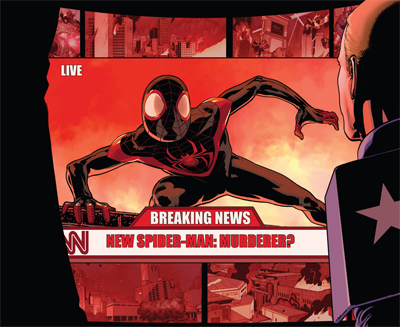
Who says there's no such thing as bad publicity?

Who says there’s no such thing as bad publicity?

Continue reading