• Following Us

  • Categories

  • Check out the Archives


  • Awards & Nominations

Star Trek: Deep Space Nine – The Maquis, Part I (Review)

Star Trek: Deep Space Nine is twenty years old this year. To celebrate, I’m taking a look at the first season. Check back daily for the latest review or retrospective.

The Maquis is an interesting episode, because it really illustrates the weird place that Star Trek: Deep Space Nine holds in the pantheon. It’s the middle act of an arc designed to play out across the final season of Star Trek: The Next Generation, the second season of Deep Space Nine and into the first year of Star Trek: Voyager. This was all part of gigantic lead-up to Voyager, a way for the producers to generate friction between the regular cast of the show.

However, with The Next Generation ending and Voyager being set on the other side of the galaxy, Deep Space Nine wound up stuck with this plot thread. As Michael Piller concedes in The Deep Space Log Book: A Second Season Companion, “DS9 is the true inheritor of the Maquis since there is no long term benefit to Voyager.” And so – despite the fact the Maquis were never intended for the show – they wind up become a perfect vehicle to explore the show’s world view.
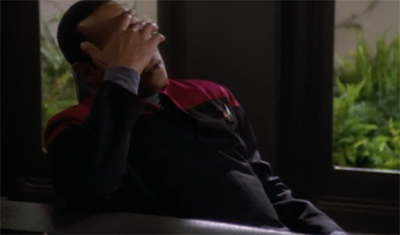
Picard's not the only one who can get a good face palm going on...

Picard’s not the only one who can get a good face palm going on…

Continue reading

The X-Files – Ghost in the Machine (Review)

I like Ghost in the Machine more than I really should. I mean, I know it’s a mess. The plotting is uninspired. The characters are thin. There’s a last minute link to the show’s overall conspiracy arc thrown in to compensate for the fact that plugging a device into a USB socket is hardly the most thrilling of climaxes. And yet, despite that, I think there’s an endearing weirdness to Ghost in the Machine that appeals to me.

It’s an AI story that has clearly written by a team who (by their own admission) know nothing about computers, and so there’s an almost ethereal quality to the whole thing – Mark Snow’s looping electronic score, the sparse theatrical set design of the COS mainframe, and director Jerrold Freedman’s obvious affection for Dutch angles all contribute to the sense that something rather strange is happening at the very edge of the frame.

Watch out...

Watch out…

Continue reading

Star Trek: Deep Space Nine – Blood Oath (Review)

Star Trek: Deep Space Nine is twenty years old this year. To celebrate, I’m taking a look at the first season. Check back daily for the latest review or retrospective.

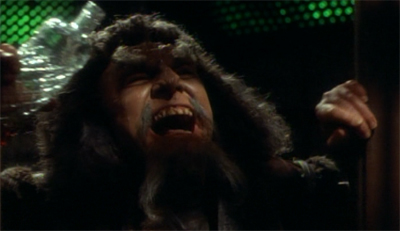
Blood Oath is a pretty fantastic piece of Star Trek: Deep Space Nine, and kicks the second season back into gear after a few mediocre (although not embarrassing) episodes. While it’s hardly the best episode of the year, and comes with its share of problems and baggage, it’s a tight and well-constructed piece of space opera. It’s a pulpy Klingon adventure, with the show’s best exploration to date of the existential problems of being Dax and a relatively simple (but potent) moral dilemma. It’s also just great fun.

Here's Kor!

Here’s Kor!

Continue reading

The X-Files – Shadows (Review)

Shadows feels a tad generic, but that’s by design. Written by the duo of Glenn Morgan and James Wong, Shadows was apparently intended to appease the network by offering something in the mold of a traditional ghost story – indeed, The Entity is often cited as an influence on the episode. Shadows runs off a rather conventional premise – a woman is haunted by a strange force capable of manipulating and moving objects, out to avenge some grave wrong.

In many respects, following The Jersey Devil, it almost seems like the first season of The X-Files is trying to knock off various items on a paranormal checklist. UFOs? Got ’em. A popular cryptozoology monster? Yep. Ghosts or poltergeists? We got a story here. The result is hardly inspiring. The X-Files tends to work a bit better when it’s venturing off the beaten track, taking something that isn’t mainstream and running with it.

Author John Kenneth Muir argued that watching The X-Files was like “watching a movie every week.” If that’s the case, Shadows feels more like a movie of the week.

The pen is mightier than the sword!

The pen is mightier than the sword!

Continue reading

Star Trek: Deep Space Nine – Profit and Loss (Review)

Star Trek: Deep Space Nine is twenty years old this year. To celebrate, I’m taking a look at the first and second seasons. Check back daily for the latest review or retrospective.

It seems we’ve reached the point where Star Trek: Deep Space Nine has figured out a base level of quality, an “average” zone that it can pitch to without too much effort or breaking a sweat. We’ve had three episodes in a row now that haven’t been brilliant, but have been far from terrible. Solid, watchable stuff. That might sound like damning with faint praise, but it took Star Trek: The Next Generation longer to find that base level of quality, while Star Trek: Voyager settled into a zone where that “average” was a lot lower.

Profit and Loss is unlikely to be anybody’s favourite episode, but it remains thoroughly unobjectionable. It features the cast playing their roles reasonably well, some hints at world-building and even a guest spot for Garak. Nobody will really remember Profit and Loss as a brilliant piece of television after completing a lengthy Deep Space Nine rewatch, but they also won’t curse its name. It’ll simply be an episode in the middle-to-end section of the second season that wasn’t too bad and wasn’t too great.

Love him and leave him...

Love him and leave him…

Continue reading

The X-Files – The Jersey Devil (Review)

And with The Jersey Devil, the first season of The X-Files hits its first major snag. The first four episodes have done an efficient job laying down the character arcs and the ground rules for this new conspiratorial series. The rest of the season – like a lot of first seasons – has a great deal of difficulty trying to figure out a formula that works using those elements.

The Jersey Devil is, by all accounts, an episode that should work. It has a nice pseudo-scientific premise. It is written by the creator of the show, and who – at this early stage – could claim a better idea of how the series works than Chris Carter? It gives us some personal insight into both of our protagonists, and it sort of clarifies that Squeeze is not going to be the exception – that there will be a lot of anthology-style episodes.

And yet, despite all that, it doesn’t quite work. The premise is never as interesting as it should be. Chris Carter confirms that while he is a fantastic ideas man, he is not the strongest writer on his own staff. The best of these insights into Mulder and Scully were already made much better in Squeeze, and the rest feel somewhat trite. Despite the fact that it’s only the show’s second anthology-style episode, The Jersey Devil feels like it’s trying to hard to stick to the framework outlined by the three UFO episodes in the series’ opening quartet.

Casting light...

Casting light…

Continue reading

Star Trek: Deep Space Nine – Playing God (Review)

Star Trek: Deep Space Nine is twenty years old this year. To celebrate, I’m taking a look at the first and second seasons. Check back daily for the latest review or retrospective.

Playing God is – structurally – quite similar to Shadowplay. The episode follows the same basic format. We have three plots running concurrently. One of these plots is a science-fiction plot while the other two are centred around character development. What’s interesting about Playing God is that the script essentially changes the priority of these plot threads. In Shadowplay, the central plot concerned the science-fiction mystery in the Gamma Quadrant, while here the ethical quandary is pushed firmly to the background. (Much to the chagrin of writer Jim Trombetta.)

Instead, Playing God brings the character plotline to the front, giving us the first Dax-centric episode firmly based around Jadzia rather than the symbiote inside of her.

Quark smells a rat... er... I mean vole...

Quark smells a rat… er… I mean vole…

Continue reading

Star Trek: Deep Space Nine – Shadowplay (Review)

Star Trek: Deep Space Nine is twenty years old this year. To celebrate, I’m taking a look at the first and second seasons. Check back daily for the latest review or retrospective.

Shadowplay is a great example of the kinds of things that Star Trek: Deep Space Nine is beginning to do very well. While the main plot works very well (so well, in fact that Star Trek: Enterprise would borrow it – and Rene Auberjones – for their first season episode Oasis), it’s remarkable how much of Shadowplay is given over to the two character-development subplots unfolding back on the station. Indeed, Dax and Odo have effectively solved the mystery of the missing villagers by about two-thirds of the way into the episode.

The character-development stuff in Shadowplay is interesting because the two subplots are not written with resolutions in mind. Indeed, they don’t even kick off the respective character arcs. Kira and Bariel have been waiting to become a couple since The Siege at the latest. The last episode, Paradise hinted that Jake might not be cut out to be a Starfleet officer.

In short, what is interesting about Shadowplay is the fact that it’s really just demonstrating that the show has reached the point where it is doing the things that it does relatively well. Deep Space Nine has found its groove, that point in a show’s history when it seems like it’s relatively easy to produce an hour of television of reasonable quality.

A holo crowd...

A holo crowd…

Continue reading

Agents of S.H.I.E.L.D. – 0-8-4 (Review)

The first few episodes of any show can be rough. It’s generally about learning to walk before you can run, drawing boundaries before you can cross them. The opening few episodes of a new television show often feel like a party full of people we’ve never met before – the first few hours are timid, awkward, probing. Hopefully, you get more comfortable and casual with the guests, you open up a bit – and before you know it, you’re having a great time. If things don’t seem to improve, you check out early.

Like The Pilot, Agents of S.H.I.E.L.D.’s second episode never feels like it’s straining too hard. Indeed, there’s a sense that we’re watching a show go through the motions. After all, Joss Whedon and his production posse are very familiar with constructing first seasons. There’s a sense that the team – led by Jed Whedon and Maurissa Tancharoen – have been given the keys to the most expensive car in the garage by Disney and ABC, and so the show feels more like a casual cruise than a pedal-to-the-metal joy ride.

0-8-4 does very little wrong. In fact, it does a lot of smart stuff, essential stuff, homework stuff. Still, it lacks any real sense of fun or joy – there’s no real suggestion that the show is giddily playing with the toys locked away in this particular toy chest. Appropriately enough, given the title, it feels a bit by the numbers.

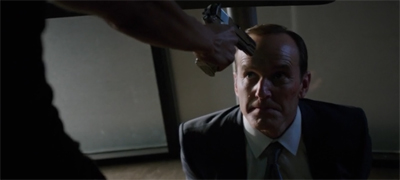
When it comes to ranking the cast, Coulson is number one with a bullet...

When it comes to ranking the cast, Coulson is number one with a bullet…

Continue reading

Star Trek: Deep Space Nine – Paradise (Review)

Star Trek: Deep Space Nine is twenty years old this year. To celebrate, I’m taking a look at the first and second seasons. Check back daily for the latest review or retrospective.

In a really weird way, this second half of the second season of Star Trek: Deep Space Nine really has its finger on the pulse of the nineties. Whispers tapped into pre-millennial anxiety, the sort of paranoia that fed into shows like The X-Files and would play itself out through the show’s admittedly underdeveloped “Changeling” arc. In a few episodes, The Maquis will play with the old “freedom fighter/terrorist” debate in a way that was only really possible in an America completely at peace, post-Cold War but pre-9/11.

Paradise taps into some other anxieties. According to The Star Trek: Deep Space Nine Companion, writer Jim Trombetta was heavily influenced by the anti-technology philosophy of the Khmer Rouge, the infamous regime where even the stereotypical signs of learning and education (for example, wearing glasses) were justification for execution. However, whatever the inspiration, Paradise seems to tap into something decidedly more contemporary.

"This is my boom stick!"

“This is my boom stick!”

Continue reading