• Following Us

  • Categories

  • Check out the Archives


  • Awards & Nominations

New Escapist Column! On “GoldenEye” and a James Bond Out of Time…

I published a new In the Frame piece at The Escapist this evening. Because GoldenEye is twenty-five years old this month, it seemed like an appropriate time to look back at one of the more underappreciated entries in the franchise.

GoldenEye arrived in a changed world, after the fall of the Berlin Wall and the collapse of the Union of Soviet Socialist Republics. Many of the underlying assumptions of the Bond franchise were no longer relevant to the new world order. At the same time, the Bond franchise was in an existential crisis following the commercial disappointment of the previous film and the longest gap between installments to date. However, GoldenEye hit upon a novel solution to this problem: instead of fighting against the idea of Bond as a man out of time, it would embrace it.

You can read the piece here, or click the picture below.

New Podcast! The Escapist Movie Podcast – “The Multigenerational Legacy of Sir Sean Connery”

The Escapist have launched a movie podcast, and I was thrilled to join Jack Packard and Stacy Grouden for the eleventh episode. With Halloween officially behind us, we turned our gaze to November movies like The Addams Family and The Addams Family Values. We also reflected on the passing of Sir Sean Connery. We took a look at the trailer for Songbird, the first pandemic-xploitation movie.

You can listen to the episode here, back episodes of the podcast here, click the link below or even listen directly.

Non-Review Review: Mank

There’s something vaguely reassuring about Mank.

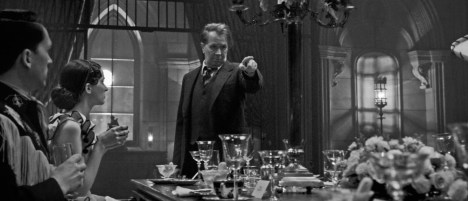
The most obviously and immediately striking aspect of David Fincher’s biopic is how consciously the film is steeped in a very particular time and place. Mank plays out against the backdrop of the thirties and forties, following screenwriter Herman J. Mankiewicz as he is inspired to develop (and as he actually writes) Citizen Kane. So much of the film deliberately evokes the period; numerous inside jokes and cameos from key Hollywood figures, the stark black-and-white cinematography from Erik Messerschmidt, the way Fincher even frames shots to evoke the period.

However, all of these period elements are juxtaposed with a broader sense of modernity and timelessness. Mank is shot in the same black-and-white style as Citizen Kane, but in a modern aspect ratio. The film features cigarette burns and other markers of classic cinema, but was shot entirely digitally. The film even offers an almost parodic old-fashioned happy ending for most of the major characters, but while telling a story that simply would not have been possible within that studio system.

The result is a movie that celebrates Hollywood without venerating it. Indeed, what distinguishes Mank from many other “films about films” like The Artist or Hugo is the way in which it tempers its nostalgia. Mank doesn’t necessarily long for the past in the way that most Hollywood productions about Hollywood do. This ambivalence to nostalgia is not cynicism or futurism, but a tacit acknowledgement that the past is still present. Mankiewicz might be rubbing shoulder with the players of another era, but the rules remain largely the same.

Indeed, the real joy of Mank is not found its glorification of Hollywood titans or the products of the studio system, but in its celebration of the “supporting players.” The story of the “organ grinder’s monkey” is discussed repeatedly, often as a metaphor for power a hierarchy. Instead, Mank seems to suggest that the relationship is symbiotic. There’s something striking in a movie from a director as venerated as David Fincher that is so openly critical of the various myths of Hollywood like the auteur theory and its cousin “the great man” theory of history.

Mank is the story of a little man, one repeatedly framed as “the court jester” and who does little to push back on that characterisation. As one might expect for a movie about Citizen KaneKing Lear is a frequent point of reference. If so, Mank suggests that the fool has the best view of all.

Continue reading

New Escapist Column! On Taika Waititi’s Totally Radical Postcolonial “Thor: Ragnarok”…

I published a new In the Frame piece at The Escapist this evening. Because it was released three years ago this month, I took a look back at the postcolonial politics of Thor: Ragnarok, and put them in a broader cultural context.

Ragnarok is one of the most enjoyable superhero movies ever made. It’s both fun and funny. However, it’s also one of the best and smartest entries in the Marvel Cinematic Universe, a joyous exploration of the legacy of colonialism and an interrogation of the consequences of imperialism. Ragnarok is bold and provocative, but is also so shrewd and slyly constructed that it manages to sneak a genuinely revolutionary perspective under the radar.

You can read the piece here, or click the picture below.

It’s All About Meme Meme: The Perfect Timing of “The Wicker Man”…

The podcast that I co-host, The 250, marked Halloween with a look at Neil La Bute’s adaptation of The Wicker Man. It’s a fun, broad discussion. However, watching the film and talking about the film got me thinking about Nicolas Cage, meme culture and the perfect storm of timing involved.

It’s possible to break down Nicolas Cage’s career into two phases: before and after The Wicker Man.

Before The Wicker Man, Nicolas Cage was a respected actor. He had won the Best Actor Oscar for Leaving Las Vegas. He had become an blockbuster movie star thanks to films like The Rock and Con Air. He had worked with auteurs like David Lynch on Wild at Heart and the Coens in Raising Arizona. Indeed, at the turn of the millennium, Cage had settled into a respectable cinematic middle age. In the years leading up to The Wicker Man, he worked on fare like Andrew Niccol’s earnest Lord of War and Gore Verbinski’s decidedly middle brow The Weather Man.
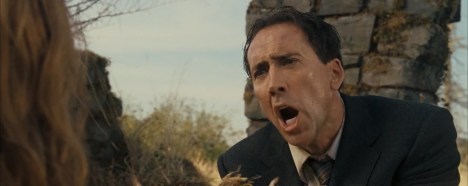
And then The Wicker Man happened. Almost immediately, Cage’s career shifted gears. There were where still franchise films like Ghost Rider or National Treasure: Book of Secrets. There were still auteur collaborations like with Werner Herzog on Bad Lieutenant: Port of Call New Orleans. However, there were also movies like Bangkok Dangerous, Next and Knowing, which would lead on to films like Drive Angry, Seeking Justice and Trespass. Not all of these films were bad, but they were instrumental in establishing the Nicolas Cage audiences know today: “full Cage.”

To give Cage some credit here, his later work is often more interesting than his popular reputation would suggest. In particular, Cage works remarkably well in ensemble genre pieces like Kick-Ass or Spider-Man: Into the Spider-Verse. More than that, Cage works remarkably well in the context of films that are pitched to match his fevered intensity as a performer like Mandy or The Colour Out of Space. Nevertheless, The Wicker Man was very much a watershed moment for Cage, like the flicking of a light switch.

Part of this is simply timing. The Wicker Man arrived at the perfect moment in popular culture, as a seismic shift was taking place. Discussions about the history of cinema often focus on the mechanics and the politics of the industry itself – the way in which movies are produced, funded and distributed. This makes a great deal of sense. However, it’s also important to consider how movies are discussed and how audiences engage with those films.

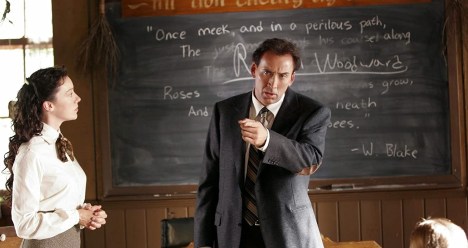
The Wicker Man arrived at a moment where the internet was primed to change the way that movies were watched, and the impact on Nicolas Cage’s career is perhaps a graphic illustration of that seismic shift.
Continue reading

New Escapist Video! On the True Horror of John Carpenter’s “Apocalypse” Trilogy…

So, as I have mentioned before, I am launching a new video series as a companion piece to In the Frame at The Escapist. The video will typically launch with the Monday article, and be released on the magazine’s YouTube channel the following week. This is kinda cool, because we’re helping relaunch the magazine’s film channel – so if you can throw a subscription our way, it would mean a lot.

With that in mind, here is last week’s episode. Because Halloween was coming up, we thought it would be fun to look at something horror-related. I’ve been watching a few John Carpenter films lately, and so I thought I’d delve a little bit into how Carpenter’s craft works and how it has aged so effectively and so hauntingly. In particular, Carpenter’s loose “Apocalypse” trilogy (The Thing, Prince of Darkness and In the Mouth of Madness) count among the most unsettling (and resonant) depictions of the end of the world in popular cinema.


Non-Review: His House

His House is a striking and unsettling piece of piece of work, and an impressive feature debut for director Remi Weekes.

His House focuses on Bol and Rial, a refugee couple who have fled war-torn Sudan and arrived in the United Kingdom. Against all odds, the couple are allowed out of the detention centre and assigned their own living space. It is a rundown old house on an estate. “You must have won the jackpot,” explains their case worker Mark, even as the front door falls off its hinges. It is a big house, one in need of a lot of care and work. However, it all belongs to Bol and Rial – and whatever they have brought with them.

That sinking feeling.

His House works on a number of levels. Most obviously and most importantly, it is genuinely unsettling. Weekes understands the mechanics of horror, and works closely with composer Roque Baños and cinematographer Jo Willems to construct a genuinely creepy horror. Weekes makes excellent use of negative space and framing to make the audience uncomfortable, and generally does an excellent job with mounting tension and dread. His House is an impressive piece of horror, judged simply as a genre piece.

However, the film is also quite pointed and well-observed in its horror. His Horror riffs on the tropes and conventions of the familiar haunted house story, particularly as a metaphor for trauma. What elevates Weekes’ screenplay, from a premise by Felicity Evans and Toby Venables, is an understanding that sometimes the ghosts that fill a haunted house arrive with the owners.

It is certainly a fixer-upper.

Continue reading

Non-Review Review: The Craft – Legacy

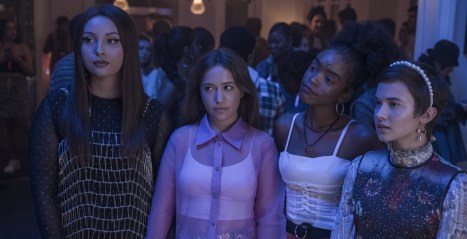
The Craft: Legacy is, as the title implies, a legacy sequel to The Craft.

The Craft is an interesting film. It received something of a critical drubbing on initial release, but there have since been conscious efforts to reevaluate it. This is not unusual in female-focused horror; Jennifer’s Body has undergone another recent critical reappraisal, and deservedly so. The Craft is an interesting film in this sense; it is certainly a better movie than many critics thought it was, if not quite the hidden masterpiece that its modern defenders would want it to be.

Picture imperfect.

One of the key and enduring strengths of The Craft was that it was a relatively rare example of a female-focused supernatural horror movie when it was released, explicitly engaged with the idea of female empowerment in the context of the mid-nineties, filtered through a teenage perspective. (It arrived a year before Buffy the Vampire Slayer.) The fact that this was an underserved market was perhaps best illustrated by the launch of the similarly-themed television show Charmed two years later, which would quietly run for eight seasons.

The Craft was imperfect, but it scratched a very strong itch. The Craft: Legacy naturally arrives at a very different time. While audiences looking for these sorts of genre stories about young women grappling with supernatural metaphors for empowerment in a hostile world, there are far more options than there were in 1994. The Craft: Legacy needs to do more than just offer a nostalgic reminder of a film that has slowly and surely built up a cult following. Unfortunately, the film can’t even do that.

Getting Coven with Stepdad.

Continue reading

New Escapist Column! On “Borat Subsequent Moviefilm” and How “Borat” Has Changed Over 14 Years…

I published a new In the Frame piece at The Escapist this evening. With the release of Borat Subsequent Moviefilm last week, it seemed an interesting opportunity to take a look at the return of the Kazakh caricature, and examine how the character had shifted in the fourteen years since the release of Borat.

Perhaps the most surprising aspect of Borat Subsequent Moviefilm is the way in which it offers a much more conventional structure – and even character arc – than the original film. It’s a strange choice, particularly in the context of the film’s mockumentary sensibility and the outlandish nature of the character. However, it also illustrates how much the world has changed since the release of the original film. Borat Subsequent Moviefilm realises that the world has changed, so maybe Borat should as well.

You can read the piece here, or click the picture below.

New Escapist Video! On “Joker” and the Exhaustion of Outrage Culture…

So, as I have mentioned before, I am launching a new video series as a companion piece to In the Frame at The Escapist. The video will typically launch with the Monday article, and be released on the magazine’s YouTube channel the following week. This is kinda cool, because we’re helping relaunch the magazine’s film channel.

With that in mind, here is last week’s episode, covering the anniversary of the outrage over the release of Joker, and how that demonstrates how cheap outrage has become.