• Following Us

  • Categories

  • Check out the Archives


  • Awards & Nominations

New Escapist Column! On How the Summer of 2011 Changed Blockbuster Cinema, Forever…

I published a new In the Frame piece at The Escapist this evening. Because it was Labour Day on Monday, officially marking the end of summer, it seemed like an appropriate opportunity to take a look back on the summer from a decade ago. The summer of 2011 was arguably the blockbuster movie season that defined the modern cinematic landscape.

Many observers would trace the root of the modern blockbuster era to the summers of 2008 and 2012 with epoch-defining smash hits like Iron Man and The Dark Knight or The Avengers and The Dark Knight Rises. However, these movies were exceptional. They were seismic. Doing something like that was an innovation and a miracle. However, the key for Hollywood is to find a way to make these sorts of models sustainable and reproduceable. That is why 2011 was such a big year, because it marked the season that Hollywood found a way to mass produce movies like Iron Man and The Dark Knight.

You can read the piece here, or click the picture below.

Non-Review Review: Copshop

Copshop is a loving and pulpy throwback to old-fashioned seventies b-movies, that simply doesn’t know when to quit.

Copshop operates very firmly within the comfort zone of everybody involved. Director Joe Carnahan has made a name for himself as a director of these sorts of high-concept thrillers. Stars Gerard Butler and Frank Grillo both seem perfectly at home glowering at each other across a police station cell block, separated from one another by two sets of bars. Watching Copshop, the film plays as a slight tweak on the basic concept that has made Assault on Precinct 13 an enduring cult hit: an isolated and under-staffed police station finds itself unde rsiege and stuck with a dangerous criminal.

The Butler did it.

There’s a compelling simplicity to Copshop, with the movie building outwards from a solid premise, and understanding the appeal of these sorts of movies. Carnahan imbues the film with an appealing nastiness and cynicism that feels appropriate for this kind of genre throwback. Most of the runtime of Copshop finds its protagonist, Officer Valerie Young, forced to choose between the lesser of two evils as the situation steadily escalates around her. For most of the film’s runtime, Carnahan commits to this meanness in a manner that is often lacking from these sorts of throwbacks and tributes.

Unfortunately, Copshop somewhat falls apart in its final ten minutes, as the film seems unable to settle on a single satisfying ending and so instead cycles through at least three different climaxes hoping that one of them might stick. The movie’s bombastic and over-stuffed third act is a frustrating conclusion to a film that worked to that point largely because of its minimalism and its restraint.

On the chain.

Continue reading

“A Goya? In a Harrods Bag?” “TENET” and the Nightmares of Late Capitalism…

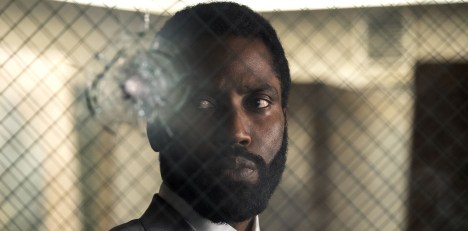
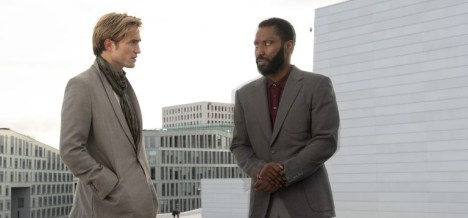
This week, the podcast that I co-host, The 250, celebrated its 250th episode with a conversation about Christopher Nolan’s TENET. I had some additional thoughts on the film.

TENET is a film about many things.

It is a movie about the idea that the future will not only judge us, it will condemn us. It is a movie about the importance of faith and mortality in a world that frequently seems to exist beyond basic human comprehension. It is a movie about time, and how there is no escaping or evading it. TENET is one of the most ambitious mainstream American blockbusters of the twenty-first century, with its fractured narrative reflecting the chaos of the time in which it was produced.

However, TENET is also a film about the nightmare of late capitalist excess. It is the story about wealth and power, and how things insulate and isolate those who hold it. It is something of a cliché to suggest that power and privilege protect the wealthy from the laws of men, from the consequences of their action – that civil and criminal laws bend to those with with enough money. TENET follows that idea to its logical conclusion, suggesting a world in which the laws of physics themselves bend to those with enough power.

TENET is a biting piece of social commentary that reflects a profoundly broken world.

Continue reading

New Escapist Column! On the “End of Evangelion” in “Thrice Upon a Time”…

I published a new In the Frame piece at The Escapist this evening. With the release of the last of the Rebuild of Evangelion movies, it seemed like the perfect opportunity to take a look at Hideaki Anno’s third draft of an ending to Neon Genesis Evangelion.

The Rebuild of Evangelion is an interesting experiment. It is essentially a remake of the classic animated series split across four feature length movies. However, as the series unfolds, this reimagining branches further and further from the original run. It’s a fascinating piece of art, a creator essentially returning to a franchise that made them a legend within the industry, and reworking it from the ground up. Rebuild of Evangelion is a set of movies that exist entirely in conversation with what has come before, daring to ask what a happy ending might look like to this familiar story.

You can read the piece here, or click the picture below.

New Escapist Column! On the Contradictory Generational Conflicts of “Shang-Chi and the Legend of the Ten Rings”…

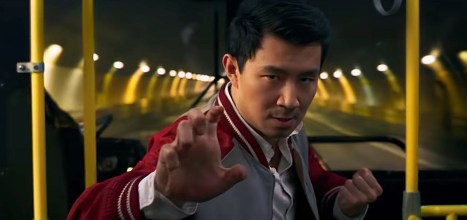
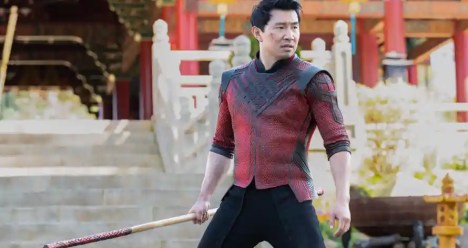
I published a new In the Frame piece at The Escapist this evening. With the release of Shang-Chi and the Legend of the Ten Rings, it seemed like a good opportunity to take a look at the film.

Shang-Chi and the Legend of the Ten Rings is an interesting mess of contradictions. On the one hand, it is a classic story of generational conflict about a son who needs to defeat and vanquish his evil father in order to determine his place in the world – like Star Wars. However, it is also a story about a prodigal son who needs to connect with his roots and let his older relatives provide him with an identity that he cannot determine for himself. It’s a weird juxtaposition that creates an irreconciliable conflict at the heart of the movie.

You can read the piece here, or click the picture below.

New Escapist Video! “Shang-Chi and the Legend of the Ten Rings – Review”

I’m thrilled to be launching movie reviews on The Escapist. Over the coming weeks and months, I will be joining a set of contributors in adding these reviews to the channel. For the moment, I’m honoured to contribute a three-minute film review of Shang-Chi and the Legend of the Ten Rings, which is released theatrically in Europe and the United States this weekend.

Non-Review Review: Shang-Chi and the Legend of the Ten Rings

There’s something unsettling on how conservative Shang-Chi and the Legend of the Ten Rings is, even by the standards of the Marvel Cinematic Universe.

This is particularly frustrating when Shang-Chi and the Legend of the Ten Rings positions itself as a progressive piece of pop culture. There’s a lot to appreciate about the film, conceptually. It is the first film in the Marvel Cinematic Universe from an Asian American director. It is the first entry in the franchise with a predominantly (almost exclusively) Asian cast. It exists in conversation with the company’s long-standing history of clichés and stereotypes, exploring and reconstructing them. Even more than that, it has a fundamentally charismatic cast and a fairly solid emotional arc, both of which should sustain it.

Stick with it.

However, all of this ultimately feels like empty window dressing arranged around a weirdly traditionalist and pandering core. At its heart, Shang-Chi and the Legend of the Ten Rings is a story about how “kids these days” really don’t know what they’re doing or where they’re going, and really just need to get back in touch with their roots and learn from their elders. There are points when Shang-Chi and the Legend of the Ten Rings feels a little bit like a Jerry Seinfeld joke about stupid millennials with their gap years and their gig economy.

There’s something disheartening in all this, particularly with Shang-Chi and the Legend of the Ten Rings positioned as the first true origin story to follow Avengers: Endgame, the herald of a new era for perhaps the most ubiquitous pop culture franchise in the world. However, when Shang-Chi and the Legend of the Ten Rings should be looking forward into a bold new era, it casts its gaze backwards.

Continue reading

“We Will Change You, Doctor Jones”: “Indiana Jones and the Kingdom of the Crystal Skull” and a Unified Theory of Indiana Jones…

Indiana Jones and the Kingdom of the Crystal Skull is a movie with very real and very tangible problems.

Part of the problem is one of simple aesthetics. The original trilogy were products of a very particular moment in the history of American cinema, spanning the eighties. Raiders of the Lost Ark was very much a rollercoaster of a movie, a showcase for practical effects and impressive stunt work. Indiana Jones and the Temple of Doom was built around impressive physical sets, model work and location work. Even Indiana Jones and the Last Crusade took a great deal of pride in how tactile this world felt.
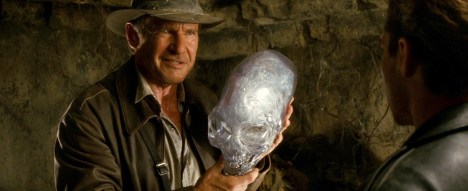
Crystal clear.

In contrast, Indiana Jones and the Kingdom of the Crystal Skull was a product of a transitional decade for Hollywood. It is no coincidence that the film opened in the same summer as blockbusters like Iron Man and The Dark Knight, which heralded a new future for crowdpleasing spectacle. While The Dark Knight made a conscious effort to ground its storytelling in practical effects, Iron Man signaled that the digital effects revolution was going to be the cornerstone of the superhero genre.

As such, Indiana Jones and the Kingdom of the Crystal Skull feels like a deliberate and conscious step into the uncanny valley. Many of the movie’s most decried action sequences are driven by green screen and computer-generated special effects, standing in start contrast to the weight and mass that defined the earlier set pieces. It’s unsettling and uncomfortable. The chase sequence in the Amazon is perhaps the most egregious example, but this detachment from reality is obvious from the early scenes inside the warehouse, as pixels guide our hero and his captors to their destination.

Blowing the roof off.

Indiana Jones and the Kingdom of the Crystal Skull exists in another uncanny space, most obviously through the introduction of the character of Mutt Williams. Part of this problem is undoubtedly Shia LeBeouf himself, who has been candid about his work on the film to the point of alienating director Steven Spielberg. Much like it’s easier to recognise the “pre-sequel” of Indiana Jones and the Temple of Doom as a prequel with the benefit of hindsight, it’s easier now to see Indiana Jones and the Kingdom of the Crystal Skull as a rough draft of a “legacyquel”, like Creed or Star Wars: Episode VII – The Force Awakens.

Of course, Indiana Jones and the Kingdom of the Crystal Skull is too clumsy to really work in that way. The film’s closing moments dare to tease the idea of Mutt Williams succeeding Indiana Jones, the wind blowing Jones’ iconic hat into Williams’ clutches. However, Indiana Jones and the Kingdom of the Crystal Skull lacks the courage of its commitment. Jones snatches the hat away at the last minute, prefiguring the way in which Star Wars: Episode IX – The Rise of Skywalker would retreat from the idea of passing Star Wars to a new generation.

It’s not the years, it’s the mileage.

There are other ways in which Indiana Jones and the Kingdom of the Crystal Skull feels like it is caught between two eras. The film’s structure arguably suffers from the production team’s famed attempts to preserve the secrecy of the plot, which even extended to a sting operation and a high-profile lawsuit. The publicity around the film reportedly considered keeping Karen Allen’s return a secret, and the film’s structure conceals the presence of Marion Ravenwood for an hour. It’s a choice that muddies the film’s handling of its themes, denying it the clarity of how Indiana Jones and the Last Crusade handled Henry Jones.

Still, accepting these issues as problems, there is a lot of interesting stuff happening beneath the surface of Indiana Jones and the Kingdom of the Crystal Skull. In particular, Indiana Jones and the Kingdom of the Crystal Skull feels like a very sincere and genuine effort on the part of everybody involved to figure out some grand unified theory of Indiana Jones, separated from the original three films by decades. What does it mean to look back on the trilogy? How has the world changed? How would the character wrap it all up?

It was admittedly a bit of a wash…

Continue reading

New Escapist Video! On How “The Green Knight” Deconstructs the Hero’s Journey…

So, as I have mentioned before, I am launching a new video series as a companion piece to In the Frame at The Escapist. The video will typically launch with every second Monday’s article, and be released on the magazine’s YouTube channel the following week. This is kinda cool, because we’re helping relaunch the magazine’s film content – so if you can throw a subscription our way, it would mean a lot.

With the release of The Green Knight on streaming, it seemed like a good opportunity to take a look at what makes the film so unique and so effective. In particular, how David Lowery uses the film to explore and interrogate the conventional hero’s journey – in particular, the idea that all it takes to make a hero great is an epic adventure.

New Escapist Column! On How “The Green Knight” Deconstructs the Hero’s Journey…

I published a new In the Frame piece at The Escapist this evening. With the release of David Lowery’s The Green Knight on streaming, it seemed like a good opportunity to take a look at the director’s reimagining of classic Arthurian legend.

In particular, when is so fascinating about The Green Knight is the way that it takes a very classic and very conventional hero’s journey – the story of a character who embarks upon a quest that makes them better, stronger and wiser before returning home fundamentally changed by the experience – and gradually deconstructs it. Is a hero’s journey alone enough to make Gawain a great man? Can the adventure make him a different person? Is there a checklist of accomplishments that he must complete before he becomes a worthy knight? The Green Knight interrogates and explores these questions.

You can read the piece here, or click the picture below.