• Following Us

  • Categories

  • Check out the Archives


  • Awards & Nominations

Jameson First Shot 2017 to feature Dominic West

For the sixth year of Jameson First Shot, three undiscovered filmmakers will be provided with the opportunity to direct award-winning actor and director Dominic West (The Wire, The Affair) in a short film that they will write and direct.

The Jameson First Shot film competition is all about giving talented filmmakers the opportunity of a lifetime – a first step in an industry that can be notoriously difficult to break into. It’s a platform that celebrates talented individuals that have incredible stories to tell but who, as yet, haven’t had the opportunity to realise their ambition and potential.

Dana Brunetti, who has produced multiple award-winning movies for film and television (The Social Network, Captain Phillips), will sit alongside each the winners on set, providing them with support, guidance and input when needed to ensure that they make the most of this incredible opportunity.

Entries are open to people living in Ireland, as well as US, UK, Canada, South Africa, Bulgaria, Australia and Israel.

The competition is open to entries now and the rules, including length and theme, can be found at http://www.jamesonfirstshot.com/

#JamesonFirstShot

#SineMetu

Non-Review Review: Guardians of the Galaxy, Vol. 2

The most appealing aspect of the original Guardians of the Galaxy was its awareness of its arrested development.

James Gunn and Nicole Perlman crafted an ode to juvenile nostalgia, anchored in a protagonist who found himself drifting away from Earth following the loss of his mother. Superhero movies work best as extended metaphors or homages, as a vehicle to render the human experience in operatic terms. Guardians of the Galaxy was the tale of a young man who had lost touch with reality in the moment that he lost his mother, and who had escaped into an acid dream of eighties space opera tropes.

Mohawking his wears…

Guardians of the Galaxy, Vol. 2 works best when it remembers this. If the first film explored Peter’s retreat from the death of his mother, then the second explores his relationship with his absentee father. Once again, the film is saturated with eighties iconography. Early in the film, Peter confesses that he used to pretend that David Hasselhoff was his father. It is hard to tell whether he is trading up or trading down when he meets a bearded Kurt Russell.

Guardians of the Galaxy, Vol. 2 has a very straightforward set of character and thematic arcs. The movie maintains a clear throughline, focusing on the relationship between fathers and sons. The film is not subtle, even working in Cat Stevens’ Father and Son. Of course, that archetypal relationship has been explored repeatedly and thoroughly within mainstream pop culture and particularly superhero cinema. Nevertheless, it provides a clear focus to Guardians of the Galaxy, Vol. 2, a sense of momentum and direction.

Turn up the volume.

This throughline is essential, because Guardians of the Galaxy, Vol. 2 suffers from significant bloat. The second act of the film is a mess, one compounded by a number of questionable creative decisions that seem to have been made because these beats are expected from the second film in a blockbuster franchise. Guardians of the Galaxy, Vol. 2 follows the science-fiction sequel playbook just a little too well, occasionally losing sight of its characters and the chemistry between them.

Guardians of the Galaxy, Vol. 2 does not work as well as Guardians of the Galaxy. In large part, this is because it feels like a self-conscious sequel rather than an organic extension of the original film. James Gunn never forgets what worked about the original film, but he also cannot resist the urge to go larger with it.

A hole lot of trouble…

Continue reading

Non-Review Review: The Promise

The Promise is made in earnest, even if it cannot honour all of its commitments.

The Armenian Genocide remains one of the most horrifying atrocities of the twentieth century, which is saying something. The horror of that systematic extermination is compounded by a refusal to acknowledge the violence committed by the Ottoman Empire. Modern Turkey refuses to acknowledge, or take responsibility, for those crimes. Political realities prevent other major powers from holding the government to account. It is a shameful situation, all around.

The Promise is made with the intent of shedding some light on that atrocity and bringing it to international attention. It is clearly a passion project, made with the best intentions. The film undoubtedly captures the horror of the violence inflicted upon the Armenian Christians and the systemic nature of the attempt to wipe out an entire civilisation. There are points at which The Promise plays as a travelogue into terror, a sequence of harrowing images set against a journey across Turkey during the First World War.

However, The Promise is also very much modeled on an old-school Hollywood adventure movie, complete with daring stunt work and tangled romantic subplots. The Promise evokes the feel of “classic” Hollywood, with its broad themes and its impressive scale. This sleek approach to the material jars with the horror being inflicted, the movie’s character arcs pasted over a nightmarish true story just a little too smoothly. The Promise is well-intentioned, if clumsy in execution.

Continue reading

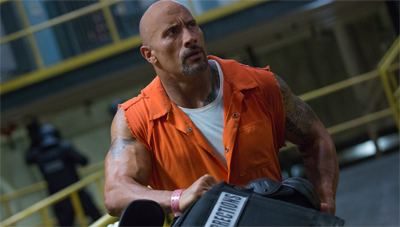
Non-Review Review: The Fast & The Furious 8 (aka The Fate of the Furious)

Seven cars crowd out an otherwise empty New York street.

In the midst of the carnage, all law-abiding citizens have taken cover. Only the outlaws remain, the powerhouses that rule the street. One black muscle car sits at the centre of this chaos. It stars menacingly at the five cars blocking its path. Behind that black car lurks the vanguard. Inside, a scruffy stubbled Englishman cracks his neck impatiently, waiting for action. The target car revs its engine. The drivers all kick into gear, and it becomes a game of reflexes.

Present and corrected.

There is an endearing charm to The Fast and the Furious as a blockbuster movie franchise. In many ways, it has become Universal’s own home-grown superhero franchise, albeit one that swaps out the capes for cars. A wry observer might suggest that the series is Diesel-powered, but that is not entirely true. The franchise runs on sheer main-lined ridiculousness, on the blurry line that falls somewhere between awesome and absurd. “High noon, but with cars…” is far from the most audacious scene in The Fast and the Furious 8, but it might be the most indicative.

Like a driver wrestling with a powerhouse engine, the series works best when it actively turns into the spin. Fast Five revived the franchise by removing the throttle and setting in motion a sense of escalation that threatens to send the characters into space before the conclusion of the series. In the meantime, The Fast and the Furious 8 settles for a neon orange Lamborghini being chased over ice by a nuclear submarine. There are points at which the whole thing threatens to fall apart like that surface ice, but the film moves just quick enough to stay above water.

Dominating Dom.

Continue reading

Non-Review Review: Miss Sloane

Like its central character, Miss Sloane is an interesting beast.

The movie’s central conflict is not the clash of egos between the rival lobbyists played by Jessica Chastain and Michael Stuhlbarg. Nor is it the philosophical conflict over gun control that drives so much of the plot. It is not even the conflict of interest that bookends the movie, the clash between the democratic ideal and the pragmatic reality of contemporary politics, although that perhaps comes closest to expressing the battle raging at the heart of the film.

Miss Sloane Goes to Washington.

The crisis that plays out across Miss Sloane is the gap between the perceived gap between personal and the political. For most of the film’s runtime, the eponymous character’s motivations remain engagingly opaque. Why has the cold and rational Elizabeth Sloane taken up a cause as ill-fated as tighter gun control regulations? The characters in the movie pick at the idea. Several wonder if she knew somebody involved in some traumatic incident of gun violence. It seems impossible to reconcile the calculated decisions of this political operator with a sense of moral righteousness.

Miss Sloane cleverly plays with this idea, teasing and goading the audience across its runtime. That implied conflict between the canny lobbyist and the just cause bubbles throughout the film. Most successfully, it plays out in Jessica Chastain’s superb central performance as the eponymous character; a keen observer of human nature who often seems to be battling with herself as much as with any singular rival. However, it also plays out in the film’s conflicted tone, with Miss Sloane often at odds with itself as it tries pitch itself at the right level.

Liz and let Liz.

Continue reading

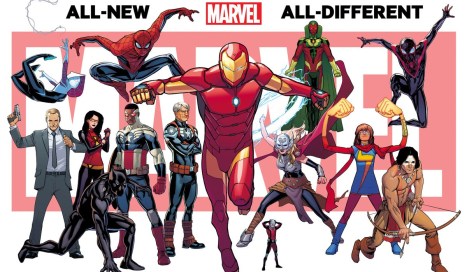
Adversity in Diversity: Marvel’s Next Generation Heroes…

Much digital ink has already been spilled about the comments that David Gabriel made of the weekend.

Gabriel is the Vice-President of Sales at Marvel, and he was speaking to ICv2 about the company’s underwhelming performance in recent times. The company’s massive “All-New, All-Different” launch in late 2015 appears to have done little to stem the attrition, offering a brief boost that has not halted the decline. Addressing these concerns, Gabriel suggested one very clear reason for the audience’s lack of enthusiasm about these comics. “What we heard was that people didn’t want any more diversity. They didn’t want female characters out there.”

Gabriel’s statement has opened up a new front in the culture wars, drawing attention from a host of high-profile new sources not necessarily known for their history of comic book reporting or their understanding of the medium’s inner workings; The Guardian, The Independent, The Irish Times. In a very strange way, this was seen as real news, in a way that news inside (as opposed to “related to the multimedia franchises of”) the comic book industry rarely is. There was clearly a lot tied up in that interview given by an industry figure to an industry publication.

The reason that this story broke out so strongly is quite simple. This debate is part of a larger debate about representation in popular culture. It emerges in the same climate as the debates about cultural appropriation in Iron Fist and whitewashing in Ghost in the Shell. It arrives at a time when the public at large is increasingly attuned to the need for diversity of representation in media and diversity in talent. It was a story that was surprisingly important to a lot of people who don’t read comic books, because it resonated beyond comic books.

Continue reading

Non-Review Review: Going in Style

At one point in Going in Style, octogenarian would-be bank robber Albert decides to craft an alibi for an elaborate bank robbery while working at a cotton candy stand.

This image might just encapsulate Going in Style, a very light and fluffy bank robbery film about a trio of senior citizens who embark upon a bank robbery in order to balance the books. The movie is consciously (occasionally suffocatingly) feel good story of a bunch of cynical wise-cracking pensioners embarking upon wish fulfillment revenge against the banks that have taken so much from hard-working and decent Americans. Think of it as Hell or High Water that swaps the moral ambiguity for a clumsy score.

Dinner of champions.

Going in Style is not an especially complicated film. It never pauses to evaluate what is happening, or why. It is anchored in the assumption that people are basically decent, even when pushed to extremes. It goes for as many obvious jokes as it can cram into its ninety-six-minute run-time, from a few cheap laughs about the embarrassment factor of old-age sex to other jokes about bodily functions. But its heart is in the right place, as it goes out of its way to repeatedly assure the audience.

The extent to which Going in Style could be said to work rests in the easy charm of its three leads, in the pleasure of seeing Michael Caine, Morgan Freeman and Alan Arkin play off one another. None of the trio is pushing themselves. All three leads are essentially offering some minor variation on an established schtick, with no nuance or strain. The result is a heist thriller that never feels like it is racing against the clock, more ambling in its own time.

Benched.

Continue reading

Trial and Trailer: The Perils of Publicity in the Internet Era

It is a cliché to suggest that trailers are spoiling movies.

Clint Eastwood was complaining about the trend more than a decade and a half ago, lamenting, “Half the time you go and watch a film, you see eight or 10 different trailers and you’ve seen the whole plot line. There’s really no reason to go see the film.” While film fans might look back nostalgically on classic trailers like Alien or Point Blank, the truth is that movie trailers have always been a bit of a haphazard artform. The trailer for Carrie is as spoilery as any modern trailer.

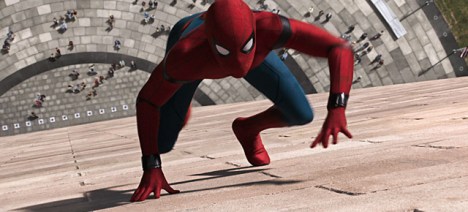
At the same time, there is a definite trend in contemporary trailers – especially for big blockbuster releases – to ensure that the audience knows exactly what they are going to get. This is most obvious in trailers like Alien: Covenant or Spider-Man: Homecoming, which go beyond spoiling the entire plot thread to spoiling big moments from the film; memorable cameos or distinctive sequences. When dealing with spectacle driven films like Kong: Skull Island, there is a conscious effort to load the trailer with spectacle, revealing monsters and set pieces.

To be fair, this is arguably more of a problem with big budget summer releases. These trailers typically belong to blockbusters that have to absolutely saturate the market in order to build hype, releasing trailers more than a half a year before release or even offering trailers for trailers. It is inevitable that this desire to effectively carpet-bomb the media landscape with footage will reveal far too much about the film in question, particularly for those who task themselves with keeping track of this information. The sparse understated trailers for smaller films like Get Out are a blessing.

It is interesting to wonder what drives these creative decisions, why studios are saturating the market with trailers that seem to lay out every beat ahead of time and which effectively promise every twist that will be delivered over the course of the narrative. There is a lot to be said for the joy of seeing a film blind, without knowing exactly what is coming and how it will be delivered. It seems reasonable to argue that the job of a trailer is to tease, to offer the viewer a hint of what is in store, instead of mapping out how they might spend two hours of their lives.

However, while these views are quite common on the internet and among film fans, it is interesting to wonder whether they reflect the opinions and taste of the mass audience. Is this increasing tendency towards spoiler-heavy trailers that plot out the entire arc of a film are driven by the tastes of audiences? Is this how the majority of viewers want their entertainment delivered, even if they would never frame it in those terms?

Continue reading

Non-Review Review: Handsome Devil

Handsome Devil is a charming coming of age tale set against the backdrop of a South Dublin Rugby School.

The film follows loner and outcast Ned, who finds himself shunned at boarding school because he lacks the ability and interest to play rugby. Ned keeps to himself, even isolated from the other boys via his private room. However, Ned’s world is thrown into upheaval when the school receives a new student. Suddenly, Ned finds himself sharing the space with Conor, a promising young rugby prospect who might have the capacity to lead the team into the finals.

Seaing red.

The plot beats and themes in Handsome Devil are fairly standard, keeping very much consistent with the genre of coming of age secondary school tales; the notion of self and identity play into, juxtaposed with the urge towards conformity. There are inspiring teachers and tough decisions, eroding cynicism and brutal betrayal. Handsome Devil is aware of these expectations, to the point that all of this is laid out in the exposition-driven framing device at the start of the film.

However, Handsome Devil is elevated by a sense of genuine warmth beneath this very familiar exterior. The script is well-observed, and the direction is light enough to let a charming cast play well off one another. Like Ned, Handsome Devil is nowhere near as cynical as it appears, and it plays best when it drops the wry irony in favour of an endearing humanism.

That’s grass.

Continue reading

Non-Review Review: Ghost in the Shell

Ghost in the Shell is a fascinating, deeply flawed, film.

The movie is vibrant and vivid, rich both textually and texturally. Its style, as much riffing on American films inspired by Japanese cyberpunk as by Japanese cyberpunk itself, is simply breathtaking. The hypersaturated colours leap off the screen, which is somewhat ironic given that the 3D rendering mutes them ever-so-slightly. Those bright blues, those glowing greens, those rich reds, they combine to create a sensation that might be described as “bubblegum noir”, a reworking of the noir trappings of cyberpunk with the colour turned way up.

Putting the pieces together.

It is almost too much handle. There is an appealing aura of sensory overload to the world of Ghost in the Shell, as if the film might best be experienced by passively allowing the world to wash over the audience, to sink into the movie in the same way that several members of the cast threaten to sink into virtual networks. Ever frame is saturated with detail, creating a sense that the audience might drown in all the little touches that suggest this neon fantasia dystopia. Ghost in the Shell works best as a mood, a visual lava lamp of shapes in motion.

The problems only really emerge when the story and characters come into focus, the film struggling to grapple with its themes through dialogue and exposition as readily as it does through steadicam tracking shots and computer-generated establishing sequences. Every character in Ghost in the Shell speaks as if preparing for a freshman philosophy tutorial, ruminating on the threads that bind identity and memory together. Characters have little time for metaphor, often bluntly over-explaining their world and their emotional state.
Neural network.

Ghost in the Shell feels at once too smart and too dumb for its own good. This is perhaps most obvious in the allegations of whitewashing that hang over the film, the wry irony of casting Scarlett Johansson as the central character in a big-screen adaptation of a beloved piece of Japanese culture. Johansson’s presence has sparked debate about cultural appropriation and representation. To its credit, Ghost in the Shell makes an earnest attempt to engage with this idea, turning audience frustration into theme. It is a very clever way of dealing with the issue.

The only problem is that Ghost in the Shell simply cannot talk its way around this core concern. Ghost in the Shell tries to recast itself as a narrative that is fundamentally about cultural appropriation, but in doing so it cannot escape the fact that it is also an example of cultural appropriation. Like those circular debates about identity and memory, these is a sense that Ghost in the Shell is attempting to trap the audience in echoes and reflections, a glitch that betrays a fundamental flaw.

Manufactured.

Continue reading