• Following Us

  • Categories

  • Check out the Archives


  • Awards & Nominations

Non-Review Review: The Hunger Games – Mockingjay, Part II

As with the rest of the series, The Hunger Games: Mockingjay, Part II has an admirable sense of ambition.

There some bold ideas here for a young adult series, some of which are increasingly relevant to twenty-first century political realities. The Hunger Games: Mockingjay, Part II feels like very old-school science-fiction, tackling big issues through metaphor and allegory. While the final film in the series is very much an action spectacular, the script offers any number of observations about terrorism and state power, about media and revolutionary politics. It is nice to see such a big-budget high-profile film tackling these ideas.

Straight arrow...

Straight arrow…

At the same time, The Hunger Games: Mockingjay, Part II feels a little too clean and tempered for its own good. The script is willing to engage with complicated questions of moral relativity, but the problems frequently feel superficial. The movie frequently suggests that political and military realities are not as clear-cut as they might appear, before offering a rather clear-cut solution to what was presented as a moral quagmire. The Hunger Games: Mockingjay, Part II does not follow the path of least resistance, but it follows the path of second-least resistance.

Oddly enough for a story that has been split across two films, The Hunger Games: Mockingjay, Part II feels rather incomplete and rushed in places. Certain sections of the expansive ensemble are casually brushed aside towards the end, with the film tying its major plot threads up quite hastily and efficiently. Still, The Hunger Games: Mockingjay, Part II is impressively produced and anchored in a few great performances from a very experienced cast. The result is a smooth-running film that perhaps might have been better to embrace a few more bumps and hiccups.

As the world burns...

As the world burns…

Continue reading

Non-Review Review: Spotlight

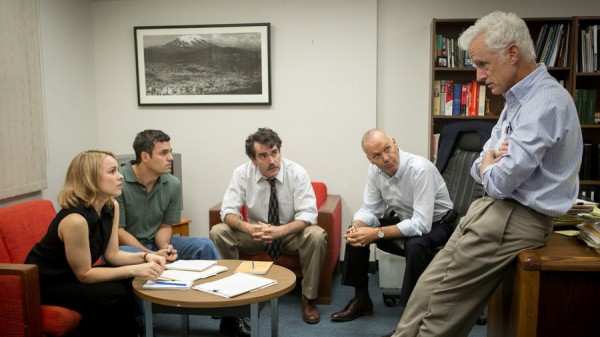
Nominally, Spotlight is about the exposé that ran in the Boston Globe identifying dozens of paedophile priests who had been shuffled around Boston parishes and the corrupt institution that sheltered them. Thomas McCarthy’s film never shies away from the horror stories told by the survivors of such institutional abuse, nor does it ignore the systems that were complicit in perpetuating and covering up that abuse. Running just over two hours, McCarthy’s film is meticulous and painstaking as it sorts through all the leads and follows the unravelling thread.

However, Spotlight is also about something bigger. It is a story about institutional structures as they exist, and how those structures are primarily motivated to protect themselves. The big reveal in Spotlight is not that the abuse is taking place, it is just how many people tried in how many different ways to expose that abuse to the cold light of day. The Catholic Church might be the most significant institution involved in the cover-up, but Spotlight suggests that the structures of Boston (and implicitly all over the globe) failed the people who needed them most.

spotlight4

Spotlight is a powerful film. McCarthy is not the most dynamic or exciting of directors, but his matter-of-fact presentation style suits the material perfectly. Towards the end of the film, journalist Matt Carroll jokes that he has started working on a horror novel to distract himself from the particulars of the case. Spotlight is very much a horror story, but a horror story where the discomfort is tied to the sheer inevitability. McCarthy’s camera is always definite and steady; a slow pan or zoom confirms what the audience already suspects, and is all the more effective for it.

McCarthy has assembled a fantastic cast, including John Slattery as Ben Bradley Junior. Bradley is the son of Benjamin Bradley Senior, the executive editor at The Washington Post who oversaw the Watergate coverage and who was played by Jason Robards in All the President’s Men. This creates a nice thread of real-life continuity for Spotlight, cementing its pedigree. McCarthy’s journalism epic is powerful stuff, and perhaps the most compelling endorsement of long-form investigative journalism to appear on screen in quite some time.

spotlight3

Continue reading

Non-Review Review: Spectre

Second acts are always tough.

This is very much the case with Spectre, whether in terms of the film itself and its relationship with Skyfall. Despite the considerable backlash that Skyfall has generated since its release – an inevitability in this era of hype – it remains one of the best-loved and best-received James Bond films. It makes sense for the follow-up to try to capitalise on that success, in much the same way that Tomorrow Never Dies attempted to up the ante from GoldenEye and that Quantum of Solace attempted to build upon Casino Royale.

Spectre will suffer in the inevitable comparisons to Skyfall. The film doesn’t have the same clarity of purpose, revisits a few too many of the same things, and lacks the sheer beauty of Roger Deakins’ cinematography. Any direct comparisons between the two films will see Spectre coming up short. This is a shame as, taken on its own merits, Spectre is a remarkably successful James Bond film. Indeed, with three out of his four films firmly in the “hit” category, Daniel Craig assures his place as a James Bond for the ages.

Spectre is perhaps a little over-extended and gets a little lost in its own extended middle section. It perhaps falls a little too heavily into the “origin story” territory teased by Skyfall. However, it is stylish and confident, with charisma to spare. Spectre retains the energy and verve of its predecessor, capitalising on a script that knows what it wants to be about and perhaps the franchise’s most artful director. Spectre is one of the better Bond films, but it suffers from having to follow one of the very best.

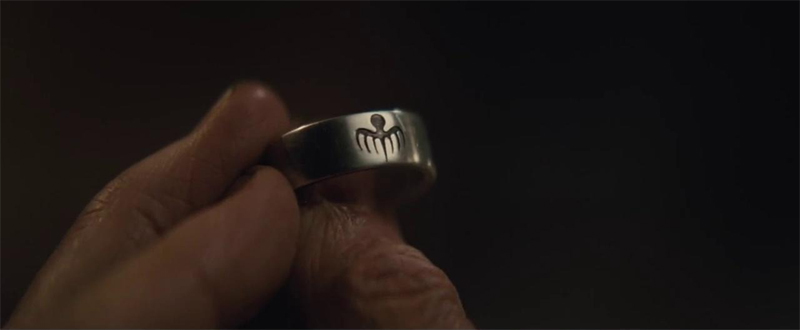
A nice ring to it...

A nice ring to it…

Continue reading

Non-Review Review: Black Mass

Black Mass has endearing ambition.

This is an old-school crime biography, one that foregoes clarity or singularity of purpose in favour of sprawling scale. Black Mass covers decades in the life of notorious Boston gangster James “Whitey” Bulger. The thematic throughline is his connection to the local branch of the Federal Bureau of Investigation and Agent John Connolly. Connolly grew up with Bulger, and hits on the seemingly ingenious idea of advancing his own career by bringing Bulger into the fold as an “informant.” It is an arrangement that benefits Bulger and Connolly more than the FBI.

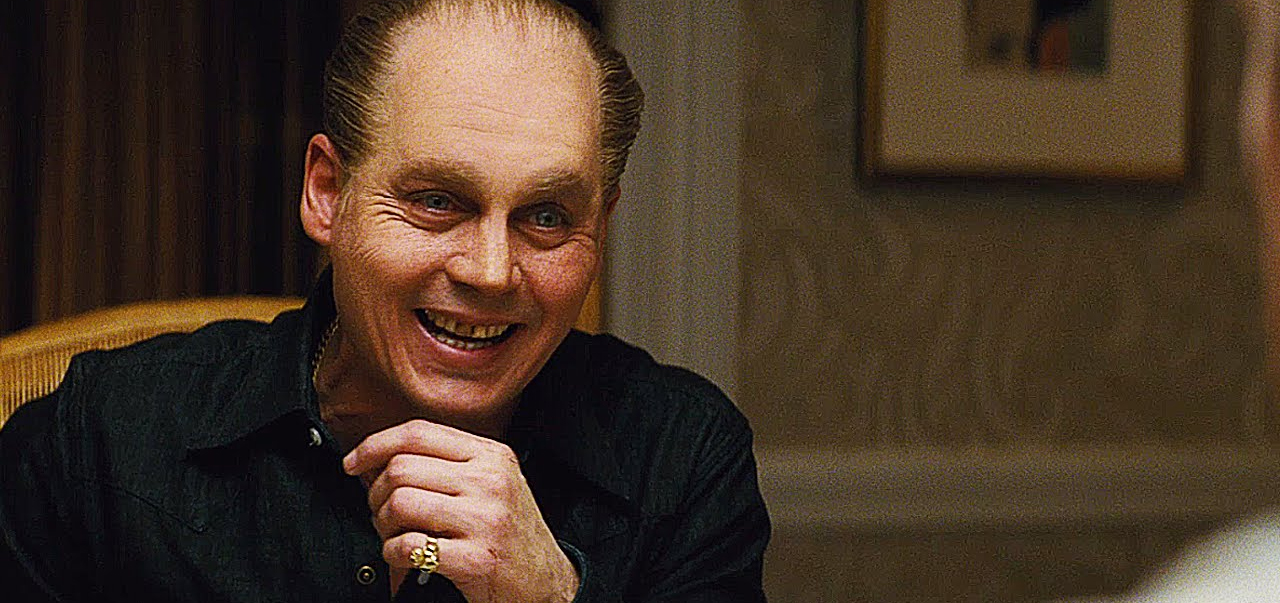
Gangbusters...

Gangbusters…

There is an interesting story to be told there, the tale of two men gaming the system for their own advantage. Many of the stories around Bulger are so ridiculous and improbable that they defy belief; they make for perfect cinematic fodder. With two strong lead actors, and a clear arc, the tale of Bulger and Connolly could be compelling and revealing. However, it also seems far too modest for Black Mass. Although Bulger and Connolly form the spine of the film, its limbs sprawl out in every possible direction trying to cover everything.

It is a valiant effort. There are moments when Black Mass really works as it picks on an awkward conversation or a loaded confrontation. However, these moments feel fleeting; they are a chain of short stories rather than a single cohesive narrative. Black Mass is frequently fascinating but seldom satisfying.

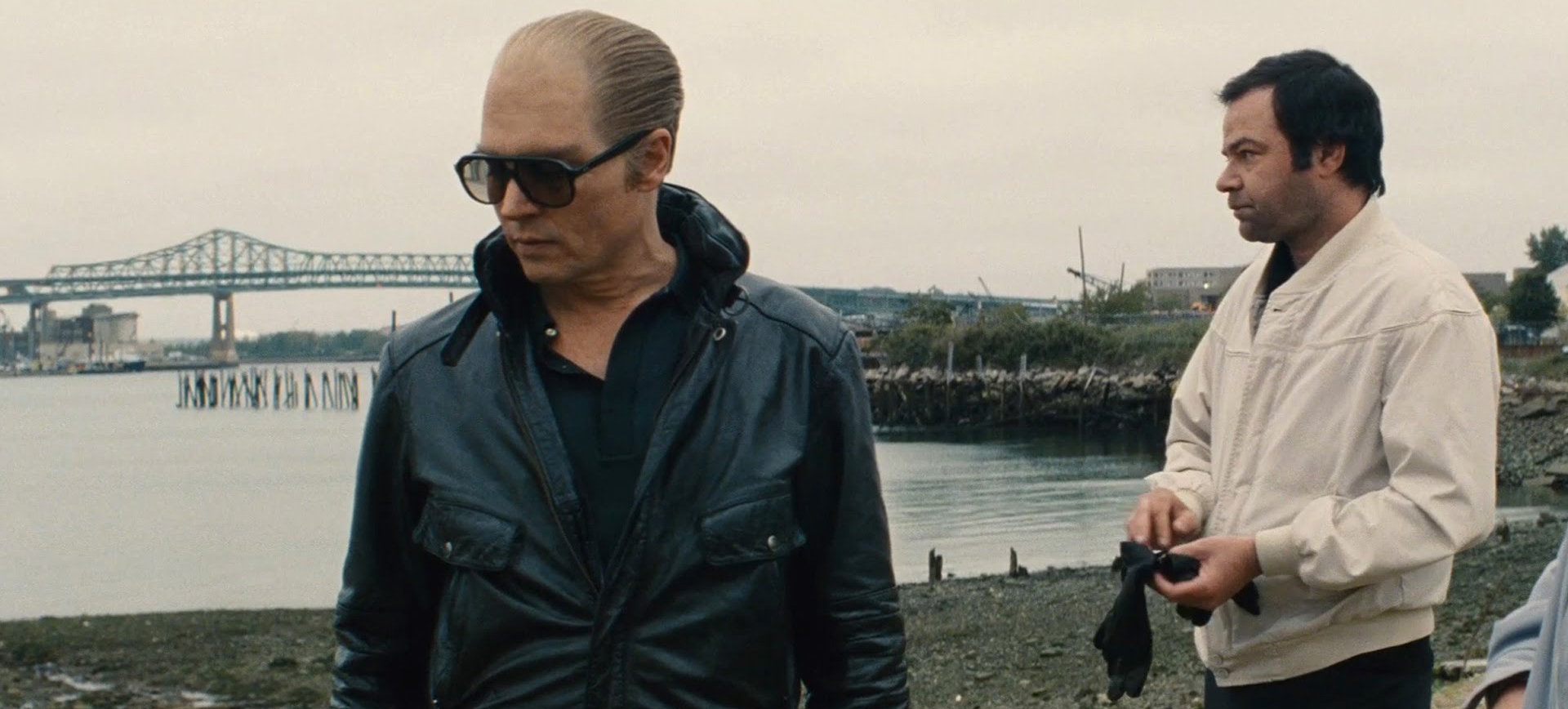
Awash with corruption...

Awash with corruption…

Continue reading

Non-Review Review: The Last Witch Hunter

There are quite a lot of things wrong with The Last Witch Hunter, to the point that it’s almost endearing that the film sends so long setting up a potential sequel. (The Second Last Witch Hunter, perhaps?)

The Last Witch Hunter is a misbegotten mess that feels like the work of five different writers working with five different directors and a surprisingly consistent VFX team. The film is stilted, illogical, clumsy and ill-judged. Indeed, it seems like the production went wrong from the moment it was decided that Vin Diesel would be the perfect actor to convey the enormity and tragedy of immortality. Diesel is a reliable screen presence, with considerable gravitas, but he is not ideally suited to this sort of pathos.

... and carry a big sword...

… and carry a big sword…

The Last Witch Hunter stumbles from half-formed idea to half-formed idea, through a mess of CGI and misjudged direction. There are point where the action can be difficult to follow, whether through the script’s dependence on liberal amounts of exposition or the fast-paced editing that makes it difficult to get a sense of character or location in the midst of all this computer-generated mayhem. There is something frustrating to all this, given the faintest hints of interesting concepts that are smothered in rip-offs of other better films.

The audience might well wish that it really is The Last Witch Hunter.

Any witch way, but loose...

Any witch way, but loose…

Continue reading

Non-Review Review: Mississippi Grind

Mississippi Grind is an intimate and thoughtful character study, featuring two superb central performances from Ben Mendelsohn and Ryan Reynolds. Written and directed by the team of Anna Boden and Ryan Fleck, Mississippi Grind finds two gamblers winding their way down the eponymous river in the hopes of winning big at a poker game in New Orleans. “Like Huck Finn,” compulsive gambler Gerry insists when the idea first comes to him. It seems an appropriate comparison, given the themes of the film.

Never pushing its meditations on the American Dream too hard, and never labouring its points too heavily, Mississippi Grind achieves an honesty that borders on the profound. More than that, it captures both the romance and the desperation of that one last bet – the inability to settle for “enough” and the insistence that there is always everything to be won, even if it means that everything can be lost.

Meet me in St. Louis...

Meet me in St. Louis…

Continue reading

Non-Review Review: Pan

There is something delightfully off-kilter about Pan, to the point that it seems almost surprising that it got made.

After all, Peter Pan doesn’t seem to need an origin story. All the core ingredients are included in the original stories that J.M. Barrie wrote at the start of the twentieth century, allowing generations of other writers to improvise and elaborate around a rather robust blueprint. Steven Spielberg hit on an interesting idea in theory (if not necessarily execution) in Hook, producing a sequel imagining what might happen if the boy who never grew up… actually grew up. However, there does not seem to be an equivalently interesting hook into a prequel story.

Don't be so harsh, Blackbeard...

Don’t be so harsh, Blackbeard…

Indeed, there is very little in Pan that connects it to its source material, beyond a few overlapping names and sly in-jokes. Captain Blackbeard meditates on Neverland as the realm of death, alluding to the historical context of the stories, but the film is absolutely fascinated by the concept of death in Neverland. James Hook might be taunted with a “tick tock” and dangle his hand in crocodile-infested waters, but the film has very little interesting to say about his relationship with Peter Pan beyond falling back on the trope of suggesting that they were once friends.

However, there is something fascinating about the execution of Pan. Even if the script doesn’t hold together, and the film often seems like two-hours of punk pop candy floss, there is an endearingly gonzo quality to the film that makes its complete refusal to work all the more interesting.

Sheets to the wind...

Sheets to the wind…

Continue reading

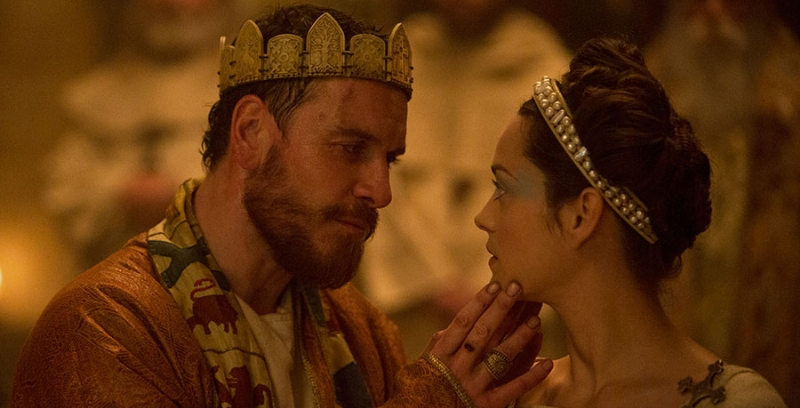
Non-Review Review: Macbeth

Justin Kurzel understands Macbeth.

A lot of Shakespeare’s work is viewed through the lens of cultural importance, and quite rightly. His plays codified a phenomenal amount of the English language in use today, incorporation and amalgamating words and phrases that people use without even thinking. Shakespeare codified drama and storytelling in the English language, to the point where any number of his plays can be cited as the defining example of particular styles of dramaturgy. There is no other figure who can cast such a shadow over English-language culture.

A Field in Scotland...

A Field in Scotland…

However, the tendency to treat Shakespeare’s works as priceless artefacts – an attitude engrained by the (rightful) reverence they receive and the way that they are taught in schools – is to miss the vitality and excitement of his work. Shakespeare might have endured as the defining wordsmith of the English-language, but before that he was just a really popular writer with an incredibly populist touch. His plays existed as spectacle before they became holy relics. The jokes played to the galleries packed with punters wanting both high and low culture.

As much as Macbeth might be a searing and insightful exploration of the relationship between violence and masculine identity, it was also pure unadulterated pulp. Justin Kurzel plays up this pulpy spectacle, crafting a version of Macbeth that anchors apocalyptic horror in two amazing central performances. Macbeth is a joyous and horrific piece of cinema, brutal and beautiful in a way that befits its source material.

Oh I just can't wait to be king...

Oh I just can’t wait to be king…

Continue reading

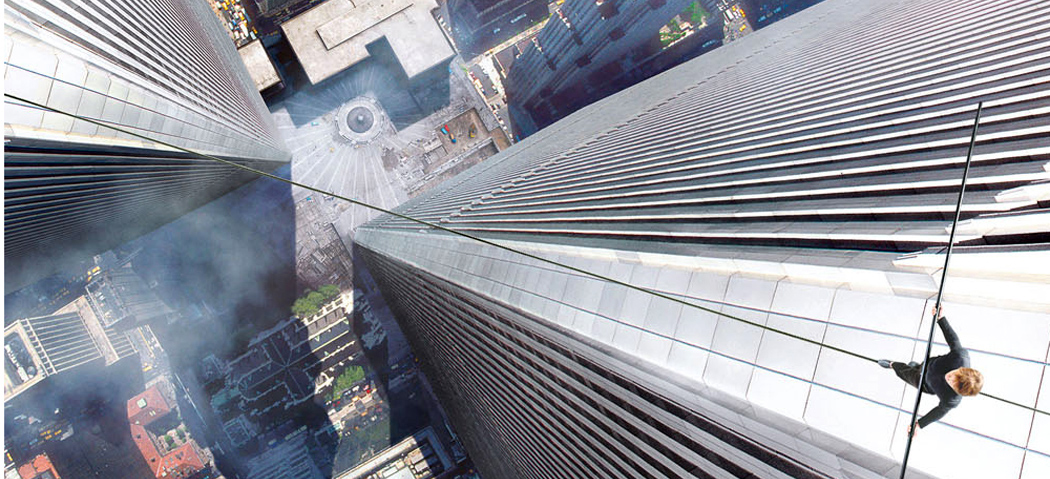
Non-Review Review: The Walk

“It is not real,” Philippe Petit reflects quite early in The Walk.

Resting his chin against one of the steel supports running the height of the World Trade Centre, Philippe stares upwards into infinity. Up until that moment, the Twin Towers had existed as a conceptual object for the young French tightrope artist; he had only seen them in photographs and sketches, framed in comparison to the Eiffel Tower to afford them a sense of scale. Appreciating the majesty of the World Trade Centre in the flesh is almost too much to process. Making them more real has somehow made them less real.

Walk on the wild side...

Walk on the wild side…

Philippe could just as easily be talking about the film that surrounds him. Director Robert Zemeckis might be best known for his work on Back to the Future, but a lot of his twenty-first century filmography has been fixated upon the unreal; Zemeckis has become known for his fascination with motion-capture and computer-generated imagery, the illusive pursuit of verisimilitude through the uncanny valley. The special effects used to realise The Walk are superb and top of the line, but there remains a feeling of unreality to the whole film.

It would be impossible to film The Walk in a real location using real stunts. The Walk is an ode to New York City, but to a version of New York City that no longer exists. Tourists cannot visit it, although perhaps it might be found on a postcard or trapped in a photo. The Walk cleverly and consciously refuses to downplay that feeling of unreality, feeling almost like a nostalgic memory recalled through the fog of time. Philippe Petit’s tightrope walk between the Twin Towers was so effective because it was real; The Walk is so effective precisely because it is unreal.

Stepping out...

Stepping out…

Continue reading

Non-Review Review: The Intern

The Intern is a likeable, competent movie about likeable, competent people doing likeable, competent things.

What is most remarkable about Nancy Meyers’ latest effort is the fact that there is no real tension at play here. Sure, there’s a three-act structure; there are revelations; there are insecurities; there is crying. However, it seems like everybody in the movie wants nothing more than to get along with everybody else in the movie. Sure, there are the obligatory comedy screw-ups and miscommunication, but there’s never a real sense of risk or stakes as the movie wanders politely from one work-related crisis to another.

Nobody gets too bent out of shape...

Nobody gets too bent out of shape…

It is not an approach that makes for particularly compelling or exciting viewing. Indeed, the characters populating The Intern seem terrified about the idea of getting anybody’s blood pressure up; whether that of septuagenarian Ben Whittaker or the prickly mother of executive Jules Ostin. Everybody involved in The Intern, including the characters themselves, are professionals. Sure, mistakes happen and people mess up, but it’s not the end of the world. There is something oddly comforting in that, even if nobody watching The Intern will be on the edge of their seat.

In the end, The Intern is a lot like the eponymous character; it is steady and reliable, amicable and inoffensive. It looks smart and it knows just what to say. Everybody’s just wary about getting that heart beating a little too hard.

"You feel tense..."

“You feel tense…”

Continue reading