• Following Us

  • Categories

  • Check out the Archives


  • Awards & Nominations

Non-Review Review: CHiPs

CHiPs is what happens when you adapt a successful-yet-forgettable eighties action series in the style of a poorly-aged nineties sitcom.

There are a whole host of problems with CHiPs, but tone is the biggest concern. Writer and director Dax Shepard never seems entirely sure what he’s pitching, which leads to a bizarre mishmash of a juvenile gay panic comedy with retro nostalgia trappings strapped on to a lazy police thriller. None of these elements work particularly well on their own, but mashing them all together leads to even bigger problems. CHiPs tries to be several different things, and succeeds at none of them.
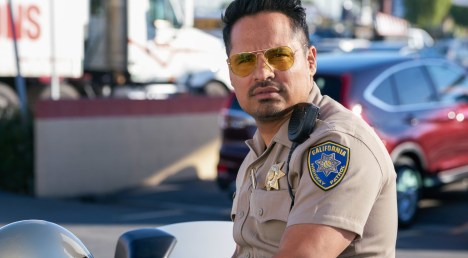
When he catches these corrupt cops, he’ll send them to the Peña-tentiary.

Who is the target market for CHiPs? The film pitches itself as a raunchy parodic reimagining of a show that was beloved at the time, but has faded into history. There’s obvious precedent here, and CHiPs can be reasonably placed as part of the movement that includes 21 Jump Street and Baywatch. However, CHiPs does not aim for nostalgia enough to appeal to fans of the show, and is not clever enough to attract the same audience as 21 Jump Street. The result is a reboot of an eighties motorcycle cop show aimed at fourteen-year-old boys.

Ironically, CHiPs feels retro for all the wrong reasons. CHiPs is largely defined by the idea that bodily functions (and male sexual organs) are hilarious, and that there is nothing funnier than two dudes touching each other’s erogenous zones, particularly when there’s at least one dude pointing out how hilarious it is. CHiPs is defensive nineties gay panic wrapped in eighties nostalgia. It is a strange cocktail.
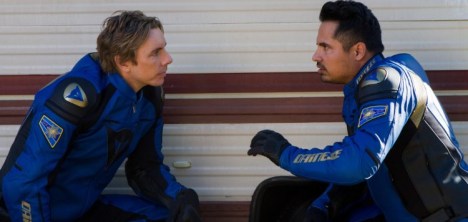
Cashing their CHiPs.

Continue reading

Non-Review Review: Life

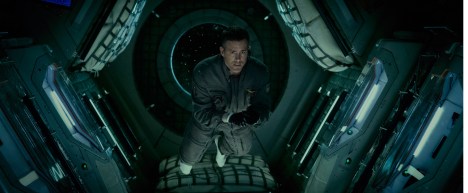
Life has a certain endearing b-movie schlock value to it, a cheesy and derivative deep space creature feature that indulges all manner of body horror in its race to the climax. With all due respect to the esteemed philosopher Forrest Gump, most viewers know exactly what they are going to get.

The biggest problem with Life is that the film is very predictable. There is very little here that seasoned science-fiction horror film fans will not have seen before. Indeed, this is arguably reflected in the biggest problem with its central monster. The first life form discovered in outer space, the creature that stalks the crew in Life is initially appealingly alien; a translucent starfish evolving into a mass of tentacles with a love of bodily orifices. Unfortunately, the creature quickly becomes more conventional. The movie even names the beast “Calvin.”

Caught in the Gravity of Alien.

And yet, there is a quirky appeal to all this. Life is a movie with an attitude mirroring that creature. It begins as something intriguing before morphing into something far too familiar. More than that, there is a ruthless efficiency to the film. Characters are rendered as little more than archetypes, information is delivered primarily as plot set-up rather than character development, the first act of the film races through what should be huge dramatic beats in order to get to the squidgy monster mayhem. Life knows what it is, even when it’s not pretty.

There is something endearing about this ruthless efficiency, the commitment with which Life seizes upon its b-movie stylings as a vehicle for really creepy space scares. Life suffers a little bit from its by-the-numbers second act, but it demonstrates enough enthusiasm for its schlocky sensibilities that it’s hard to hard. Life finds a way.

Needing some space.

Continue reading

Non-Review Review: Beauty and the Beast (2017)

The best and worst thing that can be said for Beauty and the Beast is that it beautifully recreates the animated source material.

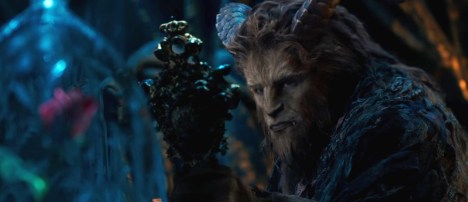
A lot of love and affection went into Beauty and the Beast. The production design is amazing, a truly stylish blend of physical objects and computer-generated imagery to create something that feels like a hybrid between live action and animation. It is a very skillful blending of two different approaches to film making. On a purely technical level, judged as a mechanical adaptation, Beauty and the Beast succeeds triumphantly. It is a live action fantasia recreation of a beloved animated film.

More than that, Beauty and the Beast works largely because it is so effective an adaptation. Beauty and the Beast scores phenomenally well because it so carefully and precisely translates material that has incredible emotional power. There is a case to be made that the original Disney adaptation is one of the best films in the company’s canon, with some of the best songs and the most memorable set pieces. The live action adaptation ensures that very few of these moments get lost in translation, which lends the movie a compelling weight.

Unfortunately, it is also a reminder that a nigh-perfect adaptation of this version of the story already exists. Beauty and the Beast runs a muscular two-hours-and-six minutes to the animated film’s eighty-two minutes, but that statistic is misleading. The additions are pointless at best and distracting at worst. As a whole, Beauty and the Beast makes the animated original look like a more streamlined take on this tale that cuts a lot of the fat, telling the same story in a way that is at once more concentrated and more concise.

Mirror, mirror.

Continue reading

Non-Review Review: Kong – Skull Island

Kong: Skull Island has an endearingly “pop” sensibility to it.

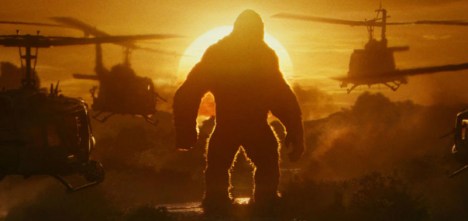
There are moments at which Kong: Skull Island feels more like an evocative theatrical-length montage than a film. This is only the second feature-length film from director Jordan Vogt-Roberts, and the movie has jarring and disorienting quality to it. Vogt-Roberts saturates the screen with reds and greens, whirls the camera at incredible velocity, and cuts at an impressive tempo. Even dialogue heavy scenes are constantly panning and cutting.

Sundown showdown.

This approach does no favours to the cast. Most of the players in Kong: Skull Island seem to have more trouble finding a consistent character throughline than mythical monsters. Tom Hiddleston seems quite lost for most of the film. Brie Larson probably does the best job of any of the major players, although the rapid-fire editing helps John C. Reilly seem suitably eccentric as the obligatory insane exposition character. Veteran performers like John Goodman and Samuel L. Jackson are forced to hold on for dear life.

However, none of this is a problem. For all its flaws, Kong: Skull Island never over-estimates how interesting its human characters are, mostly treating them as a vehicle to get to the promised monster mash. Vogt-Roberts’ direction might seem hyperactive and over-caffeinated, but it understands this. The camera and the cuts are always moving towards the monster, with the characters serving to deliver thematic dialogue and look suitably moody as seventies music plays over montage sequences.

“Oh, so that’s why they call it Skull Island.”

Kong: Skull Island never feels entirely cohesive as a feature film. That is not a fatal flaw. The movie feels weird and ethereal, the audience constantly kept off-balance by the heighten stylistic choices and the gusto with which the movie seizes upon these opportunities. After all, the eponymous island is a place where anything is possible and nothing is as it appears. It feels somewhat fitting that the movie drifts into a loose free-form style driven more by imagery than by story.

Kong: Skull Island feels in someways like a monstrous monster movie, and there’s something quite appealing in that.

No bones about it.

Continue reading

Non-Review Review: Tschick

This film was seen as part of the Audi Dublin International Film Festival 2017.

Tschick is a charming, if disorganised and overly episodic, coming of age road movie.

The basic set-up of Tschick is effective, if a little familiar. Maik Klingenberg is an imaginative and socially awkward teenager, the child of an alcoholic (if well-meaning) mother and a distant (and philandering) father. He is invisible to his classmates, except to the eponymous Tschick. Andrej Tschichatschow is a new arrival from Russia. He is antisocial, he smells bad, and he suffers from alcoholism despite only being a teenager. Naturally, he proves even less popular than Maik. The other students don’t know Maik exists, but they hate Tschick.

Cliffhanger ending.

Cliffhanger ending.

With his mother checked into rehab and his father absent for other reasons, Maik is left to fend for himself. He ends up embarking upon a cross-country road trip with Tchick in a stolen car. Along the way, the pair have a series of encounters with a wide variety of people and intersect with various other walks of life. As a result, Maik and Tschick have a unique shared experience, forging a deep bond and a mutual respect. The resulting journey is full of wry well-observed comedy and heart-warming moments, largely held together by the charm of leads Tristan Göbel and Anand Batbileg.

However, Tschick lacks the focus necessary to tie these elements together. It is both too focused on its own narrative and character arcs to fully embrace a stream-of-consciousness “on the road” travelogue style and too episodic to cohere into a single strong narrative. The result is a film that feels rather uneven and disjointed, a road trip constantly hitting speed bumps.

Venturing far afield.

Venturing far afield.

Continue reading

Non-Review Review: Headshot

This film was seen as part of the Audi Dublin International Film Festival 2017.

The obvious (and easy) comparison for Headshot is The Raid.

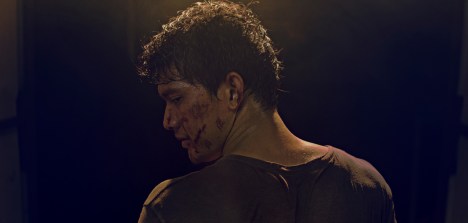
Part of that is down to the superficial similarities. Both are relatively straightforward Indonesian action movies starring Iko Uwais with an emphasis on martial arts. Even beyond that, The Raid was a breakout hit and exists as one of the defining modern martial arts movies for wider audiences. Even without the similar stuntwork and the combination of lead actor and genre, The Raid would be a stock point of comparison for Headshot. The film even seems to invite and encourage the comparison, with directors Kimo Stamboel and Timo Tjahjanto consciously evoking Gareth Evans’ style.

Headed into danger.

Headed into danger.

The comparison does Headshot no favours. For all the similarities between the two films, the differences are telling. Headshot has a style that consciously evokes The Raid, but it lacks its streamlined efficiency. It has a number of impressive prop-heavy set pieces that call to mind the impressive work in The Raid, but it never embraces the loose and freewheeling style that made The Raid so striking. More than that, Headshot never manages the delicate balance between rudimentary character work and a solid story, leading to a film that feels both paper-thin and over-developed.

Headshot is a solidly middle-of-the-road martial arts slugfest, but it lacks the sheer “wow!” factor that made The Raid pop.

Bar none.

Bar none.

Continue reading

Non-Review Review: The Farthest

This film was seen as part of the Audi Dublin International Film Festival 2017.

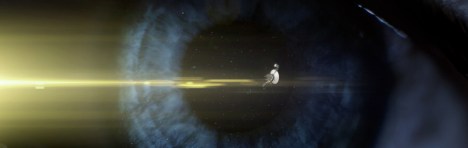
The Farthest is a fascinating documentary looking at the history and the legacy of the “Voyager” space programme.

Assembling a panel of experts from both inside and outside the development process, director Emer Reynolds crafts a captivating examination of mankind’s first journey beyond the boundaries of the solar system and into the untested void. The Farthest is a romantic tribute to the idea of space exploration, to the wonders that it holds and the inquiries that it inspires. It is a documentary that looks to the stars and wonders, as interested in what mankind is putting out there as it is in what wonders lie in wait.

thefarthest

The Farthest is bookended by a number of beautiful shots from Reynolds. The camera stares upwards at the sky as it pans slowly across a number of different locations. The sky can be narrowly glimpsed between the branches of tall trees. The audience’s eye is channeled upwards through the framework of a steel pylon. Occasionally, the sky is clear and blue. Sometimes there are faint signs of human activity, with planes charting the sky at a much more manageable scale than the craft at the centre of the documentary’s narrative.

There is something very striking and very beautiful in these opening and close shots, something that captures the sensation of looking up into the wild blue (or black) yonder and wondering what is out there or what might be staring back. The Farthest feels like romantic ode to the majesty of space, and one that deserves to be seen on the big screen.

thefarthest1

Continue reading

Non-Review Review: Get Out

This film was seen as part of the Audi Dublin International Film Festival 2017.

Get Out is a fantastic horror comedy from Jordan Peele.

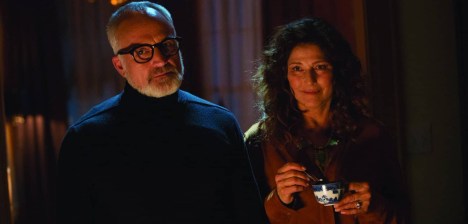
The premise of Get Out is relatively straightforward, with Rose taking her African American boyfriend Chris home to meet her wealthy white parents. What follows is essentially a twenty-first century horror movie twist on Guess Who’s Coming to Dinner?, in which Chris finds himself growing increasingly uncomfortable in the presence of Rose’s very liberal parents. There is an awkward unease to his visit with the family, beneath all the welcoming smiles and the mannered politeness.

Terrorvision.

Terrorvision.

Get Out is a brilliantly wry and ironic piece of film-making, building a very traditional horror movie around a very intangible discomfort. After all, racism is not always something that can be cleanly defined and measured, often reflected in implications and patterns more than individual statements and actions. Get Out masterfully plays on this tension of something so horrifying being rendered so ethereal, most notably through its repeated (effective) use of scare chords and horror angles making normal social interactions especially uncomfortable.

Get Out is a promising directorial debut from veteran comedian Jordan Peele, one that skilfully uses the flexibility and surrealism of conventional horror beats to build a well-observed and uncanny piece of social commentary.

Couldn't be Keener.

Couldn’t be Keener.

Continue reading

Non-Review Review: The Age of Shadows

This film was seen as part of the Audi Dublin International Film Festival 2017.

Kim Jee-woon’s The Age of Shadows is a picturesque patriotic period piece, an espionage thriller unfolding against the backdrop of late twenties Korea.

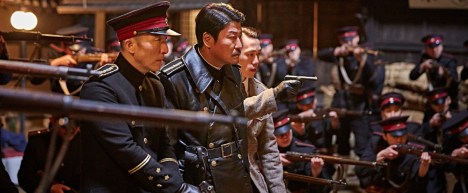
With the Japanese controlling the country, Captain Lee Jung-chool finds himself caught between the occupying forces and the local resistance. Alliances shift, manipulations unfold. Nobody can be trusted, and everything is doubt. Over the course of The Age of Shadows, the plot twists and turns, with shocking reveals and startling betrayals. Everything is beautifully captured on film, with some fantastic work by cinematographer Kim Ji-yong.

Arresting thriller...

Arresting thriller…

The Age of Shadows might be a little longer (and a little more twisty) than it really needs to be, padding out its run-time with gambits and counter-gambits that occasionally lean on flashbacks to provide essential context for the latest shift in allegiance. However, The Age of Shadows is also incredibly graceful, transitioning beautifully between a wide variety of tones and genres without ever missing a step. The Age of Shadows opens as an action film, contorts in a cat-and-mouse thriller, then becomes a more conventional patriotic epic.

In spite of its flaws with pacing and length, The Age of Shadows remains an impressive piece of cinema.

Feeling boxed in...

Feeling boxed in…

Continue reading

Non-Review Review: David Lynch – The Art of Life

This film was seen as part of the Audi Dublin International Film Festival 2017.

David Lynch: The Art of Life is a fairly conventional and straightforward affair as these sorts of documentaries go.

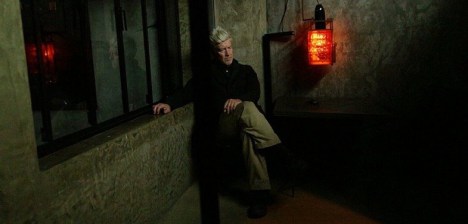
The documentary eschews a lot of the trapping of more adventurous entries in the genre. Indeed, most of David Lynch: The Art of the Life could have been filmed and recorded in David Lynch’s art studio, as the director talks at length about his life and the camera pans loving across his working space and intercuts his monologues with art work that seems to hit on some of the core themes of his narration at any given moment. There is something very standard about the way that David Lynch: The Art of Life is put together.

davidlynch1

Indeed, the film largely eschews any sense of outside context or material. The only voice heard over the course of the film is that of David Lynch himself, recording at his own home studio. Only rarely do the production team need to use material that doesn’t belong to Lynch to flesh out his dialogue, notably during his discussion of his time in Philadelphia. Those occasions are especially noticeable because the documentary takes great care to credit those sources, drawing attention to how much material comes from Lynch’s own archives and records.

However, there is a strong argument that Lynch is suited to this approach. Lynch is a surrealist artist, and it is very hard to argue that anybody has a stronger grip on or understanding of his work. Indeed, the most effective and striking aspect of David Lynch: The Art of Life is the way in which it allows Lynch to make his own arguments from his own perspective crafting a narrative that feels distinct and unique. For all that Lynch is a surrealist, David Lynch: The Art of Life allows him to make a strong case as the only sane man in an insane world.

davidlynch4

Continue reading