• Following Us

  • Categories

  • Check out the Archives


  • Awards & Nominations

Non-Review Review: They’ll Love Me When I’m Dead

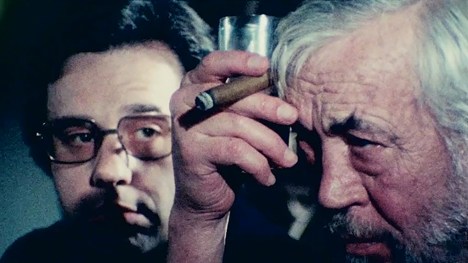
They’ll Love Me When I’m Dead serves as a convincing argument that The Other Side of the Wind works better as a story than as an actual object that exists.

They’ll Love Me When I’m Dead is a feature-length documentary that is only a few minutes shorter than its subject, providing an exploration of The Other Side of the Wind, from its conception through it development and into its long and storied afterlife. It is a very exciting and engaging tale, one that sweeps across Hollywood history, delving into a variety of nooks and crannies. It is a story that is intertwined with dissolving marriages and international politics, of bad luck and tremendous arrogance. All of this existing in the shadow of Orson Welles.
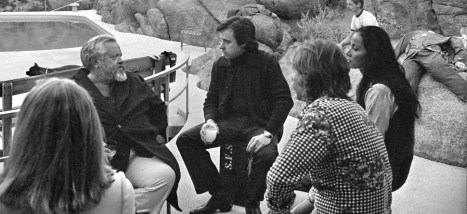
They’ll Love Me When I’m Dead offers an account of the production of Orson Welles’ ill-fated experimental piece of metafiction. It is perhaps a testament to The Other Side of the Wind that it occasionally feels like They’ll Love Me When I’m Dead can perhaps be folded into the wild ambitions of an ageing filmmaker working on a project that would not materialise during his life-time. Towards the end of They’ll Love Me When I’m Dead, archive footage of Orson Welles finds the auteur musing on his next project.

“Maybe it isn’t even the picture,” he confesses to the press. “Maybe it’s just talking about the picture.” Maybe The Other Side of the Wind is not the real headline. Maybe They’ll Love Me When I’m Dead is the real headline.

Continue reading

Non-Review Review: The Other Side of the Wind

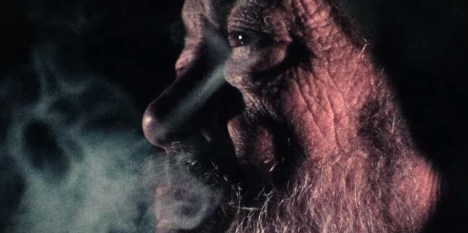
It is still strange to think of The Other Side of the Wind as an object that actually exists.

The film has haunted film films for decades, the prospect and potential of one last Orson Welles film that remains to be found long after the iconic director’s passing. The footage had all been shot. The material was gathered. All that had to be done was to journey through those hours and hours of material, in search of something resembling a feature film. It evokes that famous story about how Michelangelo approached sculpting, except that instead of a lump of marble, this work of art is to be subtracted from mountains of film.

Of course, there is a valid debate to be had about whether the version of The Other Side of the Wind that has been screened can claim to be the real or actual version. After all, the film arguably only ever existed inside the head of Orson Welles. After his passing, the only thing that could be released was an approximation of his vision, an impression of his filmmaking. This is particularly true given the extent to which Welles relied on editing in his filmmaking. Welles famously boasted to Cahiers du Cinema that editing was more important than mise en scene.

However, watching The Other Side of the Wind, there is a strong sense that Welles himself would approve this ambiguity, that he would actively encourage it. The Other Side of the Wind is a knowingly twisty and slippery piece of work, a wry and iconic piece of film that somehow still seems avante garde more than four decades after it was originally shot. There is a sense in which The Other Side of the Wind feels like sly and biting joke, one told by a comedian with pitch-perfect timing. Only one question remains. Who is the butt of this joke?

Continue reading

Non-Review Review: Overlord

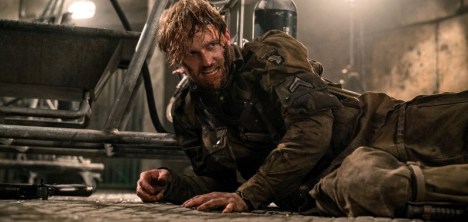
Overlord is a film that works a lot better in concept than in does in execution.

The idea of constructing a pulpy monster narrative around Nazi atrocities during the Second World War has a certain appeal to it. Not only does it evoke the sort of trashy fiction that that often existed at the margins of popular culture, but it also suggests the speculative lenses through which audiences process trauma, the way in which mass media filters horrors almost beyond human comprehension into something tangible and visceral, creating an uncanny and uncomfortable prism through which anxieties over these horrors might be channeled.

Russelling up some fun.

The horrors inflicted by the Nazis are almost impossible to fully comprehend; the systemic brutality inflicted upon those marginalised groups under their authority, the destruction that they wrought across Europe. These traumas linger in the popular memory. While the reality of those atrocities must never be forgotten or downplayed, there is something very powerful in the idea of translating that to the screen through the cinematic language of horror. Like Wolfenstein, Overlord seems to suggest an impressionistic portrait of the horrors of the period.

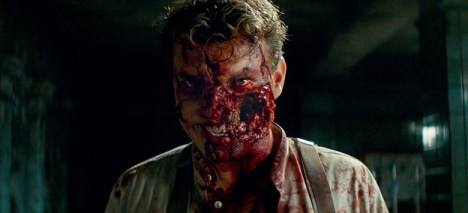
This approach is intriguing, and there are moments when Overlord works very well, when the film is creepy and unsettling in all the ways that it should be creepy and unsettling. However, the film suffers greatly when the script tries to impose a familiar framework on these horrors, when it runs through the checklist of storybeats expected for a major modern cinematic release. Put simply, Overlord works best when it aspires to be Captain America: The First Avenger, but as a horror film” and it works worst when it just tries to be Captain America: The First Avenger.

I want to take his face… off.

Continue reading

Non-Review Review: Widows (2018)

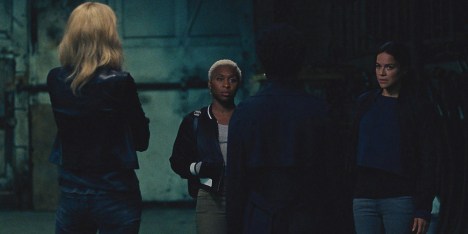
At its most basic, Widows is a testament to applying the skill and craft of two filmmakers working at the very top of their game to a sturdy and reliable genre framework.

The basic plot of Widows is relatively straightforward, adapted from Lynda LaPlante’s book by way of a very successful British television miniseries. A group of women find themselves drawn into an unlikely life of crime when their husbands are killed during a botched robbery. Caught between corrupt politicians and scheming gangsters, the women are thrown out of their comfort zone as their leader commits to completing a heist that was carefully and meticulously planned by her late husband. It’s pulpy, it’s trashy, it’s fun.

Widows of opportunity.

However, the beauty of Widows lies in applying the skill of Gillian Flynn and Steve McQueen to this set-up. Flynn is one of the biggest writers working today, known for both her novels and for her work on screenplays. Gone Girl was enough of a cultural force to turn its title into a verb, and embodied a certain kind of sleek self-aware trashy storytelling style. McQueen is a great writer in his own right, but already one of the most esteemed and respected directors working in contemporary cinema; known for his work on Shame or Twelve Years a Slave.

Widows is a movie that is completely unashamed of the trappings of its story, a familiar story about unlikely criminals who find themselves forced into “one last job”, with the biggest irony being that it is somebody else’s last job. Widows never looks down upon the heightened aspects of its narrative, nor does it feel a need to elevate or legitimise them. Instead, Widows allows its intelligence and insight to fold into the contours of this slick stylish crime thriller. The result is simply dazzling.

Stealy resolve.

Continue reading

Non-Review Review: Sorry to Bother You

Sorry to Bother You is striking, vibrant and vital. And essential.

Boots Riley’s directorial debut is a work of striking confidence, one that emerges almost perfectly formed with the skill and craft of a director much more experienced. Sorry to Bother You knows exactly what it is doing from one moment to the next, without any sense of hesitation of self-doubt. Sorry to Bother You is strikingly self-assured, maintaining an incredible level of high-energy across its runtime. This sustained propulsive dynamism in infectious, as the movie bounces from one big idea to the next.

Dialing up the social commentary.

The most obvious antecedents of Sorry to Bother You are the vibrant science-fiction social satires of the eighties, most notably the work of Paul Verhoeven that used a hyper-stylised aesthetic to depict the grosteque excesses of capitalism. Of course, the true horror of Sorry to Bother You lies in the sense of how the world itself has moved to close the gap over the past three decades. Although Sorry to Bother You unfolds primarily in a lightly fictionalised Oakland, the most unsettling aspect of the film is how close it feels to the modern status quo.

Sorry to Bother You is a work of bold vision.

Few satires are a patch on this.

Continue reading

Non-Review Review: First Man

First Man offers a novel take on a familiar story.

The moon landing is one of the most important moments of twentieth century history, a defining for both America and the larger world. In fact, it remains emblematic of the furthest soil to which  man has ventured to this point. Our species had crossed the threshold of the upper atmosphere before and has done so since. In fact, mankind has even gone back to the moon, although those trips are fading from living memory. The moon landing remains a cultural and historical touchstone, and has been explored from countless perspectives.

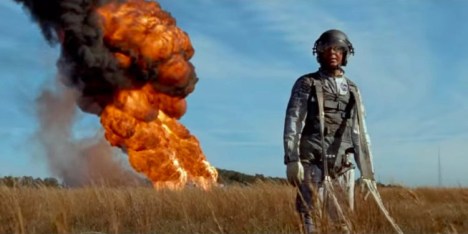
Take your protein pill and put your helmet on.

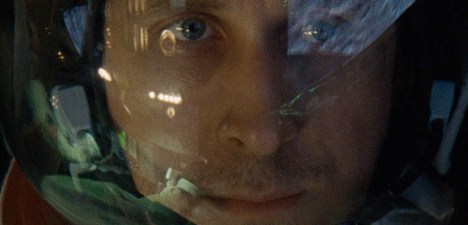
It takes a lot to find a fresh pair of eyes on this journey, but Damien Chazelle does exactly that. The director makes this clear as early as the opening scene. The first time that the audience sees the Earth as a planet, it is not through an establishing shot or the windows of the makeshift space craft. It is reflected in the visor of Niel Armstrong, the warm blue horizon cutting across his visor just below his striking and piercing eyes. Ryan Gosling has always been an actor capable of communicating much through his eyes, and First Man asks us to appreciate space reflected back from them.

So much of First Man is told either focused on or looking through the eyes of Neil Armstrong; the majesty of space and lunar surfaces reflected in the visor of his helmet, or various first-person shot from inside elevators or falling swiftly to Earth. The audience is placed very much in Armstrong’s shoes. Even when Chazelle isn’t literally shooting the film from Armstrong’s perspective, he favours tight close-ups and handheld camera work in confined spaces to suggest that the audience is literally trapped within that space with Armstrong.

Rocket man.

There is no small irony in this, and Chazelle knows it. It seems strange that freshest pair of eyes on the lunar mission should be those of the first man to set foot on the moon. One might have expected the mythology to start there, but instead Armstrong has long remained a figure of mystery. Tacit and introverted, Armstrong has always seemed more like a legend than a human being. The novelty and the power of First Man comes from studying the man who made both that small step and that giant leap.

In doing so, First Man offers a powerful and intimate exploration of a very personal story that just happens to be told on the broadest canvas imaginable.

All fired up.

Continue reading

Non-Review Review: Bad Times at the El Royale

Bad Times at the El Royale is over-stuffed, over-long, and unfocused. It is a muddle of big ideas thrown against one another, the sparks flying in whatever direction they will.

There is a sense in which writer and director Drew Goddard wants Bad Times at the El Royale to be about everything, to find some space within the movie for just about every possible allegory. It is difficult to explain what Bad Times at the El Royale is actually about, for reasons that extend beyond contemporary spoilerphobia. This is a movie that feels at once like it has important things to say, and a very abstract way of trying to say them.

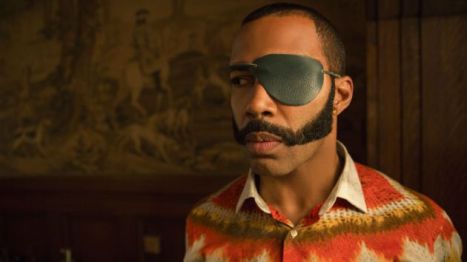
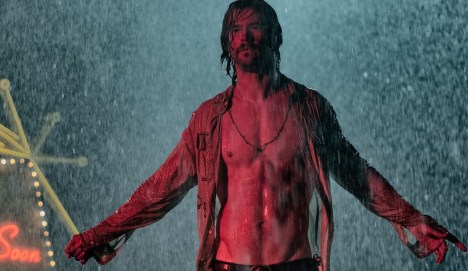
Red guy at night, Hemsworth fans’ delight.

There is also something brilliant in all of this, in the way that Drew Goddard swings wildly at such a broad array of big ideas in such a surreal context. Bad Times at the El Royale is packed to the brim with big ideas, offering a story that could easily be read as scathing political commentary, powerful religious allegory, or biting social satire. It is an unashamedly odd film that is wrestling with a variety of interesting themes. If it can’t pick just a handful to focus upon, it is because there are so many rich veins to tap.

Bad Times at the El Royale is a bold and infuriating piece of pop art. It’s also unashamedly ambitious and enthusiastically esoteric. It’s a movie that certainly won’t be for everybody, but it is broadcasting very strongly on its own distinctive wavelength.

Flower power.

Continue reading

Non-Review Review: 22 July

22 July is both a very well made and a spectacularly ill-judged film.

Written and directed by Paul Greengrass, 22 July focuses on the infamous attacks conducted by Anders Behring Breivik in Norway in 2011. The attacks were brutal and horrific, and sent shockwaves across both Europe and North America. To a certain extent, Breivik’s attacks prefigured a wave of similar violence in the years that followed, violence driven by nativism and xenophobia, toxic forms of ethno-nationalism that crept in to the social and politic spheres. There is no denying that these attacks (and their aftermath) deserve attention and discussion. They are a formative moment in modern western politics.

However, there is also a sense that Paul Greengrass might not be the best director to tell this sort of story. There are several reasons for this, but most them come down to Greengrass’ stylistic sensibilities, his strengths and weaknesses as a filmmaker. It is incredibly obvious from the outset what kind of film Greengrass is trying to make. Greengrass is trying to capture the horror and brutality of Breivik’s actions, and to present the ordinary everyday heroism of those who survived and endured his assault. However, Greengrass’ directorial sensibilities conspire to undercut these aspects of the film.

Greengrass may be a very naturalistic film director, who at times seems almost like a documentarian in his storytelling, but he can direct a visceral and effective action sequence. This means that the part of 22 July that really feels alive and propulsive is the mass shooting. More than that, Greengrass’ no-frills style means that most of the characters in 22 July never feel particularly well-developed or well-formed, never having a life outside of the frame or what the movie expects of them. As a result, the only character who does stand out is Brievik himself.

The result is a film about mass murder and ethno-nationalism that structurally resembles more conventional issue-driven movies, but without any of the strong emotional cues or distinctive performances that serve to place the moral weight within those narratives. Instead, 22 July often feels rather blunt and matter-of-fact, a collection of events and occurrences without any actual living characters to clog up the mechanics. The only things that stand out within 22 July are those elements that are (by their nature) heightened and extreme.

The result is a movie about a horrific terrorist attack that only seems to come alive in its depiction of the attack, and an ensemble drama about the cultural response to trauma where the only compelling character is a white supremacist terrorist.

Continue reading

Non-Review Review: Venom

Transformative trauma is a cornerstone of the superhero genre.

Sometimes that trauma is emotional; the deaths of Thomas and Martha Wayne, the loss of Uncle Ben, the explosion of Krypton. Sometimes that trauma is physical; having piping hot metal coated over your bones as your memory is wiped, physically mutating into something unrecognisable as human, having your entire body turn to trauma. To misquote Stan Lee, “with great power comes great responsibility.” More often than not, it also comes with great suffering.

Back in black.

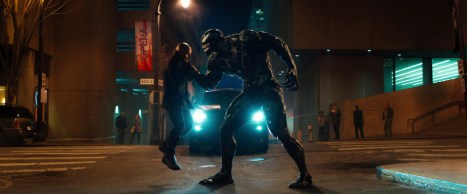
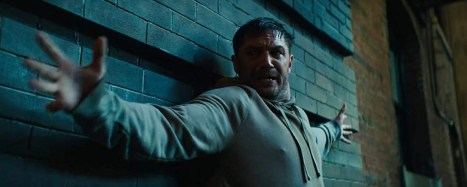
In its best moments, Venom seems to realise this. At the core of Venom is the traumatised character of Eddie Brock, who has watched his entire life fall apart and who suddenly finds himself sharing his body with a murderous alien entity with monstrous appetites. Brock is played by Tom Hardy, one of those rare actors with both immense physical presence and incredibly vulnerability. Unshaved and scruffy looking, with faded tattoos and wearing clothes that look like they haven’t been washed, Eddie looks like he’s been through hell even before his transformative experience.

There are moments when Venom almost plays as a weird psychological thriller about a character experiencing a real-time break from reality, a reporter who is losing his fragile grip on reality after suffering one too many personal and professional setbacks. As the situation gets worse, Eddie starts hearing voices in his head and losing control of his body. He finds himself in a situation where terrible things happen, but he is able to disassociate himself from the brutality and violence. Venom never quite commits to this idea, but it simmers through the story.

Wall’s well that ends well.

The first two acts of Venom are ropey and uneven, suffering from a fuzzy lack of detail and no strong focus on any of the film’s central ideas. Nevertheless, the film survives largely on the strength of Tom Hardy’s performance and the weirdness of the concept. However, things fall to pieces in the third act. Part of this is because Venom feels the need to transform into a regular superhero movie as it reaches its conclusion. Part of this is because Ruben Fleischer cannot direct action. Part of this is because of collision of clumsy exposition and muddled computer-generated imagery.

Venom loses what little control it has of itself as it reaches its climax.

MRI are we here?

Continue reading

Non-Review Review: A Star is Born (2018)

At one point in A Star is Born, Bobby Maine outlines his brother’s approach to music for the benefit of Ally.

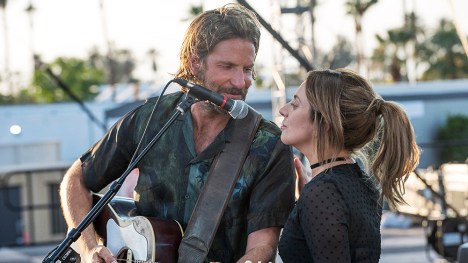
According to Bobby, Jackson believes that all music can be broken down to “twelve notes between an octave.” By Jackson Maine’s logic, Bobby explains all musical expression is “those same twelve notes, played over and over again. All any artist can offer the world is how they see those twelve notes.” It is a strange moment, one that comes very close to self-awareness from writer and director Bradley Cooper, suggesting something very close to a mission statement for his directorial debut.

Ain’t playin’.

A Star is Born is the fourth major American motion picture with that name and that premise. There are countless other stories built around the same basic concept, which has itself been translated into various settings and contexts across the globe. The story of A Star is Born is familiar. An older man discovers a talented young woman and elevates her to stardom, while his own grip on celebrity slips away between his fingers. It is an archetypal Hollywood story, and perhaps a defining American fairytale. All Cooper can do is tell that familiar story in his own way.

There are certainly moments when A Star is Born seems to take this idea to heart. In terms of basic trappings and mechanics, A Star is Born gestures towards modernity, understanding that it needs to update its core premise in the way that each of its three forerunners did. There are any number of details within A Star is Born that position the film within the modern cultural context. This is a twenty-first century take on a familiar story, and it looks distinct enough from the earlier three iterations.

Has a nice sing to it.

However, there’s a recurring anxiety within A Star is Born, a sense of trepidation. In terms of style and sensibility, Cooper’s adaptation hews closest to the country-and-western infused seventies remake with Barbara Streisand and Kris Kristofferson, which is a canny choice; it is probably the least seen and the least iconic iteration of the story, making it ripe for reinvention. However, there is also a strong sense that A Star is Born is reluctant to cross the four decades that have passed since that particular iteration of the familiar story.

The result is a film that feels at odds with itself. A Star is Born is inherently a metafictional text, suggesting a rebirth of Lady Gaga from a pop star to a credible leading actor in a prestige piece. Gaga acquits herself well in the role, but A Star is Born feels uncertain and untrusting of her. Repeatedly, A Star is Born seems to refuse to let Gaga be Gaga, instead adhering to a very fixed and very nostalgic seventies ideal of “authenticity.” This is a film that ends with the assertion that a modern pop star can only find herself when using her voice to deliver an ageing rocker’s words.

Doesn’t quite hit all the right notes.

Continue reading