• Following Us

  • Categories

  • Check out the Archives


  • Awards & Nominations

Non-Review Review: Aladdin (2019)

Aladdin is a fairly sturdy adaptation of a beloved animated film.

The obvious point of comparison here is something like Beauty and the Beast, with the live action adaptation facing many of the same challenges. By that standard, Aladdin acquits itself quite well. As with Beauty and the Beast before it, Aladdin is a fairly straightforward no-frills and no-surprises effort to transition a classic piece of nineties animation into live action; it lifts both the song and score, the set pieces, the themes, the characters, even the tempo. It is less ambitious or imaginative adaptation process than Alice in Wonderland or Pete’s Dragon, for better and worse.

Carrying a lamp for the original…

With that in mind, Aladdin feels like a clear improvement upon Beauty and the Beast. A large part of this is down to knowing what to do with the roughly forty minutes of storytelling real estate that seem to be added to these projects by default, adapting eighty-minute cartoons into two-hour blockbusters. The cartoons that inspired Beauty and the Beast and Aladdin were already very tightly structured and very well-constructed, so anything added to otherwise highly faithful adaptations those films often feels alien or uncomfortable.

Beauty and the Beast seemed particularly unsure what to do with those forty minutes, leading to strange narrative diversions to answer questions that nobody asked, like, “What happened to Belle’s mother?” In contrast, Aladdin benefits from a much better understanding of where the story can be fleshed out. There are a few clumsy missteps along the way; the new songs often stand out in contrast to those ported over from the original film, and the first act drags a little. However, by and large, Aladdin understand what aspects of the original can stand to be bulked up.

“And you’re sure you want to use your wish for a photo-realistic Sonic the Hedgehog movie?”

If this is to be the future of these adaptations – and the success of Beauty and the Beast means that it most likely will be – then Aladdin is far from the worst template. It is fun, it is light, it is diverting. It has a charismatic cast, and a solid understanding of the story that it is updating. However, it is also a little sluggish at the start and bloated at the end, traits inherited from modern blockbusters rather than a result of the process of adapting the source material.

At the same time, as with Beauty and the Beast, the same core issues shine through. Despite what spoiler culture might suggest, a film is more than just a series of plot events. Aladdin is adapting a film that was designed specifically for another medium, while making a point to stress its fidelity to that source material while translating it to live action. The biggest problem with Aladdin is built into it from the outset; this is an approach to the story that will always work better in animation than in live action.

It’s not quite a whole new world…

Continue reading

Non-Review Review: Thunder Road

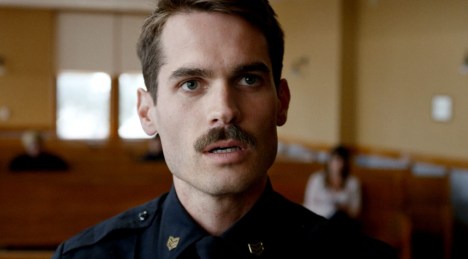
Thunder Road is a sweet, affecting piece of work.

It seems a little bit disingenuous to describe Thunder Road as a comedy. Much has been written about how the boundaries of the genre have shifted in recent years, particularly on television where form seems to dictate genre more than content. (Tom Hanks even took time to spoof that shifting trend during an appearance on Saturday Night Live.) There are funny moments in Thunder Road, often well-observed and organically delivered, but even those humourous beats underscore the film’s deep-seated melancholy.

Thunder Road is a profoundly human film, but one that feels very tragic. Focusing on a divorced police officer recovering from the recent death of his mother and facing the prospect of losing his daughter, there’s a lot of genuine emotion surging through Thunder Road. Jim Arnaud is a man who is very clearly lost at sea, oblivious to his own mental state even as friends (and bystanders) watch him crumble before their eyes. The film’s humour often seems like an attempt to stave off tears, as if an awkward laugh might offer a reprieve against the slow sense of mounting dread.

Thunder Road is an impressive piece of work, a film with real heart.

A grave mistake…

Continue reading

Non-Review Review: John Wick – Chapter III: Parabellum

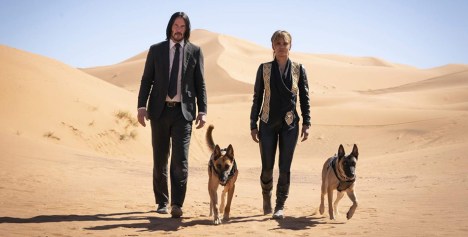
The biggest issue with John Wick: Chapter III – Parabellum is that it lacks an ending.

To be clear, there’s nothing wrong with an ambiguous or open-ended film. Indeed, a large part of the thrill of John Wick: Chapter II was the extent to which it fudged such boundaries. Despite the fact that John Wick offered something of a satisfying conclusion, the sequel picked up mere moments later to offer a coda that audiences never realised was needed. The ending of the first sequel bled (both literally) into the one that would follow. Open-endedness is not an issue of itself.

“So John Wick flees on horseback, the assassin’s after them on a motorcycle and it’s like a battle between motors and horses, like technology versus horse.”

After all, Chapter II belonged to the now-familiar family of “second films in trilogies.” Traditionally, the first film in a series would be relatively self-contained, with a broad teasing ending at best that could provide closure if the box office numbers didn’t work; Star WarsBack to the Future. In contrast, after those movies were box office hits, sequels were often commissioned in batches of two; Star Wars: Episode V – The Empire Strikes Back bleeds more obviously into Star Wars: Episode VI – Return of the Jedi, Back to the Future II bleeds into Back to the Future III.

However, there tended to be an understanding that closure was necessary at some point. Not necessarily in a definitive or conclusive manner for the series as a whole; Return of the Jedi is not the last Star Wars movie. However, a sense that the single narrative being tidied up. The characters’ journeys may not be completed, but their arc within this particular story is complete. Parabellum feels very much like a cheat on this front. Although building from a premise with a clear ending, it seems to be awkwardly constructing a perpetual motion device.

Shattering expectations.

After all, John Wick’s journey has a clear end point. The character arc that began in John Wick has any number of potential resolutions. Chapter II seemed to offer some clear linear progress to that journey, taking the character from his position in the closing moments of John Wick and escalating the existential stakes significantly. The single biggest problem with Parabellum is that the film doesn’t manage a comparable transformation. Wick’s situation doesn’t seem particularly different between the beginning and the end of the film. At most, the character has run a closed loop.

This is a shame, as that is a lot to like in Parabellum. As with both John Wick and Chapter II, this is a visually stunning film. It is saturated with neon glows of reds and blues, mingling and reflecting into beautiful purples on grimy streets and immaculate sterile sets. The stunt choreography is breathtaking, and a testament to an underappreciated artform, ballet with blades and bullets. Indeed, Parabellum even improves upon the already enchanting heightened operatic (and gloriously melodramatic) storytelling of John Wick and Chapter II, weaving them into an engaging parable.

Getting their just deserts.

Continue reading

Non-Review Review: Booksmart

Booksmart has charm to burn.

Olivia Wilde’s feature length directorial debut is built from a familiar high school coming-of-age template. It is the story of two kids who just want to party before graduation and before heading their separate ways. There are any number of films built outward from that premise, or even core components of that premise. Booksmart is canny enough to understand the genre in which it is working. Indeed, the casting of Beanie Feldstein seems designed to directing invoke two key touchstones; Feldstein’s most notable role to date remains her supporting role in Lady Bird, and her brother Jonah Hill launched his career (in part) off the success of Superbad.

Partying is such sweet sorrow.

As with any movie in a familiar genre, the success Booksmart hinges on the execution more than the concept. There are dozens of films riffing on similar ideas, so Booksmart needs to distinguish itself in how it approaches the material in question. The film elevates this somewhat stock premise through the use of a charming cast and surprising emotional earnestness. It helps that the comedy driving the film is both very well-observed on its own terms and tends towards the affectionate rather than the mean-spirited. There’s an affectionate humanism in Booksmart, and the recurring suggestion that characters are more than just the roles that they play in the highly performative environment of high school.

However, it is the two leads that truly elevate Booksmart, working with a sharp script and confident direction to create an engaging and endearing portrait of teenage insecurities.

Hold on!

Continue reading

Non-Review Review: Float Like a Butterfly

Unlike its protagonist, Float Like a Butterfly never quite figures out what it wants to be.

Float Like a Butterfly finds itself trapped between two different genres. On one side, Float Like a Butterfly aims for gritty social realism, charting a Traveller family as they attempt to navigate the uncaring Ireland of the early seventies. This is a familiar and naturalistic coming of age story, focusing on young Frances as she tries to hold her family together while her recently released father Michael sinks deeper and deeper into a drunken stupor. Frances is caught between the conservative patriarchal ideals of her own community, and the predatory hatred of the outside community.

The haymaker.

On the other hand, Float Like a Butterfly tries to position itself as an empowering sports movie, the familiar template about a confused and alienated young person who finds meaning and purpose through the expression that sport offers. Inspired by none other than Mohammad Ali himself, Frances aspires to become “the greatest.” She takes up boxing, even inheriting a set of gloves at one point. This is a story about a woman who is pressed in by a conservative society, but who finds a necessary outlet through sport. It is a feel-good triumphant narrative.

To its credit, Float Like a Butterfly plays both sides of this narrative relatively well; it offers a compelling portrait of life on the margins when it aims for naturalism, and delivers the feeling of empowerment and elation when it evokes those upbeat sports films. The big problem with Float Like a Butterfly is that it never reconciles these two competing halves into a single cohesive film. It is too meandering and too grounded to really sell itself as a sports narrative, but too heightened and too structured in its familiar plot rhythms to work as a slice of life.

Winning ribbons.

Continue reading

Non-Review Review: Wine Country

Wine Country should be a slam dunk.

The appeal Wine Country lies in its central cast. Wine Country assembles an impressive selection of older female comedians and drops them into a fairly standard premise that should allow them room to bounce off one another and enjoy themselves. It is a tried and true comic formula, the unleashing of a set of comedic personas on a familiar plot, the sole purpose of that stock set-up being to avoid getting in the way of the chemistry and charm of the cast. Wine Country has quite the cast; Amy Poehler, Maya Rudolph, Rachel Dratch, Ana Gasteyer, Paula Pell and Emily Spivey, along with supporting turns from Tina Fey and Cherry Jones. That should be enough to get any comedy half way home.

Toast of the town.

The actual plot of Wine Country is fairly simple as such things go, but this is a canny move. Wine Country is designed as a cast showcase, and so the plot’s primary function is to serve as justification for bringing (and keeping) these characters together so that the film can bounce from one scene to the next. Wine Country is the story of a group of friends who come together to celebrate a fiftieth birthday, traversing the eponymous region while each dealing with their own personal and professional crises. Character traits are arbitrary, and their arcs simplistic; in many cases, it seems like the characters were developed through nothing more than vague word association, a collection of generic adjectives (“busy”“immature”“obsessive”) thrown into a hat and selected at random.

While this does hold Wine Country back, it isn’t the biggest issue with the film. Quite simply, Wine Country is put together in a frustratingly clumsy and haphazard manner, looking a feeling like a cloying made-for-television movie that somehow stumbled upon a phenomenal cast. The film looks flat and over-lit, even allowing for the sunny Californian setting. Many of the jokes feel lazy and obvious, grabbing the lowest hanging fruit; perhaps appropriate given how much time the film spends in vineyards. The soundtrack is awful and on the nose, slowly and loudly suffocating any genuine emotion the film might attempt to evoke. There’s no doubt that the cast and crew making Wine Country had a great time making the film, but none of that carries over to the finished product.

‘Til the (fri)end of time.

Continue reading

Non-Review Review: Detective Pikachu

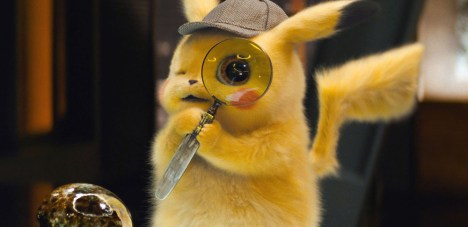
Detective Pikachu is disarmingly cute, both the movie and the character.

There are a number of serious problems with Detective Pikachu, although none of them are so serious as to become fatal flaws and most are easily explained by virtue of the film’s target audience. Most obviously, Detective Pikachu is never a movie that is particularly elegant in its storytelling. This is a film that burdened with an impressive volume of visual and spoken exposition, particularly in the opening half-hour. Characters are constantly expositing to one another, and often spelling out their motivations and perspectives for the benefit of the audience.

“Just want to take another Pikachu.”

However, once Detective Pikachu gets past that, there’s a lot of charm on display. A lot of that is down to the two central performances from Ryan Reynolds and Justice Smith, both of whom provide solid emotional throughlines and play the comic absurdity of the premise. There is also a lot to be said for the efficiency of the script, which rockets through virtually everything that the audience might expect from a Pokémon film. The energy of the cast prevents it from ever feeling too much like a checklist.

Detective Pikachu never quite achieves the level of transcendence, never pushes past its simple premise towards something more intriguing or compelling. Instead, Detective Pikachu delivers pretty much what it promises, with an endearing and infectious smile on its face.

No drive.

Continue reading

Non-Review Review: Extremely Wicked, Shockingly Evil And Vile

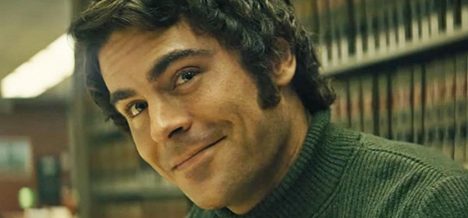
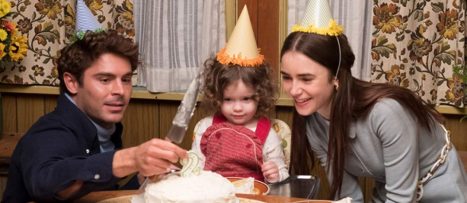
There’s an interesting film somewhere within Extremely Wicked, Shockingly Evil And Vile.

After all, the serial killer is a fascinating figure in the American popular consciousness. Although the serial killer’s stature has declined since its peak in the nineties, the recent “true crime” boom on both streaming services and in podcasts have helped to reignite some interest in the figure. Indeed, it is worth noting that Extremely Wicked, Shockingly Evil And Vile feels almost like a companion piece to director Joe Berlinger’s other Ted Bundy project, the Netflix documentary Conversations with a Killer: The Ted Bundy Tapes. As such, it is perhaps revealing that Extremely Wicked, Shockingly Evil And Vile feels like an appendix to The Ted Bundy Tapes, an extra that dramatises the meatier material presented in that streaming service true crime documentary.

Killer good looks.

After all, although Berlinger has worked on narrative films before, he is known primarily as a documentarian. (There is some small irony that his most prominent narrative film is Blair Witch 2: Book of Shadows.) Inevitably, Extremely Wicked, Shockingly Evil And Vile would feel secondary. It may have premiered on the festival before The Ted Bundy Tapes, but it was released afterwards, ensuring that to the casual viewer it will seem like something of a response to that breakout hit. More than that, though, Extremely Wicked, Shockingly Evil And Vile feels like it has very little new to say about either its serial killer or its cultural context. There is surprisingly little in Extremely Wicked, Shockingly Evil And Vile that isn’t evoked by the words “Ted Bundy.”

The serial killer is a well-explored subject in popular fiction, having been the focus of decades of narratives and deconstructions. Extremely Wicked, Shockingly Evil And Vile looks for an interesting angle on its subject, but never finds a way in. The result is a film that has an interesting premise, but which struggled to get under the skin of a serial killer.

Slice of life.

Continue reading

Non-Review Review: The Curse of La Llorona

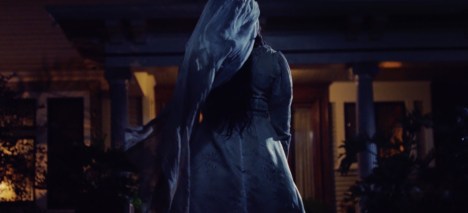
The Curse of La Llorona is fairly solid as contemporary studio horrors go.

Although the arrival of Avengers: Endgame has a lot of attention focused on the largest and most successful shared cinematic universe of the twenty-first century, there is a lot to be said for the strange horror universe that has been built outwards from The Conjuring. Although this trend is most overt in The Conjuring 2, the rare horror movie to also feature a car chase sequence, there is something fascinating in how these films have transformed studio horror into a blockbuster concern.

Mother have mercy.

There is a reason that these films are released during the summer months, as counter-intuitive as that might seem. Again, discussing The Curse of La Llorona in such terms might seem cynical, but it is genuinely striking. It takes a lot of work to satisfy the competing demands of the two genres; the shock of horror with the familiarity of blockbuster storytelling. The challenge with The Curse of La Llorona lies in offering audiences something that satisfies all their expectations of a film like this, while still offering a few shocks and starts along the way. It is a remarkable accomplishment.

The Curse of La Llorona strikes that balance relatively well. The film knows the formats and rhythms of a horror film, and director Michael Chaves knows both what the audience expects and how to work within that format to build a genuine and compelling sense of dread. The Curse of La Llorona is well-made, efficient, and delivers what the audience anticipates from a Conjuring spin-off. There’s something endearing in the reliability, in the care with which the film strikes these sorts of balances.

Scream queen.

Continue reading

Non-Review Review: A Dog’s Journey

A Dog’s Journey is incredibly earnest.

To be fair, it kind of goes with the territory. A sequel to A Dog’s Purpose, the film fits comfortably in the same “narrating baby or animal observes the adult world” subgenre as the Look Who’s Talking films. The basic premise of the film finds a beloved family pet reincarnating over and over again in order to serve as a spiritual companion to a family across three generations. Voiced by Josh Gad across a wealth of breeds, genders and personas, this “boss dog” finds themselves drawn towards a family struggling to hold itself together amid incredible internal tension.

Hardly a crowning accomplishment.

The premise and execution are admittedly very hokey. The characterisation is threadbare. The actors vary wildly in terms of skill. The jokes are often hackneyed and overly familiar. The script is full of strange narrative cul de sacs and tangents that occasionally stall the forward momentum of the film. A Dog’s Journey is an exceptionally tightly (or even well-) constructed film. However, the almost aching levels of sincerity almost hold it together despite these sheering forces.

At the heart of A Dog’s Journey is an incredibly simple-yet-heartfelt idea of the relationship that exists between a dog an it’s owner. Late in the film, one character concedes to another, “It must be nice to have something that loves you unconditionally.” For all the film’s flaws, it never doubts the idea that the love of a dog for its owner (and perhaps vice versa) is truly unconditional and uncompromising, no matter how complicated the world around that relationship might become.

Fields of gold.

Continue reading