• Following Us

  • Categories

  • Check out the Archives


  • Awards & Nominations

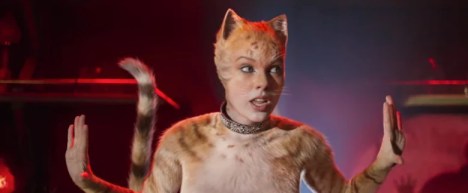
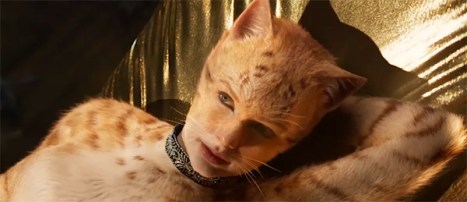
Non-Review Reviewsical: Cats

Were they blind when they made this? Do they think it looks good?
Is it fit for awards? Would it sweep at the Globes?
Can you say of the effects that they look worse than they should?
Are they justifiably excited when the internet goads?

Because Tom Hooper can and Tom Hooper did
Some actors did and some actors would
A major studio would and a major studio can
But reviewers can’t and reviewers don’t.

How about those special effects? Are they truly a feat?
Are they tense when they sense there’s no awards buzz?
Do you mind all the signs with the puns in the street?
Did they know from the go that they’d just filmed a dud?

Because Tom Hooper can and Tom Hooper does
Tom Hooper does and Tom Hooper can
Tom Hooper can and Tom Hooper does
Tom Hooper does and Tom Hooper can
Tom Hooper can and Tom Hooper does

Familiar songs for counterprogramming
All those known songs to bring them all in
There’s even a song that Ray Winstone sings
Tom Hooper’s Cats promises all of these things.

Continue reading

Non-Review Review: Star Wars – Episode IX: The Rise of Skywalker

Star Wars: Episode IX – The Rise of Skywalker is probably the weakest live action theatrical Star Wars film, which is quite something in a world where Star Wars: Episode I – The Phantom Menace and Star Wars: Episode II – Attack of the Clones exist.

To be fair, some of the problems with The Rise of Skywalker are forced by external events. Carrie Fisher passed away early during production, and there was always a sense that the third film in the trilogy would focus on Leia in the same way that Star Wars: Episode VII – The Force Awakens had focused on Han and Star Wars: Episode VIII – The Last Jedi focused on Luke. As a result, the film’s consciously flailing around how best to fill that void is understandable.

Similarly, director JJ Abrams arrived on the project at the last minute, after Colin Trevorrow was removed from the project. The new Star Wars trilogy has an abridged production cycle to begin with, but The Rise of Skywalker had to switch hands midstream. As a result, it makes sense that there is a certain rough quality to the storytelling, with Abrams inheriting a film that was not designed for him and trying to impose himself upon it.

These are serious and credible challenges facing The Rise of Skywalker, and it would take an impressive film to overcome these logistical hurdles. As much as Han Solo might not like to hear the odds, those odds have been stacked against The Rise of Skywalker from very early in the production process. The film seems keenly aware of this. At one point, Poe crash lands the Millennium Falcon on the forest moon of Endor. When Jannah comments on the rough landing, Poe replies, “I’ve seen worse.” Jannah replies, “I’ve seen better.”

However, while that failure to stick the landing might be forgivable – if disappointing in its own terms – The Rise of Skywalker is most severely undermined by unforced errors. The film makes any number of catastrophic storytelling choices, both in the story that it decides to tell and the way that it ultimately opts to tell it. Whenever The Rise of Skywalker reaches a narrative crossroads, it never fails to pick the weakest of the options in front of it. This is bad of itself, even without the sense that these choices are being driven by the most craven of motivations.

As with films like Justice League, it often feels like The Rise of Skywalker has been shaped and informed by listening to the loudest voices raging on the internet and tailoring a film to appease their aesthetic sensibilities. The grand tragedy of The Rise of Skywalker is that the kind of fans that it is intended to appease are well past being appeased. More than that, these cynical efforts to appease those fans serve to alienate the actual audience. The Rise of Skywalker is everything certain fans wanted from The Last Jedi. Not uncoincidentally, it is nigh unwatchable.

Continue reading

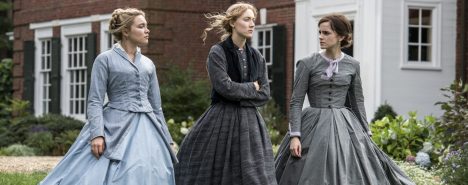
Non-Review Review: Little Women (2019)

Little Women is immensely charming and highly engaging.

As is the style of the time, writer and director Greta Gerwig offers something of a “remix” of Louisa May Alcott’s classic American novel. It’s an approach that infuses the film with an appealing poppy sensibility, as the story weaves through time and navigates on theme more than plot. It tells a story of the lives of the four March sisters as they journey from their teenage years into adulthood, wrestling with all the opportunities and challenges that such an adventure offers them.

Come what Chalamet.

Little Women works well for a number of reasons. The most obvious reason is the immensely talented cast. Gerwig reunites with a number of cast members from Lady Bird on Little Women, including Saoirse Ronan in the lead role and supporting turns from both Tracy Letts and Timothée Chalamet. These veterans team up with some of the most charismatic actors working today, including players like Meryl Streep, Laura Dern and Bob Odenkirk. The restructuring of the film plays to the strength of the cast, Gerwig effectively reworking the text as a hangout movie with some pretty cool people.

That said, there is an uncomfortable tension that simmers in the background of the film, in which two of its central themes collide in ways that the movie isn’t quite able to handle.

Women during war.

Continue reading

Non-Review Review: Jumanji – The Next Level

Jumanji: The Next Level is a deeply weird and uneven film, but one that works much better than it really should.

To be fair, a lot of the more serious problems with The Next Level are the problems that face many blockbuster sequels. The film scales upwards from its predecessor, Jumanji: Welcome to the Jungle. Given than Welcome to the Jungle was already somewhat overstuffed, The Next Level is bursting at the seams. Not only does the film bring back the entire primary cast from the previous film and bulk up the material for characters in supporting roles, it also adds at least three new major actors to the cast and attempts to maintain the same setpiece-driven pacing that kept Welcome to the Jungle moving.

Game on.

However, this doesn’t capture just how weird The Next Level allows itself to become. The film’s final act features one of the most bizarre emotional pivots in recent memory – a plot resolution that includes a terminal cancer diagnosis, a flying horse and Awkwafina doing her best impression of Danny DeVito. This isn’t even the primary plot. This is the pay-off to a secondary storyline that has, by this point in the narrative, been pushed into the background. None of this should work. Truth be told, it doesn’t really work. However, it is strangely committed. The Next Level never wavers as its plot leads to these strange places.

Like Welcome to the Jungle before it, The Next Level benefits from a propulsive approach to storytelling. To dwell on any of its plot points or character beats or emotional pay-offs would invite madness, and so the film never really does. The Next Level never settles down long enough to let the audience really appreciate how surreal or unusual its framing of these conventional tropes actually is, because there’s always something more to see or to do. The result is a messy and convoluted piece of blockbuster cinema that openly frays at the edges (and throughout), while holding together better than it should.

Solid as The Rock.

Continue reading

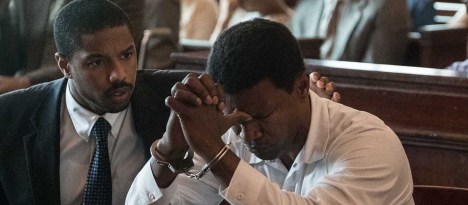
Non-Review Review: Just Mercy

Just Mercy feels like a timely and relevant update to the classic death row prestige picture.

The bulk of Just Mercy unfolds over six years, between 1987 and 1993. This roughly overlaps with a cinematic interest in this subject matter in the late eighties and into the nineties. Mississippi Burning and A Time to Kill looked at the racially-charged dimension of criminal justice in the American South, released in 1988 and 1996 respectively. Dead Man Walking and The Chamber tackled anxieties around the death penalty in 1995 and 1996. Indeed, Just Mercy feels like something of a companion piece to these explorations of the American criminal justice system.

Courting public opinion.

These sorts of films have become increasingly rare in recent years, largely driven by changes in the market. The death of the mid-budget movie has had a major impact on these sorts of projects, with the most recent major examples being films like The Hurricane in 1999 and The Life of David Gale in 2003. These sorts of projects have largely migrated to television and arguably podcasts, developed as limited series like The Night Of or Now They See Us. As such, it’s rare to see a film like this receiving that sort of awards push.

However, what is truly interesting about Just Mercy is the way in which it doesn’t just revive the starry prestige criminal justice drama, it also modernises it. Just Mercy might be set against the backdrop of the late eighties and early nineties, but it feels undeniably current in how it approaches that familiar subject matter.

Conviction.

Continue reading

Non-Review Review: 1917

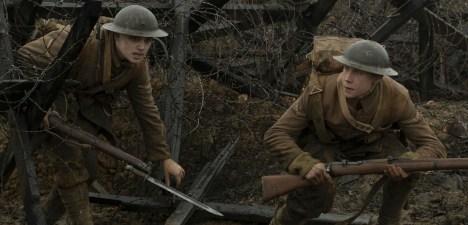
1917 is a stunning technical accomplishment.

Effectively hybridising Dunkirk and Birdman or (The Unexpected Virtue of Ignorance), 1917 is a war movie that is shot in such a way as to suggest a single extended take. Of course, the audience understand that it isn’t really a single take any more than Rope was a single take, and 1917 underscores this sense of unreality by compressing time and space on this epic adventure across the front lines of the First World War. The illusory nature of that long-take style is the entire point of the exercise.

Out in the (Scho)field.

1917 does suffer slightly in narrative terms. From a storytelling perspective, 1917 is a big collection of familiar war movie tropes. Indeed, 1917 ultimately serves to illustrate just how bold and compelling Dunkirk was in its approach to this familiar narrative template. All of the clichés and archetypes that were stripped out of Dunkirk have been inserted back into 1917, which repeatedly leans on genre shorthand to make its points about the folly of war and the senselessness of such carnage.

However, the beauty of 1917 lies not in the story that it is telling, but in the way that it tells that story. In its best moments, 1917 is haunting, nightmarish and ethereal. 1917 works best when it steers clear of the genre’s stock dialogue and characterisation, and instead aims for something much more primal and evocative.

Barbed comments.

Continue reading

Non-Review Review: The Lighthouse

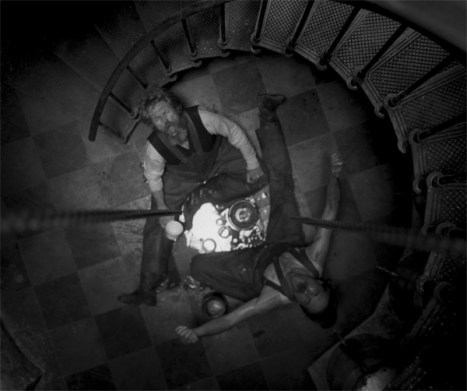
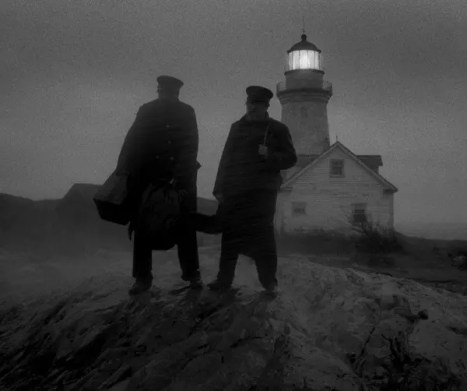
The Lighthouse is a striking, evocative, psychedelic horror. It is also about twenty minutes too long.

Director Robert Eggers made a striking impression with The Witch. Indeed, there’s a clear set of throughlines connecting The Lighthouse to The Witch. Both are fundamentally period pieces about characters who find themselves in extremely isolated conditions, with the unsettling implication that something vague and ominous is lurking in the darkness just beyond the candle light. Both are also highly formal pieces, with Eggers embracing a consciously heightened aesthetic to create a sense of unreality within his film.

Downward spiral.

However, The Lighthouse stands apart from The Witch in the particulars of its exploration of isolation. After all, The Witch was a story about a young woman who moved into the rural countryside with her entire nuclear family. In contrast, the experience in The Lighthouse is much more intense. It is the story of a young man who finds himself offered a (relatively) high-paying position on a remote rock to work as an assistant to a veteran lighthouse keeper. The two men are strangers when they start to work together, and may remain strangers throughout.

The Lighthouse becomes a study of the descent into madness, the collapse of civility, and the horrors of living with a terrible room mate.

Solid as a rock.

Continue reading

Non-Review Review: JoJo Rabbit

JoJo Rabbit is a sincere and sweet movie, but also a hopelessly misguided one.

There’s a lot of warm humanism underpinning Taika Waititi’s adaptation of the novel Caged Skies, about the eponymous young boy who finds himself wrapped up in the propaganda of Nazi Germany. Johannes Betzler is a ten year old boy with who fixates upon being “the bestest, most loyal little Nazi [Hitler will have] ever known.” He has even fashioned his imaginary friend in the form of Adolf Hitler. However, his life is turned upside down when he discovers a Jewish girl living in the crawl space in his dead sister’s bedroom.

He’s going to be Fuhrer-ious.

Waititi’s film has a surprisingly solid grasp of tone, given the material in play. JoJo Rabbit is sweet and sincere, pointed and humane. It is as playful as Waititi’s work on The Hunt for the Wilderpeople or even Thor: Ragnarok, but also appreciates the need to handle certain topis with care and consideration. There’s a warm empathy that radiates from the film, particularly in the dynamic between Jojo and his mother Rosie, who is doing everything she can to protect her son even as she watches his radicalisation.

However, despite all of this, JoJo Rabbit hinges on a fatal miscalculation. It is a story that makes a conscious effort to humanise its Nazi subjects. It is a film so rigourously invested in affirming JoJo’s humanity that it never quite confronts the audience with the horror of his denial of that humanity to others. JoJo Rabbit is a film that suggests the greatest human tragedy in the Second World War is the poor little Nazi boy, and can barely bring itself to look at the actual horrors that he inflicted.

He ain’t Hitler, he’s my buddy.

Continue reading

Non-Review Review: Colour Out of Space

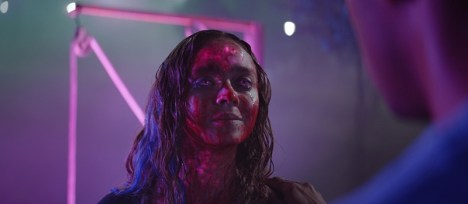
Colour Out of Space is a visceral, haunting, beautiful nightmare.

H.P. Lovecraft is a notoriously difficult writer to adapt for film. It’s arguably that the best adaptations of his work have been spiritual companion pieces like John Carpenter’s The Thing or In the Mouth of Madness. There are any number of reasons for this, such as the uncomfortable racism that unpins his recurring fear of “the other.” However, there is also the obvious challenge of trying to craft cinematic adaptations of a horror often rooted in monstrosity beyond the human capacity for comprehension.

The family that stays together…

Colour Out of Space works reasonably well as an adaptation of the Lovecraft story of almost the same name. Indeed, the film is bookended by extended quotes from the source material. Director Richard Stanley’s adaptation is surprisingly faithful to that story, even if there are obviously lots of adjustments that have to made in shifting the action to the twenty-first century in both setting and production. It helps that Stanley has a great deal of experience in body horror, and clearly appreciates Lovecraft’s influence on that school of cinematic horror.

However, the real beauty of Colour Out of Space lies in the way in which if feels like a Lovecraftian adaptation of a Lovecraft text. It represents a cold and cynical nightmare of curdled and metastasised sixties psychedelia, playing as a riff on Lovecraft’s resurgence within sixties counterculture. Colour Out of Space is the story of how the sixties kids who rebelled against adult authority have so readily allowed themselves to acclimatise to it. Colour Out of Space is a story about how children become their parents, albeit perhaps more literally that the phrase suggests.

Purple haze…

Continue reading

Non-Review Review: Motherless Brooklyn

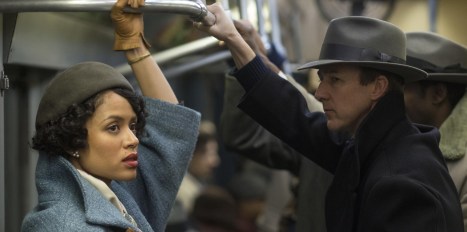
Motherless Brooklyn is a profoundly odd film.

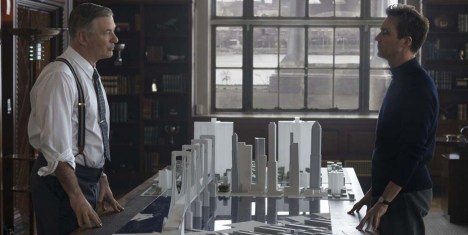
On the surface, it looks like another one of those “movies they don’t really make anymore” that tend to get a small release around awards season, like Bad Times at the El Royale or Widows. It is an old-fashioned private detective story that starts with something relatively small before pulling back to reveal a vast and insidious conspiracy at work. It is a movie that is both a genre piece and a statement, and so seems an appropriate release for this late in the calendar.

Railing against the system.

However, on closer inspection, Motherless Brooklyn is much more surreal piece of work. The film was a passion project for writer, director and star Edward Norton. Norton had been struggling to bring the film to screen for the better part of two decades. It is a period piece in more than just its fifties New York setting. It feels like a time capsule. Although Motherless Brooklyn is only Norton’s second theatrical film as director, it arguably feels much more tailored to Norton’s style and interests than his actual directorial debut Keeping the Faith.

However, Motherless Brooklyn feels like it is lost in more than just time. The film is meandering, indulgent and unfocused. It has moments of incredible beauty and surprising power, but lacks the discipline to streamline everything else around those elements. Motherless Brooklyn is not a great film, but it is a strange one.

Evil plans.

Continue reading