• Following Us

  • Categories

  • Check out the Archives


  • Awards & Nominations

Batman: The Dark Knight Archives, Vol. 1 (Review/Retrospective)

To celebrate the release of The Dark Knight Rises, July is “Batman month” here at the m0vie blog. Check back daily for comics, movies and television reviews and discussion of the Caped Crusader.

I figured, what with Christopher Nolan releasing the final part of his Batman trilogy this month, it might be worth going back and taking a look at the early days of the Dark Knight. DC have done a rather wonderful job collecting classic material featuring their iconic heroes as part of their “Archives” line, a line that seemed to have died last year, but I am very glad to see undergoing a resurgence. The idea is that each archive edition collects roughly a year’s worth of classic comics. The premium format pays for the restoration of the material, with DC then making it available in more cost-effective packaging, like their paperback “Chronicles” line that collects every appearance in order, or their “Omnibus” line, which collects larger chunks.

Batman: The Dark Knight Archives, Vol. 1 doesn’t collect Batman’s very first appearance in Detective Comics. However, it does collect the first four quarterly publications of his self-titled Batman comic book in 1940, each collecting several stories of Batman’s crusade against crime.

Batman Begins in six panels…

Continue reading

Captain America: The New Deal (Review/Retrospective)

Oh, God — How could this happen here?

– Steve Rogers, Captain America #1

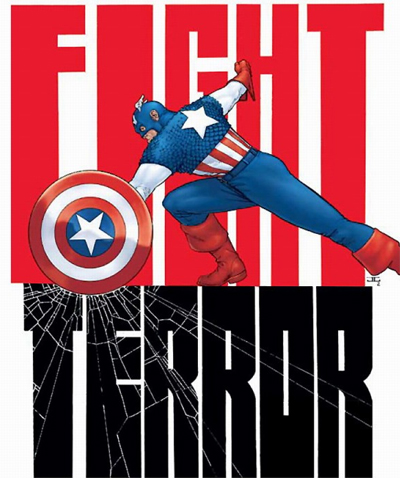
It seemed inevitable that Captain America would have to respond to September 11th. After all, the terrorist atrocities were an attack on the American way of life, and the iconic superhero was perhaps the hero best equipped to explore the scars left by the still-recent attacks upon the American psyche, much as his Secret Empire plot allowed him to respond to the Watergate Scandal. Unfortunately, John Ney Rieber’s work on the character is – while well-intentioned – clumsy, awkward, groan-inducing and cliché-ridden. Even the fantastic artwork of John Cassaday cannot salvage the run from its own tired and trite pseudo-philosophical ramblings.

Subtle.

Continue reading

The Avengers: The Crossing Omnibus (Review/Retrospective)

“One of the nineties’ most notorious narratives!”

– well, the back cover wasn’t lying

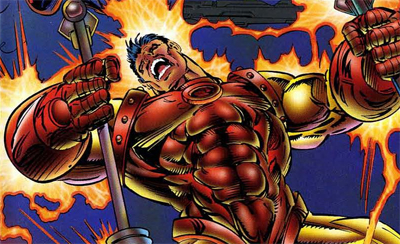
The Crossing has become a watch-word for nineties excesses. Essentially a gigantic crossover between The Avengers and the various Iron Man books (including War Machine and Force Works), it is renowned for its clumsy editorial mandate: the event was designed to replaced Tony Stark with a younger version of himself. Fans have come to reflect on The Crossing as one of the most awful comic book storylines ever concocted, an example of the mess that Marvel had made of their line of books during a decade not exactly renowned for its taste.

I know it’s fashionable to trash The Crossing, and I know that it is every bit as ridiculously nineties and forced as its editorial mandate would suggest, but I can’t help but think there are some nice ideas to be found here, if one wades in deep enough into the crap. Don’t get me wrong, there’s not nearly enough to justify the tangled bloated mess of a plot, and I’m not going to argue the consensus is wrong, but I do think the massive catastrophic failure of The Crossing was one of execution, rather than one of ideas.

Shockingly bad?

Continue reading

The Avengers: The Kree-Skrull War (Review/Retrospective)

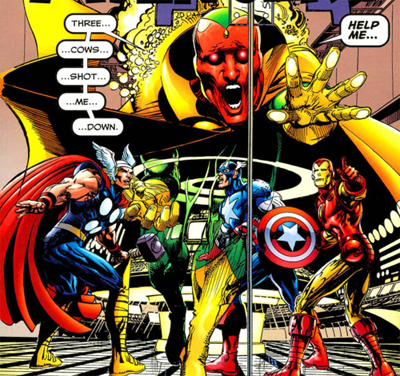
The Kree-Skrull War is perhaps the grandaddy of great Avengers story. A series of interconnected one-shots with subplots congealing into an arc, it allowed writer Roy Thomas to really define the Avengers. Written towards the start of the seventies, the saga feels like something of a transition from the innocence of the classic Silver Age superhero sci-fi zaniness and a more sombre and mature Bronze Age. Despite its age, the adventure still holds up remarkably well, partially because Thomas has some very clever ideas that are still reverberating around modern comics, and also because Neal Adams’ artwork hasn’t aged a day.

Thomas had quite a Vision for the title…

Continue reading

Avengers Disassembled: Iron Man – The Singularity (Review/Retrospective)

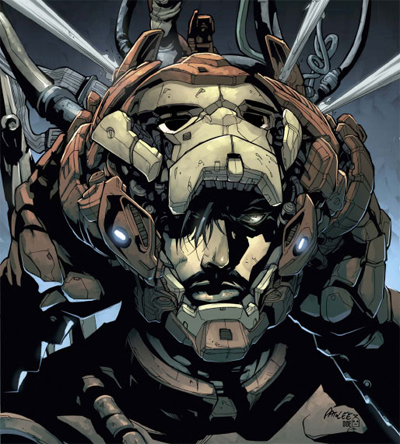
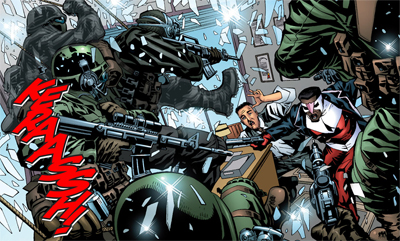
And so I’ve finished my trek through the tie-ins to Avengers Disassembled. And it was surprisingly painful. Sure, Robert Kirkman’s Captain America at least made sense if you looked at it from the right angle, and Mike Oeming’s Thor was one of the best stories to feature the character, but the Invincible Iron Man and Captain America & Falcon tie-ins serve to illustrate just how lost some of Marvel’s top books were at the time. The Invincible Iron Man actually had two arcs tying into the big event, from two very different creative teams, perhaps illustrating that Marvel was aware of this fundamental dysfunction. Unfortunately, neither is especially impressive, and both feel like they are simply treading water, waiting for Avengers Disassembled to put the book out of its misery.

Things look Stark…

Continue reading

Avengers Disassembled: Captain America & Falcon (Review/Retrospective)

If any of the Avengers: Disassembled tie-ins make a case for the drastic shake-up that took place amid Marvel’s Avengers-themed titles in 2004, it’s probably Captain America & Falcon. By the time the tie-in to the event began, the book was only on its fifth issue, but it had already found time for the juvenile and shallow conspiracy-theory mongering that would make John Nay Rieber and Chuck Austen’s Captain America proud. Still stuck in a hamfisted attempt to tie into the post-9/11 zeitgeist, the book offers some of the worst examples of comic book storytelling at Marvel at a time when their Avengers line wasn’t particularly strong to begin with.

Not a smashing success…

Continue reading

Avengers Disassembled: Thor (Review/Retrospective)

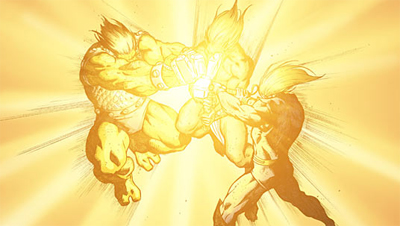
Thor: Disassembled is easily the strongest solo arc to stem from the events in Brian Michael Bendis’ Avengers Disassembled. It’s  full of interesting and clever ideas about the nature of stories, and serves to wrap up Thor’s story fairly efficiently, leading into the big reshuffle of the Marvel Universe. Rather than merely treading water waiting for J. Michael Straczynski’s Thor, writer Mike Avon Oeming takes advantage of the unique set of circumstances before him to present that rarest type of superhero story: one with an ending.

Thunderbolts and lightening, very, very frighteningly…

Continue reading

Avengers Disassembled: Iron Man – Turf War (Review/Retrospective)

It’s probably true that in comics, like in any other medium, you have a preference towards the stories that brought you into that medium. While I think Marvel was doing some truly exceptional stuff during the early part of the 2000s, like Morrison’s New X-Men or Waid’s Fantastic Four or Garth Ennis’ Marvel Knights: Punisher, I think that the Avengers line of books were all struggling to find a direction. While I have some issues with the clunky crossover- and tie-in-reliant nature of the period, I do think that there was a lot more energy for the Avengers-related titles after Brian Michael Bendis’ Avengers Disassembled. Ed Brubaker’s Captain America and J. Michael Straczynski’s Thor can stand alongside the best interpretations of the characters, with Matt Fraction’s later Invincible Iron Man run also standing as a classic Iron Man run.

These Disassembled tie-in issues offer a pretty solid indication of where Marvel’s Avengers comic book line was just before the crossover, and most of them seemed to be in very serious trouble. There are two arcs from The Invincible Iron Man collected here, from two very different teams, and neither seems to know exactly what it is doing.

Iron Man decompressed?

Continue reading

Avengers Disassembled: Captain America (Review/Retrospective)

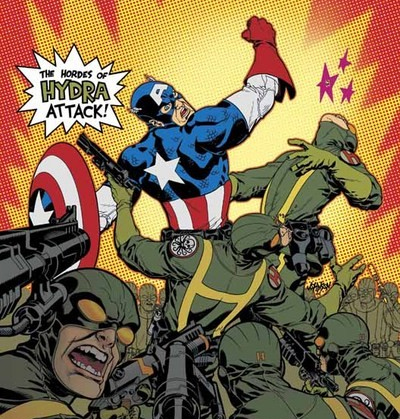
The fourth volume of Captain America had a brief but troubled run. Launched on the Marvel Knights imprint by John Nay Rieber, the book was originally intended to follow the eponymous hero as he attempted to make sense of the world after the September 11th attacks. It was precisely as heavy-handed and awkward as you might imagine. After Rieber departed the series, supposedly due to differences with editorial, Chuck Austen arrived to write a story where the US government apparently conspired to freeze Captain America in the block of ice because the hero had discovered plans to use a nuclear weapon. So, when Robert Kirkman was assigned the task of helping the series limp across the finish line so that it could be relaunched as Ed Brubaker’s Captain America, it felt somewhat appropriate that the writer cast the story as a much more conventional and goofy superhero adventure.

A punchy little run?

Continue reading

Chris Claremont’s Run on Wolverine (Vol. 2) (Review/Retrospective)

With our month looking at Avengers comics officially over, we thought it might be fun to dig into that other iconic Marvel property, the X-Men. Join us for a month of X-Men related reviews and discussion.

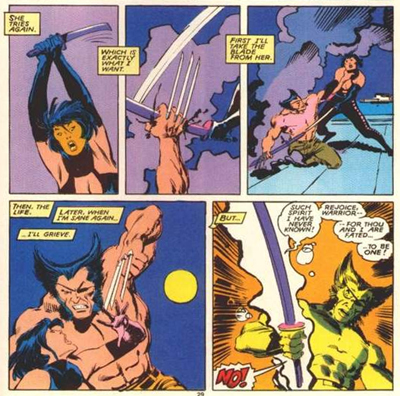
Although his extended run on Uncanny X-Men is one of the most renowned runs in comic book history, it’s easy to forget just how massively Claremont developed the X-Men franchise beyond that core book. He did, after all, launch spin-off titles like New Mutants or X-Calibur. The writer also shepherded the development of Wolverine outside the Uncanny X-Men book, producing the original Wolverine miniseries with Frank Miller, Kitty Pryde & Wolverine with Al Milgrom and even Save the Tiger in Marvel Comics Presents. Claremont also drafted nine of the first ten issues of Wolverine’s first on-going solo title and, while not the writer’s finest work by a significant stretch, it is a pulpy and entertaining read – one more firmly grounded in pop culture conventions than grim violence and anti-heroic nihilism. The issues are a light, fun collection of stories featuring the character, nothing more and nothing less.

A cut above the rest?

Continue reading