• Following Us

  • Categories

  • Check out the Archives


  • Awards & Nominations

207. The Aviator – Summer of Scorsese, w/ The Movie Palace (#—)

Hosted by Andrew Quinn, Jay Coyle and Darren Mooney, The 250 is a (mostly) weekly trip through some of the best (and worst) movies ever made, as voted for by Internet Movie Database Users. New episodes are released every Saturday at 6pm GMT.

This time, continuing our Summer of Scorsese season, a special treat.

Darren appeared on The Movie Palace podcast back in march, discussing Martin Scorsese’s The Aviator. This was before we kicked off our Summer of Scorsese, but we thought we’d share it with listeners. The bulk of the episode is a discussion between Carl and Darren over The Aviator, but we did record a special intro with Andrew and Jay just to offer a brief discussion of the film.

At time of recording, it was not ranked on the Internet Movie Database‘s list of the best movies of all-time.

Continue reading

Non-Review Review: Mank

There’s something vaguely reassuring about Mank.

The most obviously and immediately striking aspect of David Fincher’s biopic is how consciously the film is steeped in a very particular time and place. Mank plays out against the backdrop of the thirties and forties, following screenwriter Herman J. Mankiewicz as he is inspired to develop (and as he actually writes) Citizen Kane. So much of the film deliberately evokes the period; numerous inside jokes and cameos from key Hollywood figures, the stark black-and-white cinematography from Erik Messerschmidt, the way Fincher even frames shots to evoke the period.

However, all of these period elements are juxtaposed with a broader sense of modernity and timelessness. Mank is shot in the same black-and-white style as Citizen Kane, but in a modern aspect ratio. The film features cigarette burns and other markers of classic cinema, but was shot entirely digitally. The film even offers an almost parodic old-fashioned happy ending for most of the major characters, but while telling a story that simply would not have been possible within that studio system.

The result is a movie that celebrates Hollywood without venerating it. Indeed, what distinguishes Mank from many other “films about films” like The Artist or Hugo is the way in which it tempers its nostalgia. Mank doesn’t necessarily long for the past in the way that most Hollywood productions about Hollywood do. This ambivalence to nostalgia is not cynicism or futurism, but a tacit acknowledgement that the past is still present. Mankiewicz might be rubbing shoulder with the players of another era, but the rules remain largely the same.

Indeed, the real joy of Mank is not found its glorification of Hollywood titans or the products of the studio system, but in its celebration of the “supporting players.” The story of the “organ grinder’s monkey” is discussed repeatedly, often as a metaphor for power a hierarchy. Instead, Mank seems to suggest that the relationship is symbiotic. There’s something striking in a movie from a director as venerated as David Fincher that is so openly critical of the various myths of Hollywood like the auteur theory and its cousin “the great man” theory of history.

Mank is the story of a little man, one repeatedly framed as “the court jester” and who does little to push back on that characterisation. As one might expect for a movie about Citizen KaneKing Lear is a frequent point of reference. If so, Mank suggests that the fool has the best view of all.

Continue reading

New Escapist Column! On Taika Waititi’s Totally Radical Postcolonial “Thor: Ragnarok”…

I published a new In the Frame piece at The Escapist this evening. Because it was released three years ago this month, I took a look back at the postcolonial politics of Thor: Ragnarok, and put them in a broader cultural context.

Ragnarok is one of the most enjoyable superhero movies ever made. It’s both fun and funny. However, it’s also one of the best and smartest entries in the Marvel Cinematic Universe, a joyous exploration of the legacy of colonialism and an interrogation of the consequences of imperialism. Ragnarok is bold and provocative, but is also so shrewd and slyly constructed that it manages to sneak a genuinely revolutionary perspective under the radar.

You can read the piece here, or click the picture below.

New Escapist Video! “The Mandalorian – Chapter 9: The Marshal”

I’m thrilled to be launching 3-Minute Reviews on Escapist Movies. Over the coming weeks and months, I will be joining a set of contributors in adding these reviews to the channel. For the moment, I’ll be doing weekly reviews of The Mandalorian.

The review of the second season premiere, The Marshall, is available below.

It’s All About Meme Meme: The Perfect Timing of “The Wicker Man”…

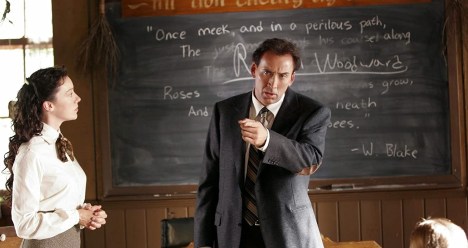
The podcast that I co-host, The 250, marked Halloween with a look at Neil La Bute’s adaptation of The Wicker Man. It’s a fun, broad discussion. However, watching the film and talking about the film got me thinking about Nicolas Cage, meme culture and the perfect storm of timing involved.

It’s possible to break down Nicolas Cage’s career into two phases: before and after The Wicker Man.

Before The Wicker Man, Nicolas Cage was a respected actor. He had won the Best Actor Oscar for Leaving Las Vegas. He had become an blockbuster movie star thanks to films like The Rock and Con Air. He had worked with auteurs like David Lynch on Wild at Heart and the Coens in Raising Arizona. Indeed, at the turn of the millennium, Cage had settled into a respectable cinematic middle age. In the years leading up to The Wicker Man, he worked on fare like Andrew Niccol’s earnest Lord of War and Gore Verbinski’s decidedly middle brow The Weather Man.
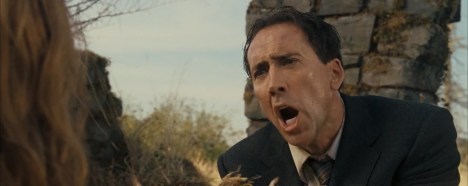
And then The Wicker Man happened. Almost immediately, Cage’s career shifted gears. There were where still franchise films like Ghost Rider or National Treasure: Book of Secrets. There were still auteur collaborations like with Werner Herzog on Bad Lieutenant: Port of Call New Orleans. However, there were also movies like Bangkok Dangerous, Next and Knowing, which would lead on to films like Drive Angry, Seeking Justice and Trespass. Not all of these films were bad, but they were instrumental in establishing the Nicolas Cage audiences know today: “full Cage.”

To give Cage some credit here, his later work is often more interesting than his popular reputation would suggest. In particular, Cage works remarkably well in ensemble genre pieces like Kick-Ass or Spider-Man: Into the Spider-Verse. More than that, Cage works remarkably well in the context of films that are pitched to match his fevered intensity as a performer like Mandy or The Colour Out of Space. Nevertheless, The Wicker Man was very much a watershed moment for Cage, like the flicking of a light switch.

Part of this is simply timing. The Wicker Man arrived at the perfect moment in popular culture, as a seismic shift was taking place. Discussions about the history of cinema often focus on the mechanics and the politics of the industry itself – the way in which movies are produced, funded and distributed. This makes a great deal of sense. However, it’s also important to consider how movies are discussed and how audiences engage with those films.

The Wicker Man arrived at a moment where the internet was primed to change the way that movies were watched, and the impact on Nicolas Cage’s career is perhaps a graphic illustration of that seismic shift.
Continue reading

New Escapist Video! On the True Horror of John Carpenter’s “Apocalypse” Trilogy…

So, as I have mentioned before, I am launching a new video series as a companion piece to In the Frame at The Escapist. The video will typically launch with the Monday article, and be released on the magazine’s YouTube channel the following week. This is kinda cool, because we’re helping relaunch the magazine’s film channel – so if you can throw a subscription our way, it would mean a lot.

With that in mind, here is last week’s episode. Because Halloween was coming up, we thought it would be fun to look at something horror-related. I’ve been watching a few John Carpenter films lately, and so I thought I’d delve a little bit into how Carpenter’s craft works and how it has aged so effectively and so hauntingly. In particular, Carpenter’s loose “Apocalypse” trilogy (The Thing, Prince of Darkness and In the Mouth of Madness) count among the most unsettling (and resonant) depictions of the end of the world in popular cinema.


New Escapist Column! On “The Mandalorian” and Science-Fiction’s Fascination with Fallen Worlds…

I published a new In the Frame piece at The Escapist this evening. With the season premiere of The Mandalorian on Friday, it seemed like a good opportunity to take a look at the show.

The Mandalorian is interesting, because it exists in a similar context to recent high-profile science-fiction shows like the third season of Star Trek: Discovery and the HBO Max flagship Raised by Wolves. These stories tend to focus on protagonists who are standard bearers for a fallen world, wandering through the ruins of a collapsing social order. It’s interesting that these franchises would push in that direction, perhaps filtering some contemporary anxieties.

You can read the piece here, or click the picture below.

New Podcast! The Escapist Movie Podcast – “Digging Deep on the Manda-lore of The Mandalorian”

The Escapist have launched a movie podcast, and I was thrilled to join Jack Packard for the tenth episode. The big news this week was the return of The Mandalorian, but we also talk a little bit about Ben Wheatley signing on to direct The Meg 2 and Tomb Raider 2, along with Michael B. Jordan making his directorial debut with Creed III.

You can listen to the episode here, back episodes of the podcast here, click the link below or even listen directly.