• Following Us

  • Categories

  • Check out the Archives


  • Awards & Nominations

Non-Review Review: The Assistant

The Assistant is a quiet and simmering examination of complicity.

The story unfolds over the course of a single day in the life (mostly the office) of Jane. Jane is the eponymous assistant, working at an independent film company in New York as the right-hand woman to a(n in)famous producer with an explosive temper and monstrous appetites. Kitty Green’s film follows Jane from her early morning Uber ride into work to the single muffin that she allows herself at the deli on the way home, keeping an intense and claustrophobic close-up on lead actor Julia Garner.

Garnering praise.

The Assistant arrives with enough weight that the audience knows what it is about even before the film clearly articulates it. The Assistant is transparently a #metoo movie and the unnamed and largely unseen (but very clearly heard and very strongly felt) producer is very plainly a stand-in for convicted sexual offender Harvey Weinstein. This allows The Assistant a great deal of freedom. Because the audience comes to the film with that assumed knowledge, Green’s script and direction are able to peddle in ambiguity and tease the veil of plausible deniability.

The beauty of The Assistant lies in the way that both the audience and Jane (and seemingly everybody else) knows what is happening, but keep their head down and their focus elsewhere. It’s a story about looking away so that one might see no evil and the noise that people make so that they might hear no evil. It’s an anxious, ominous, suffocating study of the constant smoothing done at the margins of these sorts of horror stories.

Dial it back.

Continue reading

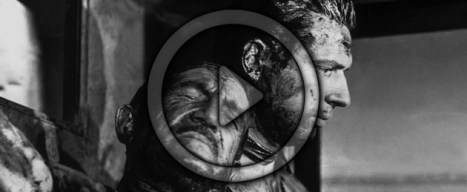
“Whose Gesture Would Remove Me?” Fate and Chance in Sorcerer and The Wages of Fear

“You going to tell me where I’m going?”

“I swear to Christ, I don’t know.”

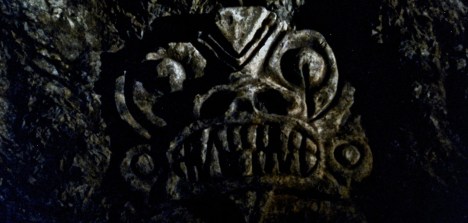
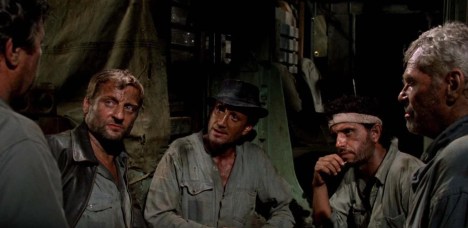
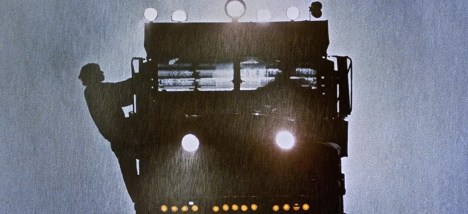
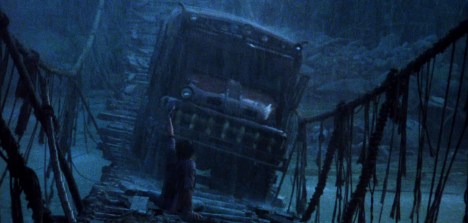
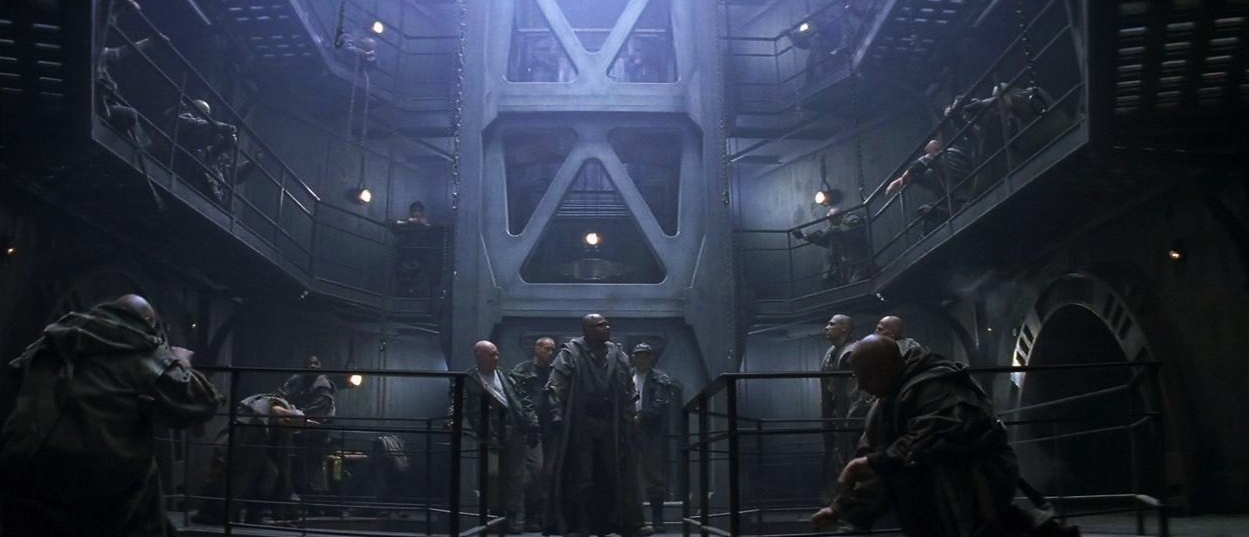
The fates seemed aligned against William Friedkin’s Sorcerer.

The very idea of the film was an act of hubris, with Friedkin daring to remake one of the classics of world cinema. The Wages of Fear is justifiably regarded as one of the best movies ever made, and so for an American director to assume that he could remake it in his own image felt like an act of arrogance. Sorcerer often felt like a doomed project, suffering from wound both rooted in Friedkin’s self-regard and resulting from broader cultural trends.

Friedkin’s refusal to compromise cost the movie a bankable leading man in Steve McQueen, something that Friedkin regrets to this day. The decision to shoot on location South America led to a ballooning budget, conflicts with cast and crew and a variety of logistical difficulties. Friedkin refused to compromise with the studio during production, being openly antagonistic when they offered notes. The decision to open the movie with seventeen minutes of subtitled prologue may have alienated audiences, along with the use of title that conjured images of an Exorcist  sequel.

Perhaps all of this was meaningless. Maybe there was nothing that Friedkin could have done during the production of Sorcerer would have made a difference. After all, Sorcerer had the misfortune of opening a week after Star Wars. George Lucas’ science-fantasy epic obliterated the more restrained and more cynical film. It’s debatable to what extent Steve McQueen’s face on a poster or more favourable reviews in the papers might have helped. Friedkin’s career might have fared better after the failure if he’d been easier to work with, but it seems the film itself was always doomed.

In its own way, this feels entirely appropriate. Sorcerer is a story about a vindictive and mean-spirited universe, one that seems actively antagonistic towards the characters who inhabit it. Sorcerer is a story about the whims of fate, and the inescapability of destiny, populated by characters who are doomed long before they sign on to a suicide mission to transport highly volatile dynamite across the Amazon. It seems entirely reasonable that Sorcerer itself would be just as ill-fated as any of its central characters, just as subject to the sinister machinations of a cruel world.

However, all of this gets at the most interesting aspect of Sorcerer, the part of the film that is most distinct from The Wages of Fear. The film is definitely a remake of Henri-Georges Clouzot’s classic, but it does what most truly great remakes do: it finds a fresh angle on the same basic source material. In many ways, The Wages of Fear is a uniquely European blockbuster that exists in the context of the aftermath of the Second World War. Sorcerer is undeniably an American movie, one that insists on finding order in the chaos of the turbulent seventies.

Continue reading

“I Simply Am Not There”: The Existential Horror of Eighties Excess in “American Psycho”…

My name is Patrick Bateman. I’m 27 years old. I believe in taking care of myself, and a balanced diet and a rigorous exercise routine. In the morning, if my face is a little puffy, I’ll put on an ice pack while doing my stomach crunches. I can do a thousand now. After I remove the ice pack I use a deep pore cleanser lotion. In the shower I use a water activated gel cleanser, then a honey almond body scrub, and on the face an exfoliating gel scrub. Then I apply an herb-mint facial masque which I leave on for 10 minutes while I prepare the rest of my routine. I always use an after shave lotion with little or no alcohol, because alcohol dries your face out and makes you look older. Then moisturizer, then an anti-aging eye balm followed by a final moisturizing protective lotion. There is an idea of a Patrick Bateman. Some kind of abstraction. But there is no real me. Only an entity. Something illusory. And though I can hide my cold gaze, and you can shake my hand and feel flesh gripping yours, and maybe you can even sense our lifestyles are probably comparable, I simply am not there.

American Psycho is twenty years old, and somehow more relevant than ever.

To be fair, the film signposts this strange relevance. Towards the end of Bret Easton Ellis’ novel, Bateman takes a moment to muse on Trump Tower, admiring it as it stands “tall, proudly gleaming in the late afternoon sunlight.” Throughout the film, Bateman and colleagues are obsessed with Trump. “Is that Donald Trump’s car?” asks Bateman while riding with his fiancée in a taxi. Later on, out at dinner in a low-rent restaurant, he tries to catch a colleague’s interest (and maybe his own) by asking, “Is that Ivana Trump?”

Without ever being directly present in the film or the novel, Donald Trump haunts American Psycho. Ironically, that weird relationship has only deepened in the years since the novel was published and the film was released. During his presidential campaign, Trump famously boasted, “I could stand in the middle of Fifth Avenue and shoot somebody and I wouldn’t lose any voters.” It’s an argument that has become worryingly central to Trump’s campaign, with even his lawyers advancing the argument that he couldn’t be prosecuted for it as part of an argument over his tax returns.

American Psycho makes a similar argument about its protagonist. Bateman spends the entirety of the book and movie openly boasting and threatening characters with death and dismemberment, only for everybody involved to remain either willfully or accidentally ignorant of what Bateman claims to be. Bateman confesses his crimes repeatedly and openly, only for colleagues to laugh it off as a joke or shift the conversation or reveal that they weren’t really listening. American Psycho unfolds in a world where nothing is real and nothing matters. It is closer to our world than it seems.

Continue reading

New Escapist Column! On “Devs”, “Westworld” and Determinism…

I published a new In the Frame piece at Escapist Magazine this evening. Devs recently wrapped up, and Westworld is hurdling towards its season finale, so it seemed an appropriate time to reflect on both of those.

There’s an interesting synchronicity between the third season of Westworld and Devs. Both are stories about tech companies trying to build deterministic models of the world. Although both series approach this basic framework in very different ways, they seem to tap into the same core anxieties. Westworld and Devs are stories about free will and choice in the face of inhuman systems that argues the world could only ever be as it is. There’s something fascinating in seeing these themes boiling to the surface so close together.

You can read the piece here, or click the picture below.

New Podcast! The Time is Now – Season 2, Episode 14 (“The Pest House”)

I am in the middle of a run of appearances on The Time is Now at the moment, and taking the time out to discuss the rare second season episode of Millennium that I don’t consider to be a highlight. I’m discussing The Pest House with the wonderful Kurt North and the fantastic Adam Chamberlain.

The Pest House is an interesting episode. It’s written by the second season showrunners Glen Morgan and James Wong, and plays into some of their interests in the horror genre. It’s very much a celebration of slasher movie clichés, which would be reflected in their projects after finishing up on Millennium – from Morgan’s Black Christmas to Wong’s American Horror Story to their joint Final Destination. However, the episode often feels like a mess of tropes and ideas, at least two different episodes stitched inelegantly together.

As ever, you can listen directly to the episode here, subscribe to the podcast here, or click the link below.

Continue reading

New Podcast! The Movie Palace – “The Aviator”

I had the pleasure of joining the great and generous Carl Sweeney on his excellent classic Hollywood podcast The Movie Palace.

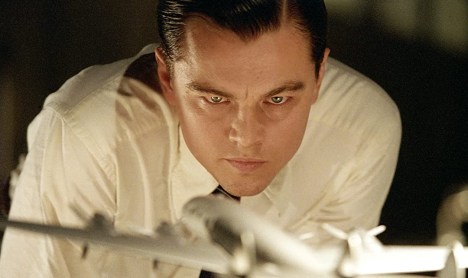
Carl had put the podcast on a bit of a hiatus earlier in the year, but these are strange times. So to kick off a new season, he invited me on to talk about The Aviator, one of Martin Scorsese’s odes to classic Hollywood. I was delighted to accept the invitation, as I’m always happy to revisit a Scorsese film. The Aviator has aged in interesting ways, providing an encapsulation of some of Scorsese’s core themes and ideas, but also blending modern filmmaking with a classic aesthetic. It’s a fascinating window into what makes Scorsese such a unique filmmaker.

You can listen to the episode here, back episodes of the podcast here, click the link below or even listen directly.

“They Are Touching Things!” The Aviator, and the Yearning for Human Contact…

I was thrilled to get back invited on The Movie Palace with Carl Sweeney to talk about Martin Scorsese’s The Aviator. It’s a film that I hadn’t watched in quite a while, and which had a much stronger impact on me than I expected. You should listen to the whole podcast conversation, but I had some thoughts I wanted to more properly articulate.

Q-U-A-R-A-N-T-I-N-E…

The Aviator is about many things.

Most obviously, it is about famous Hollywood director and aviation pioneer Howard Hughes. Hollywood had been trying for decades to bring Hughes’ life to screen. Directors like Christopher Nolan and Warren Beatty had failed to get their Hughes-related projects off the ground. Indeed, The Aviator almost feels like a work-for-hire project from Scorsese, who replaced Michael Mann as the director of this project at the behest of lead actor Leonardo DiCaprio. Having previously collaborated on Gangs of New York, The Aviator cemented Scorsese and DiCaprio’s partnership.

However, despite his late arrival on the project, The Aviator feels very much like a Martin Scorsese film. After all, the second half of the film is given over to an impassioned creator dragged out into the limelight and forced to justify a spectacular and costly failure while arguing for his exacting creative vision. This aspect of the film would undoubtedly have resonated with Scorsese, who had just come on to the project fresh from the debacle of Gangs of New York, which involving fighting with Harvey Weinstein over the cut of a movie “whose box office returns weren’t overwhelming.”

Still, there’s one aspect of The Aviator that feels much more pointed and resonant in the current context of global lockdowns and self-isolation. In a very fundamental way, The Aviator is a story about the paradox of touch. It is a story of a man who longs for human connection, but whose neuroses make that sort of connection impossible. The Aviator tells the tale of a man who locks himself away from the world, but must eventually find the strength to put himself back in it.

Continue reading

New Escapist Column! On the Bleak Nihilism at the Heart of Alien³…

I published a new piece at Escapist Magazine this evening. With “Alien Day” arriving tomorrow, I thought this was as good a time as any to celebrate the most under-appreciated film in the series.

Alien³ has a somewhat tarnished legacy. It was subject to a lot of criticism when it came out, some of which was justified and some was not. While director David Fincher’s original vision is lost to history, there have been welcome efforts to reclaim the film. The Assembly Cut is well worth any film fan’s time, and deserves consideration as a worthy entry within the larger franchise. Even allowing for this minor rehabilitation, the film is still undervalued.

Alien³ will never be as good or as iconic as Alien or Aliens. However, it is a worthy successor. The film’s unrelenting commitment to – and loud endorsement of – nihilism is very much in keeping with the spirit of the franchise. Alien³ is a massive and expensive studio blockbuster that argues for the horror of existence and the cruelty of a vicious universe. It is a $50m argument for self-negation in the face of such cosmic terror. These ideas simmered through Alien, but Alien³ allows them to come to a boil. It’s breathtaking.

You can read the piece here, or click the picture below.


179. Le salaire de la peur (The Wages of Fear) – World Tour 2020 (#202)

Hosted by Andrew Quinn and Darren Mooney, and this week with special guest Tony Black, The 250 is a (mostly) weekly trip through some of the best (and worst) movies ever made, as voted for by Internet Movie Database Users.

This time, Henri-Georges Clouzot’s Le salaire de la peur.

Four men drift idly around a deadend town in the heart of South America, when an unlikely opportunity strikes. A freak accident has caused a fire at an American oil well, and the company is offering a lavish payday to anybody who can help. The only catch is that to earn that money, these four men will have to drive extremely volatile nitroglycerine across some of the most treacherous terrain imaginable. Those who survive will have enough to escape the purgatory in which they’ve found themselves, and those who don’t won’t care.

At time of recording, it was ranked 202nd on the list of the best movies of all time on the Internet Movie Database.

Continue reading

New Escapist Column! On “Better Call Saul” as Fitting Eulogy to the Television Antihero…

I published a new In the Frame piece at Escapist Magazine this evening. Better Call Saul wrapped up its fifth season this week, and so it was worth taking a look at the Breaking Bad prequel.

To a certain extent, Better Call Saul seems like a show out of step with the times. It is set in the early days of the twenty-first century. It has never become the ratings or awards juggernaut that Breaking Bad became. It has a strong critical following, but never truly broke out into the wider culture in the way that Breaking Bad did. None of this is a judgment on the show itself. After all, Better Call Saul premiered at a time that television was already pushing away from those antihero dramas.

However, that status as show that exists at the tail end of a broader cultural trend allows Better Call Saul a greater degree of creative freedom. It offers a reflective meditation on the kind of antiheroes that populated so much of the so-called “Golden Age of Television.” These masculine archetypes are easy to galmourise, even when shows are unambiguous about their flaws. The beauty of Better Call Saul lies in creating an antihero who is harder to fetishise. Saul is not Walter White or Tony Soprano or Al Swearengen. He is a lot more tragic, a lot more pathetic.

This is the beauty of Better Call Saul, the angle that allows the show to feel like a true coda to the kind of stories that dominated prestige television for well over a decade. You can read the piece here, or click the picture below.