• Following Us

  • Categories

  • Check out the Archives


  • Awards & Nominations

154. Exorcist II: The Heretic – Halloween 2019 (-#94)

Hosted by Andrew Quinn and Darren Mooney, and this week with Doctor Bernice Murphy and Phil Bagnall, The 250 is a (mostly) weekly trip through some of the best (and worst) movies ever made, as voted for by Internet Movie Database Users.

This time, a Halloween treat. John Boorman’s Exorcist II: The Heretic.

At time of recording, it was ranked 94th on the list of the worst movies of all time on the Internet Movie Database.

Continue reading

New Escapist Column! The Flawed Redemption at the Heart of “Return of the Jedi”…

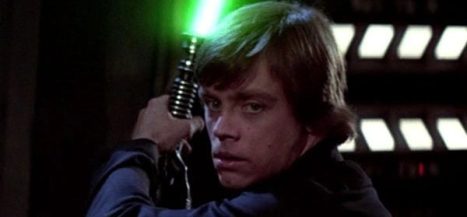
I published a new In the Frame piece at Escapist Magazine on Monday. This one has been kicking around inside my head for a little while, but came to the fore with the recent trailer for Star Wars: Episode IX – The Rise of Skywalker. Primarily, the flawed redemption at the heart of Star Wars: Episode VI – The Return of the Jedi.

Look, everybody knows the basic arc of the Star Wars saga. Luke discovers that Darth Vader is his father, sets out to redeem him, manages to turn Vader away from the dark side before Vader dies. However, that’s never been quite how it works. The actual arc is a lot messier and more complicated, and a lot less conventionally heroic than it is remembered. Return of the Jedi never actually bothers to redeem Vader, instead focusing on redeeming Luke’s idea of Vader. At its core, Return of the Jedi is a story about how hard Luke wants to believe his father was a good man, in spite of all evidence to the contrary.

Along the way, Luke gambles the entire future of the Rebel Alliance and his sister’s fate on the assumption that there is goodness in Vader, while the film never actually bothers to demonstrate that there is any. It’s a fascinating incomplete arc, and one that hints at a gaping moral void at the heart of the larger Star Wars saga. It’s a story about how an individual’s redemption doesn’t matter, only other people’s idea of that redemption. In its own way, it marks Return of the Jedi as a quintessentially eighties movie; it is a story about how the most important thing to Luke is not the fate of the galaxy, but his own self-image.

You can read the piece here, or click the picture below.
New Escapist Column! “Watchmen” and the Limits of Textual Fidelity…

I published a new In the Frame piece at Escapist Magazine last Friday. With the release of Damon Lindelof’s Watchmen, it seemed appropriate to cast an eye back to Zack Snyder’s cinematic adaptation.

I have a huge amount of admiration for Snyder’s version of Watchmen, even if I don’t think it actually works. It is a Herculean effort to bring the story to the screen, one committed to directly transposing as much of the source material from page to screen, but often without really stopping to think about what the dialogue or imagery actually means. It is in many ways a demonstration of the limits of slavish devotion in adaptation. It is a counterpoint to the argument that all it takes to adapt a major work from one medium to another is literalism.

You can read the piece here, or click the picture below.

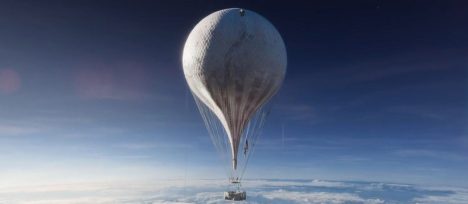
Non-Review Review: The Aeronauts

At one point in The Aeronauts, reluctant partners Amelia Wren and James Glaisher open up to one another. High above the clouds, separated from the world below, Wren talks a little bit about her own departed husband and how she has struggled to come to terms with his absence. It isn’t a particularly in-depth conversation, coming about thirty minutes into a hundred-minute movie, so she stops rather abruptly. She is grateful for the tact and restraint of her conversational partner, the socially-awkward Glaisher. “Thank you,” she tells him. “Another would have pushed me further.”

This is more than just a small and inevitable moment of character development awkwardly signposted, a gesture that Wren and Glaisher are not as incompatible and oppositional as even they have come to believe. It is also a statement of purpose for Tom Harper’s The Aeronauts. It is a promise to the audience that The Aeronauts will never push its viewers or its characters in particularly uncomfortable or unconventional directions. Instead, it will offer a much gentler type of story that moves at its own pace and deals with various obstacles and developments well within its comfort zone.

On top of the world…

The Aeronauts is a clean, old-fashioned awards season drama. Two talented young actors are locked together in a confined space, playing characters who see the world in what initially appear to be two very different ways that gradually align over the course of the movie’s runtime. The costumes are spectacular. The music is triumphant. The special effects are impressive. There is tragedy, but it is overcome. There are complications, but they are handled. The Aeronauts is surprisingly conventional for a film that can be described as “the Victorian hot air balloon adventure starring Felicity Jones and Eddie Redmayne.

This isn’t a criticism. At least, not a particularly biting one. The Aeronauts understands it is pitching itself as broad crowd-pleasing entertainment, so never pushes too hard in any direction that might possibly jeopardise that. Anything that might possible put that at risk is hastily thrown overboard. This is at once the best and worst thing about The Aeronauts. “Your husband pushed too far,” Glaisher warns Wren at one point, both an example of the film’s complete aversion to subtext and an in-text justification for its careful moderation. The Aeronauts is aiming at “charming.” It lands squarely on target.

A triumph of scale.

Continue reading