• Following Us

  • Categories

  • Check out the Archives


  • Awards & Nominations

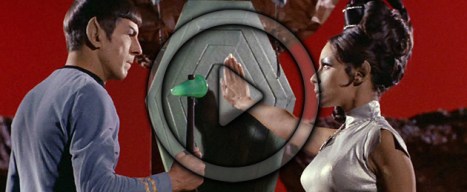
Star Trek: Voyager – Body and Soul (Review)

Body and Soul is the old science-fiction staple, the body swap episode.

There are any number of iconic examples of the genre, even within the larger Star Trek franchise. Although the original series was populated with duplicates and doppelgängers and surrogates and clones in episodes like The Enemy Within, Mirror, Mirror, Whom Gods Destroy and even What Are Little Girls Made Of?Turnabout Intruder might be the most straightforward example. Star Trek III: The Search for Spock featured sequences in which McCoy was channelling Spock. Star Trek: Deep Space Nine had all the cast take on the personalities of Dax’s past hosts in Facets.

Insert your cheesecake jokes here.

Often, these sorts of stories exist to showcase the dramatic range of key performers and to offer a little variety to the weekly routine of playing the same character for years and years on end. On Star Trek: The Next Generation, Brent Spiner would occasionally find himself tasked with playing Data’s “brother” Lore or his “father” Noonien Soong in episodes like Datalore, Family, Descent, Part I, Descent, Part II and Inheritance. The cast on Deep Space Nine would play their mirror counterparts in stories like Crossover, Through the Looking Glass and Shattered Mirror.

Even Star Trek: Voyager has done its own body swap and possession narratives before, like with Tuvok in Cathexis or with Paris in Vis à Vis. However, the success of these sorts of episodes largely rests in the execution, in the question of whether it is worth watching a familiar actor playing an unfamiliar role for forty-five minutes. This is a tough challenge, and many episodes falter trying to hit that mark. Body and Soul has a lot of very fundamental issues with it, but it at least has the common sense to ask one of the cast’s best actors to impersonate another of the cast’s best actors.

“Next week is a Kim episode?”

Continue reading

Non-Review Review: Mowgli

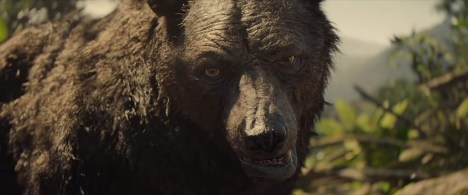
Watching Mowgli, it very quickly becomes clear why Warner Brothers sold the film to Netflix, rather than pressing forward with a theatrical release.

Mowgli was always going to suffer in comparison to The Jungle Book, Jon Favreau’s live-action reimagining of the animated Disney classic. When the two projects were in development, they seemed like obvious dueling movies; like The Prestige and The Illusionist, or Deep Impact and Armageddon, or Volcano and Dante’s Peak. It seemed like a game of chicken between two major studios; two rakes on the same beloved property arriving in cinemas at close proximity to one another. When it became clear that The Jungle Book would hit cinemas first, the fear was that Mowgli would look like an inferior imitation.

Bagheering belief.

Those fears were misplaced. Indeed, the most striking thing about Mowgli is how different and distinct it is from The Jungle Book. Despite the similar premise and being based on the same material, there is little chance of any casual audience member confusing them. Ironically, this ends up being an issue of itself. Mowgli is distinct from the iconic Disney film, but for good reason. Andy Serkis’ film is drawing more directly from the work of Rudyard Kipling. This explains the significant differences in terms of tone and narrative. These differences are intriguing and engaging, revealing in their own ways.

However, these differences are also informative. Mowgli‘s relative fidelity to its source material ultimately serves to underscore just how effectively Disney changed the underlying story in The Jungle Book, and just how carefully crafted that other film is to a larger audience. Mowgli is not a bad film, although it does have some serious flaws. However, it is a much less appealing and much weirder film than The Jungle Book. As a result, it makes sense that the film would end up at home on Netflix, where it can afford to be a little stranger and a little more eccentric than the perfectly calibrated Jungle Book.

Bear with me.

Continue reading

Non-Review Review: Green Book

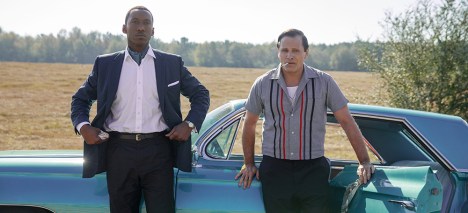
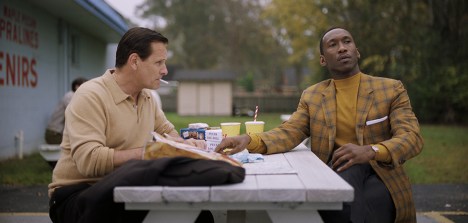
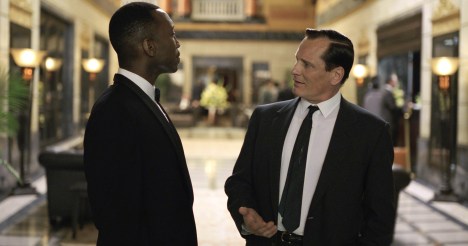
Green Book feels like a movie lost in time.

If Green Book feels displaced, it is not from the early sixties backdrop against which the story unfolds. Instead, Green Book feels like an awards season movie that was produced in the early nineties, and which slipped gently under the radar until it was unearthed at some recent point. Green Book very much belongs to those early nineties awards fare meditations upon race and class in America – especially Driving Miss Daisy, the film it most strongly evoked.

Going by the Book.

As a piece of nineties awards fare, Green Book would be judged rather kindly. It is crowd pleasing. It is broad. It is earnest, without being unnecessarily confrontational. It is also appreciably smarter than many of those nineties commentaries on race in America, consciously subverting and even inverting a lot of the expectations of the form. it is designed in such a way as to leave the audience with a big grin on their face, playing with familiar sets of narrative logic that nests a classic “odd couple” movie inside an exploration of the prejudices of the Deep South in the sixties.

However, Green Book is not a lost piece of nineties awards fare. It is a product of the current era. While it might track ahead of similarly ill-judged (and sadly contemporaneous) awards season movies about race like The Blind Side or The Help, it is still far more clumsy than a movie tackling these ideas should be in a twenty-first century context. Green Book feels positively outmoded when compared to fellow high-profile films about race like BlacKkKlansman or Sorry to Bother You or If Beale Street Could Talk. Green Book feels like a relic.

Food for thought.

This is a paradox. Green Book is significantly better in terms of production than many of the films to which it consciously invites comparison, films by white directors inspired by true events and coloured by nostalgia. However, it is significantly weaker than many of the more vital and dynamic films grappling with the same subject matter. Green Book often feels caught between these two extremes, and this presents a challenge in properly assessing it.

Green Book is a very good example of the kind of movie that it wants to be. However, it leaves unanswered the question of whether movies like this still have a place in the modern cinematic landscape.

“Doctor Shirley, you can’t be serious?”

Continue reading

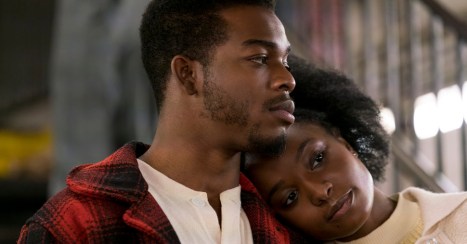
Non-Review Review: If Beale Street Could Talk

If Beale Street Could Talk is a beautiful and poetic piece of work.

From a certain perspective, the film is poetic in too literal a sense. If Beale Street Could Talk is adapted from the work of James Baldwin, and conscious venerates its inspiration. The opening title card quotes from Baldwin’s introduction to the book, and makes a point to allow his name to linger on screen after the quote itself has faded from view. There are extended sequences of If Beale Street Could Talk that are lifted directly from the book, occasionally even laid over black-and-white photos from the era to underscore the broader social commentary.

Fonny how things end up…

This would normally be an issue in an adaptation of a beloved literary work, in the same way that certain adaptations of theatrical works can seem “stagey” like Fences or even Doubt. If Beale Street Could Talk is very lucky in its choice of director. Barry Jenkins is a fantastic visual storytelling, with a wonderful eye for composition and a breathtaking way of seeing the world that seems to bleed through the screen itself. For the most part, If Beale Street Could Talk benefits from Jenkins’ strong visual style working in tandem with Baldwin’s searing prose.

There are moments when one threatens to overwhelm the other, when Jenkins’ task of adapting Baldwin’s story for the screen brushes against the limitation of the form; a monologue just a little too arch, a tangent just a little bit too removed, a transition just a little too forced. However, these moments are few and far between, and If Beale Street Could Talk is a stunning piece of cinema.

A lover’s Tish.

Continue reading

New Podcast! Standard Orbit #246 – “A Tale Of Three Producers “

I was thrilled to be invited to join the great Zach Moore on Standard Orbit, a Star Trek: The Original Series podcast hosted over at Trek FM. I appeared on the show last year to discuss the third season of the series, and so it makes sense that I should be back to discuss the second season.

Zach got in touch after reading some of my reviews for the second season from several years back. He was particularly fascinated with my breakdown of the season between three producers: Gene L. Coon, John Meredyth Lucas and Gene Roddenberry. Each of those three producers had their own unique style and each brought their distinct sensibility to the series. In fact, watching the season in production order, there a discernible shift between the three talents involved. Coon was much more interested in playing with the tropes and conventions of the young series, while Lucas was engaged with more traditional science-fiction storytelling and Roddenberry had his own strong idea of what the series could be.

Zach was, as ever, a very gracious host. I had great fun discussing it. You can hear the full discussion below or visit the episode page here.

Continue reading

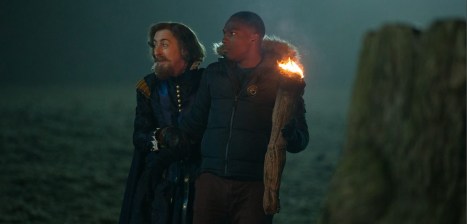
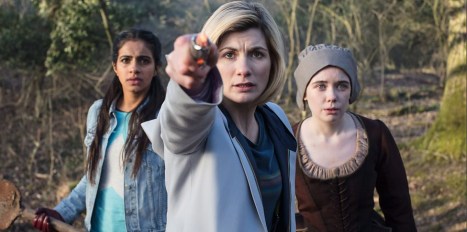
Doctor Who: The Witchfinders (Review)

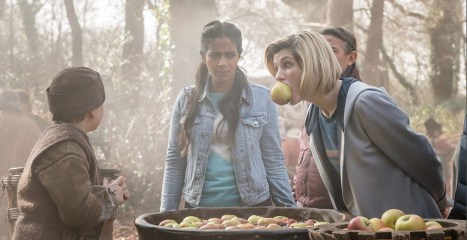
The Witchfinders is perhaps the closest that the eleventh season of Doctor Who was come to delivering a conventional celebrity historical.

It is an episode that is much closer to the traditional mode of science-fiction adventure than Rosa or Demons of the Punjab, and not just because it is the first historical episode to be set in British history. As with Arachnids in the U.K., the format of The Witchfinders harks back to the structure and rhythms of the Davies era, feeling like a companion piece to episodes like The Unquiet Dead, The Shakespeare Code or The Unicorn and the Wasp. (There are a handful of examples from the Moffat era, notably Victory of the Daleks and Vincent and the Doctor, but they are appreciably fewer.)

The King’s Demons.

This is a broad episode set in the distant path in a manner that evokes the popular folk history of the United Kingdom. It evokes a particular period of history that tends to be well known in a general sense, but less familiar in any specific detail. The Witchfinders focuses on the Doctor and the TARDIS wading into the witch trials that took place during the seventeenth century, overseen by King James I. There is even a nice tie-in to The Shakespeare Code, with the historical connection between those witch trials and William Shakespeare’s Macbeth.

The Witchfinders often finds itself trapped between two extremes. The idea of sending the first female Doctor back into these witch hunts is ripe for social commentary, arguably even more directly than that with which the historical episodes like Rosa and Demons of the Punjab have engaged. Indeed, there is something slyly subversive in the episode’s portrayal of its celebrity figure – in this case King James I – as a deeply flawed figure rather than somebody to be venerated.

Screwed.

On the other hand, The Witchfinders is very much a typical modern-era historical adventure. The Doctor inevitably discovers that there are sinister aliens at work in a historical setting, plotting an invasion and threatening to derail the entire course of history. These aliens serve to provide an explanation for a historical event, and even allow the Doctor to have a more direct impact on the life of an important historical figure, before disappearing into the TARDIS. This is very much of a textbook example of the kind of story codified by The Visitation or The Mark of the Rani.

These two extremes pull within the episode, holding The Witchfinders back from greatness. It is too serious to be enjoyed purely as a fun runaround, but too winkingly mischievous to work as an insightful piece of social commentary. The result is mostly satisfying, even if it is hardly filling.

Apple of her eye.

Continue reading

106. Fifty Shades of Grey (#-91)

Hosted by Andrew Quinn and Darren Mooney, and this week with Marianne Cassidy and Grace Duffy, The Bottom 100 is a subset of the fortnightly The 250 podcast, a trip through some of the worst movies ever made, as voted for by Internet Movie Database Users.

This time, Sam Taylor Johnson’s Fifty Shades of Grey.

Continue reading

Non-Review Review: Roma

There’s a lyrical beauty to Roma, a decidedly intimate and personal project for director Alfonso Cuarón following on from his triptych of more mainstream fare.

Roma is a very different beast from Harry Potter and the Prisoner of Azkaban, Children of Men and Gravity. It is much smaller in scale, focusing on the life of a maid who works for a slightly-above-middle-class family in early seventies Mexico city. Shot in black and white, often favouring quiet scenes and still shots, there is an observational aspect to most of Roma, a sense in which the movie very gently and very elegantly watches life unfold in slow motion without any sense of hurry or panic. For most of its runtime, Roma is content to just be.

This is not a surprise. After all, Cuarón has been candid about how much of the film is drawn from his own childhood. Even without that outside knowledge creeping in, Roma seems to tacitly acknowledge it in the central role that the cinema plays in the story. At one point, the young children take a trip to the picturehouse to see the space thriller Marooned, with Cuarón making a point to showcase a sequence that evokes his own work in Gravity. As much as this is a story about a young woman who works as a maid to a privileged Mexican family, it is undoubtedly filtered through the lens of childhood.

Although nominally set against the backdrop of early seventies Mexico, Roma repeatedly suggests that the larger world is but the echo chamber for the uncertainty and tumult within a family unit; when earthquakes happen and revolutionaries march, they are simply expressions of more intimate traumas and challenges facing these characters. In the world of Roma, it is as below as above, reflecting the way in which a child might see the outside world as nothing more than an extrapolation of the home life that they know so well.

This lends Roma an almost magical quality. Although the film and its characters are complex and developed, there is something poetic in the way in which Cuarón chooses to tell this particular tale. Cuarón never rushes or hurries his characters, instead giving them room to breath. He finds a zen-like calm in the stability of the everyday, the safety of routine against the backdrop of larger anxieties and uncertainties. The characters in Roma repeatedly navigate life-changing events, but underscored with a childlike certainty that they can survive them.

Roma is a genuinely moving piece of cinema.

Continue reading

New Podcast! Scannain Podcast (2018) #44!

It’s time for the latest Scannain podcast! Almost live from the Dublin Feminist Film Festival this week.

Recorded late on Wednesday evening, following the screening of the festival shorts and Parklands. Directed by Kathryn Millard, with cinematography by Mandy Walker, Parklands is notable as Cate Blanchett’s first starring role. So Jay Coyle, Ronan Doyle and I talk a little bit about our reactions to both the shorts and the film itself.

As usual, we talk about the top ten and the new releases, as well as what we’ve watched this week outside of the festival. In this episode, Jay discusses both the massive list of great films he has to watch before the end of the year, and his decision to watch both The Meg and Skyscraper instead. Ronan has seen two of the films in the top ten, having very strong opinions about both A Star is Born and Bohemian Rhapsody.

There is a lot to cover in news, including the announcement of a new Criterion streaming service risen from the ashes of Filmstruck, the awards at the Cork Film Festival, the Irish Film Festival London, the Polish Film Festival at the Irish Film Institute and the launch of Screen Skills Ireland. So a busy week.

The top ten:

  1. Overlord
  2. Johnny English Strikes Again
  3. Burn The Stage: The Movie
  4. Smallfoot
  5. The Nutcracker and the Four Realms
  6. Widows
  7. A Star is Born
  8. Bohemian Rhapsody
  9. The Grinch
  10. Fantastic Beasts: The Crimes of Grindelwald

New releases:

You can download the episode here, or listen to it below.

Non-Review Review: Won’t You Be My Neighbour?

Won’t You Be My Neighbour? is an affecting and thoughtful exploration of a key figure in American popular consciousness.

Documentary maker Morgan Neville has established himself as a masterful navigator of the history of popular culture, of the depth and shadow often obscured by memory. Neville is perhaps most famous for his fascinating exploration of the back-up singers who provided a foundation for more recognisable stars in 20 Feet from Stardom, and he was also responsible for the documentary They’ll Love Me When I’m Dead, which probably made a more coherent narrative of The Other Side of the Wind than the film itself.

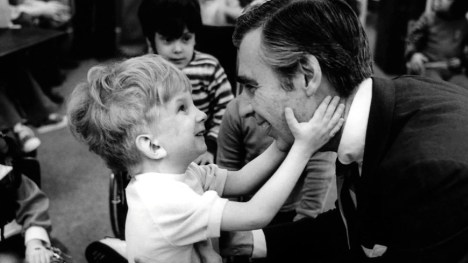
Won’t You Be My Neighbour? tells the story of children’s entertainer Fred Rogers, a staple of American television since the late sixties. Although the performer passed away more than a decade and a half ago, he casts a long shadow. There has been a renewed interest in his persona. Jim Carrey is playing a fictionalised version of the present in Kidding, while Tom Hanks will play a more official version of the man in a biography directed by Marielle Heller. (The film was originally titled Are You My Friend?, but is reportedly in the process of being retitled.

It is interesting to wonder why Fred Rogers is of such great interest at this precise moment, something that Won’t You Be My Neighbour? skirts around without tackling directly. Instead, Won’t You Be My Neighbour? is a sweet and affecting documentary that maybe brushes a little too lightly against its subject in places, but speaks most convincingly to what he represented and why he is so beloved.

Continue reading