• Following Us

  • Categories

  • Check out the Archives


  • Awards & Nominations

Black Panther Movement: IMDb Vote Rigging and the Politicisation of Everything…

Everything is political.

And not just in abstract sense any longer. Over the past two years, it has become clear that popular culture is not insulated from politics, and cannot be insulated from politics. There are any number of markers along this road; the rise of socially-conscious film criticism, the election of a reality television star as President of the United States, debates about diversity and representation on screen and in organisations. It is fair to debate all this, to wonder whether it is a necessary step on the road to maturity or another way in which it has become harder to escape into pop culture.
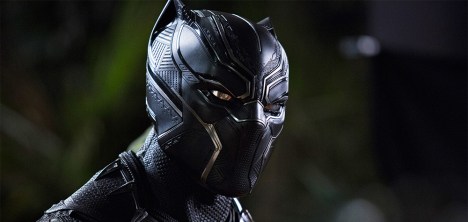
Over the past few weeks, Black Panther has become another front in the perpetual and never-ending culture wars, a battleground much like Gamergate in which views that would have been socially unacceptable even half a decade earlier are spilling out into the mainstream. Weeks before the film was released it found itself subjected to organised vote brigading and troll campaigns, racist fear-mongering and dogwhistling, panic and chaos. This was before the public had been given the opportunity to actually watch the film. Black Panther became a pop culture totem.

Much has been made of Black Panther as a progressive milestone. It is not the first black superhero movie, but it is the first Marvel Studios film with a primarily black cast and focusing exclusively on a black hero. It is perhaps the first true black superhero film of the superhero boom that the Blade trilogy helped to kickstart, but subsequently stood apart from. Black Panther is undeniably compelling from that perspective, a bold and necessary step forward. However, one look at social media demonstrates that there is still a long way left to go.
Continue reading

Star Trek: Voyager – Riddles (Review)

Riddles is very much a stock episode of Star Trek: Voyager.

Like Barge of the Dead and Alice before it, Riddles is a character-focused episode of the sixth season that largely retreads character dynamics that feel thorough explored by this point in the show’s run. One of the big issues with Voyager is that it never got past more than a single line of biography for many of its lead characters; Torres is angry, Paris is a restless rebel, Tuvok is logical, Kim is inexperienced. Indeed, in the case of Chakotay, the series even dropped that one-line character synopsis after Michael Piller departed and never bothered to draft a new one.

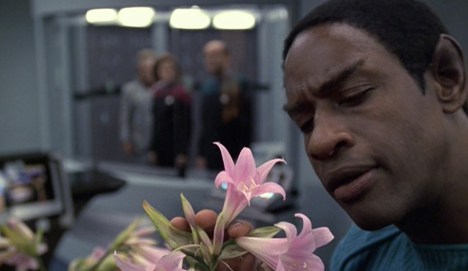
Stopping to smell the roses.

Riddles is a Tuvok-centric episode that brushes up against the fact that Voyager doesn’t really know (or care) that much about Tuvok beyond the existence of his pointy ears. Tuvok is a Vulcan, and so his stories tend to be about logic and the challenges that it presents. This is not a bad thing, with Tuvok’s repression and logic providing the basis for Meld and Gravity, two of the best episodes of Voyager ever produced. However, Riddles is somewhat underwhelming. It feels like the story has been done before. More than that, this feels like a particularly stock iteration of that story.

Riddles is not a bad episode of Voyager by any measure. It is also not an especially good episode of Voyager either. Instead, Riddles is a perfectly familiar episode of Voyager.

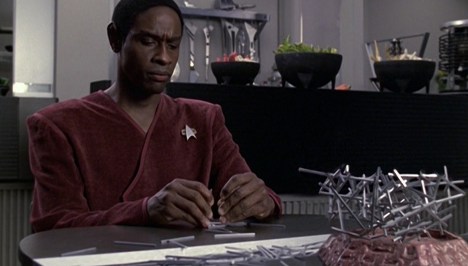
Putting the pieces together.

Continue reading

Non-Review Review: The Cloverfield Paradox

The Cloverfield Paradox is important. It’s just not very good.

The Cloverfield Paradox is a movie that seems destined to be overshadowed by the circumstances of its release. The Cloverfield Paradadox is one of several films that Netflix harvested from the increasingly beleaguered Paramount Pictures. Netflix will be handling the international distribution of Annihilation and picked up The Irishman when Paramount backed out. However, The Cloverfield Paradox remains one of the strangest fruits of this bitter harvest, in large part because of its pedigree, its production and its release.

It ain’t Clover ’til it’s Clover…

As the title implies, The Cloverfield Paradox is part of the shared universe of JJ Abrams films including Cloverfield and 10 Cloverfield Lane. Both were films that cleverly snuck up on audiences, and both were films that performed well for Paramount. As such, Paramount’s decision to sell off The Cloverfield Paradox seems strange – this is one of the company’s few successful properties, and there is even a fourth movie in the pipeline still aiming for a theatrical release. It seems a strange choice for Paramount to offload on Netflix.

Then again, the film’s production was notoriously troubled. The film was originally titled “The God Particle” before being changed to “Cloverfield Station” before finally being released as “The Cloverfield Paradox.” While the finished film looks impressive and has a top-notch cast, watching it is an incredibly disjointed experience. There is a sense that The Cloverfield Paradox has not been edited so much as filleted, that the audience is watching the leftover elements of a film that have been assembled from leftovers after the connecting tissue has been scraped from the bone.

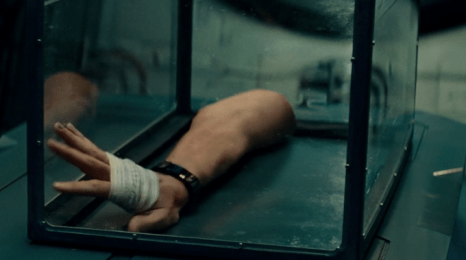
Admiring the handiwork.

However, all of this is overshadowed by the circumstances of the film’s release, with Netflix finallising the deal to purchase The Cloverfield Paradox in late January, reportedly paying over $50m for it, and releasing it directly following the Super Bowl. There were no critics’ screenings, no advanced hype. There were simply two television spots promising viewers that they could watch the film on Netflix “after the game.” This was a brutally effective piece of marketting from Netflix, using the film to create a “disruption” to the established pattern of major movie releases.

This was an uncanny move, because all of the surrounding hype around this “event” glosses over the fact that The Cloverfield Paradox is just a new sheen on a familiar cliché. It is a “direct to video” film elevated to a seismic pop cultural phenomenon. And it is not even a good “direct to video” film.

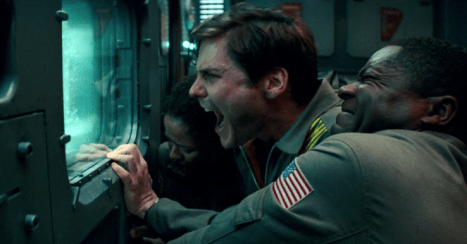
Station-keeping.

Continue reading

Non-Review Review: The Mercy

It can be tempting when reviewing contemporary films to looks for some sort of profound meaning, some deep insight on the contemporary world reflected back on celluloid. This is particularly true in the current climate, when it seems like every piece of American pop culture is just waiting to be read as a meditation upon the tenure of President Donald J. Trump. Some of this is because politics are particularly inescapable at this moment, when a reality television star is the leader of a free world. Part of it is perhaps down to critics trying to make their own meaning in the world.

Nevertheless, The Mercy seems to be the quintessential Brexit film. A biography of (in)famous British sailor Donald Crowhurst, The Mercy is a fascinating piece of a work. A large part of the film’s success is down to how skilfully and cannily it manipulates its audience and their expectations, how heavily leans on the tropes and conventions of the standard biographical drama to wrongfoot the viewer. The Mercy starts out as one type of film, only to make a brutal swerve into another. It is a harrowing tale of grand delusion smashed against the shoals of reality.

Tough sail.

Note: This review will assume some passing familiarity with the story of British sailor Donald Crowhurst. These true-life events may be considered spoilers for audience members without any foreknowledge and who wish to see the movie entirely blind. So consider this something of a spoiler warning.

Continue reading

Non-Review Review: Black Panther

Black Panther is something special.

In a lot of ways, it is a very typical Marvel blockbuster. The familiar formula is in place, and the movie follows the rhythms that audiences have come to expect from these films. There is a certain tempo and structure to the film, the sort of clean efficiency that delineates most of the movies produced under the banner of Marvel Studios. For a film advertised using a remix of The Revolution Will Not Be Televised, it is striking how conservative Black Panther is.

The Panther Strikes!

However, there is a lot to be said for the film’s more understated revolutionary qualities, the depth of understanding that the production team bring to the adaptation. Black Panther is acutely aware of what it means to construct a superhero fantasy epic about an African prince who leads a utopian society in the context of 2017, and there is something reassuring in how confidently and efficiently the film works within that framework. It is not merely that the existence of Black Panther is important, it is that Black Panther‘s assertion of its identity is important.

Black Panther is superior blockbuster by any measure, constructed with a great deal of care and thought about what it means. Much like its title character, there is a sense that the weight of expectation is upon Black Panther, and the most remarkable thing about the film is how seriously it takes that obligation without ever feeling burdened.

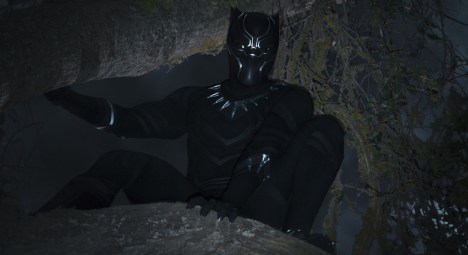
Heavy lies the head that wears the cowl.

Continue reading

The Netflix Paradox: New Media and Old Methods…

Last night, Netflix released The Cloverfield Paradox.

The release of the film was announced in a Superbowl advertisement, promising audiences that the film would be available direct to them “after the game.” It was a striking move, particularly because so little was known about the film. It was, in many ways, an unexpected Christmas present, particularly as hyped and teased by director Ava DuVernay on Twitter. On the surface of it, this looked like a game-changing paradigm, a film released with only a few hours’ notice, directly bypassing critics and hype in a way that rendered it accessible to casual movie-goers.

Never too far a (Clover)field.

However, it also feels like a publicity coup for Netflix. The company has pulled off something truly remarkable with this release, in pulling off one of the oldest tricks in the film distribution playbook, while making it seem fresh and exciting. More than that, Netflix took a tactic that is traditionally associated with the release of bad films, and presented it as something revolutionary and democratic. Twitter commentators argued that this was the future of film releasing. Peeling back the layers on the release of The Cloverfield Paradox, it looked to be something quit different.

This was simply an old trick being cast in a new light.

#FilmTwitter right now.

Continue reading

64. Крым (Crimea) – This Just In (-#–)

Hosted by Andrew Quinn and Darren Mooney, This Just In is a subset of the fortnightly The 250 podcast, looking at notable new arrivals on the list of the 250 (and the 100 worst) best movies of all-time, as voted for by Internet Movie Database Users.

This time, Aleksey Pimanova’s Крым.

Continue reading

Non-Review Review: Phantom Thread

Phantom Thread is certainly a beautiful film.

In many ways it resembles the dresses designed by the artist at its centre. It is elegant, well-composed, stylish. It looks perfect and has just the right texture. Phantom Thread is a meticulously-produced piece of work, with every technical aspect of the film delivered to the highest possible standard. More than that, Phantom Thread is a very clever and incisive film, one that arguably feels much more suited to this particular cultural moment than Three Billboards Outside Ebbing, Missouri.

Tailored to the role.

However, Phantom Thread feels like one of Reynolds Woodcock’s dresses in another manner. As fantastic as it might look, it is not designed for living. There is one memorable sequence in the middle of the film where Woodcock actually confiscates the dress from a patron because it is not being treated with the pomp and ceremony that he expects. These are dresses for display, designed to leave observers breathless. It never ignites the same passion as Three Billboards Outside Ebbing, Missouri, never feeling as anchored in appreciable human emotion.

Phantom Thread often feels too much like strolling through Woodcock’s parlour, the audience invited to examine the sheer craft and cleverness of what is being done, but warned in the starkest possible terms not to touch anything. There is beauty, but no feeling.

Make it sew.

Continue reading

New Podcast! Scannain Podcast (2018) #3!

Continuing the revival of the Scannain podcast!

A weekly podcast looking at events in the world of Irish and international film, the Scannain podcast is the perfect way to start the weekend. Discussing everything from what the hosts watched this week to the top ten and new releases, the team also discuss the Irish Film Board’s funding initiatives for the new year and access to film via streaming services.

I’m thrilled to be part of a panel including Jay Coyle, Ronan Doyle and Alex Towers. Give it a listen below.

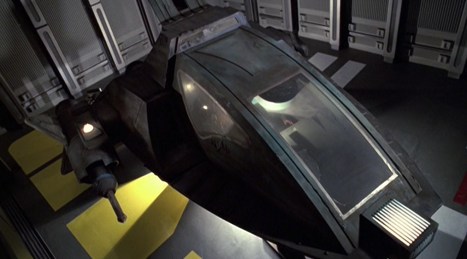
Star Trek: Voyager – Alice (Review)

Alice is a misfire.

To be fair, the episode seemed doomed from its original set of premises. Star Trek: Voyager has never been particularly good at capturing the sense of Tom Paris as a restless unreliable rebel. The episodes of Voyager focusing on the character’s rebellious tendencies tend to be spectacular misfires; Ex Post Facto, Investigations, Vis à Vis, Thirty Days. These stories do not play to the strengths of either the writing staff or Robert Duncan McNeill, feeling largely incompatible with the character of Tom Paris as he developed in the wake of Caretaker.

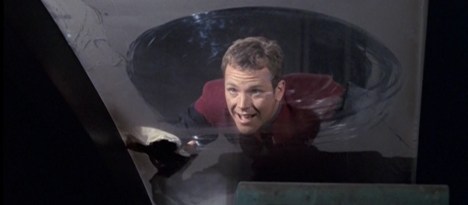
I’ll never get used to not living inside of Alice.

However, Alice literally weds this familiar and unsuccessful premise to another recurring Voyager trope with a less-than-impressive rate of success. It is not enough for Alice to be another story about Tom Paris proving that he has a rebellious streak, that premise has to be woven into a broad science-fiction gothic horror in the style of Threshold or Macrocosm. Indeed, Alice is explicitly a psycho-sexual horror in the mode of Blood Fever or Darkling, inevitably butting up against the difficulties of constructing an episode that is about sex but can never discuss sex.

Alice is flawed from the ground-up, but those flaws are only further revealed in the clumsy execution and the disappointing storytelling. Alice is a very bad piece of television.

A deep-space dust-up.

Continue reading