• Following Us

  • Categories

  • Check out the Archives


  • Awards & Nominations

The X-Files (Topps) #4-6 – Firebird (Review)

This August (and a little of September), we’re taking a trip back in time to review the second season of The X-Files. In November, we’ll be looking at the third season. And maybe more.

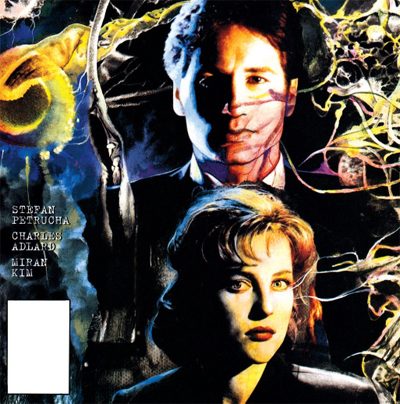
Firebird is the first multi-part story told in the pages of The X-Files. Writer Stefan Petrucha and artist Charles Adlard don’t transition from done-in-one stories to two-part adventures, instead skipping the middle step and producing a three-issue epic. While A Little Dream of Me exposed the limitations facing a creative team working on a tie-in, Firebird demonstrates the strengths of the format. Spanning from Siberia to New Mexico, Firebird has an epic scale that would not be possible on the second season of The X-Files.

(Rather interestingly – and perhaps tellingly – Petrucha takes the comics to places that the show wants to go. The American South-West would be very difficult to replicate in Vancouver, prompting the creative team to make an ambitious effort to bring Mulder and Scully to New Mexico in Anasazi, infamously painting a quarry red to achieve the desired result. The show would wait until the fourth season before it was confident enough to take Mulder to Siberia in Tunguska and Terma.)
Something out of this world?

Something out of this world?

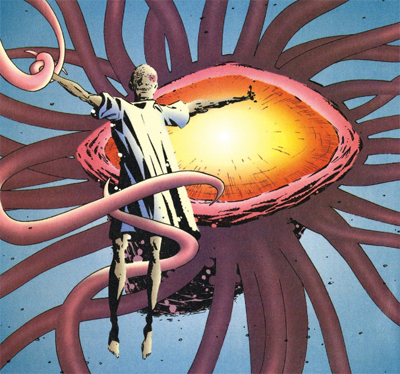
As with Not To Be Opened Until X-Mas, Firebird is very much a comic book story. While the show was reluctant have Mulder and Scully directly encounter aliens, the story features a monster that looks like something from the Lovecraft mythos. While the stakes on the show were generally rather personal to this point, Firebird puts the entire population of New Mexico (if not the world) at stake. While the series took its time revealing its evil conspiracy, Firebird gives us a cabal headed by a monologuing skull-holding would-be supervillain.

Perhaps surprisingly, this works. It’s clear that Petrucha and Adlard are aware that they are working in a different medium with different expectations and conventions. Firebird is very much an X-Files comic book epic, a story that couldn’t be realised on film. And there’s something very endearing about that.
Alien affairs...

Alien affairs…

Continue reading

The X-Files – Soft Light (Review)

This August (and a little of September), we’re taking a trip back in time to review the second season of The X-Files. In November, we’ll be looking at the third season. And maybe more.

Soft Light is a bit of an oddity. It’s primarily notable for being Vince Gilligan’s first credit on The X-Files, coming a few years after the release of Wilder Napalm, a film based on his screenplay.

Gilligan, of course, would go on to become a wildly influential television writer. He would join the staff in the show’s third year and produce some of the series’ most memorable episodes. He would also manage the day-to-day running of The Lone Gunmen spin-off. Although, at the moment, Gilligan is probably best known for creating and producing Breaking Bad, which has already been ranked among the best television series ever produced.

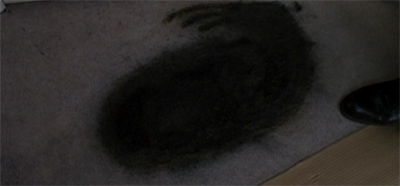
Everything burns...

Everything burns…

It is very tempting to look at a writer’s early work and to try to retroactively over-analyse it – to spot familiar themes and images, as if to incorporate it into a large oeuvre. That becomes a bit more complicated in television, where an early screenplay is quite likely to have been written and re-written several times before it reaches the screen. As a freelance writer submitting a script, Gilligan’s work would have been heavily reworked to make it fit within the context of The X-Files.

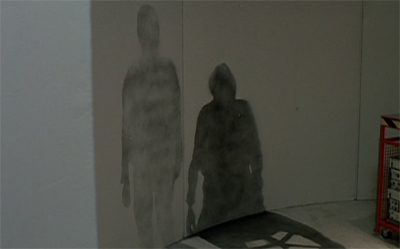
While there are traces of Gilligan’s later work to be found here, Soft Light is a rather awkward late-season episode, one that seems a little out of place.

Shadows on the wall...

Shadows on the wall…

Continue reading

Non-Review Review: Pride

Lesbians and Gays Support the Miners is an oft over-looked chapter in the history both the labour and the gay rights movement. Based around the fundamental principle that oppressed groups have a great chance of achieving their goals standing side-by-side (or shoulder-to-shoulder) than they would ever would apart, the alliance forged during the 1984 coal strikes went on to have a lasting and important influence on both the mining community and the gay community.

Pride is perhaps a little bit too whimsical and twee for its own good, going for any number of easy feel-good smiles and affectionate chuckles, but there’s something quite compelling about this tale of two different groups forging an unexpected and unprecedented alliance in pursuit of a common good. Pride is a light and charming “opposites unit” story with enough wit and soul to win over even the most cynical audience members.

Labour of love...

Labour of love…

Continue reading

Star Trek: Deep Space Nine – The Search, Part I (Review)

The September and October, we’re taking a look at the jam-packed 1994 to 1995 season of Star Trek, including Star Trek: Deep Space Nine and Star Trek: Voyager. Check back daily for the latest review.

The Search, Part I is interesting. It is an episode that, in effect, serves as something of a second pilot for the show. It’s an episode that re-conceptualises the show, while taking a great deal of trouble to ensure that any new viewers will be brought up to speed. In fact, The Search is a rather disjointed two-parter as a whole. The first part feels like a lot of set-up with a cliffhanger tacked on to the end of the episode, while the second part is very clearly its own story.

It makes sense. At this point, Star Trek: Deep Space Nine is the only Star Trek on television. It’s a period that doesn’t last, and which is really just a scheduling fluke. The show’s second season continued on past the airing of All Good Things…, the final episode of Star Trek: The Next Generation. The third season began broadcasting before the airing of Caretaker, the pilot of Star Trek: Voyager. Star Trek: Generations was released somewhere in the middle. So the stretch where Deep Space Nine was “the only Trek on television” feels largely illusory.

Still, The Search, Part I feels like a conscious attempt to welcome any wayward Star Trek fans. Including, appropriately enough, new staff writer Ronald D. Moore.

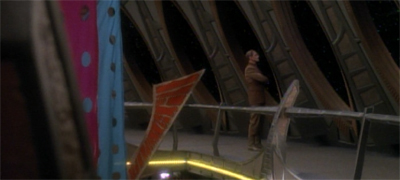
Staring into space...

Staring into space…

Continue reading

Mike W. Barr and Gordon Purcell’s Run on Star Trek: Deep Space Nine (Malibu Comics) (Review/Retrospective)

The September and October, we’re taking a look at the jam-packed 1994 to 1995 season of Star Trek, including Star Trek: Deep Space Nine and Star Trek: Voyager. Check back daily for the latest review.

The nineties comic book market was an interesting place. It enjoyed a huge boost due to the rise of speculation and collectors. The industry was massively successful in the early years of the decade, fuelled by high-profile artists, hype, and events. The industry imploded in on itself in the middle and towards the end of the decade, but it looked surprisingly profitable in the early years. Against that backdrop, Malibu Comics emerged.

Malibu had become the publisher of record for Image Comics in 1992. Image had been founded by a number of popular artists who had departed Marvel to set up their own shop and found their own company. Malibu distributed their comics for about a year, which gave Malibu access to a larger distribution platform. Although Image soon grew strong enough to publish its own comics, there was a point where Malibu had surpassed industry veteran DC Comics in the market place.

"Think of it—five months ago no one had ever heard of Bajor or Deep Space Nine. Now all our hopes rest here."

“Think of it—five months ago no one had ever heard of Bajor or Deep Space Nine. Now all our hopes rest here.”

Against this backdrop, Malibu secured the rights to publish comic books based on Star Trek: Deep Space Nine. Up until this point, DC comics had been publishing comics based on the original Star Trek and Star Trek: The Next Generation. Paramount’s decision to award the Deep Space Nine license to Malibu effectively split the comic book license up. DC Comics continued to publish comics based around the first two Star Trek shows, while Malibu had exclusive rights to the characters and world of Deep Space Nine.

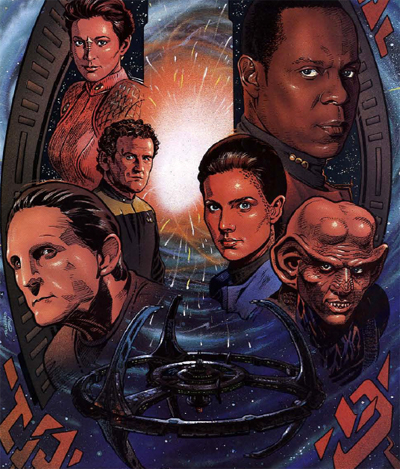
As such, the decision to recruit writer Mike W. Barr and artist Gordon Purcell to write the first six issues of the comic was a pretty big deal. Barr and Purcell were incredibly associated with Star Trek comic books. The duo had done popular work on the movie-era comics, and had demonstrated an obvious and abiding affection for the franchise. Assigning these two creators to work on Deep Space Nine was a very clear message. Malibu were taking this license very seriously, indeed.

Triptych...

Triptych…

Continue reading

The X-Files – F. Emasculata (Review)

This August (and a little of September), we’re taking a trip back in time to review the second season of The X-Files. In November, we’ll be looking at the third season. And maybe more.

The wonderful thing about the second season of The X-Files is the spirit of experimentation. There’s a sense that the show is consciously pushing itself to try new things, to figure out what works. Watching the second season of the show, you can see the series’ outline beginning to take shape, even if it’s not full developed yet. The third season of The X-Files would seem a lot stronger and more cohesive, but it was building off the lessons learned during the second season.

Sometimes those experiments worked well. For example, the first stretch of the season demonstrated that the show could do an arc spanning multiple episodes. Colony and End Game established the foundations of the larger “colonisation” mythology even beyond “the government knows about aliens and they sometimes abduct people.” Episodes like Die Hand Die Verletzt and Humbug demonstrated that the show could do comedy stories and step outside its comfort zones.

Has everybody caught the Ebola bug?

Has everybody caught the Ebola bug?

Of course, there were a few narrative dead-ends as well, a few experiments that did not work as well as they might. Most notably, the tail end of the season leans rather heavily on science-fiction high-concepts. The elements introduced in Colony and End Game work well enough, but shows like Soft Light and Død Kälm feel almost like episodes of some other science-fiction anthology show. Still, there’s a sense that the show is trying to figure out what exactly it wants to be.

F. Emasculata is a wonderful example of that spirit of experimentation, effectively tapping into nineties health scares within the framework of a conspiracy thriller.

Everything burns...

Everything burns…

Continue reading