• Following Us

  • Categories

  • Check out the Archives


  • Awards & Nominations

Star Trek – Where No Man Has Gone Before (Review)

To celebrate the release of Star Trek: Into Darkness this month, we’ll be running through the first season of the classic Star Trek all this month. Check back daily to get ready to boldly go. It’s only logical.

In a way, there’s a very clear divide between The Cage and Where No Man Has Gone Before. It’s clearer than the strange new actor sitting in the middle of the Bridge or the fact that Spock is suddenly a lot less casual. In a way, each is perfectly positioned in popular consciousness. The Cage was produced in late 1964, but wouldn’t be shown on television until 1988, after spending years touring the fan circuit. It remains a strange bit of Star Trek history, sitting simultaneously outside any of the five television shows, and simultaneously a completely inexorable part of the franchise’s evolution. It’s where it all began, but not where the first Star Trek began.

In contrast, Where No Man Has Gone Before feels more like the pilot episode of Star Trek. Sure, the fashion changes a bit in the episodes to come, the entire cast has yet to be assembled, but this is recognisably the same ship and the same show as The Corbomite Manoeuvre or The Man Trap. It’s more than the actors filling roles, the consistent characterisation of Spock or the fact that it actually aired on television in September 1966. This is what the next three years of Star Trek will be like. It’s an aesthetic or an approach to storytelling that is markedly different to the way that The Cage tackled many of the same themes and ideas.

While The Cage laid down many of the philosophical underpinnings of the broader Star Trek universe – including the classic show – it is also a lot less physical and visceral than the classic Star Trek. Indeed, The Cage featured the Captain of the Enterprise reasoning with an advanced bunch of god-like aliens, appealing to human virtues. The action sequences felt a bit extraneous. In contrast, Where No Man Has Gone Before sees the Captain of the Enterprise punching a god-like being repeatedly in the face while hitting on the same themes.

I think that’s perhaps the most dynamic difference between not only The Cage and Where No Man Has Gone Before, but between Star Trek and its spin-offs.

All the old familiar faces...

All the old familiar faces…

Continue reading

Star Trek: Early Voyages #1 – Flesh of my Flesh (Review)

To celebrate the release of Star Trek: Into Darkness this month, we’ll be running through the first season of the classic Star Trek all this month. Check back daily to get ready to boldly go. It’s only logical.

We’ll be supplementing our coverage of the episodes with some additional materials – mainly novels and comics and films. This is one such entry.

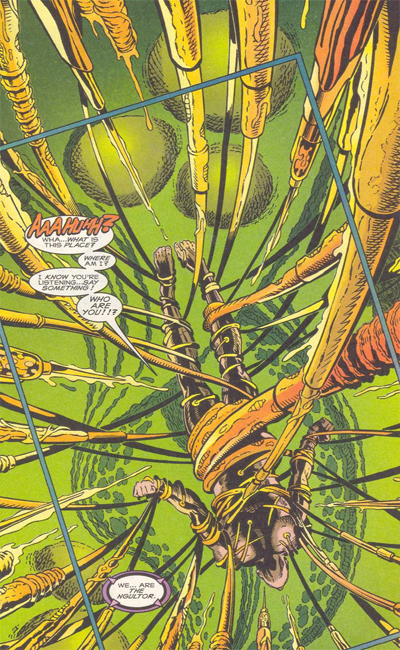
In the late nineties, Marvel were publishing Star Trek comic books. One of those books, perhaps the book garnering the most critical praise, was Star Trek: Early Voyages. Written by Dan Abnett and Ian Edginton, the series was intended to follow the mission of the USS Enterprise under the command of Captain Christopher Pike. Published monthly, the comic is perhaps the best indication of what a Star Trek show starring Christopher Pike might have actually looked like. Although the series was cancelled suddenly after only seventeen issues, ending on a cliffhanger, it is still a fascinating look at what might have been.

Looks like they've hooked a Pike...

Looks like they’ve hooked a Pike…

Continue reading

Doctor Who: Warriors’ Gate (Review)

To celebrate the fiftieth anniversary of the longest-running science-fiction show in the world, I’ll be taking weekly looks at some of my own personal favourite stories and arcs, from the old and new series, with a view to encapsulating the sublime, the clever and the fiendishly odd of the BBC’s Doctor Who.

Warrior’s Gate originally aired in 1980. It was the third instalment of the E-Space Trilogy.

We found it.

Yes, well, that’s one of the advantages of living in a rapidly shrinking micro-universe.

What are the others?

Other what?

Other advantages?

Ah, well, it’s difficult to say.

– Adric, the Doctor and Romana discuss modern living

I’m actually very, very fond of Warriors’ Gate. It’s a piece of bold science-fiction that actually manages to accomplish what a lot of these stories in Tom Baker’s final season try to do. It offers an effective bit of speculative fiction while playing to the theme of entropy, decay and collapse. Both Stephen Gallagher’s fine script and Paul Joyce’s direction come together to produce a very thoughtful and clever Doctor Who story that manages to avoid a lot of the problems facing this era of the show.

More than that, though, it turns some of those disadvantages into advantages. After all, when else is the show’s tiny production budget going to produce something this beautiful?

Shades of grey...

Shades of grey…

Continue reading

Star Trek – The Cage (Review)

To celebrate the release of Star Trek: Into Darkness this month, we’ll be running through the first season of the classic Star Trek all this month. Check back daily to get ready to boldly go. It’s only logical.

The Cage is fascinating. Looking at it now, it holds up phenomenally well a s apiece of sixties science-fiction. However, it feels like we’re watching a prototype of Star Trek. In many respects, The Cage feels like a rough sketch that captures some essentials, but is missing out on the finer details. Spock is there! But he smiles! The set design looks the same, but the characters are different. Some of the cast fill the same roles, but some are dramatically different. Watching The Cage, you can see a lot of the philosophy that Gene Roddenberry would bring to Star Trek, but it’s very difficult to imagine an on-going series spinning out of this adventure, let alone one that managed to become as iconic or influential as Star Trek would ever be.

Still, it’s pretty solid viewing. It’s entertaining on its own terms, but it’s also informative in the context of the series. It’s more like dry run or a test drive of the concept.

To boldly go... for some reworking...

To boldly go… for some reworking…

Continue reading

Star Trek – Vulcan’s Glory by D.C. Fontana (Review)

To celebrate the release of Star Trek: Into Darkness this month, we’ll be running through the first season of the classic Star Trek all this month. Check back daily to get ready to boldly go. It’s only logical.

We’ll be supplementing our coverage of the episodes with some additional materials – mainly novels and comics and films. This is one such entry.

I’ve never really felt too strongly one way or another about continuity. I never got too upset about Klingon forehead ridges, or the fact that Khan somehow remembered Chekov from an episode that took place before he joined the Enterprise. I’ve always found the use of the term “canon” to describe the shared continuity as more than a little indulgent or absurd. I consider some of the better tie-in novels I have read to be a worthy part of the Star Trek universe, regardless of the fact that they may not fit, or they may contradict what was depicted on-screen. I’ve never been too tightly tied to the notion that something is “important” or “in continuity” among this 700-episode franchise.

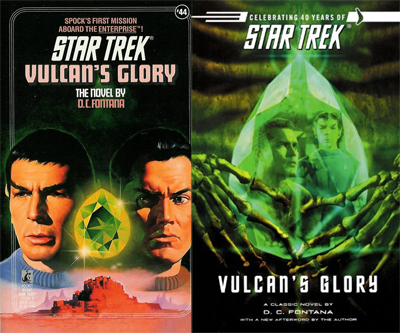
Still, I can’t help but feel like there’s something almost legitimate about Vulcan’s Glory. It is a novel from writer D.C. Fontana, who served as script editor and writer on the classic Star Trek show, and is regarded as one of the guiding lights of the franchise. She went on to write for both Star Trek: The Next Generation and Star Trek: Deep Space Nine. Given her importance to the show over its extended history, anything Fontana writes about it is worthy of note. Indeed, Vulcan’s Glory was originally published in 1989 and was reissued in 2006 for the franchise’s fortieth anniversary.

Even to somebody reluctant to consign “importance” or “worthy” to a tie-in based on outside factors, the story of Spock’s first mission on board the Enterprise, written by one of the strongest writers of the original Star Trek and a guiding influence on the franchise, still jumps out as a pretty important book.

vulcansglory

Continue reading

Doctor Who: State of Decay (Review)

To celebrate the fiftieth anniversary of the longest-running science-fiction show in the world, I’ll be taking weekly looks at some of my own personal favourite stories and arcs, from the old and new series, with a view to encapsulating the sublime, the clever and the fiendishly odd of the BBC’s Doctor Who.

State of Decay originally aired in 1980. It was the second instalment of the E-Space Trilogy.

You are incredible.

Yes, I suppose I am, really. I’ve never given it much thought.

– who says Romana and the Doctor weren’t meant for one another?

Just when it seemed that the John Nathan-Turner era was going to be all about hokey pseudo-science concepts and galaxy-conquering cacti, State of Decay comes along and offers a good old-fashioned gothic science-fiction adventure from long-time writer Terrance Dicks. It feels like a very conscious throw-back in the midst of an otherwise new and distinctive season, but I honestly don’t mind this story about vampires on an alien world, if only because it feels right that Baker should get to do one last gothic horror before he finishes up in the lead role.

Towering over the locals...

Continue reading