• Following Us

  • Categories

  • Check out the Archives


  • Awards & Nominations

Doctor Who: Kinda (Review)

To celebrate the fiftieth anniversary of the longest-running science-fiction show in the world, I’ll be taking weekly looks at some of my own personal favourite stories and arcs, from the old and new series, with a view to encapsulating the sublime, the clever and the fiendishly odd of the BBC’s Doctor Who.

Kinda originally aired in 1982.

My dear, you can’t possibly exist, so please go away.

– a figment of Tegan’s imagination… or is it?

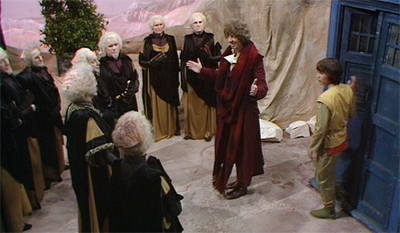
Every once in a while, there’s a story that undergoes something of a critical reappraisal among Doctor Who fans, as particular fans champion a forgotten story as a classic, attack the assertion that a given story is a classic or even suggest a stinker is in serious need of reevaluation. I actually like that, even fifty years after the show originally aired, there are still discussions to be had around what the good, bad and indifferent stories are. I think Kinda has cycled through this process quite a bit – a story initially overlooked in Peter Davison’s “much better than you remember, if you can get past the cheesy production values” first season, but one that has been somewhat re-appraised in the decades that followed.
A hot-shot colonist...

Continue reading

Star Trek – The Man Trap (Review)

To celebrate the release of Star Trek: Into Darkness this month, we’ll be running through the first season of the classic Star Trek all this month. Check back daily to get ready to boldly go. It’s only logical.

It really is amazing how busy the Star Trek universe is. Or, well, how busy it was at one point. Although there are plenty of alien civilisations scattered across the vast gulf space, numerous empires vying for power and glory, the first season of Star Trek seems fixated on the notion that the universe is packed with the relics and ruins of long-dead civilisations. The Man Trap is just one example, as Kirk and his crew investigate an archaeological dig on the planet M-113, decorated with “the ruins of an ancient and long-dead civilisation.” Of course, the civilisation isn’t quite dead, but there’s a definite funereal atmosphere about The Man Trap.

That somewhat grim atmosphere makes the show’s fixation on long-dead worlds somewhat fascinating, given how the series is primarily about mankind’s optimistic future. However, it creates a sense – palpable throughout the first year of Star Trek – that the human race is a relatively new arrival on the scene, but emerging following the collapse and decay of countless ancient civilisations. It’s an old universe, but it’s a new dawn.

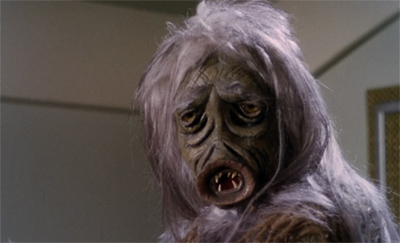
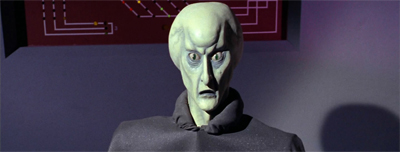
Suckers!

Suckers!

Continue reading

Doctor Who: Four to Doomsday (Review)

To celebrate the fiftieth anniversary of the longest-running science-fiction show in the world, I’ll be taking weekly looks at some of my own personal favourite stories and arcs, from the old and new series, with a view to encapsulating the sublime, the clever and the fiendishly odd of the BBC’s Doctor Who.

Four to Doomsday originally aired in 1982.

Come along, children. Not in front of our hosts.

– the Doctor finally manages to strike the right tone with his companions

Four to Doomsday is an interesting story, if only because it’s so rarely discussed. The second story of a particular Doctor seems to set the tone for their era. William Hartnell’s second story, The Daleks, introduced the iconic pepperpots. Patrick Troughton’s second serial, The Highlanders, introduced the companion Jamie, who would remain with him for the rest of his tenure. Jon Pertwee’s second story, The Silurians, saw Barry Letts taking over the role of producer. Tom Baker’s second story, The Ark in Space, is one of the most memorable and definitive instances of horror in the history of the show. Colin Baker had the misfortune to have Attack of the Cybermen as his second story, an adventure that set the tone for his time in the TARDIS. Sylvester McCoy didn’t really develop until his second season, but he’s probably the exception that proves the rule.

Peter Davison’s Four to Doomsday, on the other hand, just sort of… is.

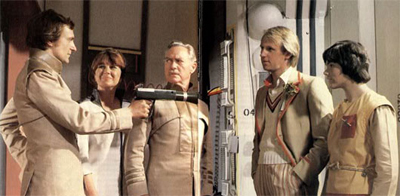
Ground control to Major... dammit, why couldn't I get this image a year earlier in the show's run?

Ground control to Major… dammit, why couldn’t I get this image a year earlier in the show’s run?

Continue reading

Star Trek – The Enemy Within (Review)

To celebrate the release of Star Trek: Into Darkness this month, we’ll be running through the first season of the classic Star Trek all this month. Check back daily to get ready to boldly go. It’s only logical.

One thing that I don’t think the original Star Trek gets nearly enough credit for is the quality of the writers that Gene Roddenberry recruited to contribute scripts. Television obviously operated under a different model at the time, but there’s an impressive selection of science-fiction literary giants who contributed scripts to the show. More than that, it’s impressive how many of those stories became truly iconic Star Trek stories.

The Enemy Within is the work of author Richard Matheson, best known for stories like I Am Legend or What Dreams May Come. It’s very much a high-concept science-fiction story, but it’s also notable because it establishes two of what would become the show’s favourite tropes: transporter accidents and evil duplicates. Indeed, the two devices would be reunited in the following season’s Mirror, Mirror. These narrative elements even featured in the last season of Star Trek: Enterprise to air, in episodes like Daedalus and In a Mirror, Darkly.

Perhaps it’s a demonstration of how important these outside writers were to the development of Star Trek as a franchise that Matheson would effectively codify two stock narrative devices that would still be in use four decades later.

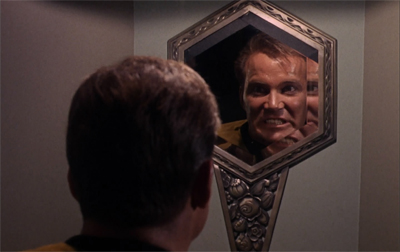
Mirror, mirror...

Mirror, mirror…

Continue reading

Doctor Who: Castrovalva (Review)

To celebrate the fiftieth anniversary of the longest-running science-fiction show in the world, I’ll be taking weekly looks at some of my own personal favourite stories and arcs, from the old and new series, with a view to encapsulating the sublime, the clever and the fiendishly odd of the BBC’s Doctor Who.

Castrovalva originally aired in 1982.

Welcome aboard. I’m the Doctor. Or will be if this regeneration works out.

– the Doctor greets Adric

Tom Baker did seven years of Doctor Who. That is impressive. No matter which way you look it, and no matter how cynical you might be, it’s hard to argue that Baker’s departure wasn’t a fundamental and radical change to the series. In fact, his influence is so great that Castrovalva even opens with a rare pre-credits sequence, just to make sure that the viewers know that Baker is gone. (Despite the fact that John Nathan Turner apparently asked that the scene be shot so that the new season could open without having to show Tom Baker.)

Baker was going to be a tough act to follow. In fact, to many people, Tom Baker is still the Doctor. I don’t mean that in a sort of “stubborn fans refusing to acknowledge change” sort of way. I mean that in a “when The Simpsons make a Doctor Who reference they use Tom Baker” sort of way. He cast one hell of a shadow, and it’s hard to truly fathom how daunting it must have been to try and step out from that show.

That Peter Davison manages to do so is nothing short of amazing. Equally impressive is the fact that Castrovalva manages to be its own story. While it suffers – as with so many Bidmead scripts – from the fact that the technical limitations of the show can’t keep pace with his ideas, there’s still a lot to love here. And not just Peter Davison. Though he helps.

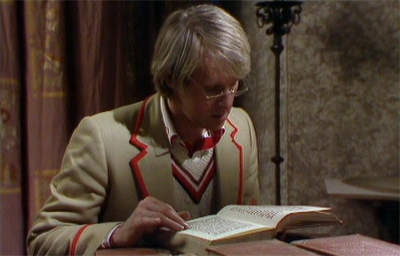
“Oh! The brainy specs!”

Continue reading

Star Trek – Mudd’s Women (Review)

To celebrate the release of Star Trek: Into Darkness this month, we’ll be running through the first season of the classic Star Trek all this month. Check back daily to get ready to boldly go. It’s only logical.

I think it’s fair to say that Star Trek had some gender issues. I say that as a fan of the show, and as a person with an immense fondness for the ensemble. It’s tempting to write off those sexist moments and decisions as attitudes that were socially acceptable at the time. After all, the sixties are almost half a lifetime away at this point. However, that doesn’t account for the fact that many of the same gender issues plagued Star Trek: The Next Generation in the late eighties, which lost two of its three female leads in its first season, and opened its second year by subjecting the remaining female lead to The Child.

Even disregarding that, though, there comes a point where even the time when a work was produced can’t excuse certain attitudes or approaches. Star Trek doesn’t feature too many strong female characters, relegating recurring female characters like Uhura and Janice Rand to the background. This is dodgy enough, but the show’s problems with gender become a lot more obvious when a show throws sexuality into focus. Mudd’s Women is such a show. It famously introduced one of the few recurring non-crewmember characters, and it plays into the “Star Trek as space western” theme, but it is also very sexist. Very, very sexist.

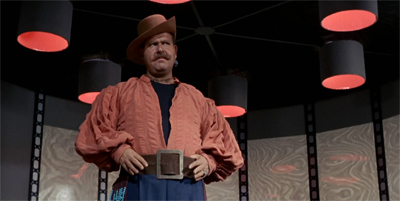
Mudd-ying the waters...

Mudd-ying the waters…

Continue reading

Doctor Who: Logopolis (Review)

To celebrate the fiftieth anniversary of the longest-running science-fiction show in the world, I’ll be taking weekly looks at some of my own personal favourite stories and arcs, from the old and new series, with a view to encapsulating the sublime, the clever and the fiendishly odd of the BBC’s Doctor Who.

Logopolis originally aired in 1981. It was the second instalment in the “Master” trilogy.

It’s the end… but the moment has been prepared for.

– the Doctor finally figures out what this year has been about

I don’t think the departure of a Doctor has even been a bigger deal than it was with Tom Baker. Sure, Christopher Eccleston’s first season was so fixated on death that his departure seemed preordained, even in the episodes written before his decision to leave. Similarly, Peter Davison’s final year seems designed to demonstrate that the universe is no longer suited to this particular iteration of the Doctor. Maybe David Tennant’s final year is focused on his passing, but the episodes are so spaced out that it makes little difference. However, we’ve just spent an entire year focused on the idea of entropy and decay, the inevitably of change and the notion that death is just a nature part of the cycle of things.

When the Doctor assures his companions that “the moment has been prepared for”, he may as well be looking at the camera, assuring those of us at home that the past year has been spent readying them for the unthinkable: the time when Tom Baker might not be the Doctor.

Final destination?

Final destination?

Continue reading

Star Trek – The Corbomite Manoeuvre (Review)

To celebrate the release of Star Trek: Into Darkness this month, we’ll be running through the first season of the classic Star Trek all this month. Check back daily to get ready to boldly go. It’s only logical.

Again, The Corbomite Manoeuvre is one of those early episodes of Star Trek that was shuffled around in the broadcast order. Not that there’s too much internal continuity to mess up or anything like that, but it is particularly noticeable when episodes at the start of a television show get shuffled around. The writers are establishing characters and concepts, so it feels strange to watch the first episode written with McCoy after we’ve already seen him established as the ship’s doctor.

(The first episode aired, The Man Trap, centres around McCoy, which makes it strange when the ship suddenly has a different Chief Medical Officer in the Where No Man Has Gone Before.)

Fortunately though, The Corbomite Manoeuvre is the last time that this really becomes a concern, as Star Trek seems to iron out all the difficulties and the nuances on a new television show. Effectively the first regular episode of the show produced after two pilots, a large part of the charm of The Corbomite Manoeuvre is really watching it all come together.

What a dummy...

What a dummy…

Continue reading

Star Trek – Crew by John Byrne (Review)

To celebrate the release of Star Trek: Into Darkness this month, we’ll be running through the first season of the classic Star Trek all this month. Check back daily to get ready to boldly go. It’s only logical.

We’ll be supplementing our coverage of the episodes with some additional materials – mainly novels and comics and films. This is one such entry.

Majel Barrett Roddenberry was the first lady of the Star Trek franchise, in more ways than one. She was married to Gene Roddenberry and remained a part of the franchise after his death. She guest starred on the shows occasionally, continued to lend her voice to the computers and offered the occasional interview to the press. Although her actual influence on the television shows was relatively minimal (and she was occasionally prone to protesting various plot developments including the Dominion War on Star Trek: Deep Space Nine), she did remain involved in Star Trek until she passed away in 2008.

However, she was also involved from the start. She had the recurring role of Christine Chapel throughout the original television show, and appeared in the unaired pilot, The Cage, as Christopher Pike’s first officer. Identified only as “Number One”, this almost made her the literal “first lady” of Star Trek. I’m surprised that Number One hasn’t been used more often as a character, with her appearances in tie-ins generally restricted to her time on board Pike’s Enterprise.

John Byrne’s miniseries might have the title Crew, and feature supporting roles for Christopher Pike and Mister Spock, but it is very much the story of Number One. Published a year after her death, and dedicated to her memory, Crew feels like a fitting farewell to the actress responsible for one of the franchise’s earliest and most intriguing supporting characters.

Fate protects fools, little children... and ships named Enterprise.

Fate protects fools, little children… and ships named Enterprise.

Continue reading

Doctor Who: The Keeper of Traken (Review)

To celebrate the fiftieth anniversary of the longest-running science-fiction show in the world, I’ll be taking weekly looks at some of my own personal favourite stories and arcs, from the old and new series, with a view to encapsulating the sublime, the clever and the fiendishly odd of the BBC’s Doctor Who.

The Keeper of Traken originally aired in 1981. It was the first instalment in the “Master” trilogy.

He dies, Doctor. The Keeper dies!

– Tremas heralds the end of an era

Of course, the entire season has been less than subtle about the point, but The Keeper of Traken is the point at which Tom Baker’s final season builds to critical mass, and reaches the point of no return. Entropy, decay and death have all been crucial ingredients in the year’s collection of adventures, but The Keeper of Traken is the point at which it seems like our character has set himself on an incontrovertible course, a path from which he cannot diverge. Baker’s approaching departure gives The Keeper of Traken a great deal of weight, and helps balance a story that might otherwise seem excessive or overblown. There’s melodrama here, but it feels strangely appropriate.

Lawrence Miles has argued that Logopolis was the funeral for the Fourth Doctor. If so, The Keeper of Traken is his wake – and it’s fitting that Irish poet and writer Johnny Byrne should provide this strangely lively (if morbid) celebration.

Hell of a wake...

Hell of a wake…

Continue reading