• Following Us

  • Categories

  • Check out the Archives


  • Awards & Nominations

Home Entertainment

I just finished the third season of The Wire on DVD. I am impressed. I never caught the show the first time around, so – as with many of today’s fine televisual treats – it seems to be one best sampled on DVD, at your own pace. It’s a fantastic saga that really capitalises on the previous two seasons (which, while very good fell just short of greatness). I may not be entirely convinced that it is, loike, the best TV show in the world… ever, but I can see why George Hook likes the show.

As I was watching the development of themes and character and mood in the twelve-hour set, I began to think about how far television has come within its own context in the past few years. I remember the days when it was the height of praise to describe a show as being like ‘a new movie every week’. The X-Files, Law & Order, Miami Vice and Star Trek: The Next Generation seemed to epitomise the early wave of this view point, as the networks seemed desperate to sell the illusion that viewers shouldn’t go out to the cinema – the can find entertainment of a similar scale on the box.

Not only can they look moody, the cast of The Wire can also act pretty damn awesome as well...

Not only can they look moody, the cast of The Wire can also act pretty damn awesome as well...

Of course, this wasn’t quite the case. No matter the loft heights that the narratives may reach (and the best television can be as compelling as the best movie or novel or play), the shows were always confined by the ceiling of their budget. So Crockett could crash a speedboat and watch it explode, but he couldn’t blow up a building, or Mulder could see an alien spaceship, but only from the distance as a sequence of blurry lights. You can really only fool the audience so often – eventually they’ll realise the champagne you’re serving is simply apple juice mixed with white lemonade. And treating television as literally a ‘home box office’ also confined the plot: each story had to be self-contained, or you couldn’t mess with the status quo too much, nor develop the characters too far beyond their original positions. It goes without saying that – unless you’re planning a franchise – movie makers rarely have to put the pieces back where they found them. Sure, shows might make a token effort – The X-Files mythology comes to mind – but it would plod rather than glide, if it moved at all.

Television isn’t filmmaking. That should go without saying. As such, it came as a bit of a surprise that it wasn’t really until the last fifteen or so years that writers and producers really embraced the idea. Movies have bigger budgets, but smaller canvas. Your plot pretty much has to fit within two hours (or four if you’re really powerful and can overpower the editor). A television show runs on average about one hundred and fifty episodes. It spans several years in the lives of a bunch of characters. Sometimes events don’t simply occur in handy forty-minute blocks.

As ever, science fiction lead the way, really – but didn’t get the credit. Babylon 5 embraced a complex narrative arc-structure that made the show nigh-impossible to casually follow. Many science fiction nuts would accuse one of the Star Trek spinoffs (Star Trek: Deep Space Nine) of stealing the gimick with a densely layoured (yet still relatively accessible) two-and-a-half-year war storyline balancing a huge number of individual characters whose lives changed from week-to-week. Then again, it’s quite likely that not many people know either of these shows. The more geek-aware would note season-long arcs (again carefull constructed so as to not alienate casual followers) on Joss Whedon’s shows Buffy: The Vampire Slayer and Angel.

The approach really made its jump to the mainstream with The West Wing. I love the show, but will readily admit that most of the time the plots made little-or-no-sense in-and-of-themselves, but rather played into larger arcs both in terms of narrative and character. Big events were seldom concluded within the same hour that they commenced (the shooting, the impeachment hearings, the re-election campaign, the middle east initiative, the primaries and the general election, for example). The show went down as the prestigious pretentious drama it was intended to be, but it began to signal that maybe a change was coming.
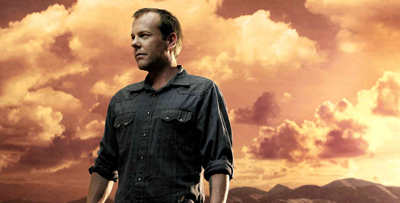
This was taken on Jack's day off...

This was taken on Jack's day off...

About the same time, Home Box Office began producing its own run of series. Oz, though I love it, was a glorified night time soap opera and a respectable first attempt. The Sopranos is generally acknowledged as their masterpiece, though those seeking to be a little contrarian will champion The Wire as the best HBO series. Either way, both unfolded almost as gigantic miniseries, needing to be viewed as a whole to be appreciated in their full beauty. Sure, most episodes of The Sopranos unfold around an issue of the week in Tony’s life, but these generally play as a solo movement in a larger concerto. I know nothing about music, so I don’t know if I messed up that metaphor.

At the same time, regular television shows such as Lost proved that modern audiences could follow an interweaving, no-answers-up-front style of storytelling, with a carefully-constructed six year arc. Well, either that or they’re making it up as they go along, depending on who you ask. Love it or loathe it, it represents a huge step forward in modern storytelling – contestably one story in 150 smaller chapters. A more obvious example is 24, where literally every hour on screen is an hour in Jack Bauer’s really bad day. The advent of the DVD market at around this time undoubtable helped these shows reach people who want a big story, but are afraid of missing an episode on the television.

I love that television seems to have found a unique way of telling a story. That’s how media evolves. Film took a while to find its feet (initially stalling in boring uninspired adaptations of stage plays), emulating an earlier media form much as television aspired to. Sure, you’ll still find a movie-of-the-week style show or two (Law & Order and the CSI franchise spring to mind), but even those shows seemingly following an episodic story format will infulge the odd long game (the CSI franchise like serial killers, unsurprisingly; Life on Mars saw Sam try to get home while solving the crime o’ the week; House is as much about the protagonists many, many, many on-going issues as it is the patient of the week).

I love movies. I also love television. Variety is the spice of life.

I’m ordering the fourth season of The Wire now…

Holy Blasphemy Law, Batman!

As a lot of people reading this blog are probably aware, the Irish government recently proposed a new crime of blasphemy. Predictably, the media has erupted in a massive firestorm, free speech activists are pledging to fight tooth-and-nail, religious groups are distancing themselves from the law and the Minister for Justice is covering his backside by claiming that – due to an archaic provision of our Constitution – he is only doing his job.

Putting on my rather dusty ‘lawyer’ hat, he’s half-right. He is supposed to obey the Constitution and cannot directly act against it, nor can he ignore it. However, even the most stoic drafters of the document realised that social values tend to evolve over large periods of time and put in a get out of jail free card intended to be invoked in situations like this.

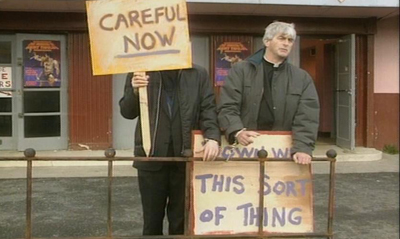
An impromptu staging of The Life of Brian was not a good idea given Ireland's new blasphemy law

An impromptu staging of The Life of Brian was not a good idea given Ireland's new blasphemy law

As one my most learned lecturers drilled into my head while at college, Ireland has one of the most flexible methods of constitutional reform in the world. Unlike England, we actually have a constitution. Unlike America, we don’t require a nigh-impossible unity of political thought in our houses of government to change our guiding principles. We hold simple ‘majority-wins’ referenda to amend our Constitution. There’s no requirement of turnout, nor of government or judicial support. All power to the people and all that.

The biggest stumbling block is getting the referendum held in the first place – that requires government support. The Dail and Senate need to agree to have a referendum (though all the Senate does is either rubber-stamp the proposal or delay it two months). I don’t understand why the Greens are the only party who seem to be pushing for an actual debate on whether we want blasphemy to remain a crime in this jurisdiction – especially given we’ve held plebiscites on everything from divorce to abortion to immigrant babies to Europe (often until we get the ‘right’ answer).

Although, given the debatable role that the ‘silent’ religious majority may have played in defeating the godless baby-killing European Union in the Lisbon referendum, maybe I do see why the major parties might shy away from a public debate on the matter. I’ve only seen one abortion referendum while living in the country, and it was a very messy affair. I would hope that something as simple as freedom of speech wouldn’t be so viciously divisive in modern Ireland.

Better off Ted...

Better off Ted...

I believe. I am a Catholic (albeit lapsed, slightly). I still view this proposal as a huge step backwards. I don’t intend on doodling images of the Prophet, nor of insulting any belief that people hold sacred, but I like to believe I have the right to. If a system of belief is so blatantly ridiculous and offensive as to deserve my scorn (and I can think of one example in particular), I would like to think that they are not above debate or discussion merely because they are a religion. If people want to insult God or Allah or Buddha, well… I’d like to think the believers who invest faith in these religions worship beings that have more important things to worry about that what some blogger or newspaper columnist thinks of them.

Freedom of speech is a core part of democratic freedom. Sure there are grey areas where it becomes hazy – like incitement to hatred, or maybe holocaust denial – but blasphemy isn’t one of them. Sure, it might not necessarily be conducive to polite discussion to bring up the topic (it’s easy to point the finger at willfully offensive content like South Park or Family Guy here), but sometimes it is (Salmon Rushdie’s Satanic Verses is proclaimed a masterpiece, Scorcese’s The Last Temptation of Christ is a flawed but thoughtful film). Even if it’s not intrinsically valuable or even if it doesn’t contribute to discourse, the principle of freedom of speech loses any value if we restrict it to protecting only speech worthy of our protection. Who makes that call?

I love this country, but we do tend to lag behind the rest of the world when it comes to distancing the personal religious affairs of our citizenry from the rule of law in our state. What worries me is that – for all the observations from legal scholars and government officials stressing the constitutionality (as distinct from the moral correctness) of the law – we’ve yet to have any return shots fired from the pro-criminalising-blasphemy side.

Still, it’s early days.

Non-Review Review: Deception

I was feeling a little under the weather last night, but we decided we’d stick on a family film at the house where I stay during the week. Browsing the telly listings, we found a film none of us had heard of starring Ewan McGregor and Hugh Jackman. We didn’t hesitate: how bad could a movie starring those two charming actors be?

Well, I’m not in the business of rhetorical questions, preferring pithy answers, so: very.

Deception is just terrible. Really. It goes on and on and on. And then on some more. Let’s establish a little mood. Now, let’s have a montage! And is the bad guy’s scheme or the heroes last minute escape or the heroine’s triple cross anything the audience doesn’t see coming? Nope. It’s con-movie-by-rote. I’m not surprised that the movie didn’t make it to cinemas.

McGregor and Jackman make the most of being hopelessly miscast. Jackman seems for too smooth for an aggressive (and, it turns out, pervy) street hustler. McGregor fares better as the accountant on the road to self-discovery. But only slightly.

And it just. doesn’t. end.

The only deception worth note is that played on the suckers that actually paid to see this movie.

Would you look at that? I’m in the majority on this!

————————————

Deception is one of those con-man themed drama/thrillers that were popular a few years back, starring Hugh Jackman (X-Men Origins: Wolverine, The Prestige) and Ewan McGregor (the Star Wars prequels, Moulin Rouge, Trainspotting, Down with Love). It was released in the UK and the USA on the 28th April 2008, but I never saw hide-nor-hair of it in any local cinemas.

Star Trekkin’, Across the Universe!

This weekend sees the much anticipated opening of Star Trek. And I have to admit, I’m a little excited. It’s been a while since we’ve seen a good old-fashioned space opera on the big screen, the way that it’s meant to be seen.

Sure, it looks like it might have jettisoned all the moral and philosophical explorations that made the franchise what it was – where else could the American public have found dispassionate explorations of issues as diverse as the Cold War, Vietnam, assisted suicide, cloning, religion, even the American healthcare system? – in favour of an edge-of-your-seat thrill ride, but it still looks incredible. It seems more like a rollercoaster to the stars than a wagon train.

"I'm from Iowa, I only work in outer space..."

"I'm from Iowa, I only work in outer space..."

Of course, I wouldn’t be me if I didn’t have a complaint or two. I should introduce this article with the forewarning that I am not a hardcore Trekker/Trekkie/whatever-they-call-themselves, but there is one thing about the attitude of geek god JJ Abrams that really grinds my gears: the insistence that this movie is not for Star Trek fans.

Don’t get me wrong. I have no problem with a movie that is not just for Star Trek fans, but that’s an entirely different sentiment than a movie that is not for Star Trek fans. It’s these guys who are going to see the movie three or four times and will likely make up a sizeably portion ($100m+) of the film’s revenue base. Maybe not a majority, but enough to justify being treated with a little ounce of respect. What’s the point of giving the franchise a much-needed overhaul if you’re just going to insult the fans in the national press?

Anyway, my pet publicity peeve out of the way, I look forward to the reintroduction of space-based science fiction on to the big screen. In the past few years it seems the genre has been confined to the telly (with the superlative, but over, Battlestar Galactica – which also sometimes draws the similar protest “it’s not for sci-fi fans!” – or the wonderful nonsense of Doctor Who, who is unfortunately out of the office bar four specials this year). It’s been a while since we’ve had a big out-and-out science fiction release (okay, most summer blockbusters could loosely be classified as science fiction – Transformers, Eagle Eye, etc. – but I like a bit of substance with my flash).

Ignoring the Star Wars prequels (I’m less of a Star Wars nut than a Star Trek nut), I can only think of a handful of respectable science-fiction films in the past few years. There was the George Clooney vehicle, Solaris, a remake of a classic Russian film of the same name, and there’s was director-of-the-moment Danny Boyle’s Sunshine. Both are solid films, almost independent films in their mindset (being more psychological than epic). A few Michael Gondry fans might throw a hissy-fit at this classification, but Eternal Sunshine of the Spotless Mind is probably easiest classified as a science fiction film (there’s a machine that can erase memories!).

"Walking on... Walking on the moon... ((Some... may say...))"

"Walking on... Walking on the moon... ((Some... may say...))"

Of course, thoroughbred science fiction is the ugly stepchild of the major film genres, one that gets very little respect. The major studios are understandably antsy, with risky science-fiction flicks like Artificial Intelligence or Blade Runner opening to little critical or commercial success. Blade Runner has been subsequently rehabilitated critically, and has likely made its money well back (I own five versions of the film), but one gets the vibe that audiences just don’t dig science fiction settings. The most often-cited complaint about the disappointing Indiana Jones and the Kingdom of the Crystal Skull was the substitution of hokey fifties aliens ‘extra-dimensional beings’ for hokey thirties mysticism. Personally, I just thought the movie was a mess, and its problems had little to do with the close encounter at the film’s climax.

Still, the genre is home to some of the greatest films ever made and, when used well, can provide a creative team an epic canvas with which to work. 2001: A Space Odyssey combining breathtaking ideas with breathtaking imagery. Alien and Aliens gave us some of the most visceral body horrors of mainstream cinema. Metropolis remains one of the most influential films of all time ninety years after it was released. Few types of film can so deftly mix the existentialist questions with sheer visual flair; nor do they mix so well – I can readily name sci-fi dramas (Gattaca), sci-fi comedies (Galaxy Quest), sci-fi horrors (Event Horizon), sci-fi action flicks (Total Recall), sci-fi romances (Wall-E), even sci-fi westerns (Outland).

It is perhaps because of the breadth and scale of the genre’s potential that I can forgive it the occasional empty treat like Star Wars or Minority Report. After all, if Star Trek sucks, I can look forward to Moon.

It’s a low-budget claustrophobic drama set – where else? – on the moon, with Sam Rockwell playing an astronaut whose isolation is steadily growing into paranoia. It probably doesn’t help that his only companion is a computer voiced by Kevin Spacey. Nothing helps calm you down like creepy monotone.

So, yep, I’m looking forward to Star Trek. I’m hoping they catch the lightening in a bottle again. I’m hoping that there are brains to match the spectacle on display. Even if there isn’t, I’m sure there’ll eventually be a science fiction movie along with both.

Maybe Terminator Salvation?

Okay, I won’t hold my breath.

Wolverine makes $85m

Well, I think we can safely confirm that the popcorn comic book genre is still alive and well, unthreatened by the deconstructionist fare that populated The Dark Knight and the bizarre union of big-budget effects and almost arthouse sensibilities that was Watchmen. Wolverine proved that Hollywood was still capable of making a good old-fashioned matinee-idol-powered piece of fluff.

The reviews are… underwhelming to say the least, but I certainly found the film to have its charms. It featured two of the most solid leading performances I’ve seen in a summer blockbuster (Hugh Jackman and Liev Schrieber), it never slowed down enough to allow its preposterous excuse for a plot to catch up with the sheer kinetic thrills and it was unapologetic about what it was. Still… eighty-five million? That means we can look forward to the Japanese-themed sequel and the many, many spinoffs in the next few years – but where’s my Magneto movie?

"Grrr... You're an animal!!!"

"Grrr... You're an animal!!!"

To be honest, the next certifiable box-office-monster in waiting is Iron Man II coming in next summer, followed by The Green Lantern and Jonah Hex. I might enjoy having a year off from big-budget comic book adaptations before running the gauntlet – there’s still Thor and Captain America due soon. And who could forget The Avengers – a superhero epic that looks set to star a superlative cast including Samuel L. Jackson, Robert Downey Jnr., Edward Norton, alongside – possibly – Matthew McConaughey and – unlikely, but just maybe – Hugh Jackman? That’s three Oscar-nominees, one Oscar host and the dude from Failure to Launch. Pretty impressive cast.

Hollywood has truly found its new money-spinner. In the last year alone, we’ve had Iron Man, The Dark Knight, The Incredible Hulk and Punisher: Warzone. Admittedly a mixed crop in terms of quality, but no one can deny that the genre seems to be here to stay.

It seems hard to remember a time when there were really only two superhero franchises to speak of – Christopher Reeves as Superman and the Burton/Schumacher Batman series, both running four movies on a similar trajectory of quality (from very good to great to terrible to oh my god, my eyes!) – but, until the beginning of the last decade, that’s really all there were. So, how’d we end up here?

The answer, in a bizarre example of symmetry that most bloggers aspire to, leads right back to the subject of this post – Hugh Jackman. See, somehow Fox decided they wanted to make an X-Men movie. No one really knows why one of the most notorious popularist media companies in America decided to run with a group of superheroes relatively unknown outside comic books when Spiderman was still waiting for a screen adaptation. Even those who know that don’t know why they gave the job to Bryan Singer. As awesome as the dude is – and he is freakin’ awesome – his resume doesn’t exactly scream “big budget comic book epic” (featuring films about crippled gangsters, gay film directors and hiding Nazis). Still, for once Fox made a good decision. Maybe they were due.

Anyway, Singer pretty much knocked it out of the park. He found a way to mix an admittedly obvious subtext (during the second film, one confused parent asks “Have you tried not being gay a mutant?”) with very powerful visuals (a showdown on top of the Statue of Liberty, an impromptu redesign of a train station). Thus began one of two trends that pretty much defined the modern comic book movie: taking an edgy, relatively independent film director and giving them a boatload of money.

Pretty soon you had Spiderman trilogy directed by horror-maestro Sam Raimi and Batman reboot directed by low-key British director Christopher Nolan. Sure, this indoctrination of what would have been considered ‘risky’ directors was not exclusive to the comic genre – Peter Jackson directed the as-gross-as-it-sounds Brain Dead before taking to Middle Earth – but it was arguably most pronounced there. Jon Favreau directed Swingers, Made… and Iron Man. Kenneth Branagh, when he isn’t directing Hamlet, is working on a big screen adaptation of Thor. Oscar-nominated character actor Edward Norton ‘revised’ the script to The Incredible Hulk.

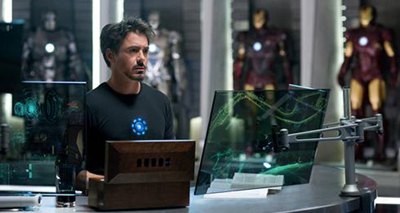
"Suit up!"

"Suit up!"

The other trend? Solid actors giving credible performances. Sure, Jack Nicholson and Marlon Brando were playing supporting roles (and being billed as leads) more than two decades ago, but both left big teeth marks in the scenery. And sometimes it works – Nicholson’s Joker was meant to be nuts, Gene Hackman’s Lex Luthor was as much a clown as a supervillian – but sometimes it doesn’t – I sure hope no one on the sets of Batman Forever or Batman & Robin was lactose-intolerant, because Tommy Lee Jones and Arnold Swartzenagger might as well have been made from cheese.

On the other hand, in the past decade, we’ve had Sir Ian McKellen infusing pathos into a villian who can bend metal, Edward Norton fleeing the beast within, Gary Oldman trying to keep a city under control amid chaos, Robert Downey Jnr. playing a man-child who needed to grow up, Cillian Murphy tormenting asylum inmates as a malicious psychologist, Brian Cox portraying a man propelled as much by shame over his own family history as a burning racism, Heath Ledger delving into the lunacy of one of the genre’s most iconic creations. Okay, maybe not all performers have been so refrained (we’re looking at you Dominic West, Willem Dafoe and Jeff Bridges), but sometimes scenery just needs chewing.

The term ‘comic book movie’ has a bit of a negative connotation – perhaps partially justified by truly painful films like The Fantastic Four series, the later Batman and Superman movies – but a lot of people tend to forget that comic books are not solely the realm of psychologically-scarred anthropologically-themed vigilantes. The comic book – or graphic novel, depending on your level of pretension – movie genre also gave us movies like Ghost World, A History of Violence and The Road to Perdition, the latter of which featured Paul Newman’s last Oscar-nominated role. Rumours abound about a planned adaptation of Neil Gaiman’s Sandman. Please God, don’t ruin it!

So, where does that leave us? Well, the comic book movie looks to be here to stay, for better or for worse. I have to say I’m a little fascinated by the prospect, getting to see the emergence and evolution of a new style of film. Comic adaptations will likely take a while to earn any major respect from those who take the industry seriously – The Dark Knight put several cracks in that glass ceiling with several nominations and wins last year, but not enough to secure a Best Picture nomination – but so did a lot of other genres. Before The Silence of the Lambs, no horror had won the Best Picture Oscar.

I’m holding my breath for the Best Picture winning comic book film. It certainly ain’t going to be Wolverine… but that doesn’t mean I didn’t enjoy it.

————————————

X-Men Origins: Wolverine is the first in a long line of projected X-Men spinoffs (that will include prequels Deadpool, Gambit, Magneto and First Class, as well as the inevitable sequels). It is directed by Gavin Hood (Totsi, Rendition) and stars a hideously talented cast including Hugh Jackman (the X-Men trilogy, The Prestige), Leiv Schreiber (the Scream trilogy, Defiance, The Manchurian Candidate, The Painted Veil), Danny Heuston (The Constant Gardener, The Proposition, Birth), Will.i.am (of the Black Eyed Peas), Dominic Monaghan (The Lord of the Rings, Lost), Kevin Durand (Lost, Stargate SG-1) and Ryan Reynolds (Van Wilder, Blade: Trinity). In a rare twist it was released in the UK on the 30th April 2009, before the US release date of 2nd May 2009.

Up, Up and… Away?

I’m a huge Pixar fan – I always have been. I’ve seen every film they’ve released since Toy Story, and the only one that has disappointed me was Ratatouille. The studio is one that manages to be obscenely crowd-pleasing while seemingly equally risk-taking, seemingly disproving the notion that mainstream audiences dislike challenging entertainment – let alone challenging animation.

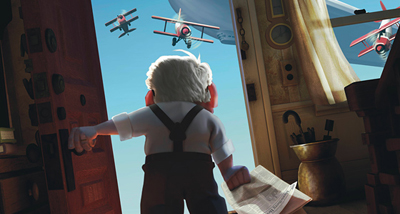
"Merchandise this!"

"Merchandise this!"

Still, I’m a little surprised at the assertion that Up might be the studio’s riskiest commercial venture yet. There are a whole host of convincing arguments that suggest that the company is making a risky gambit – from the commercial-based suggestion the movie isn’t as toyetic as Cars or Toy Story to the reasonably valid observation that the film may alienate younger viewers by focusing on a lonely old man rather than more visually appealing characters like Monsters Inc. or Ratatouille – but I’m not convinced.

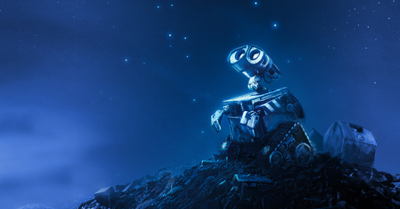
Wall-E finds himself on top of the heap

Wall-E finds himself on top of the heap

In defense of my point, I point to Wall-E. The movie was the most breathtaking major release last year, and my third favourite film of the year (it was also my girlfriend’s favourite) – and before you label me as an indie-loving arthouse snob, my top two were The Dark Knight and Frost/Nixon. The film was about as non-commercial as you can get: next to no dialogue for the superior first half, an almost invisible bad guy in the autopilot, a lead cast that couldn’t speak and a soppy robotic romance. Yet somehow the film made over $500m at the world-wide box office (58% of which came from outside the US). Clearly the guys at Pixar know what they were doing.

I’ll admit that Up has (pardon the pun) an uphill climb. In the United States it’s opening in one of the most crowded Mays on record. It doesn’t really have much direct completion (save the delightfully titled Drag Me To Hell – I doubt it’s the same market), but Star Trek, Wolverine and Terminator will still be playing at the matinee. The more direct threat for the family money is opening only a week before. Night at the Museum: Battle of the Smithsonion will be arrive in theatres on May 22nd. Still, I think Pixar can do it. They always do.

Maybe I should be a little relieved, though, that the movie isn’t opening in Ireland until October.

——————————————————————

Up is the latest film from Pixar, starring the vocal talents of Edward Asner (Freakazoid, Batman: The Animated Series) and Christopher Plummer (Inside Man, The Sound of Music, Star Trek VI: The Undiscovered Country). It opens 29th May 2009 in the United States and 16th October 2009 in the UK.

Welcome

Hi.

I’m new to this blogging thing, so there might be a bit of a learning curve, but I hope to post a couple of times a week about goings-on in movie-land – once about a major release out in the coming weekend and maybe again about whatever grabs my goat. I may also just ramble on about whatever comes into my head or rant about the latest movie I’ve seen in a casual review-type-thingie.

Anyway, keep in mind that – as I’m based in Ireland – that I might not be able to review films as they come out in the United States, but if you’re looking for up-to-the minute reviews this probably isn’t the blog for you.

As for myself, I’m a young professional with a law degree who is working in software testing. I studied at Trinity College Dublin, where I tried just about anything going (having working with a large number of student societies there) and managed to get an article published in the Trinity Film Review (among other publications). I also used to be able to do a very good Christopher Walken impression, but I may be a little out of practice.

I hope you enjoy the blog and feel free to leave a comment.

Cheers,

Darren