• Following Us

  • Categories

  • Check out the Archives


  • Awards & Nominations

The X-Files: Season 10 (IDW) #16-17 – Immaculate (Review)

This June, we’re going to be taking a look at the current run of The X-Files, beginning with the IDW comic book revival and perhaps taking some detours along the way. Check back daily for the latest review.

Immaculate is perhaps most notable for reintroducing the character of Frank Black.

One of the more interesting ironies of Millennium is the fact that show had a smaller fanbase than The X-Files, but also a much more vocal campaign to resurrect the series. Outside of a few die-hards eagerly hoping for a third film, X-Files fans had only really begun to clamour for the series to return following the hype around the show’s twentieth anniversary. In contrast, fans of Millennium had been angling for a continuation of their beloved series for years in a number of high-profile ventures.

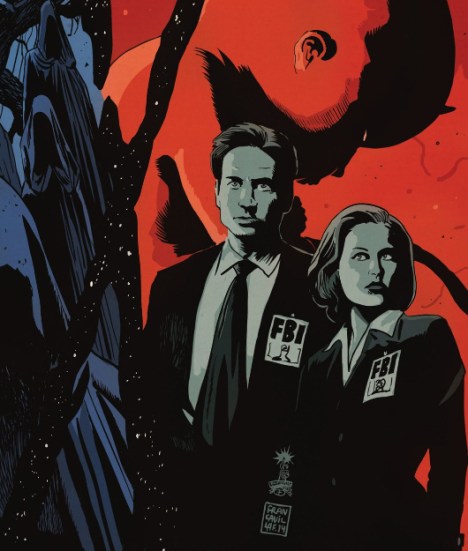
Familiar demons...

Familiar demons…

Perhaps the most obvious of these campaigns was the Back to Frank Black campaign, which was even endorsed by series star Lance Henriksen providing an introductory voiceover to the Millennium Group Session podcasts urging listeners that “the time is now” and which put out a wonderful series of critical essays and interviews concerning the series in October 2012. As recently as August 2015, they were organising a campaign to bring a revival to Netflix. When the return of The X-Files was announced, one of the big recurring questions was “what about Frank Black?”

As such, it seemed like it was only a matter of time before Frank Black turned up in IDW’s monthly X-Files comic book series.

Baby on board.

Baby on board.

Continue reading

The X-Files: Season 10 (IDW) #11-15 – Pilgrims (Review)

This June, we’re going to be taking a look at the current run of The X-Files, beginning with the IDW comic book revival and perhaps taking some detours along the way. Check back daily for the latest review.

Pilgrims is essentially an attempt to do a mid-season mythology episode in the style of Colony and End Game or Tunguska and Terma, a big sprawling epic populated by familiar faces and impossible scale that is driven more by questions and mysteries than by answers or revelations. It is in many ways a testament to writer Joe Harris’ desire to emulate the basic structure and framework of The X-Files, right down to the manner in which he structures The X-Files: Season 10.

There are a lot of obvious markers and touches that help Pilgrims to feel like a classic mid-season mythology episode. There is an international scope, as seen in the trip to the Arctic in End Game or to Hong Kong in Piper Maru or to Russia in Terma. The first half of Pilgrims unfolds in Saudi Arabia, with Mulder and Scully dispatched to investigate what initially appears to be a terrorist attack on an oil operation but is promptly revealed to be something far more sinister.
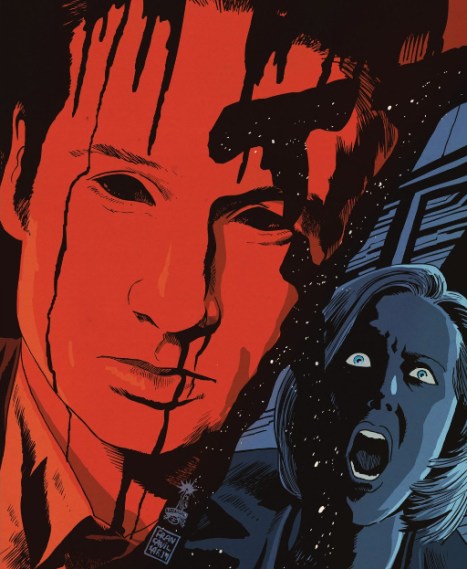
The red and the black.

The red and the black.

Similarly, in keeping with the style and tone of many of the best mythology two-parters, the basic plot is relatively straightforward even as complications appear at the edge of the frame. In End Game, Mulder is racing to recover his lost sister as details about secret cloning experiments spill out around him. In Nisei, Mulder is trapped in a traincar with a ticking time bomb and a dangerous assassin as he digs away at the conspiracy. In Apocrypha, the black oil just wants to go home. The same is true in Pilgrims, which follows an alien trying to escape.

Even the structure of the five-issue arc recalls that of many X-Files two-parters, with a massive pivot coming between the third and fourth issues in the same way that many two-parters would switch premises at the half-way point. The Saudi Arabia plot wraps up at the end of the third issue, while Gibson Praise is introduced at the start of the fourth. The first three issues focus on the mystery of the Saudi attack, while the final two put a much greater emphasis on the traditional trappings of the X-Files mythology including the conspirators and Skyland Mountain.
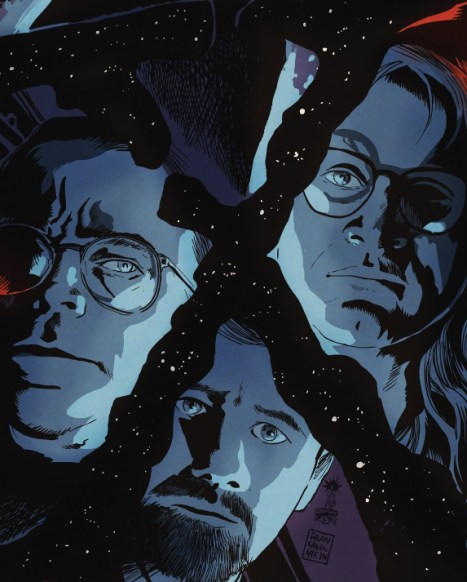
Lone survivors.

Lone survivors.

It is remarkable how faithful Joe Harris is to the format of those classic X-Files mythology episodes. Of course, this is something of a double-edged sword. As with a lot of The X-Files: Season 10, the biggest weakness of Pilgrims is the fact that it all feels a little overly familiar and a little too indulgent. Krycek was one of the most popular supporting characters from the nine-season run of The X-Files, but bringing him back at the centre of a five-part epic mythology story feels like pandering and fan service. Harris is not inventing his own mythology, but resurrecting an old one.

Then again, that might seem to be the point. The black oil discovered in Pilgrims is compared to the oil resting beneath Saudia Arabia. In that respect, it is the remains of long-dead organisms compressed and decayed and converted into fuel. There is something more than a little appropriate about that.
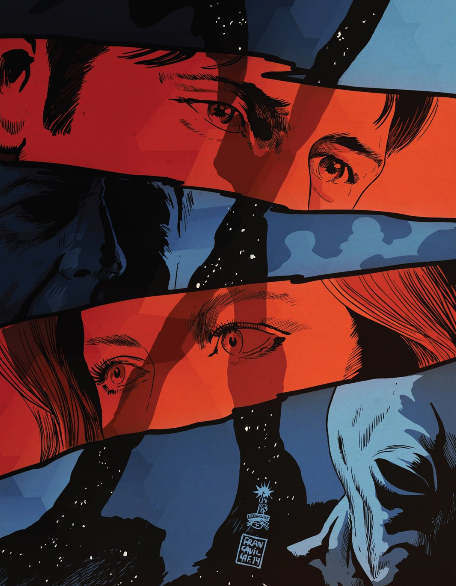
Eye see.

Eye see.

Continue reading

The X-Files (IDW) Annual 2014 (Review)

This June, we’re going to be taking a look at the current run of The X-Files, beginning with the IDW comic book revival and perhaps taking some detours along the way. Check back daily for the latest review.

The X-Files: Season 10 was a massive success for IDW publishing.

Although the monthly series had been announced in January 2013, it hit the stands in June 2013. That meant that the opening arc, Believers, basically ran through the summer season and towards the big twentieth anniversary coverage in October 2013. The X-Files: Season 10 was one of the first indicators that there was a public appetite for The X-Files, with behind-the-scenes talks about a live action revival only really coming to a head after that first issue hit shelves.

... and so is the fact that they let Dave Sim write a Scully story.

… and so is the fact that they let Dave Sim write a Scully story.

It is perhaps too much to credit The X-Files: Season 10 for building or sustaining momentum towards the revival. However, the monthly comic series spoke very clearly to the series’ continued relevance and to the audience very eagerly invested in the idea of more stories built around these iconic characters. IDW moved to capitalise on the hunger quite quickly, and it is telling that the publisher moved to publish at least two X-Files books per month for most of the comic’s run. Fans wanted more X-Files, and IDW wanted to give it to them.

This explains The X-Files Annual 2014, a book published outside the monthly schedule of The X-Files: Season 10 and drawing two big-name creators to draft their own short stories focusing on Mulder and Scully. Neither of these stories is particularly brilliant or insightful, and neither feels like it really needed to be told, creating the impression that the comic exists mainly so that fans can have more Mulder and Scully in their lives.

"Have you seen The Exorcist?" "No, but I've seen The Calusari."

“Have you seen The Exorcist?”
“No, but I’ve seen The Calusari.”

Continue reading

The X-Files Polls Results

A quick thanks to all who voted in our big X-Files poll to wrap up our coverage of the classic era of the show – from The Pilot up through The X-Files: I Want to Believe. I was very pleased with the response the poll got, with over 100 votes cast. (101, in total.) The results are below, but first two quick housekeeping announcements:

a.) we’ll be covering the modern era of the show (the IDW comics and the six episodes) sometime later in the year, probably around the DVD/blu ray release when things in my personal life are less hectic; part of that hecticness is because…

b.) I’ve written an unauthorised and unofficial critical history of The X-Files that is going to print at the end of the month; I’ll publish more details closer to publication, but it’s very much a refinement of everything that’s been put on the blog, with better research, more detail and a clearer narrative throughline; there is one really cool detail: the introduction is very kindly being written by the wonderful Kumail Nanjiani.

Anyway, enough housekeeping. Let’s get to the results!

xfilespoll15

Continue reading

The X-Files (Wildstorm) #5-6 – Dante’s Muse (Review)

This January, to prepare for the release of the new six-part season of The X-Files, we’re wrapping up our coverage of the show, particularly handling the various odds and ends between the show’s last episode and the launch of the revival.

And Wildstorm’s X-Files comic dies a quiet death.

The seven-issue (six monthly issues and a special “zero” comic) miniseries is an oddity. These seven comics tell four self-contained mysteries that stand quite separate from another, even as they echo the show’s creative peak. These four self-contained stories are credited to three different writers; the first two stories are written by producer and writer of the classic show, while each of the final two stories is credited to an established industry veteran with a long history working at DC comics.

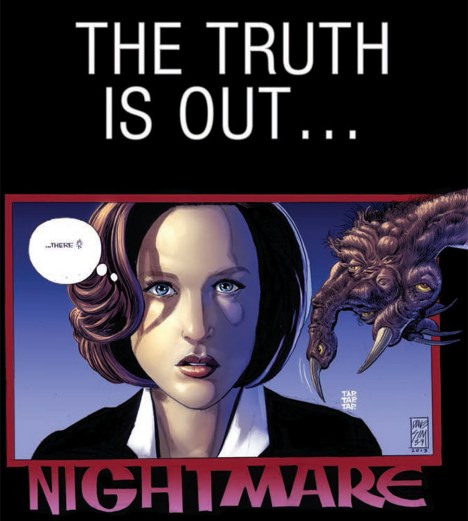
THE TRUTH IS OUT THERE

THE TRUTH IS OUT THERE

Still, the miniseries feels like something of a damn squib. Barring that X-Files/30 Days of Night crossover, these seven issues represent everything that Wildstorm chose to do with the license. It certainly pales in comparison to the more comprehensive and thorough exploitation of the property by previous owner Topps and future owner IDW. While part of that is likely down to the simple fact that Wildstorm was in its extended death throes, perhaps it also speaks to where The X-Files was at that point in time.

Perhaps there simply was not that big a market for The X-Files in late 2008 and into 2009. Perhaps the memory of the show’s final season lingered too strongly in the cultural memory, or perhaps the cultural remembrance of show had faded entirely. The spark of nostalgia that would resurrect the show half a decade later had yet to be kindled. For whatever reason, it seemed like The X-Files was not quite ready to return to the popular consciousness.

EVERYTHING DIES

EVERYTHING DIES

Continue reading

Massive X-Files Fandom Poll!

So, for the past two years or so, I’ve been delving into the cultural history of The X-Files, doing long-form reviews of everything from the show itself to spin-offs to comic books to crossovers to pop singles. It’s been great fun, and a pleasure from beginning to end. However, that end is fast approaching, and I was thinking of a nice way to mark the occasion. So I thought it might be fun to do a poll of the show’s run, and just get a sense of the broad consensus of fandom’s opinion on the best of the show’s nine-plus year run.

So, that’s what I’m doing.

xfilespoll3

The poll is open to anybody who wants to vote. It will be open until Babylon airs on the 15th February 2016. I’ll then take a little while to tabulate results, and offer a glimpse of fandom’s favourite episode before My Struggle II airs 22nd February 2016. Submission is simple; just compile a list of up to thirty of your favourite episodes (in order) and mail them directly to email address xfilespoll@gmail.com. (Or, if you don’t want to share your email with a stranger, fill out the form here.) Please include the word “Poll” in your subject to weed out the spam, but I’ll be checking the address fairly regularly.

I’ll go through the “rules” below, but it is worth mentioning why I thought this was a good idea. The most obvious is that I’ve spent more than two years talking about The X-Files. It might be worth hearing somebody else’s opinion.  More than that, it is a nice way to acknowledge all the readers of my reviews, and to involve you guys in some way in this project. It’s been great fun for me, and I’ve greatly enjoyed engaging with fans on twitter and in the comments, so I thought this might be a great way to involve everybody.

xfilespoll1

As an aside, I am surprised at the lack of fandom polls for The X-Files compared to other popular franchises like Doctor Who or Star Trek. Fandom polls are a great way to measure popular opinion over long periods, to see how consensus has changed or solidified over long periods of time. With the revival, now seems a good moment to take  a measure. It has been over a decade since the show went off the air, but it’s very much at peak popularity. It feels like this might be useful for the next rewatch or go-round.

As an aside, please feel free to spread word of this poll. Basically, the more people take part, the more interesting the results will be and the more accurately that the results will reflect X-Files fandom at this particular moment. So share it, tweet it, facebook it. Get the word out, even if you just send out the email address and an instruction to send up to thirty ranked choices for the best X-Files episodes ever. I hope this can become something special and cool, a snapshot of where the popular opinion is on The X-Files at this moment in time.

xfilespoll

Now for the boring stuff. Organising a poll means having rules, so the results are somewhat transparent. They should be straight-forward enough, but any questions, please sound off in the comments:

Thanks for reading! Have fun! Any questions or comments, sound off below!

Note: Per feedback, people might be understandably uncomfortable emailing a random address. So I’ve put up a form you can fill out using just your alias and providing your list. The form is accessible here.

Night Stalker – Three (Review)

This January, to prepare for the release of the new six-part season of The X-Files, we’re wrapping up our coverage of the show, particularly handling the various odds and ends between the show’s last episode and the launch of the revival.

Three is an interesting episode of Night Stalker, representing a threat that certainly feels less generic than that proposed by episodes like The Five People You Meet in Hell or Burning Man.

Three is the story of a house that is haunted by “the ghost of an emotion.” Given the fact that this is very much a horror show, and the themes already outlined in The Pilot and The Five People You Meet in Hell, it makes sense that the emotion in question is “fear.” Opening with a hazing ritual conducted by a secret society inside a derelict house, Three confronts the guest characters with their greatest fears. It is a very direct way addressing the underlying themes of Night Stalker, the fear and disconnect of modern urban living.

Top of the world...

Top of the world…

However, despite a good premise and solid execution, Three demonstrates the difficulties that Night Stalker is having finding its own unique voice. Three makes a conscious effort to flesh out its main characters, giving its central players personal conversations and introducing a new recurring character to help Kolchak in his investigations. However, this focus on character only emphasises how generic the show’s ensemble is. It is unfair to blame the cast and crew for something as intangible as the lack of chemistry, but it remains an issue for the series.

Three gives Stuart Townsend and Gabrielle Union banter, but it only serves to demonstrate that they lack the palpable chemistry that David Duchovny and Gillian Anderson had. The script slots Jain into the role of comic relief, but this raises questions about what exactly his function in all of this is meant to be. The central characters seem lost in the episode’s shuffle, with Three demonstrating that a solid monster-of-the-week can only really succeed when built on a firm foundation.

Hide and seek...

Hide and seek…

Continue reading

Night Stalker – Pilot (Review)

This January, to prepare for the release of the new six-part season of The X-Files, we’re wrapping up our coverage of the show, particularly handling the various odds and ends between the show’s last episode and the launch of the revival.

If you want to examine at the impact of The X-Files on mainstream American television, there are worse places to look than Night Stalker.

Sure, the show only ran for six episodes before it was cancelled, but its very existence speaks to the legacy and success of The X-Files. Night Stalker was a revival of a failed seventies cult television show commissioned by Touchstone Television and broadcast on ABC, one of the “big three” American television networks. More to the point, the network had tasked a veteran producer of The X-Files to oversee production of the show. The network scheduled their Night Stalker relaunch on Thursday nights, against the ratings juggernaut of CSI.

Night Stalking, deserves a quiet night...

Night Stalking, deserves a quiet night…

This was not a scrappy young network taking a creative gambit on an unknown property because they had nothing to lose; this was a substantial investment by a major player in a property that was largely forgotten outside of cult circles and which had failed the last time that it had come to television. It was very much a creative decision based on what had been learned from the success of The X-Files; handled properly, a seemingly marginal and fringe property could grab the national attention. The major networks had been paying attention.

In a way, the success of CSI at the turn of the twenty-first century was proof of this; a forensic thriller populated by idiosyncratic characters with an emphasis on stylised direction. ABC had committed to this idea with Lost, which launched in September 2004. Debuting a year later, Night Stalker found the network doubling down on the premise. Although the twenty-first century televisual landscape owed a debt to The X-Files, Night Stalker would be perhaps the most obvious successor. At least until Fringe came along three years later.

Playing all the angles on the City of Angels...

Playing all the angles on the City of Angels…

Continue reading

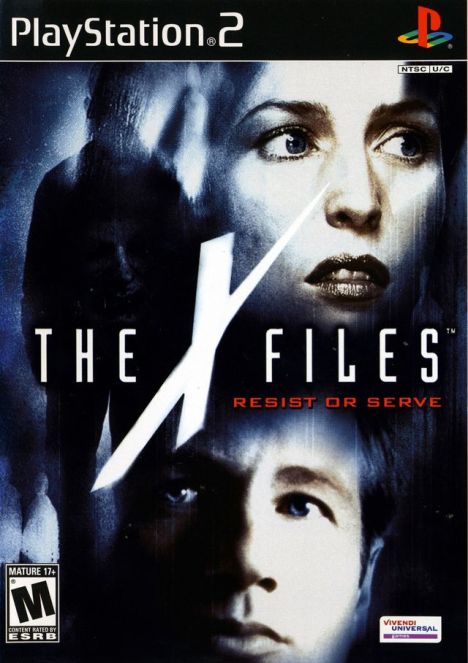
The X-Files – Resist or Serve (Review)

This January, to prepare for the release of the new six-part season of The X-Files, we’re wrapping up our coverage of the show, particularly handling the various odds and ends between the show’s last episode and the launch of the revival.

The X-Files disappeared rather quietly from television.

Despite the talk of launching a film series, the franchise was allowed to lie fallow for a couple of years. There were a number of reasons for this. Immediately following the broadcast of The Truth, Chris Carter disappeared out into the world. The creator and executive producer had worked for almost a decade without any real break. It made sense for the writer to avail of the opportunity to get away from it for an extended period of time. A breather felt more than justified after overseeing more than two hundred episodes of television.

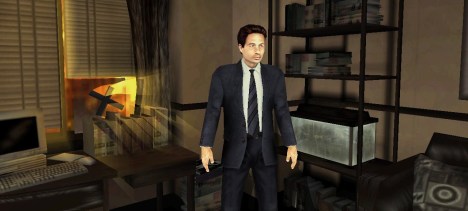
Game on...

Game on…

The band broke up. Members of the production team took jobs elsewhere. Frank Spotnitz and Vince Gilligan worked with veteran director Michael Mann on Robbery Homicide Division. John Shiban joined the writing staff on the second season of Star Trek: Enterprise. There was a sense that The X-Files had faded into the ambient background radiation of popular culture, its constituent elements – whether writers or directors or even themes or storytelling techniques – ready to flavour a new generation of television production.

However, there were signs that the show might linger on. Even if the sequel to The X-Files: Fight the Future had yet to materialise, it lurked just over the horizon. Critical and fan consensus was starting to form around the show. Although The X-Files might have been finished, its legend was still being solidified. Resist or Serve is very much a part of this process. Released on Playstation 2 in March 2004, Resist or Serve was a very disappointing video game. However, it was also a very instructive insight into just how the legend of The X-Files was shaping up.

Feels like going home...

Feels like going home…

Continue reading

The X-Files: Season One (Topps) #8 – Beyond the Sea (Review)

We’ve recently finished our reviews of the nine seasons of The X-Files. Along the way, we tried to do tie-ins and crossovers and spin-offs. However, some of those materials weren’t available at the right time. So this week will be spent finishing Topps’ line of “Season One” comics, published during the fifth season in the lead up to The X-Files: Fight the Future.

Beyond the Sea is more than just the best episode of the first season.

Beyond the Sea is one of the best episodes that the show ever produced. Airing half-way through the first season of The X-Files, Beyond the Sea demonstrated exactly what the show was capable of doing at that point in its run. It was a television masterpiece, and remains one of the very best episodes of an extended nine-season run. More than Ice, more than E.B.E., more than Darkness Falls, Beyond the Sea is the unqualified success story of the show’s first season.

Sea change...

Sea change…

This makes the decision to adapt it as part of the Season One line a relatively risky endeavour. The last two episodes adapted as part of the series – Space and Fire – are unlikely to rank highly on any fan’s assessment of the show’s first year. This was not a bad strategy. If the comic book adaptations were good, like the adaptation of Space had been, then it was a success story for everybody involved. If the comic book adaptations were not great, as was the case with Fire, then it seemed unlikely that anybody would care too much.

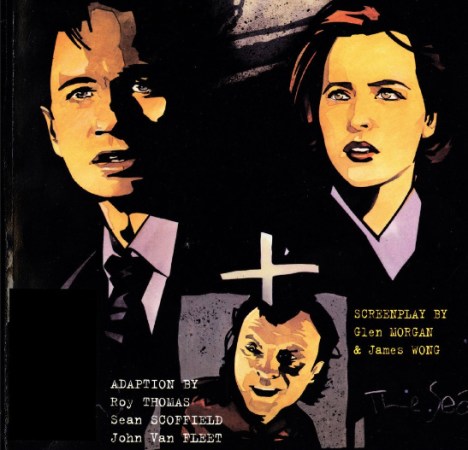
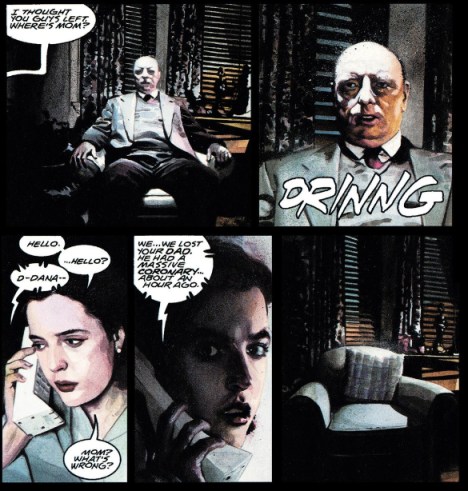
Adapting the season’s strongest episode was a bold creative decision. It seemed highly unlikely that writer Roy Thomas and artist Sean Scofield could compete with the episode written by Glen Morgan and James Wong and directed by David Nutter. The best case scenario for an adaptation of Beyond the Sea would be to serve as a reminder of just how wonderful the television episode had been, rather than a comic book that was memorable in its own right. It was very much a situation where the best possible outcome was not messing it up.

Haunting visit...

Haunting visit…

Continue reading