• Following Us

  • Categories

  • Check out the Archives


  • Awards & Nominations

The Lone Gunmen – All About Yves (Review)

This October/November, we’re taking a trip back in time to review the eighth season of The X-Files and the first (and only) season of The Lone Gunmen.

The broad consensus would seem to suggest that All About Yves is the best episode of The Lone Gunmen.

While this is perhaps unfair to Madam, I’m Adam and Tango de los Pistoleros, it is certainly a defensible position. All About Yves is one of the tightest shows of the season, and marks the first time since The Pilot that a plot has managed to actually build momentum and tension across its run-time. As effective as the climaxes of Madam, I’m Adam and Tango de los Pistoleros might have been, the first season of The Lone Gunmen doesn’t really offer much in the way of dramatic stakes.

"This looks familiar..."

“This looks familiar…”

In a way, that is to be expected. The Lone Gunmen is, first and foremost, a comedy. There are points in the first season where it feels like The Lone Gunmen exists primarily as a silo to store all the displaced comedy that the production team stripped out of the sombre eighth season of The X-Files. (Cynics might suggest that there wasn’t quite thirteen episodes’ worth of comedy to be re-homed.) It is hard to feel too stressed when Langly is threatened in Bond, Jimmy Bond or when a poacher points a gun at Byers in Diagnosis: Jimmy.

That is the beauty of All About Yves, managing to create a growing sense of tension and unease without sacrificing any of the show’s humour. Indeed, with the addition of guest star Michael McKean to the cast, All About Yves winds up funnier than about half of the preceding season.

The truth is out there...

The truth is out there…

Continue reading

The Lone Gunmen – Maximum Byers (Review)

This October/November, we’re taking a trip back in time to review the eighth season of The X-Files and the first (and only) season of The Lone Gunmen.

With Maximum Byers, it seems like The Lone Gunmen has wandered back into the wilderness.

Madam, I’m Adam and Planet of the Frohikes suggested a show that had found its own voice and figured out how best to tell stories featuring theses characters. Those two episodes worked by eschewing the caper-driven hijinks of episodes like Like Water for Octane and Three Men and a Smoking Diaper in favour of character-driven melancholy. Planet of the Frohikes might be the single funniest episode of the show’s short run, but it mostly works because it is underpinned by a sense of genuine tragi-comedy. Its characters felt real; even the talking monkey.

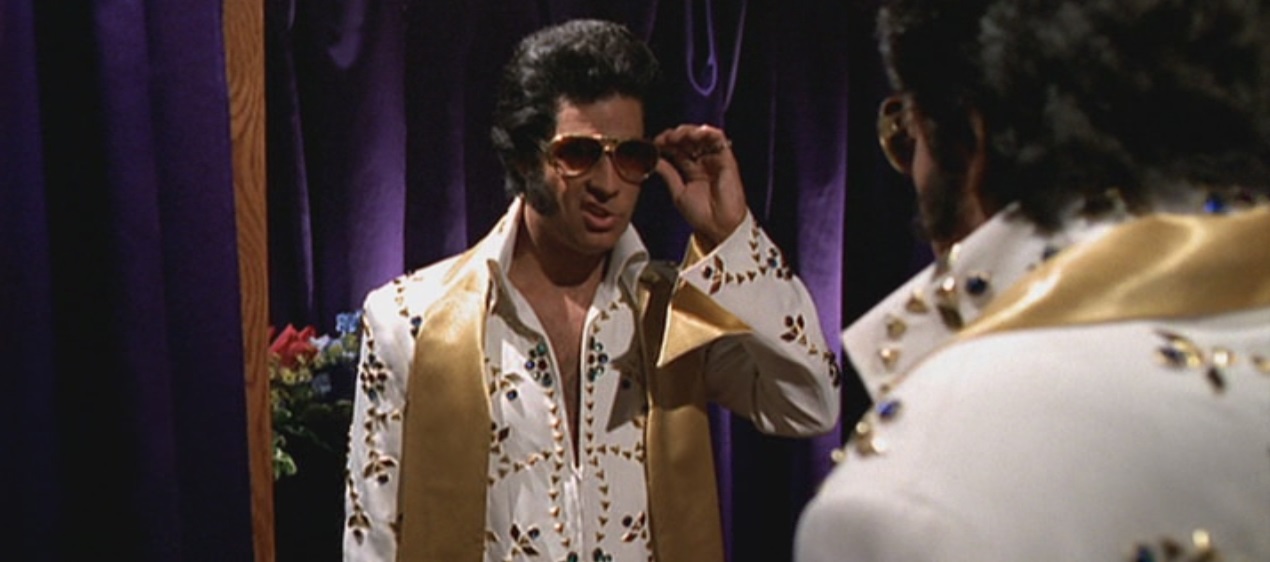
"Thank you very much..."

“Thank you very much…”

Maximum Byers seems to set the clock back to the early first season, sending the Lone Gunmen on a wacky self-aware adventure designed to evoke classic episodic television. It is a model very similar to that employed by scripts like Eine Kleine Frohike or Diagnosis: Jimmy, where the objective is to drop a major character into an unlikely situation and hope that the plot (and the laughs) take care of themselves. After all, “Byers undercover in prison!” seems as compelling as “Frohike undercover as a woman’s long lost son!” or “Jimmy in hospital!”

For most of its runtime, Maximum Byers is fairly bland and inoffensive. It is not particularly memorable or hilarious, but it is not close to the worst episode of the show. Unfortunately, then the ending happens. One of the more frequent criticisms of The Lone Gunmen is that the show had difficulty balancing its tone. While there is an element of truth to this observation, it is never quite as clear as in the final act of Maximum Byers. Then again, it is probably quite tough to do a comedy set on death row.

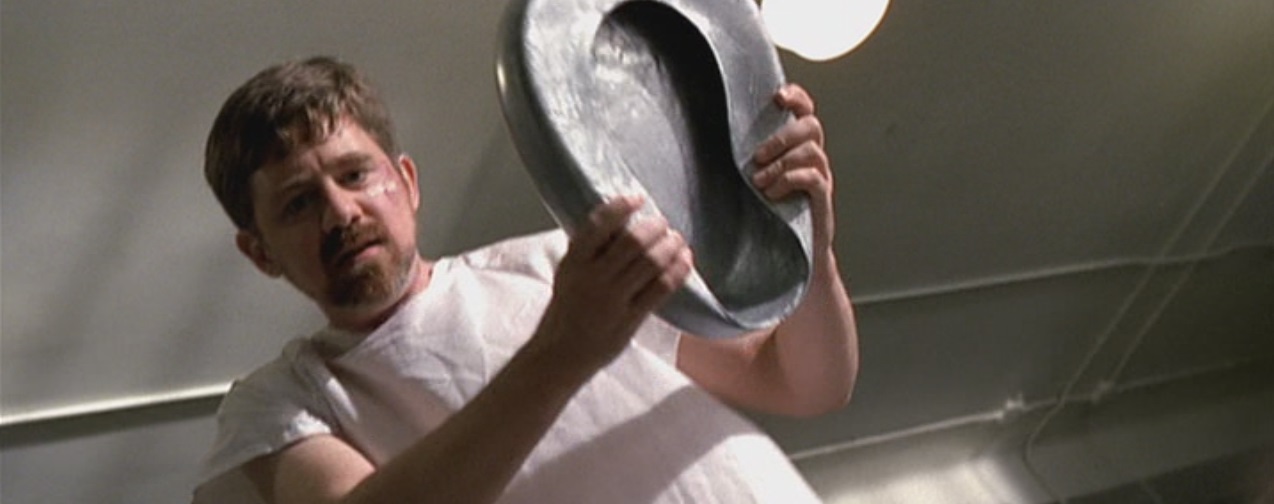
Critics couldn't wait to (bed)pan the episode...

Critics couldn’t wait to (bed)pan the episode…

Continue reading

The Lone Gunmen – Planet of the Frohikes (A Short History of My Demeaning Captivity) (Review)

This October/November, we’re taking a trip back in time to review the eighth season of The X-Files and the first (and only) season of The Lone Gunmen.

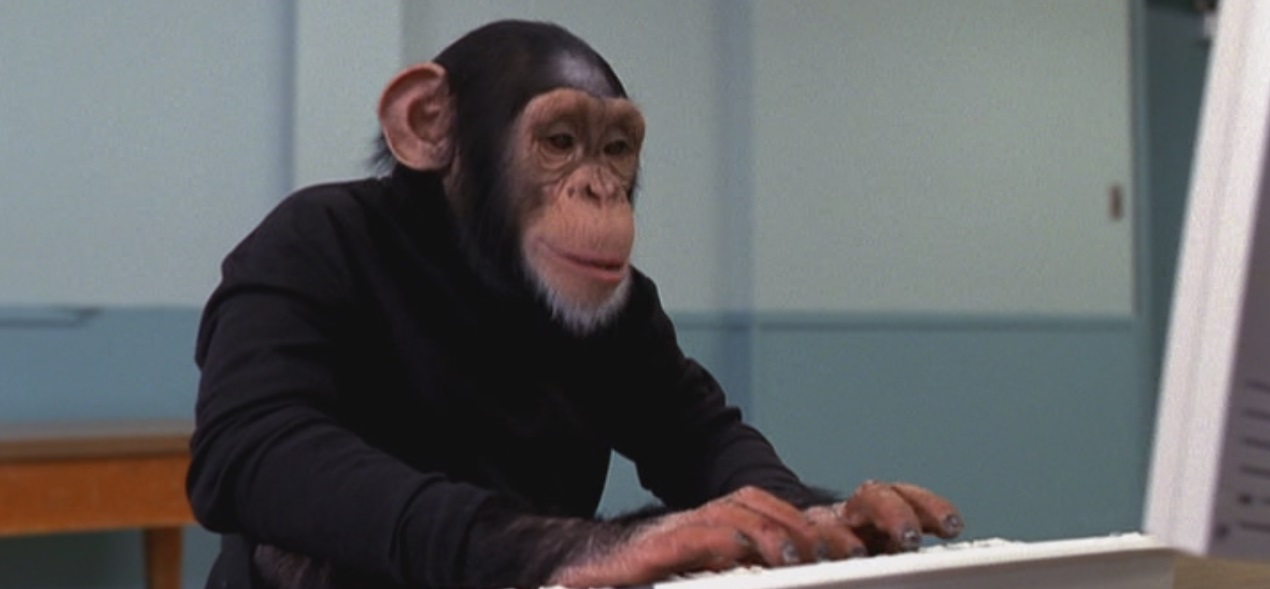
Planet of the Frohikes is Vince Gilligan’s only solo script for The Lone Gunmen. It is also a story about a super-intelligent chimpanzee who adopts the voice of veteran British character actor Edward Woodward. This can be a very strange television show.

All captions to be read in the voice of Edward Woodward.

All captions to be read in the voice of Edward Woodward.

Continue reading

The Lone Gunmen – Pilot (Review)

This October/November, we’re taking a trip back in time to review the eighth season of The X-Files and the first (and only) season of The Lone Gunmen.

It is meant to be a joke.

It is an episode known as The Pilot, because it is a proof of concept for a new series that can be shown to executives in the hopes that they might green-light it and give the production team a series order. That is, after all, what a television pilot is. It is the first episode of a television show to be filmed, usually with considerable space between it and the rest of the first season. There is time for network notes and feedback, to determine what works and what doesn’t. There is space for recasting and reshooting, which becomes more problematic on a weekly schedule.

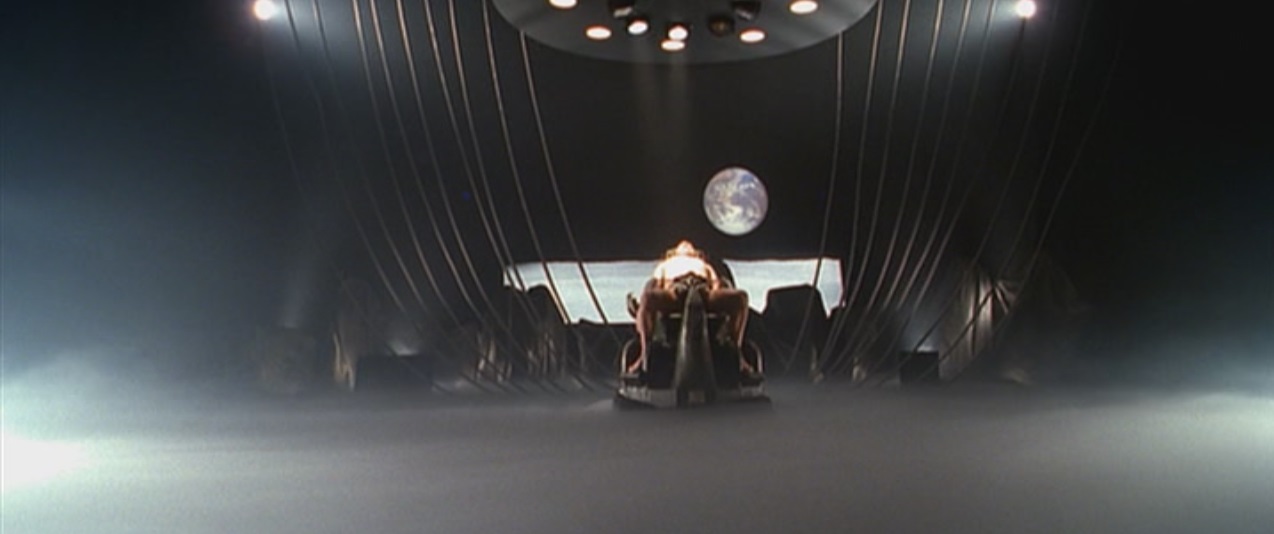
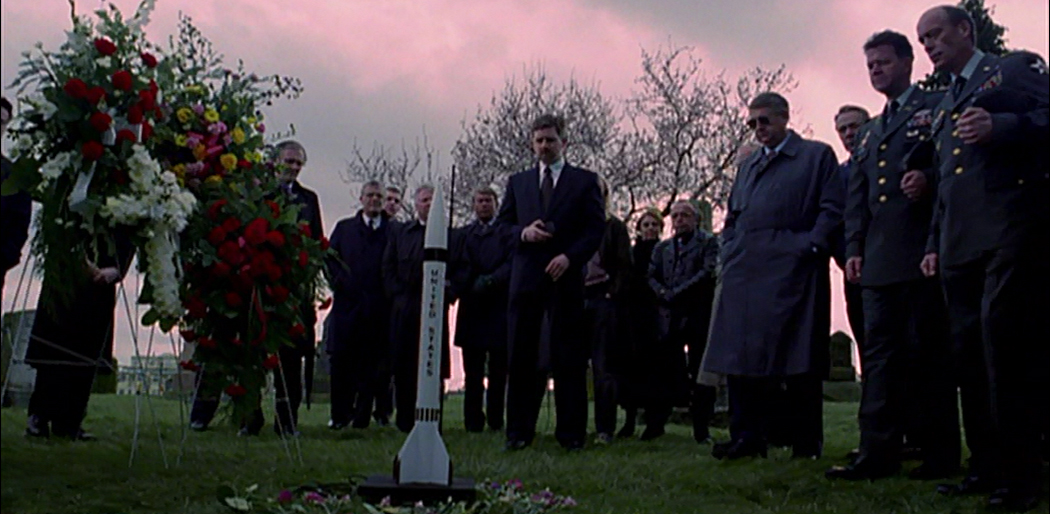
Rocket man.

Rocket man.

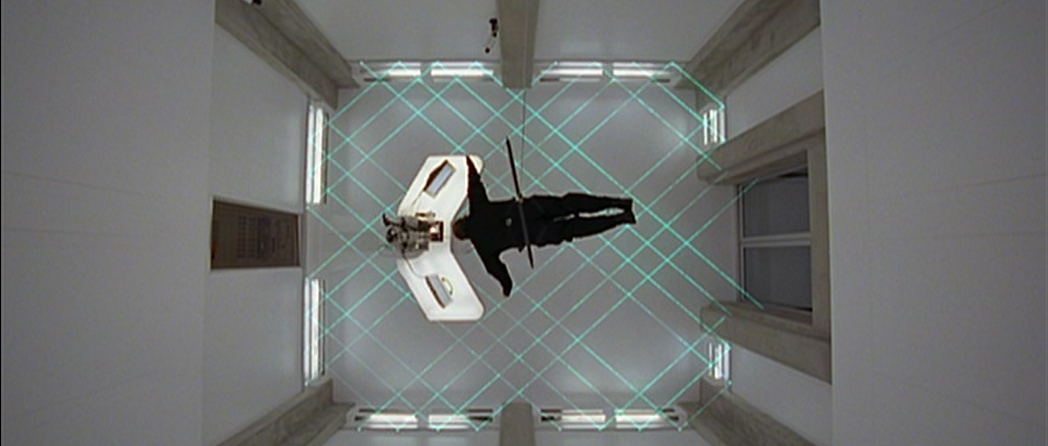
However, the fact that the first episode of The Lone Gunmen is called The Pilot is also a rather wry punchline. It is a self-aware reminder that the show takes itself considerably less seriously than Millennium or Harsh Realm. After all, even if this weren’t the very first episode of a new television show, it might be called The Pilot. Based purely on the plot, the episode might have been called The Pilot. It is an episode about a sinister plot to hijack planes using advanced technology. So calling the episode The Pilot is a cheesy and goofy bit of wordplay.

Of course, there is very little funny about it in hindsight.

Don't leave us hanging...

Don’t leave us hanging…

Continue reading

The X-Files – Roadrunners (Review)

This October/November, we’re taking a trip back in time to review the eighth season of The X-Files and the first (and only) season of The Lone Gunmen.

In case there was any doubt, Roadrunners proves that the eighth season of The X-Files means business.

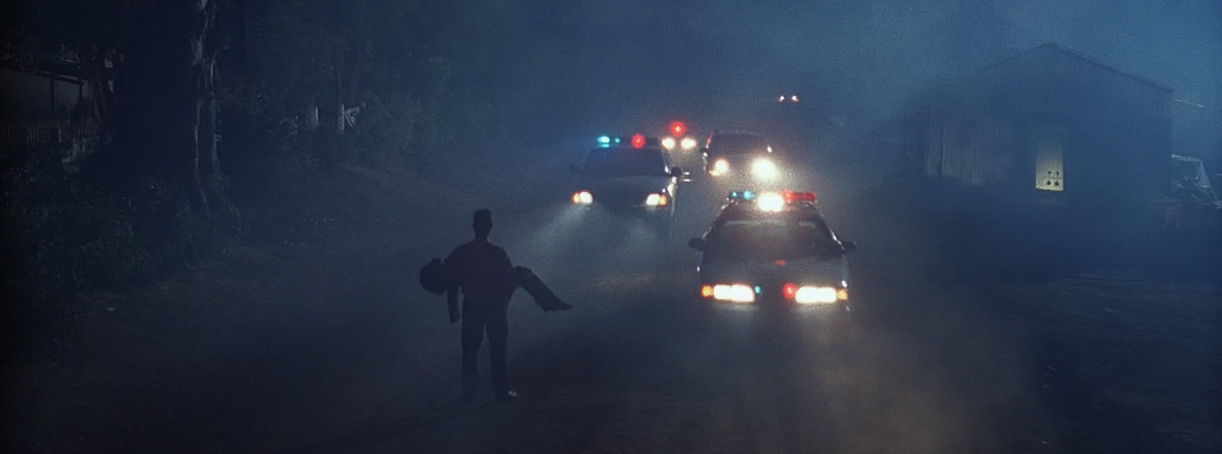
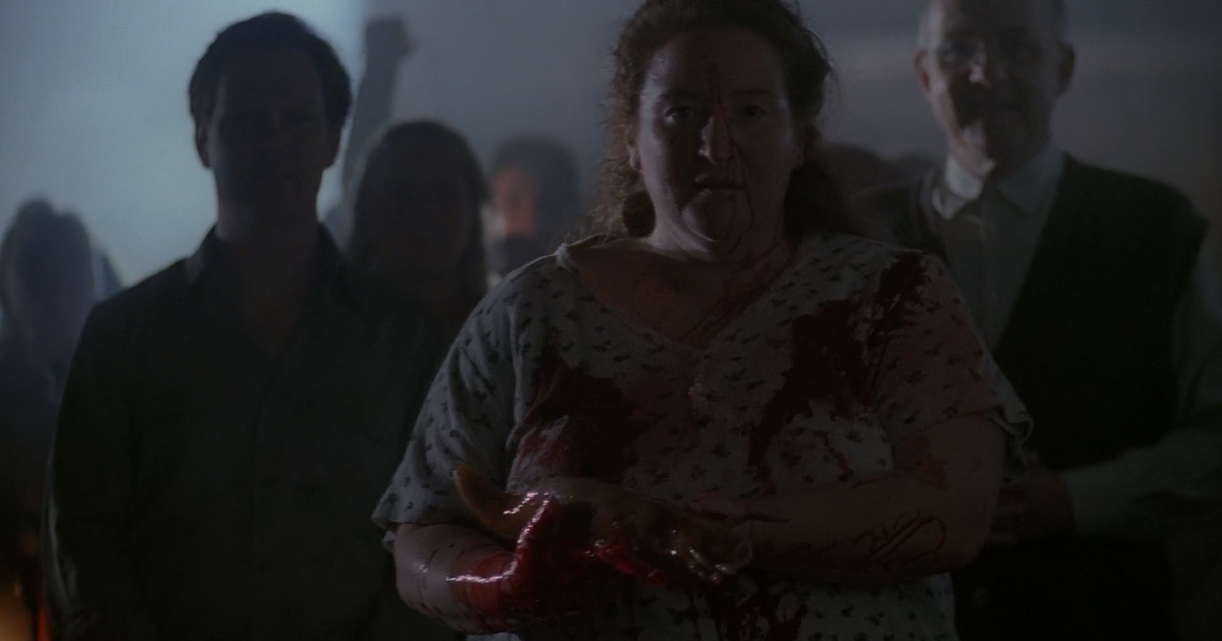
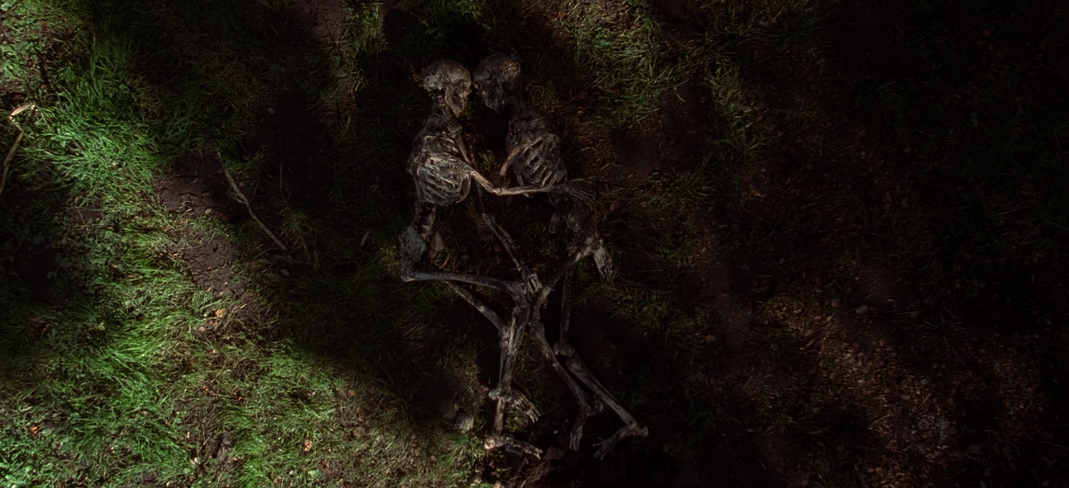
In some ways, it seems remarkable that Roadrunners did not receive a warning about graphic content. The season would wait until Via Negativa before offering a viewer discretion advisory. Roadrunners is one of the most uncomfortable and unsettling episodes in the show’s nine-season run, one that cements the “back to basics” horror aesthetic of the eighth season as a whole. It was clear from the opening three episodes that the eighth season was intended as a return to the darkness of the first five seasons, but Roadrunners commits to the idea.

Off-road...

Off-road…

Roadrunners is a “back to basics” script in a number of ways, even beyond its very graphic horror stylings. It is a very good “small town” story, returning to the motif that populated many of the show’s early episodes. It is a story about an eccentric and isolate space in America, a place with its own unique character and its own rich history and traditions. It is a place that stands quite apart from the modern world, that might have looked the same at the turn of the twentieth century as it does at the start of the twenty-first.

Roadrunners could be seen as Vince Gilligan’s answer to Home, a similarly brutal (and unsettling) small-town tale.

"On to new business. Today's mission is for all of you to go to the brain slug planet." "What are we going to do there?" "Just walk around not wearing a helmet."

“On to new business. Today’s mission is for all of you to go to the brain slug planet.”
“What are we going to do there?”
“Just walk around not wearing a helmet.”

Continue reading

The X-Files – Je Souhaite (Review)

This September, we’re taking a trip back in time to review the seventh season of The X-Files and the first (and only) season of Harsh Realm.

The late seventh season has something of a twilight quality to it.

Even the show’s production staff are unsure whether the show will be coming back for an eighth season, so every episode takes on a special significance. Could this episode be “the last time that…”? Is Brand X the last time that the show does a traditional monster of the week? Is Hollywood A.D. the last time that David Duchovny writes and/or directs? Is Fight Club the last time that Chris Carter writes a non-mythology episode? Is Je Souhaite the last time that Mulder and Scully just investigate a weird standalone case together? There is a weight to it all.
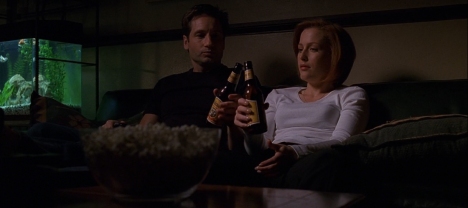
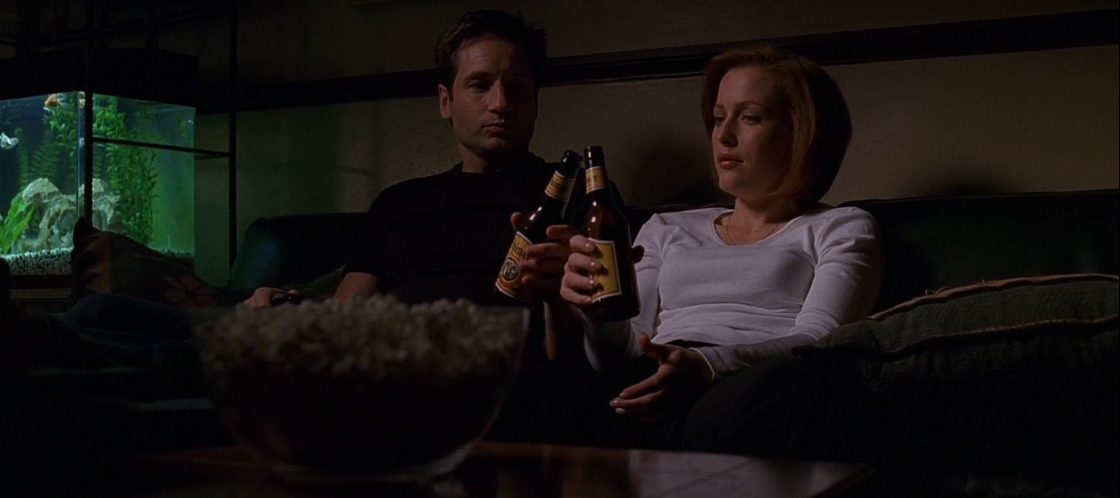
"I'll drink to that."

“I’ll drink to that.”

Of course, the show would come back for an eighth season. There would be lots of traditional monster of the week stories after Brand X. David Duchovny would enjoy another story and directorial credit after Hollywood A.D. Chris Carter would get to write non-mythology episodes after Fight Club, and even get to direct a much more successful whimsical adventure. Mulder and Scully would get to hang out together in the late eighth season and even at the very end of the ninth. In a very real way, this is not the end.

However, in an equally real way, this is the end. It has become hyperbole to suggest that something “… will never be the same again.” Even The X-Files has reinvented itself at least twice by this point, at the start of the third and sixth seasons. However, it is also perfectly reasonable to argue that The X-Files actually will never be the same again. The show changes on a very fundamental level after this point, with Je Souhaite serving as the very last glimpse of the show as it was. In many ways, this is the end of the road.
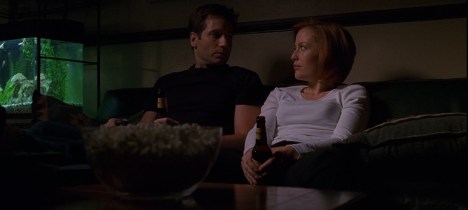
"So... meet up in about fifteen years?"

“So… meet up in about fifteen years?”

Gilligan would get to write and direct another episode of The X-Files before the show finally came to an end. In fact, there are a few thematic similarities between Je Souhaite and Sunshine Days, with both stories serving as affectionate and romantic finalés to Vince Gilligan’s version of The X-Files. There are still two full seasons ahead. Indeed, it is interesting to wonder what it would be like had Je Souhaite come earlier in the season, or even during the sixth season; it would be a light and fun episode, but would have the same heft and weight?

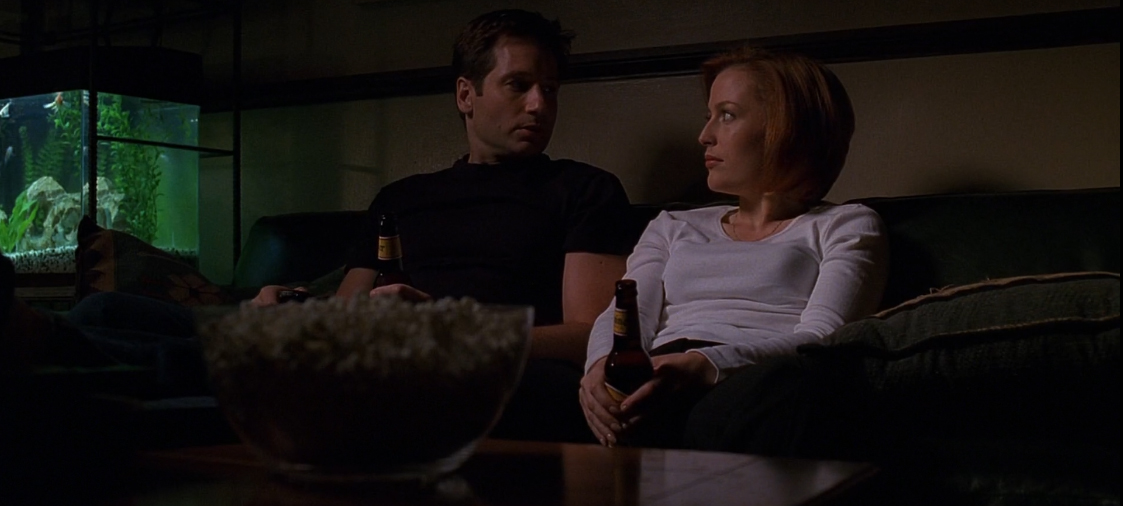
However, there is something different about Je Souhaite. In hindsight, it feels like a snapshot of an extended (seven-year-long) moment coming to end; it is a picture in an photo album that captures Mulder and Scully right on the edge of a transition. It is innocuous, yet profound. It is a picture of college friends sharing a drink at the end of the last term, unaware (or silently aware) of how things will change in the coming months. It is a picture of friends just hanging out before one gets married or has children.
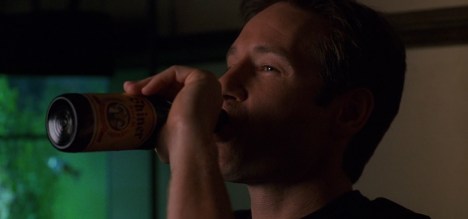
"I am outta here!"

“I am outta here!”

Of course, Mulder and Scully see each other after this point; there is the second half of season eight and the revival hanging in the future. (To say nothing of The X-Files: I Want to Believe or the comics.) College buddies still hang out. People with families maintain friendships. Still, those dynamics change. They are never quite the same. Not better, not worse. Just different. As weird as it is to describe an episode where Mulder encounters a genie as “the point before things got weird”, that’s exactly what Je Souhaite feels like.

What is most striking about Je Souhaite is how much the episode accepts that reality. It is not morose or melancholy; it is practically celebratory. Instead of eulogising the good times, it decides to have a good time. There is something very sweet about that.
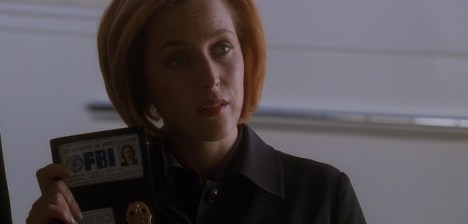
"I'm still here for two seasons..."

“I’m still here for two seasons…”

Continue reading

The X-Files – X-Cops (Review)

This November, we’re taking a trip back in time to review the seventh season of The X-Files and the first (and only) season of Harsh Realm.

There is a very serious argument to be made that X-Cops represents the last point at which The X-Files truly pushed itself.

There are experimental episodes later in the run that play with new narrative forms and concepts. Improbable features a snazzy musical number; Lord of the Flies intersects with stunt-driven television shows; Sunshine Days has the characters enter The Brady Bunch. However, X-Cops represents the last time that The X-Files allows itself to be completely submerged in a high-concept idea, following the concept through to its logical conclusion in the spirit of Jose Chung’s “From Outer Space” or Bad Blood or Triangle.

xfiles-xcops17a

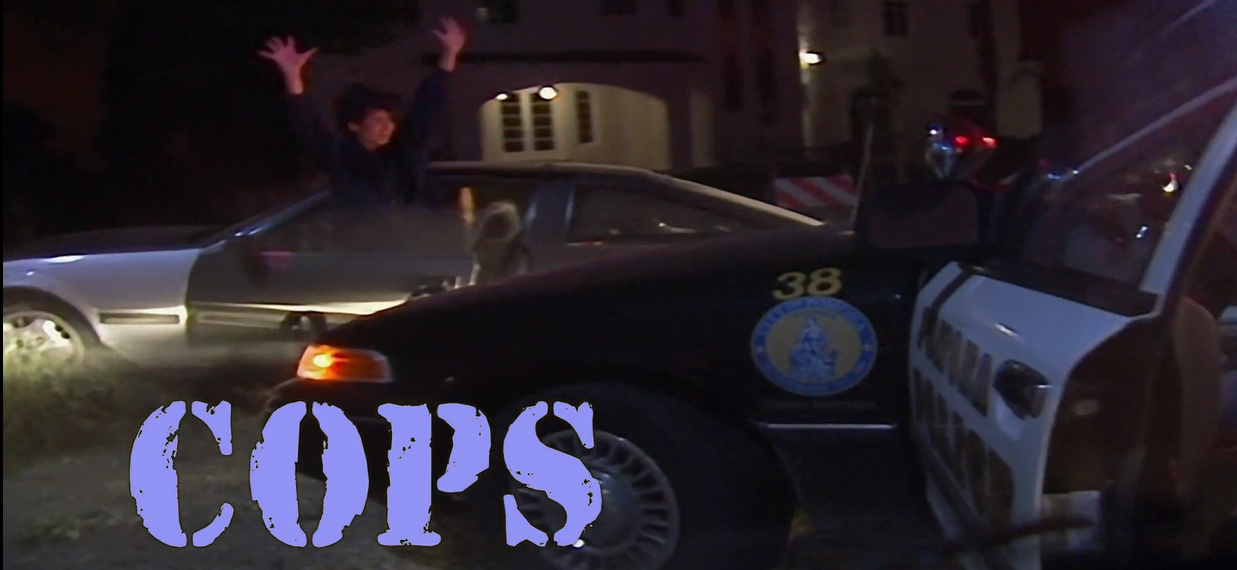
X-Cops features Mulder and Scully crossing over into an episode of Cops. However, the episode is told entirely from the perspective of the Cops production team, filmed and broadcast as if it were an episode of Fox’s long-running law enforcement reality television show. The camera becomes a performer in X-Cops, and at no point in the entire forty-five minutes does it “break character.” Barring the use of the X-Files opening credits sequence and superimposing the logo at commercials, X-Cops adopts the form and structure of Cops.

This is a boldly experimental piece of television; it is not the sort of episode that viewers expect from a show in its seventh season. This is a giddy and goofy concept more akin to enthusiastic student filmmaking than an established television institution. After Sein und Zeit and Closure suggested that The X-Files was winding down, X-Cops proves that there’s life in the old show yet. Sadly, this feels like something of a last gasp; there would never be quite as much life in The X-Files after this point.

xfiles-xcops2a

Continue reading

The X-Files – Millennium (Review)

This November, we’re taking a trip back in time to review the seventh season of The X-Files and the first (and only) season of Harsh Realm.

There are any number of ironies around the cancellation of Millennium.

The show was cancelled by Fox to make room for Harsh Realm, hoping that Chris Carter’s new show would perform better in the Friday night slot. Of course, that did not turn out to be the case; Harsh Realm was cancelled after only three episodes had been broadcast, all failing to even match the already low numbers of the third season of Millennium. A show in its third season was cancelled to make room for a hip new show that was pretty much dead on arrival. However, that is not the only irony.

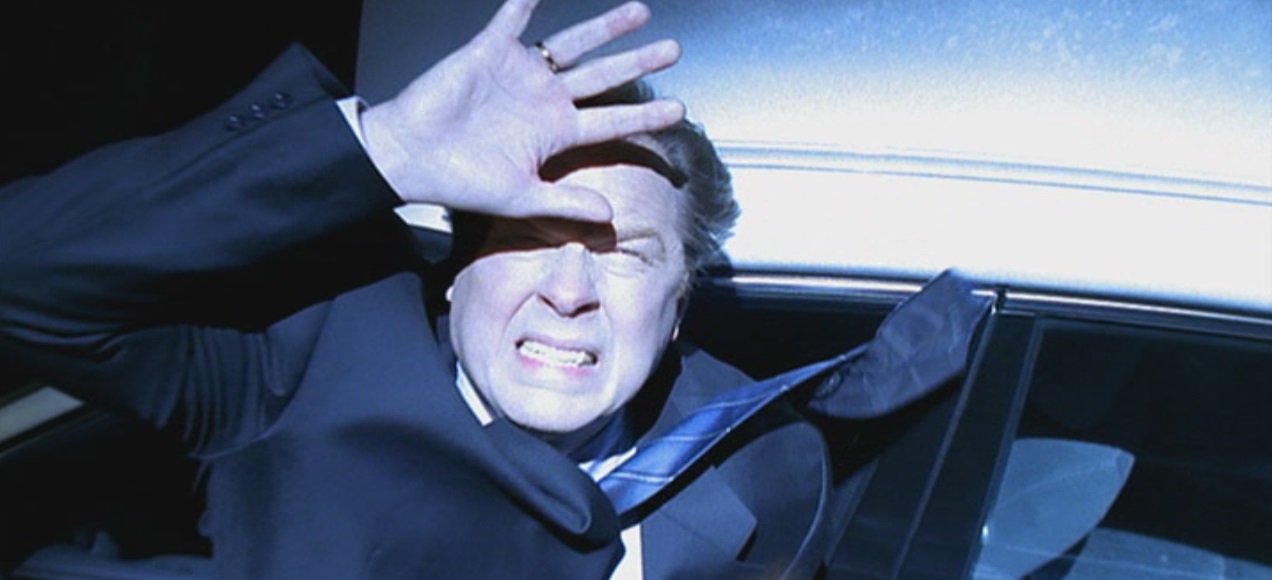
Frank Black's return...

Frank Black’s return…

Millennium concluded with Goodbye to All That in May 1999. The show fell seven months shy of its own deadline. If Fox had commissioned only eight new episodes, the creative team would have been able to take the show right up to the turn of the millennium itself. (Well, in a way that would make sense to most viewers. “Nobody likes a maths geek, Scully.” Even one who is technically correct.) It seems like Frank Black would not get to see the arrival of the date that had defined his show. (It was the title, after all.)

If Christmas is the season of goodwill to all men, then it is a nice gesture that The X-Files invited Frank Black to ring in the new year (and the new millennium) with them. It might not be much more, but it is a nice gesture.

... is just one thing that fans remember about this episode.

… is just one thing that fans remember about this episode.

Continue reading

The X-Files – Hungry (Review)

This November, we’re taking a trip back in time to review the seventh season of The X-Files and the first (and only) season of Harsh Realm.

Hungry is an underrated episode of The X-Files.

Although it was the third episode of the season to air, it was actually the first episode produced, allowing David Duchovny and Gillian Anderson to ease themselves back into the demanding shooting schedule. As with Vince Gilligan’s script for Unusual Suspects, the idea was to write an episode that required as little of Mulder and Scully as possible. However, rather than building Hungry around an established member (or members) of the supporting cast, Gilligan decides to introduce a new character and make them the focus of the episode.

"I am sharkboy, hear me roar..."

“I am sharkboy, hear me roar…”

Hungry is not quite as experimental as X-Cops, but there is something deliciously subversive about telling a “monster of the week” story from the perspective of the monster. Gilligan is arguably building upon the work done by David Amann in Terms of Endearment, but Hungry is very much its own story. It pushes Mulder and Scully to the very edge of the narrative in a way that distorts many of the underlying assumptions about what The X-Files is and how it is supposed to work.

Hungry is proof that The X-Files still has legitimately great stories in it, even if the seventh season has a decidedly funereal atmosphere.

Brains...

Brains…

Continue reading

The X-Files – Field Trip (Review)

This July, we’re taking a trip back in time to review the sixth season of The X-Files and the third (and final) season of Millennium.

Field Trip works well as the penultimate episode of the sixth season.

It returns to a lot of big ideas threaded through the sixth season, particularly as they relate to endings and mortality. It also pushes the bond between Mulder and Scully to the fore; it feels like something of a spiritual successor to both Bad Blood and Folie á Deux in its portrayal of the dynamic between Mulder and Scully, charting a rough arc in how Mulder and Scully come to see themselves and each other. Even beyond all that, it contains another surrogate romantic relationship for Mulder and Scully, this time in Wallace and Angela Schiff.

A lot to digest...

A lot to digest…

More to the point, Field Trip seems to hit on the core anxieties at the heart of the sixth season. It is a meditation on the show’s success and the status quo that has to be so careful maintained to keep the show from tipping over. As with TriangleDreamland IDreamland II, How the Ghosts Stole Christmas and Monday, our heroes find themselves trapped in something of a weird alternate reality. The climax of Field Trip hinges on both Mulder and Scully deducing that their world operates according to the logic of a television show.

However, Field Trip is perhaps most intriguing in the way that it proposes two separate endings to The X-Files. The humongous fungus at the heart of Field Trip offers both Mulder and Scully a conclusion to their six-year journey, an opportunity for closure and satisfaction. In doing so, Field Trip suggests that it is the central tension at the heart of The X-Files that keeps the show young. There is no way to end the show without absolutely and definitively declaring that one of the characters is right and the other is wrong.

Down the rabbit hole...

Down the rabbit hole…

As such, the endings seem mutually exclusive. Field Trip suggests that endings designed to satisfy Mulder and Scully and mutually exclusive and irreconcilable – recalling the implication in Bad Blood that both Mulder and Scully filter the same events through different lenses. However, Field Trip is rather more optimistic in its assessment of the dynamic between Mulder and Scully. While it might not be able to provide an ending to the show that satisfies both, Field Trip suggests that the duo have reconciled themselves to each other.

Whereas Bad Blood seemed to state that Mulder and Scully would never share the same perspective, Field Trip suggests that both characters have evolved and matured to the point where they can see the world through the eyes of the other. Bad Blood featured the two characters positing wildly different accounts of the same event, but Field Trip only resolves when Mulder and Scully come to share each other’s perspective. It feels entirely appropriate to close out the sixth season suggesting a new harmony between the two leads.

It's a dirty job...

It’s a dirty job…

Continue reading