• Following Us

  • Categories

  • Check out the Archives


  • Awards & Nominations

The X-Files (Topps) Digest #2 – Dead to the World (Review)

This November (and a little of December), we’re taking a trip back in time to review the third season of The X-Files and the first (and only) season of Space: Above and Beyond.

Stefan Petrucha and Charles Adlard are winding at this point in their curatorship of Topps’ The X-Files comic book. The duo have contributed an absolutely staggering volume of work to the line. On top of monthly issues and short stories, there have been annuals and digests. The volume of the output has been staggering. All of it has been written by Petrucha and the vast majority was illustrated by Adlard. The quality has – generally speaking – been quite impressive.

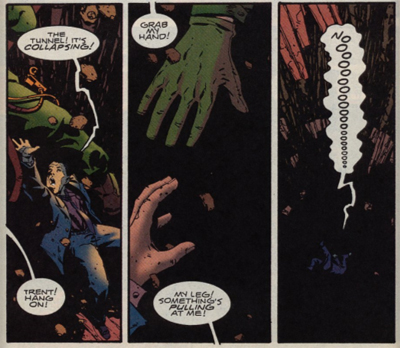
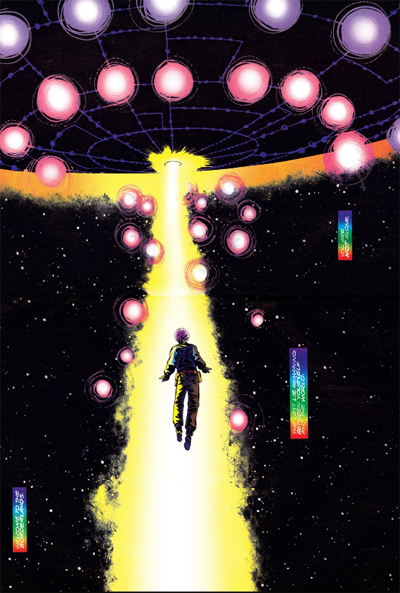
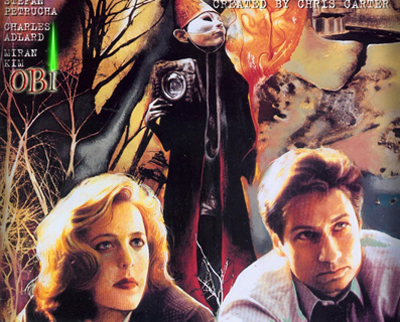
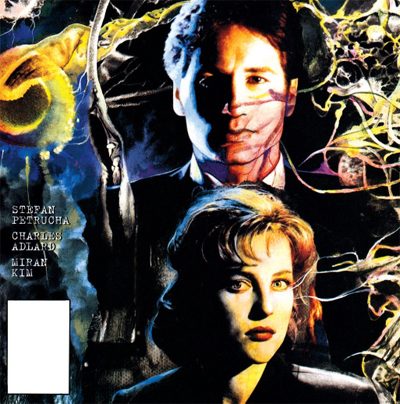
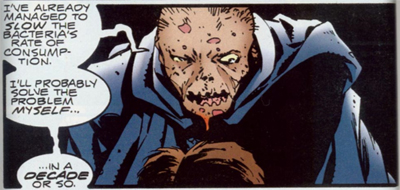
Dead to the World is the headline story in the second “digest” published by Topps comics. As with Big Foot, Warm Heart before it, the format of the “digest” feels a little strange. There is a single (and rather long) comic written by Petrucha and illustrated by Adlard, following by a collection of shorts taken from Ray Bradbury Comics, a somewhat less popular feature of Topps’ comic book publishing line. There is a sense that the format might have worked better as a collection of short X-Files-themed stories for a variety of creators.

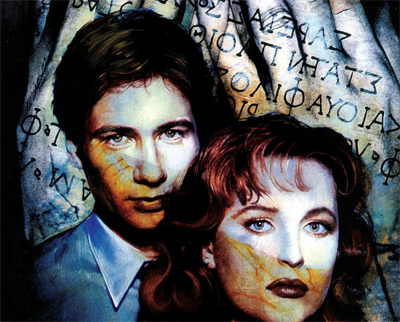
Face to face...

Face to face…

Nevertheless, the result is interesting. In many ways, Big Foot, Warm Heart seemed to point at where Petrucha and Adlard would go when they wrapped up their massive twelve-part “Aquarius” mega-arc. With its reflections on human failings and human abuses, it seemed like Big Foot, Warm Heart set the tone for the stories that would follow – like One Player Only or Falling. It offered a tease of things to come, suggesting the humanity could be more monstrous than any mythological creature.

In contrast, it is very tough to see where Dead to the World might have been pointing. Then again, Petrucha and Adlard would be gone from the comic a month after its publication. So perhaps the story’s funereal atmosphere feels appropriate.
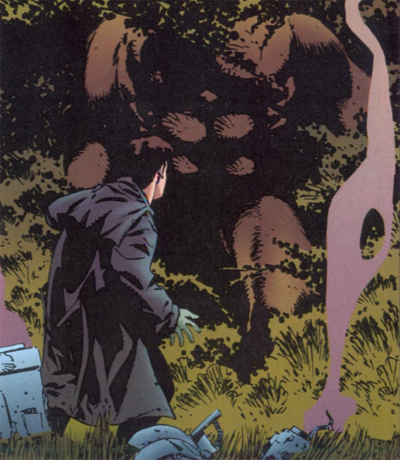
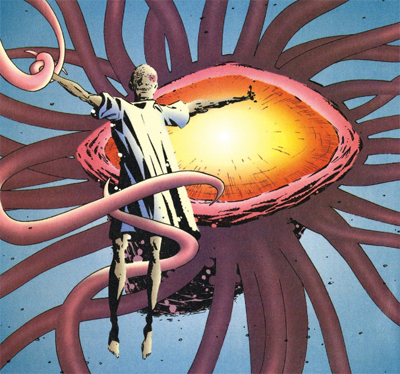
Here there be monsters...

Here there be monsters…

Continue reading

The X-Files (Topps) – The Pit (Review)

This November (and a little of December), we’re taking a trip back in time to review the third season of The X-Files and the first (and only) season of Space: Above and Beyond.

Tucked away in the Winter 1996 issue of The X-Files Magazine and republished with The Silent Sword in September 1996, The Pit is an atmospheric short story from Petrucha and Adlard, demonstrating the two work quite well together across a variety of formats. The Pit is only nine pages long, including two splash pages – and another half-page splash. There isn’t a lot of room for plot or detail. Instead, Petrucha and Adlard opt for mood and atmosphere, crafting a weird and spooky little diversion.

All fall down...

All fall down…

Continue reading

The X-Files (Topps) Digest #1 – Big Foot, Warm Heart (Review)

This November (and a little of December), we’re taking a trip back in time to review the third season of The X-Files and the first (and only) season of Space: Above and Beyond.

It is very odd to think that The X-Files has never done an episode about Bigfoot, perhaps America’s most recognisable and iconic mythological figure.

Perhaps there’s a reason for this. The show did a Bigfoot-type creature early in its first season, with The Jersey Devil. The fifth episode of the first season, The Jersey Devil helped to solidify the impression that The X-Files was better at abstract horrors than familiar monsters. It is not too difficult to imagine that the production team looked at The Jersey Devil and decided that Bigfoot was unlikely to be a runner.

Here there be monsters...

Here there be monsters…

Still, the show has waded into cryptozoology on occasion – with somewhat mixed results. Quagmire featured the agents hunting a mysterious reptile in a rural lake. When the show had to relaunch itself during the eighth season, Scully and Doggett bonded over their pursuit of a giant bat-like creature in Patience, the first standalone episode within that new status quo. Even Bigfoot was frequently referenced and cited. Most obviously, the final montage of Jose Chung’s “From Outer Space” suggests that Mulder treats the Roger Patterson footage as an almost holy text.

Perhaps it’s appropriate, then, that Mulder and Scully would come face to face with Bigfoot in the pages of the licensed tie-in, as part of the “digest” that Topps released at the end of their first year publishing the comic.

Eye see...

Eye see…

Continue reading

The X-Files (Topps) #10-12 – Feelings of Unreality (Review)

This November (and a little of December), we’re taking a trip back in time to review the third season of The X-Files and the first (and only) season of Space: Above and Beyond.

Feelings of Unreality marks the end of Stefan Petrucha and Charles Adlard’s first year on Topps’ licensed X-Files comic book.

It also marks the end of their extended arc. It became clear around six issue into their run that Petrucha and Adlard were really just telling one large and expansive story that could be broken down into small bite-sized chunks. From Not To Be Opened Until X-Mas through A Dismembrance of Things Past through Firebird and Silent Cities of the Mind, these were all separate pieces of a larger puzzle waiting to be fitted together. Feelings of Unreality marks a conclusion to this ambitious and expansive arc.

Slightly unreal...

Slightly unreal…

What has been fascinating about Petrucha and Adlard’s run on The X-Files comic book as been the way that the team has adapted the show’s format to fit within this distinct medium. Writing a tie-in like this, it would would be very tempting to do “a television episode, in comic book form!” There’s a very serious argument to be made that the comics would be pushed in that direction after Petrucha departed. However, there’s something much more compelling about a story that takes advantage of its own medium, rather than offering a flat imitation of another.

For all its flaws, Feelings of Unreality – like Petrucha and Adlard’s epic Firebird before it – feels like a comic book story. It’s pulpy, exciting, ambitious, expansive, silly. And just a little brilliant.

Lift me up...

Lift me up…

Continue reading

The X-Files (Topps) #8-9 – Silent Cities of the Mind (Review)

This November (and a little of December), we’re taking a trip back in time to review the third season of The X-Files and the first (and only) season of Space: Above and Beyond.

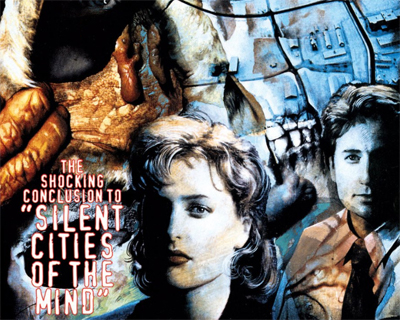
Silent Cities of the Mind is a very “comic book” story – it’s a story that might easily seem outlandish or ridiculous if committed to film, but which works very well within its medium. After all, the plot centres around a bunch of ancient Aztec priests who built an elaborate underground city that could project itself above ground as a mirage. Indeed, the story seems to accept this as a given, with Scully instead spending most of the adventure questioning whether memories can be transmitted via cannibalism.

It’s a concept that could easily seem ridiculous, and it’s a testament to writer Stefan Petrucha and artist Charles Adlard that it works as well as it does. Silent Cities of the Mind is a decidedly pulpy adventure, but that lends the story an undeniable charm. It’s a story packed to the brim with clever and fascinating ideas – from ancient aliens to ritual cannibalism to hidden cities to crystal skulls. All this is crammed tightly into two issues, meaning that everything moves so fast there’s no real time to stop and nitpick it all.

It's all in the mind...

It’s all in the mind…

Mulder is negotiating with survivalists! There are memories transferred through the act of ritual cannibalism! Mulder and Scully are shot down over Alaska! Mulder is trapped with a cannibal! There’s a hidden Aztec city buried underground! Mulder has discovered ancient Aztec mythology! There’s an army rescue team that isn’t a rescue team! There’s a macguffin that allows its wearer to commune with the gods! There’s a stand-off!

It’s all rather exhausting, but in a fun and exciting sort of way. Silent Cities of the Mind is perhaps the best example of how Petrucha and Adlard were writing The X-Files as a comic book, positioning the show’s tropes and iconography within the framework of comic book conventions.

Bonfire of the vanities...

Bonfire of the vanities…

Continue reading

The X-Files (Topps) Annual #1 – Hallow Eve (Review)

This August (and a little of September), we’re taking a trip back in time to review the second season of The X-Files. In November, we’ll be looking at the third season. And maybe more.

No matter how you cut it, the creative team of Stefan Petruscha and Charles Adlard were prolific. The duo only worked on The X-Files comics book for seventeen months between January 1995 and May 1996, but they put out a phenomenal amount of work. On top of sixteen issues of the monthly series, there were also two digests, a number of short stories and an annual. In most cases, some of this work would be outsourced to another creative team, but Petrucha and Adlard remain the creative team for Topps’ X-Files comic.

While this undoubtedly required a great deal of creative energy from Petrucha, churning out scripts on a regular basis, it is worth pausing to praise artist Charles Adlard. These days, for a variety of reasons, it seems that major comic book artists have difficulty producing twelve twenty-odd-page issues in a year. Not only was Adlard able to meet that objective, he was able to do that while drawing a large volume of supplementary material, including this feature-length annual.

All about Eve...

All about Eve…

It’s remarkable how consistent it all is. One of the advantages of a tie-in comic book with a steady creative theme is that there’s a much clearer authorial voice. Although Chris Carter oversaw the production of The X-Files, the demand of weekly network television mean that some episodes got more attention than others, and that particular voices tend to shine through. Darin Morgan writes his own version of The X-Files, as do Glen Morgan and James Wong or Howard Gordon or Vince Gilligan. (This isn’t a bad thing, by the way.)

On a comic, with all the issues written by the same author and illustrated by the same artist, there is a bit more consistency. Even though Hallow Eve is a stand-alone one-shot story that exists quite separate to Petrucha and Adlard’s twelve-issue meta-arc, it fits quite comfortably with their themes and subtexts. It’s an episode about history and memory, and perception and reality.

Shocking...

Shocking…

Continue reading

The X-Files (Topps) #4-6 – Firebird (Review)

This August (and a little of September), we’re taking a trip back in time to review the second season of The X-Files. In November, we’ll be looking at the third season. And maybe more.

Firebird is the first multi-part story told in the pages of The X-Files. Writer Stefan Petrucha and artist Charles Adlard don’t transition from done-in-one stories to two-part adventures, instead skipping the middle step and producing a three-issue epic. While A Little Dream of Me exposed the limitations facing a creative team working on a tie-in, Firebird demonstrates the strengths of the format. Spanning from Siberia to New Mexico, Firebird has an epic scale that would not be possible on the second season of The X-Files.

(Rather interestingly – and perhaps tellingly – Petrucha takes the comics to places that the show wants to go. The American South-West would be very difficult to replicate in Vancouver, prompting the creative team to make an ambitious effort to bring Mulder and Scully to New Mexico in Anasazi, infamously painting a quarry red to achieve the desired result. The show would wait until the fourth season before it was confident enough to take Mulder to Siberia in Tunguska and Terma.)

Something out of this world?

Something out of this world?

As with Not To Be Opened Until X-Mas, Firebird is very much a comic book story. While the show was reluctant have Mulder and Scully directly encounter aliens, the story features a monster that looks like something from the Lovecraft mythos. While the stakes on the show were generally rather personal to this point, Firebird puts the entire population of New Mexico (if not the world) at stake. While the series took its time revealing its evil conspiracy, Firebird gives us a cabal headed by a monologuing skull-holding would-be supervillain.

Perhaps surprisingly, this works. It’s clear that Petrucha and Adlard are aware that they are working in a different medium with different expectations and conventions. Firebird is very much an X-Files comic book epic, a story that couldn’t be realised on film. And there’s something very endearing about that.

Alien affairs...

Alien affairs…

Continue reading

The X-Files (Topps) #1 – Not To Be Opened Until X-Mas (Review)

This August (and a little of September), we’re taking a trip back in time to review the second season of The X-Files. In November, we’ll be looking at the third season. And maybe more.

If you needed proof that The X-Files had made it, then the forty-issue Topps comic book series from the mid-nineties seems a place to start. Of course, this has less to do with the stories published in the comics themselves – though some are very interesting – and more to do with the comic book market in the nineties and the business model employed by Topps. The comic book industry was perhaps at its peak in the nineties – at least when it came to exposure and public profile.

Chris Claremont and Jim Lee’s X-Men #1 became the biggest-selling comic book of all time in 1991, selling over eight million copies. A year later, DC Comics published The Death of Superman, a sprawling highly-publicised comic book event that killed off (and then revived) the Man of Steel. The year after that, Batman got in on the action with the Knightfall trilogy, a suitably spectacular event that featured the crippling of Bruce Wayne, his replacement as Batman, and the eventual return of the Caped Crusader.

The truth is in here?

The truth is in here?

It is important to put those figures in perspective. While this was a financial peak for the comic book industry, it was still something of a fringe economy. In the mid-nineties, a television show attracting only eight million viewers would find itself on the bubble line when it came to renewal. However, that figure was the largest readership of any comic book ever. (Audience diversification means that both television audiences and comic book readers have dwindled in the years since, but the latter much more than the former.)

However, the business model for comic books in the nineties made them highly profitable, despite their smaller audience. Price gouging was not uncommon, with some retailers charging as much as $30 for Superman #75 in 1992. Poly bags, gimmick covers, variant artwork, celebrity authors – comics were largely driven by gimmicks in the nineties. More than that, the emphasis on comic books as an investment in the mainstream media helped to suggest the industry was more for collectors than for readers.

Holy conspiracy, Mulder!

Holy conspiracy, Mulder!

It is telling that the company to land the license for The X-Files was Topps, a company famous for producing sports memorabilia. The company had branched into comics in 1993, as the industry was growing and growing, hoping to license various characters and properties. The implication was that The X-Files comic had been designed more as an accessory than as a story. The cover to Not To Be Opened Until X-Mas ever features a handy “first collectors item issue” tag below the “1” at the top left-hand corner.

Licensed comic books have something of a chequered history. In the context of the mid-nineties, it would be easy to write off the forty-one issues (and change) of The X-Files as a cynical cash-in. However, the series has moments of brilliance and insight that mark it as a worth extension of the brand name.

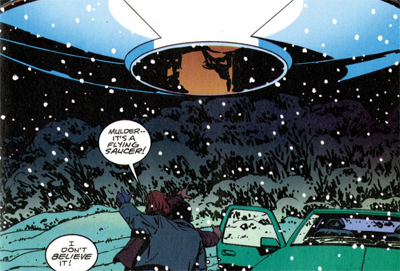
Up in the sky!

Up in the sky!

Continue reading

Non-Review Review: Mars Attacks!

I have a genuine affection for Mars Attacks! It’s certainly not Tim Burton’s best work, but it’s also miles above some of his more disappointing output. It feels like an affectionate homage to Ed Wood, putting together the kind of movie that the old B-movie director would have approved of, except with the judgement to play it as a comedy rather than entirely straight (although Wood’s filmography is typically “so bad it’s good“, one could scarcely accuse the director of being in on the joke), and made with a more significant budget. Seen in that light, it’s hard to resist the movie’s (admittedly uneven) charms.

The chances of anything coming from Mars are a million to one, they say...

Continue reading