• Following Us

  • Categories

  • Check out the Archives


  • Awards & Nominations

The X-Files: Season 10 (IDW) #21-25 – Elders (Review)

This June, we’re going to be taking a look at the current run of The X-Files, beginning with the IDW comic book revival and perhaps taking some detours along the way. Check back daily for the latest review.

One of the more disappointing aspects of The X-Files: Season 10 and The X-Files: Season 11 is that it does very little to adapt the mythology to the twenty-first century.

The X-Files is very much a show rooted in the political and cultural context of the nineties. Everything about the show’s first seven seasons reflects the Clinton era, with the series perfectly capturing the zeitgeist in the weird lacuna between the fall of the Berlin Wall and the destruction of the World Trade Centre. At its peak, the show touched on underlying anxieties that are social, political and existential; it asked tough questions about identity in the final days of the twentieth century. As much as Friends or The Simpsons, The X-Files embodied the nineties.
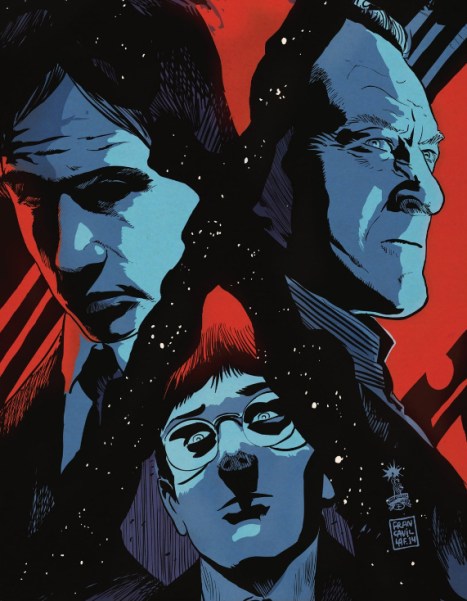
The son becomes the father... And the pseudo-son...

The son becomes the father…
And the pseudo-son…

As such, any revival of The X-Files must face questions of relevance. The X-Files so perfectly captured the spirit of the nineties that removing the series from that context runs the risk of severely damaging it. What makes now such a perfect time for The X-Files? What does The X-Files have to say about contemporary culture? How will the show be tweaked for modern audiences and sensibilities? These are not trivial questions. Any X-Files revival should be more than just a nostalgic “victory lap.”

This question of relevance faced the revival miniseries, but it also faced The X-Files: Season 10. What does The X-Files mean in the modern world? Harris had broached the question in a number of different ways, perhaps most skilfully in his approach to the classic “small town horror stories” that populated the show’s nine-season run. Whereas those stories tended to touch upon themes of globalisation and the erosion of so-called eccentric spaces, Harris used stories like Chitter and Immaculate to explore a growing cultural divide in twenty-first century America.
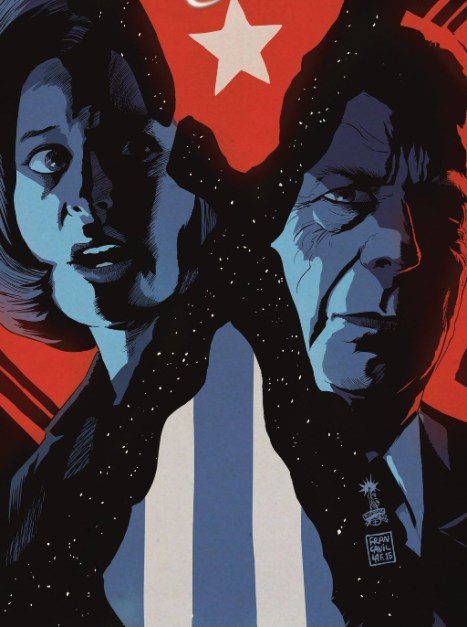
Cuba libre...

Cuba libre…

However, The X-Files: Season 10 does not work quite as well when it comes to updating the mythology for the twenty-first century. A lot of this is down to the strong nostalgic pull of the nineties mythology. Harris employs a lot of the same elements that were in play while the show was on the air; the same characters, the same dynamics, the same story beats. There were occasional nods towards the changing geopolitical realities, such as the use of black-oil-as-oil in Pilgrims. However, the revived mythology never engaged with the twenty-first century as well as it might.

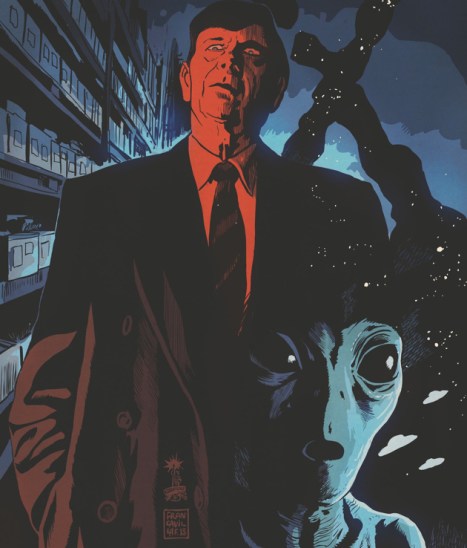
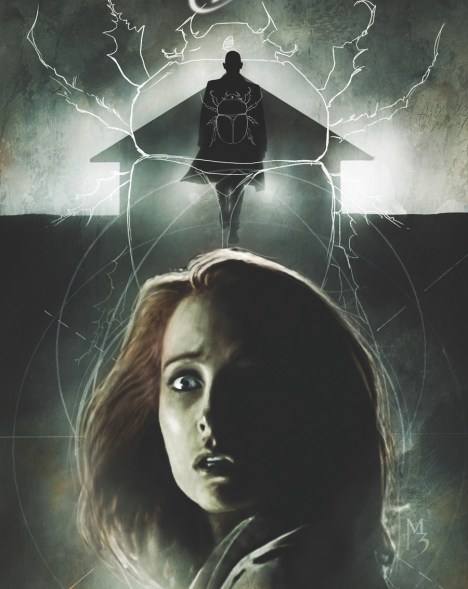
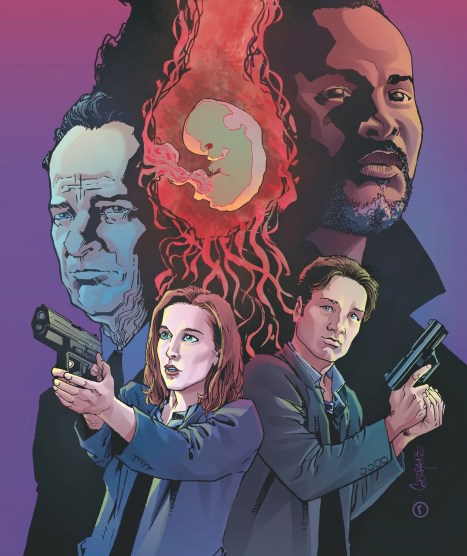
Effectively serving as the season “finale”, Elders makes the strongest play for relevance yet. It consciously references and evokes the imagery of the War on Terror in its exploration of Gibson Praise’s revived conspiracy. Unfortunately, it doesn’t quite work.
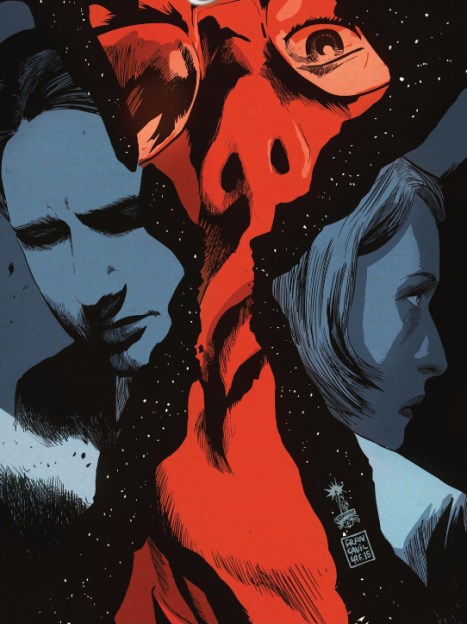
Cross to bear...

Cross to bear…

Continue reading

The X-Files: Season 10 (IDW) #19-20 – G-23 (Review)

This June, we’re going to be taking a look at the current run of The X-Files, beginning with the IDW comic book revival and perhaps taking some detours along the way. Check back daily for the latest review.

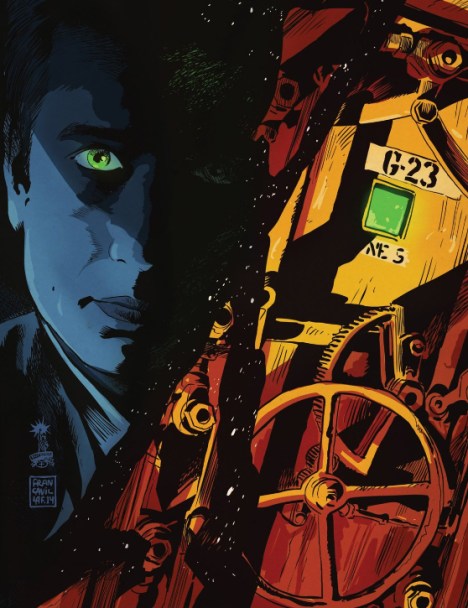
One of the more underrated aspects of The X-Files: Season 10 is the care that writer Joe Harris takes to emulate the structure and tone of a regular season of The X-Files.

There are obvious structural differences, of course. Twenty-five issues cannot possibly correspond to twenty-five episodes of television, and the comic ran for over two years rather than across nine months. Nevertheless, Harris works hard to ensure that the comic book series adopted a structure rather similar to that of the television series. The X-Files: Season 10 has a flow to it that feels vaguely like the structure of those classic nineties seasons, albeit with fewer individual stories due to the nature of the medium.

Ol' green eyes is back...

Ol’ green eyes is back…

Believers was an epic mythology season premiere, akin to The Blessing Way and Paper Clip or Redux I and Redux II. Pilgrims was a big mid-season mythology adventure like Nisei and 731 or Piper Maru and Apocrypha. Elders is an epic game-changing season finale, like The Erlenmeyer Flask or Anasazi or Requiem. Even stand-alone character-centric stories like Being for the Benefit of Mister X or More Musings of a Cigarette-Smoking Man recall episodes focusing on supporting characters like Zero Sum or En Ami.

With that in mind, G-23 is very much the weird mind-bending off-format episode that tends to appear towards the end of the season. Indeed, Harris boasted on Twitter that the end of the season would “include an… off-beat story.” In that light, G-23 feels very much like an affectionate nod to trippy stories like Demons, Folie à Deux and Field Trip. Indeed, it is something of a precursor to the positioning of Babylon within the revival series.

Poster child...

Poster child…

Continue reading

The X-Files (IDW) Christmas Special 2014 (Review)

This June, we’re going to be taking a look at the current run of The X-Files, beginning with the IDW comic book revival and perhaps taking some detours along the way. Check back daily for the latest review.

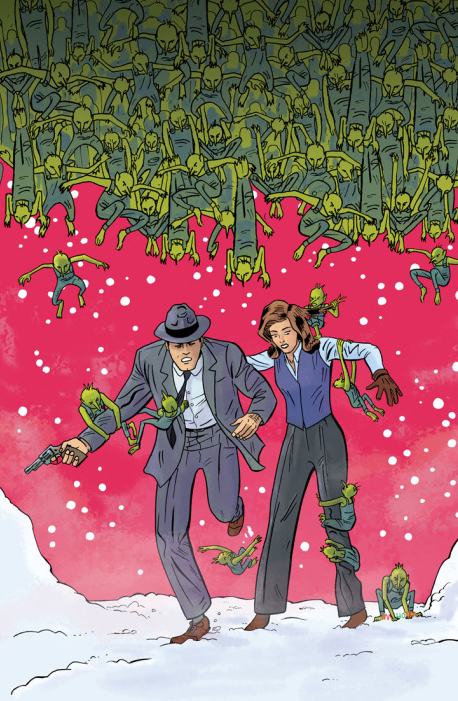
The X-Files Christmas Special 2014 is an indulgence. There is no other way to cut it. The primary story is essentially a Christmas wrap party that happens to feature the bulk of the cast from The X-Files: Season 10, cutting loose and making references and in-jokes like nobody’s business. The secondary story allows writer Karl Kesel the opportunity to expand out a fun one-liner from Year Zero into a full-blown story. Neither story is essential, or adds much to their parent series. It is hard to justify either story on its own merits.

Still, if you can’t excuse an indulgence at Christmas time, when can you?

How the gremlins stole Christmas...

How the gremlins stole Christmas…

Continue reading

The X-Files: Season 10 (IDW) #10 – More Musings of a Cigarette-Smoking Man

This June, we’re going to be taking a look at the current run of The X-Files, beginning with the IDW comic book revival and perhaps taking some detours along the way. Check back daily for the latest review.

More Musings of a Cigarette-Smoking Man is certainly an ambitious story.

As the title suggests, writer Joe Harris and artist menton3 position this one-shot as a spiritual sequel to Musings of a Cigarette-Smoking Man, the controversial fourth season episode written by Glen Morgan and directed by James Wong. Musings of a Cigarette-Smoking Man offered a window into the past of the Cigarette-Smoking Man, a possible glimpse of who he had been and how he had come to be. It was also one of the most consciously stylised and ambiguous episodes in the entire nine-year run of the show.

Wheels within wheels.

Wheels within wheels.

Writing a spiritual sequel to that classic episode is a bold decision from the creative team. As with a lot of the big creative decisions concerning The X-Files: Season 10, More Musings of a Cigarette-Smoking Man seems too focused on the past. There is a sense that the monthly series is a little too beholden to what came before, too rooted in continuity, too dedicated to revisiting the iconography of the series. Writing a single-issue standalone story positioned as a sequel to on of the most unique episodes of the original run only emphasises this unease.

And, yet, in spite of these legitimate concerns, More Musings of a Cigarette-Smoking Man works reasonably well. It is indulgent and obsessive, but it is also rich and mysterious. It is disjointed and uneven, but that feels like the point. In keeping with the spirit of Musings of a Cigarette-Smoking Man, it feels like More Musings of a Cigarette-Smoking Man is a reflection on the comic book itself. This is a comic book contemplating its own identity and purpose, even as it finds itself being made redundant.

X marks the spot.

X marks the spot.

Continue reading

The X-Files: Conspiracy (IDW) (Review)

This June, we’re going to be taking a look at the current run of The X-Files, beginning with the IDW comic book revival and perhaps taking some detours along the way. Check back daily for the latest review.

IDW is quite different from Topps and Wildstorm, the two prior comic book companies to hold the license for The X-Files.

Part of that simply reflects changes in the comic book industry over time, with a greater fixation on concepts like shared universes and continuity, along with an increased emphasis on the importance of “the canon.” Part of that is simply down to the way that IDW operates as a publisher. The company is the fourth-largest comic book publisher in America, behind Marvel, DC and Image. While the company publishes a number of creator-owned properties, its success has largely been based around licensing properties.

A mutant phenomenon...

A mutant phenomenon…

In doing so, the company has adopted a model quite close to that of Marvel or DC. It tends to organise its books around these properties in the same way that Marvel or DC might organise themselves around the so-called “families.” Much like books like Detective Comics, Nightwing or Batgirl are considered part of the “Batman” family or books like Wolverine, Namor and X-Force fall under the X-Men banner, IDW tends to group its books into familiar families based around licensed properties. Transformers, G.I. Joe, Teenage Mutant Ninja Turtles.

It is not uncommon for each of those lines to support multiple books. For example, the company would publish a number of miniseries as companion pieces to their monthly Star Trek or Doctor Who comics. The same would be true of The X-Files: Season 1o, with the company publishing a number of tie-in books around that. Year Zero and Millennium are the most obvious example, providing the company with the opportunity to publish several branded X-Files books within the same month.

I bet super soldiers wish that they could do this.

I bet super soldiers wish that they could do this.

At the same time, the company engages with its properties in much the same way that Marvel or DC might. Marvel and DC tend to fall into a pattern of massive so-called “events” that serve to draw particular books away from their own internal narratives and towards a more “epic” story. Civil War focused on a fight between Captain America and Iron Man, but crossed over into over one hundred comic book issues published over seven months. There are countless other examples, from House of M to Crisis on Infinite Earths to Siege to Final Crisis.

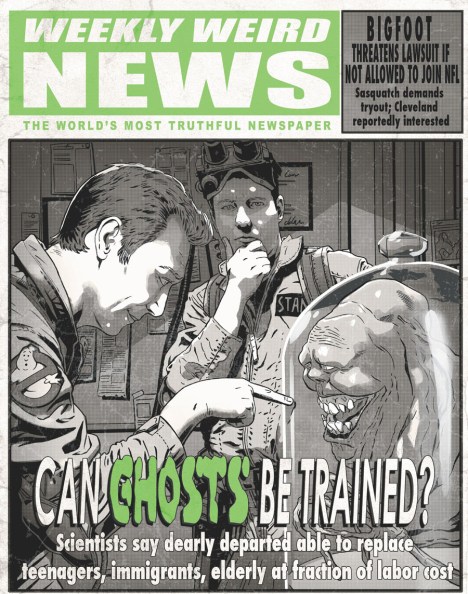
IDW has organised several of its own blockbuster events to tie together its own licensed properties; Infestation and and Infes2ation come to mind. To celebrate the landing of the license, it was decided that the 2014 crossover would be themed around The X-Files. It is just a shame that the result was terrible.

We ain't afraid of no ghosts...

We ain’t afraid of no ghosts…

Continue reading

The X-Files: Season 10 (IDW) #9 – Chitter (Review)

This June, we’re going to be taking a look at the current run of The X-Files, beginning with the IDW comic book revival and perhaps taking some detours along the way. Check back daily for the latest review.

Chitter is an interesting single-issue story.

In many ways, Chitter feels very much like a throwback. It is a “monster of the week” story, the first such story to be written by Joe Harris focusing on an original creation. In fact, Harris acknowledged as much on his blog, remarking, “It’s my first, original ‘Monster of the Month’ (a term I’m taking sole credit for) story and it’s utterly disgusting, I’m sorry.” Although the plot includes a few nods towards the overarching themes of The X-Files: Season 10, the story stands almost completely alone. It would be possible to skip the issue entirely without missing much of importance.

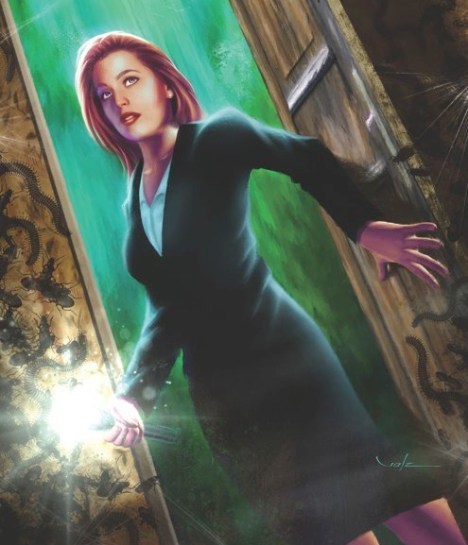
Bugging out...

Bugging out…

This is very much an oddity in terms of The X-Files: Season 10, a monthly comic book series that has been very focused on the mythology and continuity of The X-Files. The first eight issues of the series were given over to threads dangling from the original show, whether the continuation of the mythology in Believers or the fate of the Fluke Man in Hosts or the origin of Mister X in Being for the Benefit of Mister X. This is the first time that the comic book has told a story that feels self-contained and truly standalone.

There is something very refreshing in that, with Harris constructing a story that feels very much in keeping with the tone and mood of The X-Files without relying on specific details. In many ways, it feels more like a classic episode than any of the previous issues. More than that, it actually feels very much like one of the early X-Files comics written for Topps by writers like Stefan Petrucha or John Rozum. It is a very strong piece of work.

Crawl good...

Crawl good…

Continue reading

The After – Pilot (Review)

This June, we’re going to be taking a look at the current run of The X-Files, beginning with the IDW comic book revival and perhaps taking some detours along the way. Check back daily for the latest review.

And I to him: “Poet, I thee entreat, 

By that same God whom thou didst never know,  

So that I may escape this woe and worse, 


Thou wouldst conduct me there where thou hast said,  

That I may see the portal of Saint Peter,  

And those thou makest so disconsolate.”


Then he moved on, and I behind him followed.

Devil's in the details...

Devil’s in the details…

Continue reading

The X-Files: Season 10 (IDW) #8 – Being for the Benefit of Mr. X (Review)

This June, we’re going to be taking a look at the current run of The X-Files, beginning with the IDW comic book revival and perhaps taking some detours along the way. Check back daily for the latest review.

Being for the Benefit of Mr. X is effectively another origin story, following on from Hosts.

While Hosts explained exactly how the Fluke Man came to be, and even gave the character tangible motivation, Being for the Benefit of Mr. X is largely driven by flashbacks that proceed to explain and elaborate upon Mulder’s second informant. Mister X has long been one of the franchise’s most interesting and underdeveloped character, in part owing to the fact that the show fleshed out very little about him and in part due to Steven Williams’ performance. While the show revealed a lot about Deep Throat or the Cigarette-Smoking Man, Mister X remains a mystery.

Marking the spot.

Marking the spot.

The question, of course, is what this actually adds to the story being told. It is fun to revisit the origin of Mister X, but he is very much an outdated concern at this point in the show’s life. In fact, the character’s last appearance was in flashback in Unusual Suspects at the start of the fifth season, following his death in Herrenvolk at the start of the fourth season. Unlike the Cigarette-Smoking Man, Mister X was never literally resurrected. Unlike Deep Throat, he never turned up to haunt Mulder in episodes like The Blessing Way or The Sixth Extinction II: Amor Fati.

It is not as if writer Joe Harris has constructed a particularly compelling origin story for Mister X. The story told in Being for the Benefit of Mr. X is solid and sturdy, integrating quite smoothly with the continuity of the show and the character as we understand it. However, there are no real surprises or tangents, no twists or surprises. Being for the Benefit of Mr. X is a solid “done in one” story. It just feels a tad unnecessary.

In too Deep (Throat)...

In too Deep (Throat)…

Continue reading

The X-Files: Season 10 (IDW) #6-7 – Hosts (Review)

This June, we’re going to be taking a look at the current run of The X-Files, beginning with the IDW comic book revival and perhaps taking some detours along the way. Check back daily for the latest review.

Balance was always going to be an issue for The X-Files: Season 10, even in a purely logistical sense.

At its peak, The X-Files was churning out twenty-six episodes in a season. Of those, maybe a third would be mythology episodes and the rest would be standalone monster of the week stories. As a result, the show could find the time to balance earth-shaking mythology episodes like Paper Clip, Nisei, 731 and Talitha Cumi with brilliant episodic television like Clyde Bruckman’s Final ReposeOublietteGrotesquePusher and Jose Chung’s “From Outer Space.” Part of the appeal of The X-Files was always striking that balance.

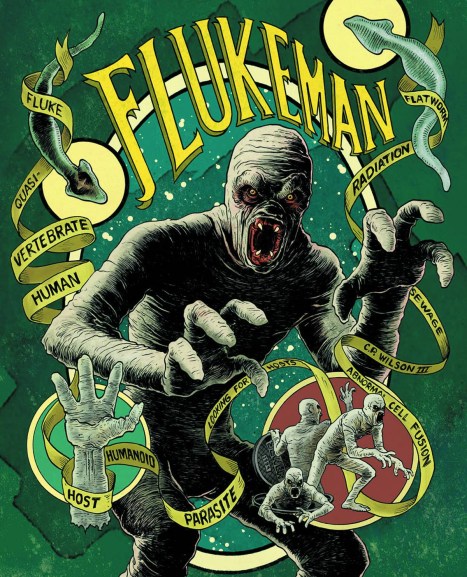
No Fluke.

No Fluke.

That is not really possible with a conventional comic book release schedule. Comic books are released once a month, limiting the creative team to twelve issues in a given year. They might also get an annual, if the comic is popular. Given modern comic book narrative conventions and the lower page counts of modern comics, “done-in-one” standalone stories are increasingly uncommon. At best, it seems like a creative team might get away with seven stories in a year, six two-parters and an annual.

This causes issues in structuring a comic book season of The X-Files. Quite cleverly, The X-Files: Season 10 runs for twenty-five issues, evoking the length of a classic television season. However, it tells far fewer stories, with the run dominated by epic sprawling mythology stories like the five-part Believers, the five-part Pilgrims and the five-part Elders. That is three-fifths of the “season” given over to three mythology stories. It is no wonder that the rest of the run feels so compressed.

Worming his way back to you...

Worming his way back to you…

Continue reading

The X-Files: Season 10 (IDW) #1-5 – Believers (Review)

This June, we’re going to be taking a look at the current run of The X-Files, beginning with the IDW comic book revival and perhaps taking some detours along the way. Check back daily for the latest review.

Five years can be a long time.

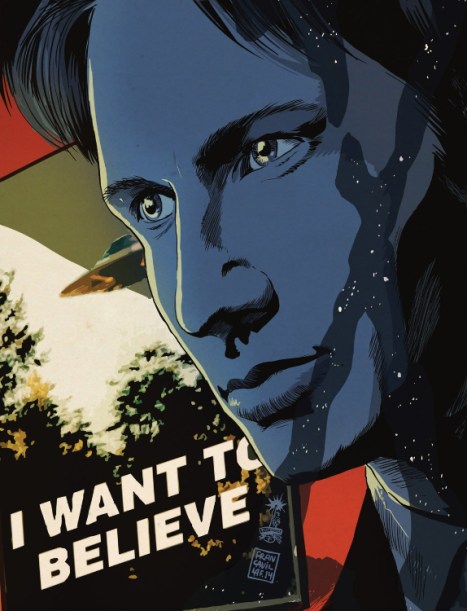
To be fair, there was a six-year gap between the broadcast of The Truth and the release of The X-Files: I Want to Believe, so the gap was not unprecedented. Nevertheless, the fact is that Mulder and Scully had been retired for five years since their last film and eleven years since their last television episodes. Even the most hardcore fans of The X-Files had begun to doubt that the show would ever return in any tangible form. However, the show was entering its twentieth anniversary year, and forces were stirring in the background.

X-appeal.

X-appeal.

Occasionally interviews would surface with David Duchovny or Gillian Anderson mooting the possibility of doing a third feature film. After all, despite the promise made in the opening of The Truth, 2012 had come and gone without an alien invasion or a global apocalypse. The franchise had set its own alarm clock and slept through it. There were still fitful stirrings, suggestions of possible future developments. As the franchise passed what many regarded as its “best before” date, Frank Spotnitz even speculated that fans might be treated to a reboot.

In many ways, the revival of The X-Files began somewhat innocuously. In January 2013, comics publisher IDW announced that they would be publishing a monthly series focusing on the continuing adventures of Mulder and Scully. This was not necessarily news of itself. IDW had a long history of managing licensed properties, such as the JJ Abrams Star Trek reboot and the Russell T. Davies Doctor Who relaunch. That was very much their market niche in the comic book industry, especially with nostalgic titles like Ghostbusters or Teenage Mutant Ninja Turtles.

How the years 'shroom by...

How the years ‘shroom by…

While the launch of the title did suggest that there was an audience for stories featuring Mulder and Scully, it did not necessarily lead to the promise of greater things. Indeed, the announcement that IDW would be publishing The X-Files: Season 10 consciously and clearly evoked the approach that the publisher Dark Horse had adopted towards Buffy: The Vampire Slayer and Angel, running entire seasons of comic book stories that served as the new “canon” for the characters. But nobody was expecting Sarah Michelle Gellar to reprise the role of Buffy Summers.

However, the IDW comic book launch served to bring Chris Carter out of semi-retirement and back into the media spotlight. Joss Whedon had consulted with Dark Horse on Buffy: Season Eight, the prolific television writer and producer was also working on his own concurrent projects that included directing episodes of The Office and preparing Doctor Horrible’s Sing-Along Blog. In contrast, Chris Carter had been largely silent since the release of I Want to Believe. The launch of the comic book brought him back.

Where there's smoke...

Where there’s smoke…

Continue reading