• Following Us

  • Categories

  • Check out the Archives


  • Awards & Nominations

Star Trek – Season 2 (Review)

The first Star Trek pilot, The Cage, was produced in 1964. To celebrate its fiftieth anniversary, this December we are reviewing the second season of the original Star Trek show. You can check out our first season reviews here. Check back daily for the latest review.

The first season of Star Trek was quite remarkable. The cult television show opened with a reasonably solid run of episodes that gradually built momentum over the course of the season. The first season seemed to build towards a crescendo, climaxing with a run of episodes including all-time classics like A Taste of Armageddon, Space Seed, The Devil in the Dark, Errand of Mercy and The City on the Edge of Forever. Sure, Operation — Annihilate! ended the first season on a whimper rather than a bang, but the quality of the show only seemed to improve as the season went along.

In contrast, the second season was a bit more uneven. It probably contains as many truly classic hours of television, but the quality is a lot more variable on an episode-to-episode basis. The Apple leads in to Mirror, Mirror, which leads into The Deadly Years. Metamorphosis leads into Friday’s Child. The Immunity Syndrome and A Piece of the Action follow The Gamesters of Triskelion and Obsession. Watching the season blind is a roller-coaster, with episodes varying radically in quality from one week to the next. Some of the franchise’s best and worst episodes sit back-to-back here.
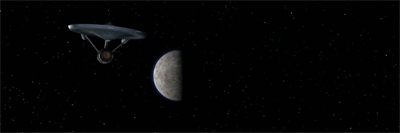
tos-returntotomorrow25

The second season of Star Trek can be incredibly hard to get a handle on. It is, in many respects, the season that defined a lot of what the franchise could and would become. Episodes like Amok Time and Journey to Babel really built up a universe around the Enterprise and her crew, expanding on late first season episodes like Arena or Errand of Mercy. The show also demonstrated incredible range, with the occult sensibilities of Catspaw and Wolf in the Fold existing alongside the broad comedy of I, Mudd and The Trouble With Tribbles.

However, the season also demonstrated some of the worst tendencies of sixties Star Trek. Episodes like Friday’s Child, A Private Little War and The Omega Glory engaged in precisely the sort of sabre-rattling jingoism against which Balance of Terror and Errand of Mercy had cautioned. The Changeling, By Any Other Name and Return to Tomorrow felt like generic science-fiction retreads. The show brutally (and casually) massacred red shirts in episodes like The Changeling, The Apple and Obsession.

tos-theapple

This variable quality is a feature of episodic television. After all, different writers working on different stories featuring the same characters will inevitably produce a wide variety of results. Some writers “get” the show more than others, and some scripts are subject to more work and attention than others. Such is the nature of the industry, particularly when the production team is cranking out more two dozen hours of television in a year – under intense pressure, both in terms of time and money.

Nevertheless, it is quite difficult to distill the second season of Star Trek into a cohesive or singular whole. It is diverse and multifaceted, capable of being almost anything from one episode (or, perhaps, one moment) to the next. Perhaps that is the greatest legacy of this second season; demonstrating that there is very little Star Trek cannot be.
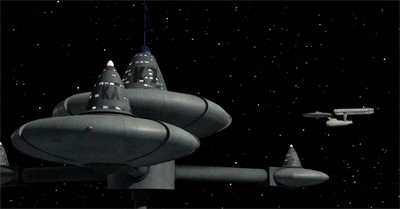
tos-thetroublewithtribbles2

Continue reading

Star Trek – Assignment: Earth (Review)

The first Star Trek pilot, The Cage, was produced in 1964. To celebrate its fiftieth anniversary, this December we are reviewing the second season of the original Star Trek show. You can check out our first season reviews here. Check back daily for the latest review.

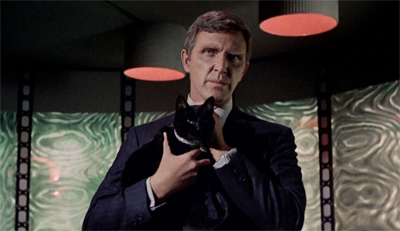
Assignment: Earth was almost the last episode of Star Trek ever produced.

It was also possibly (although nowhere near “almost”) the pilot for a spin-off television show.

Seventh heaven?

Seventh heaven?

At the last minute, following a very high-profile fan campaign, Star Trek was renewed for a third season.

Fans would have to wait decades to see an actual Star Trek finalé that reduced the main cast to guest stars.

"Wait, who just hijacked my show?"

“Wait, who just hijacked my show?”

Continue reading

Star Trek – Return to Tomorrow (Review)

The first Star Trek pilot, The Cage, was produced in 1964. To celebrate its fiftieth anniversary, this December we are reviewing the second season of the original Star Trek show. You can check out our first season reviews here. Check back daily for the latest review.

Return to Tomorrow is similar to By Any Other Name in a number of ways.

Most superficially, it’s an episode about aliens in human bodies, who find themselves learning (or, in this case, remembering) how to appreciate all that mankind has to offer. The plot similarity is rather broad, but it seems strange that By Any Other Name and Return to Tomorrow would be produced right after one another, and that no significant effort would be made to space them apart on initial broadcast. (Both aired in February of 1968.)

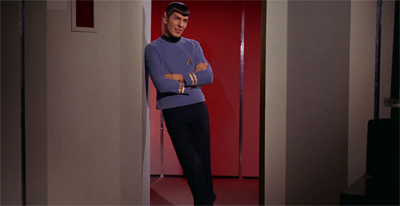
Leonard Nimoy only gets to smile once a year, so the show makes the most of it...

Leonard Nimoy only gets to smile once a year, so the show makes the most of it…

However, there are more fundamental and underlying similarities between Return to Tomorrow and By Any Other Name. Both are episodes that are very much engaged with the underlying philosophy of the franchise, particularly concerning humanity’s place in the universe. Indeed, there’s an argument to be made that Return to Tomorrow and By Any Other Name both work much better as statements of philosophical intent than they do as stories in their own right.

Co-written by Gene Roddenberry, Return to Tomorrow is a rather generic piece of television, but one that feels like a considered statement of the franchise’s central themes.

"Things are going to be a little different around here..."

“Things are going to be a little different around here…”

Continue reading

Star Trek – By Any Other Name (Review)

The first Star Trek pilot, The Cage, was produced in 1964. To celebrate its fiftieth anniversary, this December we are reviewing the second season of the original Star Trek show. You can check out our first season reviews here. Check back daily for the latest review.

By Any Other Name is very much a stock episode of Star Trek. It hits on all manner of familiar themes and ideas. It’s a story about powerful aliens who seem to overpower the crew, only to be outmanoeuvred themselves. It is about the Enterprise literally going where no human has gone before. It is about how humans are undeniably and incomparably special – about how becoming human opens up the aliens to a world of sense and experience.

However, By Any Other Name never really has anything particularly insightful to say about any of this stuff. The script to the episode is a mess, despite the best efforts of D.C. Fontana to develop the character beats. For a show based around such core Star Trek concepts and storytelling devices, By Any Other Name is surprisingly all over the place, with a wildly dissonant tone and a sense that the script was desperately padded in order to extend it out to the requisite fifty minutes.

"No dice, Captain..."

“No dice, Captain…”

By Any Other Name is not a terrible episode of Star Trek, but it’s not a particularly good one either. It is just “there.” In many ways, it feels like an example of an episode designed to fill a gap in twenty-odd-episodes-a-year schedule. After all, the last eight episodes of the season were pushed into production at short notice when NBC opted to pick up the show for the rest of the season during the production of The Gamesters of Triskelion. It makes sense that the episodes in this final stretch of the third season are somewhat rough.

By Any Other Name is a familiar Star Trek plot with a somewhat bloated script and a sense that the show is just trying to eat up minutes between here and the end of the season.

"It appears the rock knows as little as we do, sir..."

“It appears the rock knows as little as we do, sir…”

Continue reading

Star Trek – Obsession (Review)

The first Star Trek pilot, The Cage, was produced in 1964. To celebrate its fiftieth anniversary, this December we are reviewing the second season of the original Star Trek show. You can check out our first season reviews here. Check back daily for the latest review.

The Star Trek franchise really does like Moby Dick, doesn’t it?

The show had done its first appropriation of Herman Melville’s iconic story of obsession and revenge earlier in the second season with The Doomsday Machine. In that episode, Commodore Decker sought to avenge the loss of his crew upon an unstoppable planet-killing machine. However, the basic formula quickly worked its way into the franchise’s blood. Obsession casts Kirk in the role of Ahab, albeit with a radically different ending and tone. After all, it is very cast Ahab as the heroic lead of a weekly television show.

"It's behind you!"

“It’s behind you!”

Star Trek II: The Wrath of Khan would return to Moby Dick for inspiration. Khan would even paraphrase from the book, without a hint of self-awareness or irony. After that point, it seemed like the franchise was more interested in mimicking the themes of The Wrath of Khan , which inevitably meant carrying over the themes of Moby Dick as well. Nevertheless, Star Trek: Voyager did its own variant of Moby Dick in Bliss and Star Trek: First Contact would reference the book directly.

Obsession is a competent if unspectacular episode, one that suffers from the fact that it has been done better and more compellingly in recent memory. However, given all the changes taking place behind the scenes, Obsession flows surprisingly well.

It really sucks to be a red shirt, eh?

It really sucks to be a red shirt, eh?

Continue reading

Star Trek – Journey to Babel (Review)

The first Star Trek pilot, The Cage, was produced in 1964. To celebrate its fiftieth anniversary, this December we are reviewing the second season of the original Star Trek show. You can check out our first season reviews here. Check back daily for the latest review.

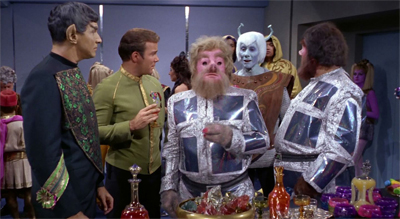
Journey to Babel is pretty influential, as episodes of Star Trek go. It is an episode that really cements idea of the Federation that came to be at the heart of the franchise, suggesting that the organisation really is a diverse intergalactic alliance of diverse alien species, rather than a union between Earth and Vulcan. More than that, the episode suggests that the individual members of the Federation might not exist in perfect harmony with one another, but may each operate with their own agenda and motivations.

However, what is really remarkable about Journey to Babel is how much of this unfolds in the background. All this world-building and -embellishing is very much a secondary concern for writer D.C. Fontana. Despite its scale and its scope, Journey to Babel is a decidedly personal story about a family in crisis. It works remarkably well, offering viewers a bit more insight into Spock as a character and where he came from.

Party on, Gav...

Party on, Gav…

Continue reading

Star Trek – Bread and Circuses (Review)

The first Star Trek pilot, The Cage, was produced in 1964. To celebrate its fiftieth anniversary, this December we are reviewing the second season of the original Star Trek show. You can check out our first season reviews here. Check back daily for the latest review.

Bread and Circuses is not subtle. Then again, that is the point.

There’s a lot of interesting stuff happening in Bread and Circuses, the fourteenth episode produced for the second season, but the last to air. There’s the idea of a world dominated by “a twentieth century Rome”, a rogue captain, a Prime Directive dilemma and a scathing indictment of modern television. Not only is it one of the last episodes with a “produced by Gene L. Coon” credit, it is also an episode co-written by Roddenberry and Coon. It is also the episode of Star Trek that endorses Christianity most explicitly and heavily.

"Wait, we're only getting it in black and white?"

“Wait, we’re only getting it in black and white?”

Bread and Circuses is a bold and audacious piece of television, full of venom and righteous anger, rich in satire and cynicism. It’s a plot so ridiculously over-stuffed with good ideas that viewers are liable to forgive the show’s somewhat cop-out ending where Kirk and his away team beam back to the Enterprise and continue on their merry way as though little has actually happened. Bread and Circuses feels like it uses every minute of its fifty-minute runtime wisely, balancing character with world-building.

It is probably a little bit too messy and disjointed to be labelled a dyed-in-the-wool classic, particularly when compared to the shows produced around it. Nevertheless, it is a decidedly ambitious piece of work, and one that demonstrates what Star Trek could do when it sets its mind to something.

When in Rome...

When in Rome…

Continue reading