• Following Us

  • Categories

  • Check out the Archives


  • Awards & Nominations

Doctor Who: The Reality War (Review)

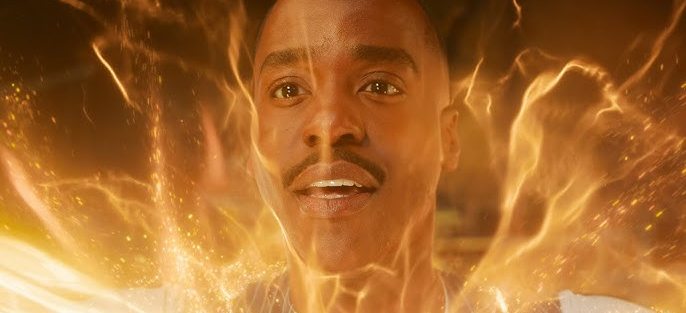
“Oh, hello.”

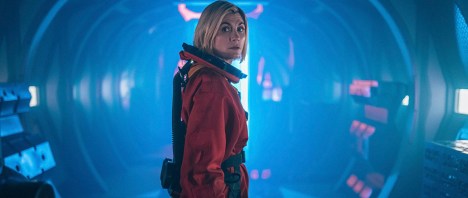
Well, Russell T. Davies winds up the Fifteenth Doctor’s era by taking a second shot at The End of Time, Part II.

Fifteen’s minutes of fame.

Continue reading

Doctor Who: The Well (Review)

“There’s still hope.”

“Hope is irrelevant.”

The Well is a strange and triumphant exercise, a collection of contradictions that coheres remarkably well.

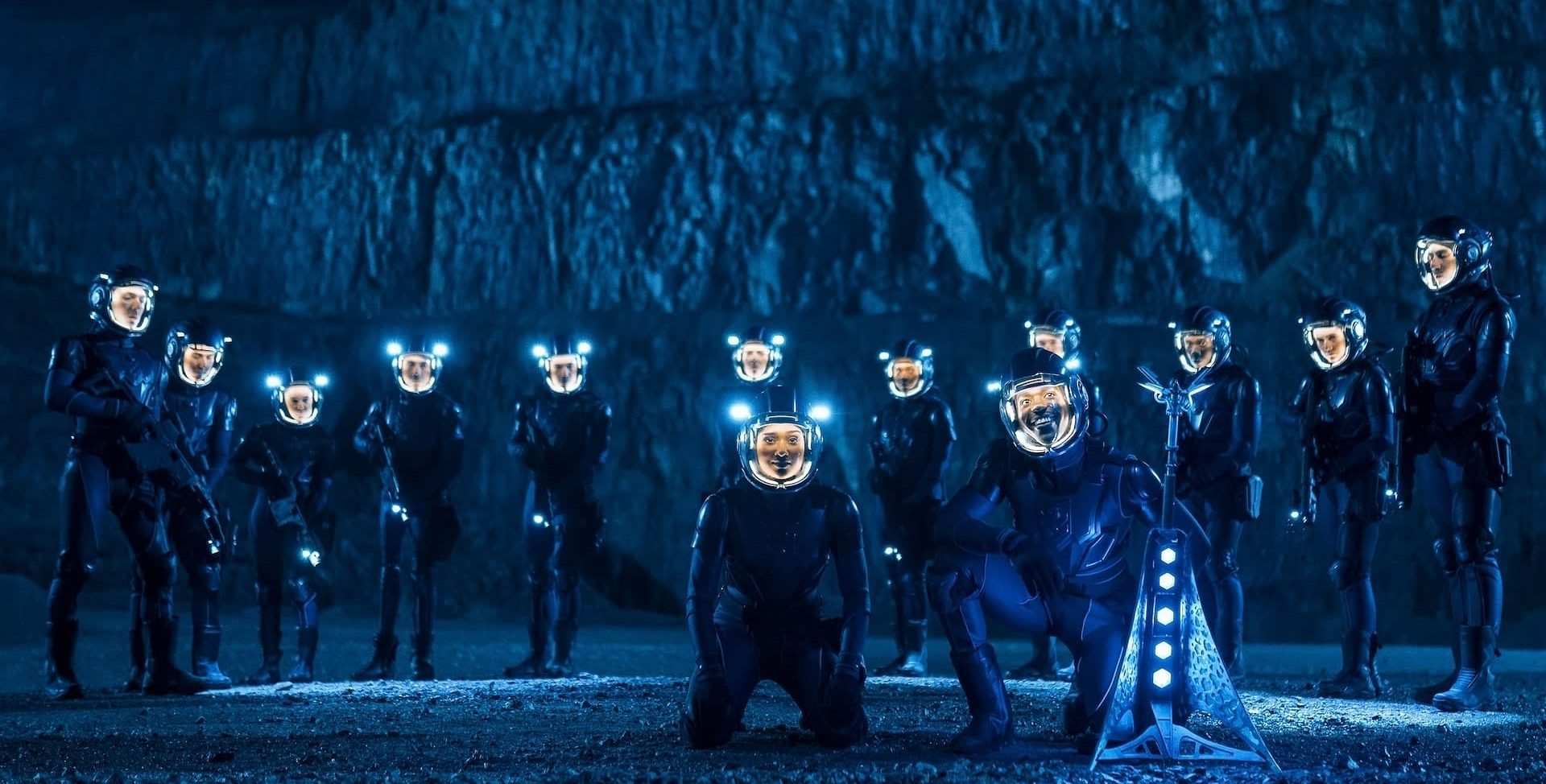
It is a chamber piece, a very basic Doctor Who story that could easily have been executed on the classic BBC budget, blown up with Disney+ money. It is a very obvious sequel to at least one beloved story from Davies’ original tenure as showrunner, and saturated with references to others, while still feeling undeniably like a produce of his second era overseeing the show. It is an exercise in nostalgia, but also a story about how that nostalgia is cursed. It is also Russell T. Davies revisiting his early work, while taking cues from Steven Moffat.

All’s well…

It shouldn’t work. The Well should collapse under its own weight. It should feel like an indulgent mess, a collection of clashing recycled imagery and iconography. However, The Well manages to strike a very careful balance between its competing priorities, allowing the individual elements to add up to more than the sum of its individual parts. It’s an episode that feels like an extension of Davies work in both The Robot Revolution and Lux, solidifying a rich thematic vein running through the first three stories of the season.

The Well is a remarkable accomplishment.

Spaced out…

Continue reading

Doctor Who: The Robot Revolution (Review)

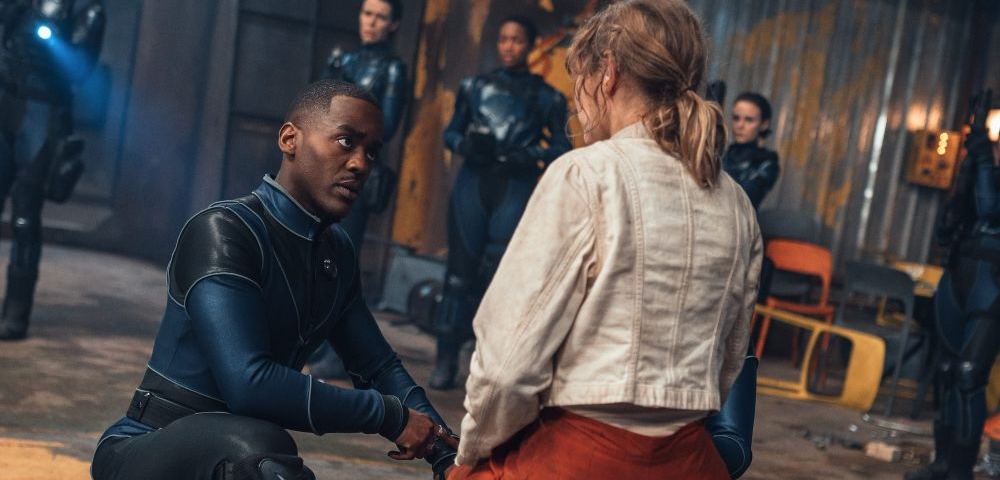
“I’m saying no.”

“With regret, your powers are only nominal.”

“Why is it all so mad? Why is everything on this planet so stupid?”

One of the interesting consequences of the relatively compressed modern season of Doctor Who is the way that it collides episodes into one another.

With only eight episodes in a given season, there isn’t room for the sort of structure that Davies brought to his first four years overseeing Doctor Who, when he would reintroduce the show to audiences each year with a triptych that opened in the present and followed with a celebrity historical and a futuristic science-fiction episode. Rose gave way to The End of the World and The Unquiet DeadSmith and Jones led into The Shakespeare Code and Gridlock. Partners in Crime fed into The Fires of Pompeii and Planet of the Ood. Davies’ second season was the exception, opening with New Earth and Tooth and Claw, but that was notably the only one of Davies’ four seasons that didn’t have to open with the introduction of a new companion, with The Christmas Invasion having introduced the Tenth Doctor.

Extending its reach.

The Robot Revolution is put in the awkward position of having to combine the typical Davies season opener that introduces Belinda Chandra as a companion but also being Davies’ big high-concept pseudo-political idiosyncratic science-fiction story like Gridlock or Planet of the Ood. The result is a strange cocktail, that doesn’t quite cohere but is nevertheless compelling. For all the criticism of Davies’ return as showrunner, his second tenure does not lack for ambition and ideas. The Robot Revolution is bursting with concepts and thoughts, with Davies eager to scream his ideas at the loudest possible volume. The Robot Revolution is, in typical Davies style, incredibly maximalist in its storytelling. It brushes past plot points and ideas with reckless abandon and breathless enthusiasm.

Whatever the episode’s flaws, it’s certainly not the product of assembly line production.

The march of progress…

Continue reading

Doctor Who: The Star Beast (Review)

“There’s just this… gap.”

“It’s no great mystery. You had a bit of a breakdown, sweetheart. And then you got better.”

“Sometimes I think there’s something missing. Like I had something lovely, and it’s gone.”

Doctor Who is back.

Who’s back.

Continue reading

Doctor Who: The Power of the Doctor (Review)

“Forced regeneration. Forced degeneration.”

The Power of the Doctor is in some ways a fitting conclusion to the Chibnall era, and an illustration of the era’s lost potential.

Trained for this.

Continue reading

“Doctor Who?” The Deconstructed Davison Doctor…

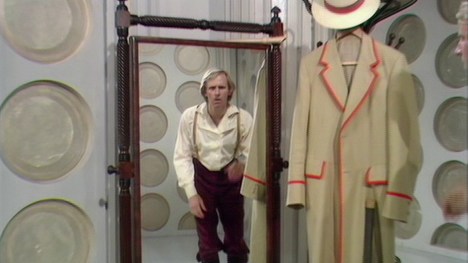
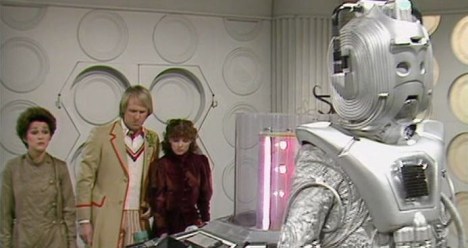
This week, I had the privilege of stopping by The Galactic Yo-Yo to talk a little bit about Doctor Who with the wonderful Molly Marsh. In preparation for the episode, I rewatched the bulk of the Peter Davison era for the first time in years. I talked about it on the podcast, which is worth your time. But I also thought it was worth jotting some of the thoughts down in more detail.

Rewatching the Peter Davison era of Doctor Who is a strange experience for a number of reasons, not all of which are good.

The Davison era arguably served as a point of transition. It existed in the negative space between two particularly memorable incarnations of the Time Lord. Tom Baker is justifiably considered the most important and influential actor to play the role. Notably, he was the only lead from the classic series to get a showcase scene in The Day of the Doctor. Despite Colin Baker’s protestations, this made a great deal of sense. For an entire generation of television viewers – not just Doctor Who fans – Tom Baker is the Doctor.

On the other extreme, Peter Davison was succeeded by Colin Baker. Whether rightly or wrongly, Colin Baker occupies a similarly important place in the mythos. With his garish costume and his string of terrible stories, Colin Baker was long the public face of the decline and decay of Doctor Who as a cultural institution. This isn’t entirely fair. The rot had set in considerably earlier than Baker’s arrival, and there’s a sense in which he suffered from terrible timing. Still, Colin Baker wound up serving as the face of the show’s hiatus and the embarrassing Doctor in Distress.

This puts Peter Davison in a strange position. He is caught between these two hugely important moments in the show’s history. However, he also arguably lacks a strong cohesive identity like other iconic iterations of the character. The Fifth Doctor is a markedly different character from the iterations around him, and Davison was subject to criticisms from fans that his interpretation of the title character was “bland” or “boring.” It’s arguable that the Sixth Doctor’s abrasive personality was a direct response to this perceived blandness.

However, in just under three full seasons in the role, Peter Davison left quite a mark on the Time Lord. His final story, The Caves of Androzani, is rightly regarded as one of the finest Doctor Who stories ever made. (Indeed, it is one of the rare stories to have topped polls of fandom.) More to the point, it’s notable that Davison would become a surprisingly strong influence on the revival series. Tom Baker got to occupy centre stage in The Day of the Doctor, but Davison returned first in Time Crash. The short served primarily as a love letter to Davison’s influence on the role.

There’s a lot of very fascinating stuff happening during Davison’s time in the role, most of seemingly happening by accident. The most striking thing about Davison’s tenure in the role is the recurring sense that he doesn’t quite fit. The Fifth Doctor often seems to struggle with the basic narrative conventions of Doctor Who, wrestling with the series’ core concepts and underlying assumptions. Over the course of Davison’s three seasons in the role, Doctor Who seems to ask what might happen if there were an iteration of the Doctor who wasn’t up to the task.

Continue reading

New Escapist Column! On Sixties Throwback Qualities of Chris Chibnall’s “Doctor Who”…

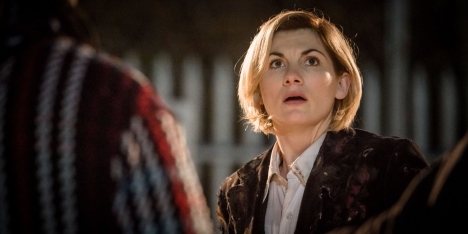
I published a new In the Frame piece at Escapist Magazine this evening, looking at Chris Chibnall’s Doctor Who, which kicked off its second season with Spyfall, Part I and Spyfall, Part II last week.

Cosmetically, Chibnall has done a lot to modernise the show – the way it looks, the way it sounds, the way it’s structured. However, one of the most striking aspects of Chibnall’s era has been the way that it has drawn so heavily and so consciously from the show’s earliest days. Certain vocal segments of Chibnall’s Doctor Who complain that it is too modern and too disconnected from the show’s roots. This has always seemed a strange criticism to level at a showrunner who arguably owes as much to Terry Nation as he does to Russell T. Davies.

You can read the piece here, or click the picture below.

Doctor Who: The Battle of Ranskoor Av Kolos (Review)

The Battle of Ranskoor Av Kolos ends the eleventh season on something of a damp squib.

To be fair, there were a lot of hurdles facing The Battle of Ranskoor Av Kolos from the outset. Most obviously, the expectations of a season finale. Unlike when Doctor Who was first broadcast, season finales are a big deal. They are part of the structure and rhythm of a season of television in a highly competitive market place. Indeed, one of the big innovations of the Davies era was understanding this, with Russell T. Davies building all of his season to bombastic blockbuster season finales.
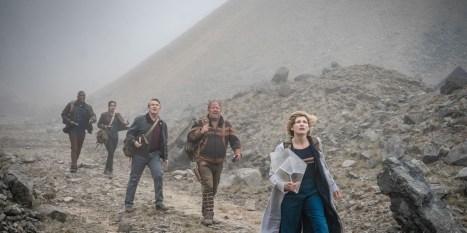
Hunting their quarry.

There are a lot of expectations heading into a season finale. The episode has to at once exist in the context of what came before and gesture towards the future, satisfy the audience who watched every episode leading into it and offer a compelling reason to stick with the show through a long hiatus. That reason to stick around does not have to be a hook or a plot point, it can simply be, “this show does stuff that nothing else on television is doing.”

However, The Battle of Ranskoor Av Kolos faces a number of problems in this regard. Most obviously, it is only a single episode long, which means it is formally indistinct from the nine episodes before it. More than that, it has to cram a host of plot and character work into that space, which needs to be “bigger” (or even just “more”) than the rest of the season. The Battle of Ranskoor Av Kolos has to be a blockbuster episode despite being indistinguishable from Kerblam! or The Witchfinders or It Takes You Away.
Actually, more like Paltraking down their quarry…

There is a reason that Moffat’s two single-episode season finales are among his most divisive, and those were consciously designed to defy the formal expectations of the season finale. Although The Wedding of River Song did not quite work, it was structured more as a fun run-around season opener than an epic season finale, most of its questions long answered. The Name of the Doctor was less of a season finale and more a springboard to The Day of the Doctor and The Time of the Doctor. Even then, Moffat returned to two-part finales in the Capaldi era.

To be fair, The Battle of Ranskoor Av Kolos might be able to get away with this if the show had been seeding momentum leading into the finale in earlier episodes so that story begins with a sense of stakes. Think about the way that The Long Game set up Bad Wolf and The Parting of the Ways, or the way that Tooth and Claw or Rise of the Cybermen and Age of Steel built to Army of Ghosts and Doomsday. More applicable to The Battle of Ranskoor Av Kolos, consider the repeated references to missing planets in the lead-in to The Stolen Earth and Journey’s End.
“Orange-a glad it isn’t the stinkin’ Daleks?”

There are undoubtedly aspects of The Battle of Ranskoor Av Kolos that were seeded earlier in the season. Tim Shaw from The Woman Who Fell to Earth, the Stenza weapons testing in The Ghost Monument, the lost world in The Demons of the Punjab. However, none of these were developed with any sense of urgency, nor maintained across the length the season. None of them make any lasting impression. It is a minor miracle that any of the characters remember Tim Shaw, as he was never a compelling villain in the first place.

The result is a season finale that aspires towards a sense of scale that never feels earned, that never pays off, that never engages. It is a good thing that Resolutions will arrive in a little over three weeks, as it’s very hard to imagine The Battle of Ranskoor Av Kolos sustaining audience interest until the series returns in 2020.
“Battlefield: Ranskoor Av Kolos.”

Continue reading

Doctor Who: It Takes You Away (Review)

It Takes You Away is a strong contender, along with Demons of the Punjab, for the strongest story of the eleventh season of Doctor Who.

It Takes You Away plays as an allegory. It is something of a fairy tale. It is perhaps the closest that the eleventh season of Doctor Who has come to feeling like a fairy tale, particularly given the conscious choice to root The Woman Who Fell to Earth in a more gritty and grounded universe. It Takes You Away seems like it could have been commissioned during the Moffat era, a lyrical meditation on the idea of loss and mourning. It Takes You Away is a story about needing to let go of trauma, rather than holding on it or carrying it inside.

Reflections and symbols.

To be fair, It Takes You Away is not perfect. There are still some minor pacing issues, particularly with how long the episode takes to get to the meat of the story; there is a sense in which It Takes You Away is three stories stitched together, with the middle segment particularly inessential. There is also the same over-reliance on weirdly specific and overly detailed nonsense techno-babble and mythology that stood out in episodes like The Ghost Monument or The Tsuranga Conundrum.

Still, It Takes You Away has some big ideas, a clever execution, and a strong central theme upon which both might be placed.

Mind the gap.

Continue reading

Doctor Who: The Ghost Monument (Review)

The Ghost Monument feels almost worryingly safe.

To be fair, it is almost churlish to complain about this. The Woman Who Fell to Earth seemed designed to assure audiences that the Chibnall Era would be a safe pair of hands, a stylishly produced piece of televisual science-fiction that visually upped the ante in terms of how Doctor Who looked and felt on the small screen. It was consciously designed to be safe and accessible to new viewers, to avoid anything that could be considered weird or strange.

Artful appearance.

By all accounts, this approach paid off. Reviews for the episode were largely positive. The ratings were spectacular, with Jodie Whittaker premiering to a larger audience than any Doctor since Christopher Eccleston and earning the series its highest ratings since the end of the Davies Era. There is a lot to recommend this relatively safe approach to Doctor Who, particularly following the ambition and experimentation of the Moffat Era.

Chibnall is very much adopting a back-to-basics approach. The Woman Who Fell to Earth demonstrated the way such an approach could work. This is the function of premiere episodes, particularly following a regeneration or a significant change behind the scenes. The goal is to comfort audiences still curious whether Doctor Who is the show that they love and to welcome those viewers who might be dipping their toes into the water. Rose and The Eleventh Hour did this as well, constructing tightly-wound accessible thrill rides.

Piecing it together.

However, the question then becomes “what about the second episode?” What happens after the premiere? Having welcomed both old and new audiences into the fold, what does a showrunner do next? In the case of both Davies and Moffat, the answer was to produce something ambitious and messy, something that showcased just how weird and strange the series could be. If the premieres lured viewers in, the following episodes suggested what that audience might be in for; consider the gonzo weirdness of The End of the World or The Beast Below.

The Ghost Monument is a much cleaner and much more streamlined episode than either of those two. It is an efficient action adventure that carries over a lot of the more effective elements of The Woman Who Fell to Earth. However, The End of the World and The Beast Below also suggested just how bizarre and wonderful Doctor Who could be, underneath their messiness. The Ghost Monument is simply effective.

Things went South (Africa) very quickly.

Continue reading