• Following Us

  • Categories

  • Check out the Archives


  • Awards & Nominations

Doctor Who: Robot (Review)

To celebrate the fiftieth anniversary of the longest-running science-fiction show in the world, I’ll be taking weekly looks at some of my own personal favourite stories and arcs, from the old and new series, with a view to encapsulating the sublime, the clever and the fiendishly odd of the BBC’s Doctor Who.

Robot originally aired in 1974 and 1975.

There you are. Now come along, Doctor, you’re supposed to be in the sick bay.

Am I? Don’t you mean the infirmary?

No, I do not mean the infirmary. I mean the sick bay. You’re not fit yet.

Not fit? I’m the Doctor.

No, Doctor, I’m the doctor and I say that you’re not fit.

You may be a doctor, but I’m the Doctor. The definite article, you might say.

– Harry meets the Doctor

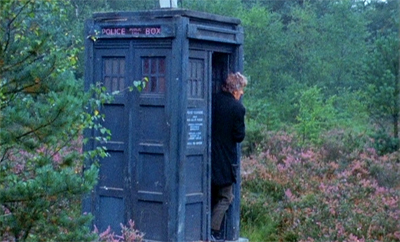
Robot feels a bit like trying to fit a round peg into a square hole, or a Tom-Baker-shaped peg into a Jon-Pertwee-shaped hole. At the time that Baker assumed the role as everybody’s favourite time-travelling phone-booth dweller, Pertwee had just finished the longest stint as the character, portraying the Doctor for five years. Of course, Baker himself would go on to break that record, playing the part for seven years, but it gives you a sense of just how big of a transition it was. As such, it’s easy to understand why outgoing producer Barry Letts felt the need to essentially cast Tom Baker in what feels distinctly like a Jon Pertwee story. As a concept, the central character aside, Robot feels like it would have fit in quite well as part of Pertwee’s last season, which is – I think – part of the problem here.

Tom Baker is a lot of things, but he’s not Jon Pertwee. As a result, Robot feels a little clunkier than it really should, as if the show is actively working against the character who should be driving it.

The Doctor will see you now...

The Doctor will see you now…

Continue reading

Doctor Who: The War Games (Review)

To celebrate the fiftieth anniversary of the longest-running science-fiction show in the world, I’ll be taking weekly looks at some of my own personal favourite stories and arcs, from the old and new series, with a view to encapsulating the sublime, the clever and the fiendishly odd of the BBC’s Doctor Who.

The War Games originally aired in 1969.

Well, what was happening? Why was it so difficult to move?

It was the Time Lords.

But they’re your own people, aren’t they, Doctor?

Yes, that’s right.

Why did you run away from them in the first place?

What? Well, I was bored.

What do you mean, you were bored?

Well, the Time Lords are an immensely civilised race. We can control our own environment, we can live forever, barring accidents, and we have the secret of space time travel.

Well what’s so wrong in all that?

Well we hardly ever use our great powers. We consent simply to observe and to gather knowledge.

And that wasn’t enough for you?

No, of course not. With a whole galaxy to explore? Millions of planets, eons of time, countless civilisations to meet?

Well, why do they object to you doing all that?

Well, it is a fact, Jamie, that I do tend to get involved with things.

– Jamie, the Doctor and Zoe

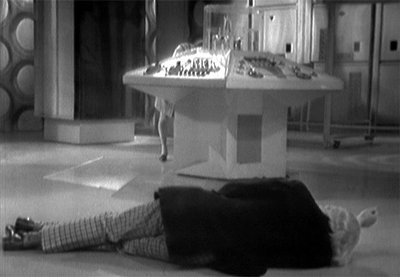
The War Games represents the end of the era. It is the last appearance of Jamie as a regular companion. It is the last show featuring Patrick Troughton as the Doctor, although he would return for the occasional guest spot, celebration or charity episode. It was also the last of the series to be shot in black and white. The transition from Troughton to Pertwee would arguably be one of the most dramatic shifts in the history of the show. Not only would the show suddenly be broadcast in colour, and not only would it feature a new lead actor, but it would also have a new focus, grounded on Earth, and with that a new status quo and new rules. The show was only six years old at the time, but the change must have seemed radical to those watching.

The War Games isn’t the perfect episode – it’s too long and too plodding – but it is a lot more entertaining than some of the longer adventures, and it serves as a fond farewell to the “cosmic hobo” interpretation of the Doctor. Indeed, the episode probably seems a great deal harsher than it did in hindsight, with the specifics of regeneration not quite codified, the Doctor’s forced transformation seemed less like a formal execution than it does to modern audiences who watched the Tenth Doctor plead for more time.

The War Games is an effective and fond farewell to not only a particular iteration of the title character, but also a version of the show as a whole.

Run!

Run!

Continue reading

Doctor Who: The Eleventh Hour (Review)

To celebrate the fiftieth anniversary of the longest-running science-fiction show in the world, I’ll be taking weekly looks at some of my own personal favourite stories and arcs, from the old and new series, with a view to encapsulating the sublime, the clever and the fiendishly odd of the BBC’s Doctor Who.

The Eleventh Hour originally aired in 2010.

So, coming?

No.

You wanted to come fourteen years ago.

I grew up.

Don’t worry. I’ll soon fix that.

– the Doctor and Amy

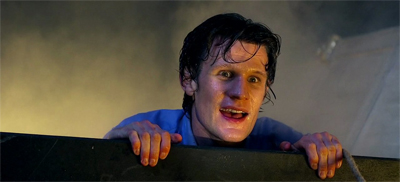
The arrival of a new producer on Doctor Who always represents a shift in some way shape or form. The change from Barry Letts to Philip Hinchcliffe must have seemed radical, even at the time. Graham Williams following Hinchcliffe represented a similarly strange departure. The departure of Russell T. Davies, the producer who had brought Doctor Who back to television after over a decade, was always going be a pretty significant change for those watching. Steven Moffat’s first episode as producer might not seem like it’s a shocking departure from what came before, but it also quite efficiently and effectively distinguishes Moffat’s tenure from that of his direct predecessor.

While by no means as radical a shift as Spearhead from Space, there is a very clear feeling that The Eleventh Hour brings with it significant tonal and thematic changes to the tale of the Doctor.

A mad man with a box...

A mad man with a box…

Continue reading

Doctor Who: Spearhead From Space (Review)

To celebrate the fiftieth anniversary of the longest-running science-fiction show in the world, I’ll be taking weekly looks at some of my own personal favourite stories and arcs, from the old and new series, with a view to encapsulating the sublime, the clever and the fiendishly odd of the BBC’s Doctor Who.

Spearhead from Space originally aired in 1970.

Oh well, at least he won’t get very far.

You mean, before your men shoot him again?

I don’t find that funny.

– The Brigadier and Liz discuss the Doctor’s (second) escape

Looking back now, it’s hard to believe that Spearhead from Space had so much riding on it, if only because of the deft combination of Robert Holmes’ sharp script and Derek Martinus’ confident direction. Indeed, the serial served as something of a second pilot for the show, demonstrating that the survival of the series during the transition between William Hatnell and Patrick Troughton had not been a fluke, broadcasting in colour for the first time, and setting up an entirely new status quo set primarily on present-day Earth. It’s a miracle that it all works so well, let alone that fact that it remains one of the most accessible adventures featuring the character.

We need a Doctor in the TARDIS!

Continue reading

Doctor Who: The Sensorites (Review)

To celebrate the fiftieth anniversary of the longest-running science-fiction show in the world, I’ll be taking weekly looks at some of my own personal favourite stories and arcs, from the old and new series, with a view to encapsulating the sublime, the clever and the fiendishly odd of the BBC’s Doctor Who.

The Sensorites originally aired in 1964.

There’s one thing about it, Doctor. We’re certainly different from when we started out with you.

That’s funny. Grandfather and I were talking about that just before you came in. How you’ve both changed.

Well we’ve all changed.

Have I?

Yes.

Yes, it all started out as a mild curiosity in a junkyard, and now it’s turned out to be quite a, quite a great spirit of adventure, don’t you think?

Yes. We’ve had some pretty rough times and even that doesn’t stop us. It’s a wonderful thing, this ship of yours, Doctor. Taken us back to prehistoric times, the Daleks.

Marco Polo, Marinus.

And the Aztecs.

Yes, and that extraordinary quarrel I had with that English king, Henry the Eighth. You know, he threw a parson’s nose at me.

What did you do?

Threw it back, of course.

– Ian, Susan, Barbara and the Doctor discuss character development

The Sensorites feels like a bit of a mess of an episode. It’s a six-part adventure, but one that feels quite a bit longer than it should be. The trip to Skaro in The Daleks ran for seven episodes, but it never felt quite as padded as this. There are some decent ideas and some nice character moments to be found in The Sensorites, if you’re willing to look hard enough, but there’s also quite a lot of padding, quite a lot of nonsense, and some plot developments that feel just a little bit convenient or contrived. This isn’t Doctor Who at anything approaching its best, but there’s still some measure of potential here.

Using your head...

Using your head…

Continue reading

Doctor Who: The Keys of Marinus (Review)

To celebrate the fiftieth anniversary of the longest-running science-fiction show in the world, I’ll be taking weekly looks at some of my own personal favourite stories and arcs, from the old and new series, with a view to encapsulating the sublime, the clever and the fiendishly odd of the BBC’s Doctor Who.

The Keys of Marinus originally aired in 1964.

While the initial thirteen-episode block helped established Doctor Who, it was the follow-up stories that built on those initial blue-prints. Marco Polo was a historical adventure in the style of An Unearthly Child, paying homage to the original educational aim of the series, designed to teach kids about history and science. However, the real breakout of the initial run had been The Daleks, with those adorable psychotic pepper pots. Keen to capitalise on the success of the futuristic adventure, another adventure serial was commissioned to take place on an alien world, with Terry Nation’s The Keys of Marinus helping to establish science fantasy as a concrete part of the show’s identity.

All a-Voord!

Continue reading

Doctor Who: The Edge of Destruction (Review)

To celebrate the fiftieth anniversary of the longest-running science-fiction show in the world, I’ll be taking weekly looks at some of my own personal favourite stories and arcs, from the old and new series, with a view to encapsulating the sublime, the clever and the fiendishly odd of the BBC’s Doctor Who.

The Edge of Destruction originally aired in 1964.

The Edge of Destruction is an interesting little two-parter. Basically created to fill out a two-episode gap in the end of the initial run of episodes following the four-part An Unearthly Child and the seven-part The Daleks. It wasn’t possible to bring Marco Polo forward into this production block, as it was too long, and there wasn’t any budget provided for a guest cast or for new sets. So, as seemed to happen quite a lot on the show, the production team’s ingenuity forced their creativity. The Edge of Destruction (or Inside the Spaceship) ended up being a two-part “bottle” episode, featuring only the four members of the lead cast.

After seven episodes of The Daleks, I can’t blame the Doctor for wanting a nap…

Continue reading

Doctor Who: The Daleks (Review)

To celebrate the fiftieth anniversary of the longest-running science-fiction show in the world, I’ll be taking weekly looks at some of my own personal favourite stories and arcs, from the old and new series, with a view to encapsulating the sublime, the clever and the fiendishly odd of the BBC’s Doctor Who.

The Daleks originally aired in 1963-4.

Make! no! attempt! to! capture! them! they! are! to! be! exterminated! you! understand! exterminated!

– four episodes in, the Daleks have a catchphrase

Because of the somewhat confusing naming conventions for the Hartnell era, where each individual episode had its own title, this one goes by a variety of names: The Mutants, The Dead Planet, or The Daleks. Still, if you’re reading this, you probably know the serial I’m talking about. It’s the one that introduced everyone’s favourite psychotic little pepper pots.

Taking the plunger…

Continue reading

Doctor Who: The Snowmen (Review)

Snowmen are rubbish in July. You’ll have to be better than that.

– the Doctor points out that the Great Intelligent doesn’t seem especially… intelligent

The Snowmen is a return to the sort of plot-driven Christmas Special that we occasionally saw during the Davies era. Much like The Christmas Invasion was concerned with introducing David Tennant and The End of Time, Part I was focused on wrapping up the Davies era, The Snowmen feels like it’s more concerned with setting up the fiftieth anniversary half-season ahead than it is with being a Christmas Special in its own right.

Sure, The Snowmen has all the festive trappings you might expect. There are killer snowmen, as the title implies. There’s a rich lonely old miser, as we’ve come to expect in these sorts of tales. There’s a nice Victorian setting for all the action as well. However, The Snowmen devotes a considerable amount of time to developing the mystery surrounding the Doctor’s new companion, and setting up a recurring foe for this fiftieth anniversary half-season.

The result is somewhat unsatisfying, as if The Snowmen is working harder to check the requisite boxes than it is to provide seasonal Doctor Who viewing.

What white teeth they have...

What white teeth they have…

Continue reading

Doctor Who: The Angels Take Manhattan (Review)

The decision to build Steven Moffat’s third season of Doctor Who around a series of done-in-one stories has been a bit of a mixed blessing. Asylum of the Daleks was suitably madcap Saturday tea-time telly, and A Town Called Mercy was an affectionate homage to Americana, but Dinosaurs on a Spaceship barely had room to breath, overloaded on cool moments with little room left for plotting.

The Angels Take Manhattan suffers the most from this sense that it is being compacted. Watching the episode, it feels like Moffat is trying to cram too much story into a single forty-five minute episode. It makes the viewer long for the days when Russell T. Davies would gleefully run his episodes over the allocated forty-five minute slot. Here, Moffat’s big high-concept “timey wimey” ideas and his farewell to his two companions eating up so much of the run-time that the plot itself still feels like an afterthought, running on contrivance and coincidence rather than anything more substantial.

That doesn’t mean it isn’t an affective farewell to Rory and Amy, or that it doesn’t draw fantastic performances from its central quartet, but it does mean that The Angels Take Manhattan is never quite as sturdy as it should have been.

A walk in the park…

Continue reading