• Following Us

  • Categories

  • Check out the Archives


  • Awards & Nominations

Doctor Who: Time and the Rani (Review)

To celebrate the fiftieth anniversary of the longest-running science-fiction show in the world, I’ll be taking weekly looks at some of my own personal favourite stories and arcs, from the old and new series, with a view to encapsulating the sublime, the clever and the fiendishly odd of the BBC’s Doctor Who.

Time and the Rani originally aired in 1987.

Right, that all seems quite clear. Just three small points. Where am I? Who am I? And who are you?

– the Doctor

A Doctor’s first story is always difficult. Even if it’s not as explicit as it was in Power of the Daleks, the new actor his constantly fighting against the weight of expectation, trying to cast off the spectre of their predecessor and make the show their own. There’s also a sense that the production team is trying to reinvent the show around their new lead. It’s transitional, and it’s not too difficult to see how the task could be daunting.

If that’s a typical first story, imagine how frustrating Time and the Rani must have been at the time. Hastily cobbled together in a rush, coming out of a season that had been a spectacular failure and with the shadow of cancellation looming heavy, there’s a lot of pressure on Time and the Rani. It is a story that is routinely trashed and mocked, and perhaps deservedly so. However, I must concede, it’s not as bad as it could have been and I’d be very reluctant to rank it among the worst Doctor Who serials of all time.
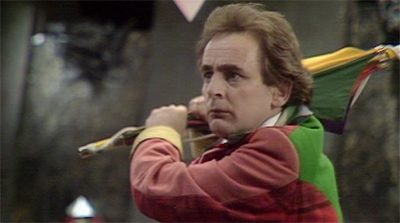
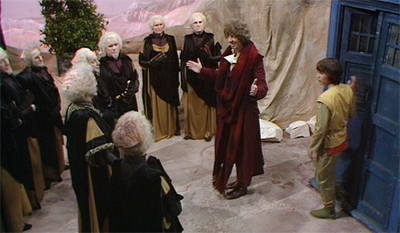
He's got an umbrella and he's not afraid to use it!

He’s got an umbrella and he’s not afraid to use it!

Continue reading

Doctor Who: The Trial of a Time Lord – Terror of the Vervoids (Review)

To celebrate the fiftieth anniversary of the longest-running science-fiction show in the world, I’ll be taking weekly looks at some of my own personal favourite stories and arcs, from the old and new series, with a view to encapsulating the sublime, the clever and the fiendishly odd of the BBC’s Doctor Who.

The Trial of a Time Lord originally aired in 1986.

Mmm. This is a situation that requires tact and finesse. Fortunately, I am blessed with both.

– the Sixth Doctor

Okay, so the “past” and “present” sections of The Trial of a Time Lord haven’t been blow-outs. The Mysterious Planet demonstrated that maybe, once upon a time, Doctor Who had been decidedly average, constructed of a checklist of familiar and inoffensive tropes. Mindwarp demonstrated that Colin Baker’s Doctor was the kind of character who you could probably imagine chaining his companion to a rock on the beach, before leaving her to die… or marry Brian Blessed… or something. But, hey, there was some social commentary! If The Trial of a Time Lord is constructed as a defence by the show to avoid being sentenced to the bleak nether-realms of cancellation, I have to confess that I’m not convinced. And I like the show to begin with.

Still, it’s not a total failure. I mean, whatever the show was or is, it can always be something better, right? And so, this final story, Terror of the Vervoids, could easily prove that the show has a very clear idea of where it’s going next? The future will be better tomorrow, and all that?

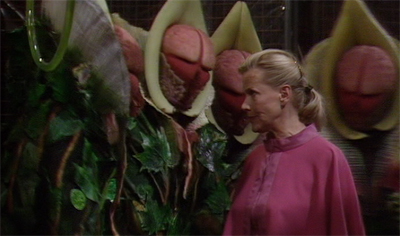
Cue incredibly lame "Pussy Galore" joke...

Cue incredibly lame “Pussy Galore” joke…

Continue reading

Doctor Who: The King’s Demons (Review)

To celebrate the fiftieth anniversary of the longest-running science-fiction show in the world, I’ll be taking weekly looks at some of my own personal favourite stories and arcs, from the old and new series, with a view to encapsulating the sublime, the clever and the fiendishly odd of the BBC’s Doctor Who.

The King’s Demons originally aired in 1983.

Do our demons come to visit us? Bid them attend us.

Demons? Very odd indeed.

Makes a nice change for you not to take everything in your stride, I must say.

– King John, the Doctor and Tegan set the mood

The show’s twentieth anniversary deserved better than this. Okay, there are a number of qualifications that can made, excuses that can be offered. The King’s Demons was never intended to close out the season, and was instead intended as a two-part episode to bridge into the triumphant return of the Daleks, a return that ended up postponed a year and reworked into Resurrection of the Daleks. There’s also the fact that The King’s Demons wasn’t the last piece of Doctor Who to air as part of the show’s twentieth anniversary year, even if it was the season finalé. The Five Doctors would be broadcast later in the year to celebrate the anniversary.

However, none of these excuses take away from the fact that The King’s Demons is an exceptionally weak piece of television, and a demonstration of everything wrong about how John Nathan Turner and the Doctor Who production staff approached the show’s twentieth season.

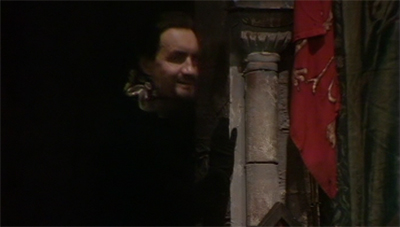
Hardly a Master piece...

Hardly a Master piece…

Continue reading

Doctor Who: Four to Doomsday (Review)

To celebrate the fiftieth anniversary of the longest-running science-fiction show in the world, I’ll be taking weekly looks at some of my own personal favourite stories and arcs, from the old and new series, with a view to encapsulating the sublime, the clever and the fiendishly odd of the BBC’s Doctor Who.

Four to Doomsday originally aired in 1982.

Come along, children. Not in front of our hosts.

– the Doctor finally manages to strike the right tone with his companions

Four to Doomsday is an interesting story, if only because it’s so rarely discussed. The second story of a particular Doctor seems to set the tone for their era. William Hartnell’s second story, The Daleks, introduced the iconic pepperpots. Patrick Troughton’s second serial, The Highlanders, introduced the companion Jamie, who would remain with him for the rest of his tenure. Jon Pertwee’s second story, The Silurians, saw Barry Letts taking over the role of producer. Tom Baker’s second story, The Ark in Space, is one of the most memorable and definitive instances of horror in the history of the show. Colin Baker had the misfortune to have Attack of the Cybermen as his second story, an adventure that set the tone for his time in the TARDIS. Sylvester McCoy didn’t really develop until his second season, but he’s probably the exception that proves the rule.

Peter Davison’s Four to Doomsday, on the other hand, just sort of… is.

Ground control to Major... dammit, why couldn't I get this image a year earlier in the show's run?

Ground control to Major… dammit, why couldn’t I get this image a year earlier in the show’s run?

Continue reading

Doctor Who: Logopolis (Review)

To celebrate the fiftieth anniversary of the longest-running science-fiction show in the world, I’ll be taking weekly looks at some of my own personal favourite stories and arcs, from the old and new series, with a view to encapsulating the sublime, the clever and the fiendishly odd of the BBC’s Doctor Who.

Logopolis originally aired in 1981. It was the second instalment in the “Master” trilogy.

It’s the end… but the moment has been prepared for.

– the Doctor finally figures out what this year has been about

I don’t think the departure of a Doctor has even been a bigger deal than it was with Tom Baker. Sure, Christopher Eccleston’s first season was so fixated on death that his departure seemed preordained, even in the episodes written before his decision to leave. Similarly, Peter Davison’s final year seems designed to demonstrate that the universe is no longer suited to this particular iteration of the Doctor. Maybe David Tennant’s final year is focused on his passing, but the episodes are so spaced out that it makes little difference. However, we’ve just spent an entire year focused on the idea of entropy and decay, the inevitably of change and the notion that death is just a nature part of the cycle of things.

When the Doctor assures his companions that “the moment has been prepared for”, he may as well be looking at the camera, assuring those of us at home that the past year has been spent readying them for the unthinkable: the time when Tom Baker might not be the Doctor.

Final destination?

Final destination?

Continue reading

Doctor Who: Revelation of the Daleks (Review)

To celebrate the fiftieth anniversary of the longest-running science-fiction show in the world, I’ll be taking weekly looks at some of my own personal favourite stories and arcs, from the old and new series, with a view to encapsulating the sublime, the clever and the fiendishly odd of the BBC’s Doctor Who.

Revelation of the Daleks originally aired in 1985.

There’s an argument to be made that Revelation of the Daleks is the only truly classic episode that Doctor Who produced during Colin Baker’s stint in the leading role. I’m not sure I agree – I’d argue that Vengeance on Varos, despite a misleading title, is surprisingly solid and clever – but I can see the logic. In fact, Revelation of the Dalekswas a fitting choice to close out Baker’s first season in the role, the last episode to air before BBC placed the series on hiatus, as it represents the very best of mid-eighties Doctor Who.

We can see right through the Daleks’ plan…

Continue reading

Doctor Who: Destiny of the Daleks (Review)

To celebrate the fiftieth anniversary of the longest-running science-fiction show in the world, I’ll be taking weekly looks at some of my own personal favourite stories and arcs, from the old and new series, with a view to encapsulating the sublime, the clever and the fiendishly odd of the BBC’s Doctor Who.

The Last of the Time Lords originally aired in 1979.

Oh, look! Rocks!

– the Doctor

Destiny of the Daleks is a bit crap. I know that there’s a whole bunch of “a bit crap” Dalek episodes, but Destiny of the Daleks doesn’t suffer because it doesn’t make sense, or it hangs on plot contrivance. Instead, it’s just a little bit dull. At least Resurrection of the Daleks bangs along making no sense in a reasonably exciting manner. In contrast, Destiny of the Daleks just sort of… is. In a way, it serves as the perfect opener to Graham Williams’ final year as producer, perfectly capturing the gap between the production staff the cast and the writers that so often led to bit of a mismatch in this part of the show’s history.

While I have a fondness for Terry Nation, I think it’s perfectly reasonable to argue that his style was hardly progressive or dynamic when he first wrote for the show in 1963. Indeed, my fondness for his work in the early years of the show is mostly down to how it harks backwards to pulpy classic science-fiction. If Nation wasn’t the most forward-looking of writers in 1963, then perhaps he really wasn’t best suited to open a season for Graham Williams and Douglas Adams in 1979.

Romana II goes through one of the oldest companion rites of passage...

Romana II goes through one of the oldest companion rites of passage…

Continue reading

Doctor Who: Remembrance of the Daleks (Review)

To celebrate the fiftieth anniversary of the longest-running science-fiction show in the world, I’ll be taking weekly looks at some of my own personal favourite stories and arcs, from the old and new series, with a view to encapsulating the sublime, the clever and the fiendishly odd of the BBC’s Doctor Who.

Remembrance of the Daleks originally aired in 1988.

You can always judge a man by the quality of his enemies.

– the Doctor explains why the Daleks needed to be badass again

I think Sylvester McCoy’s tenure in the lead role has been vindicated by history. While he may have been the title character as the show slid quietly into cancellation, there’s no denying the massive impact that the show has had on the hugely popular revival. It’s quite something that the McCoy era managed not only inspire both Russell T. Davies and Steven Moffat, but in two radically different ways. Although it kicks off his second year in the role, you could make the argument that all of that really kicks off with Remembrance of the Daleks, which was also a hell of a way to celebrate the show’s twenty-fifth birthday.

They’ll never keep them clean…

Continue reading

Doctor Who: The Tomb of the Cybermen (Review)

To celebrate the fiftieth anniversary of the longest-running science-fiction show in the world, I’ll be taking weekly looks at some of my own personal favourite stories and arcs, from the old and new series, with a view to encapsulating the sublime, the clever and the fiendishly odd of the BBC’s Doctor Who.

The Tomb of the Cybermen originally aired in 1967.

In fact you might say they’ve had a complete metal breakdown.

Oooooh….

I’m sorry, Jamie.

– traveling with the Doctor can be quite pun-ishing

The Tomb of the Cybermen is a bit of miracle. Originally thought lost to history in the great BBC archives purge (along with most of the Troughton era), The Tomb of the Cybermen was recovered completely intact from Hong Kong in 1992, a quarter of a century after the adventure aired and several years after the original series had been cancelled by the BBC. It remains perhaps the most significant recovery in recent memory, and fosters hope that there might be a few other serials that have been preserved in their entirety. Still, even outside of its significant historical context, I’d make the argument that The Tomb of the Cybermen stands as the best adventure to feature the metallic men.

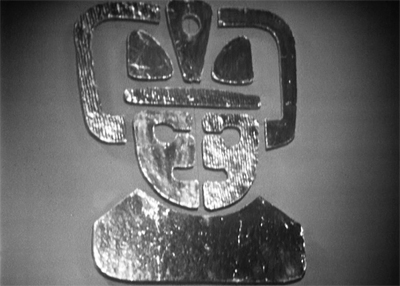
Sealing your tomb…

Continue reading

Doctor Who: Scream of the Shalka (Review)

To celebrate the fiftieth anniversary of the longest-running science-fiction show in the world, I’ll be taking weekly looks at some of my own personal favourite stories and arcs, from the old and new series, with a view to encapsulating the sublime, the clever and the fiendishly odd of the BBC’s Doctor Who.

Scream of the Shalka originally streamed in 2003.

Doctor Who survived its cancellation across a variety of media. There were unofficial videos starring Colin Baker and Sylvester McCoy. There were audio plays. There were mountains of books. The BBC even came up with the clever idea of offering on-line content, with a series of illustrated audio plays, including the Seventh Doctor story Death Comes to Time and the Sixth Doctor adventure Real Time, as well as an adaptation of the aborted Douglas Adams serial Shada. Most of these were little more than powerpoints with sound playing over them. However, for the show’s fortieth anniversary, the BBC came up with an altogether more ambitious idea – a brand new fully animated adventure starring a new Doctor and promising a wave of new adventures, striving boldly forward into the new century.

The Doctor is in…

You can hear the serial, free, here.

Continue reading