• Following Us

  • Categories

  • Check out the Archives


  • Awards & Nominations

Doctor Who: Nightmare in Silver (Review)

I trust the Doctor.

You sure he knows what he’s doing?

I’m not sure I’d go that far.

– Clara and the Captain make sure they’re on the same page

Nightmare in Silver might not be as breathtakingly ambitious as The Doctor’s Wife, but Neil Gaiman’s sophomoric Doctor Who script retains the writer’s charm and wit. A collection of wonderful high concepts thrown together into a blender, distilled to their essence and gleefully sprinkled across forty-five minutes of television, it’s a beautiful reinvention of the Cybermen. After all, the show’s golden anniversary probably wouldn’t be complete without a visit from the Doctor’s silver nemesis.

Face-off!

Face-off!

Continue reading

Doctor Who: Castrovalva (Review)

To celebrate the fiftieth anniversary of the longest-running science-fiction show in the world, I’ll be taking weekly looks at some of my own personal favourite stories and arcs, from the old and new series, with a view to encapsulating the sublime, the clever and the fiendishly odd of the BBC’s Doctor Who.

Castrovalva originally aired in 1982.

Welcome aboard. I’m the Doctor. Or will be if this regeneration works out.

– the Doctor greets Adric

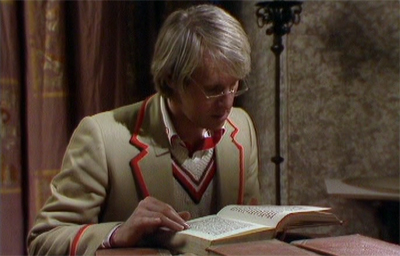
Tom Baker did seven years of Doctor Who. That is impressive. No matter which way you look it, and no matter how cynical you might be, it’s hard to argue that Baker’s departure wasn’t a fundamental and radical change to the series. In fact, his influence is so great that Castrovalva even opens with a rare pre-credits sequence, just to make sure that the viewers know that Baker is gone. (Despite the fact that John Nathan Turner apparently asked that the scene be shot so that the new season could open without having to show Tom Baker.)

Baker was going to be a tough act to follow. In fact, to many people, Tom Baker is still the Doctor. I don’t mean that in a sort of “stubborn fans refusing to acknowledge change” sort of way. I mean that in a “when The Simpsons make a Doctor Who reference they use Tom Baker” sort of way. He cast one hell of a shadow, and it’s hard to truly fathom how daunting it must have been to try and step out from that show.

That Peter Davison manages to do so is nothing short of amazing. Equally impressive is the fact that Castrovalva manages to be its own story. While it suffers – as with so many Bidmead scripts – from the fact that the technical limitations of the show can’t keep pace with his ideas, there’s still a lot to love here. And not just Peter Davison. Though he helps.
“Oh! The brainy specs!”

Continue reading

Doctor Who: Hide (Review)

Say we actually find her. What do we say to her?

We ask her what she is, how she came to be.

Why?

Because I don’t know and ignorance is… what’s the opposite of bliss?

Carlisle.

Yes, Carlyle. Ignorance is Carlyle.

– the Doctor and Clara

Hide is the best episode of Doctor Who to air since The God Complex, almost two years ago. Writing an affectionate tribute to gothic horror Doctor Who, Hide allows even the most skeptical member of the audience to forgive writer Neil Cross for his somewhat clunky script for The Rings of Akhaten. It’s a nostalgic and atmospheric trip back in time, and a reminder of just exactly what this show is capable of, offering a creepy haunted house horror that manages to morph into an epic love story by the time the credits have rolled.

What lies beyond?

What lies beyond?

Continue reading

Doctor Who: Victory of the Daleks (Review)

To celebrate the fiftieth anniversary of the longest-running science-fiction show in the world, I’ll be taking weekly looks at some of my own personal favourite stories and arcs, from the old and new series, with a view to encapsulating the sublime, the clever and the fiendishly odd of the BBC’s Doctor Who.

Victory of the Daleks originally aired in 2010.

Would! you! care! for! some! TEA???!!!

– the Daleks

Ah, the Daleks. They tend to rise and fall. They get built up and then they fall back down. Like the show itself, they come and go in cycles. The Dalek Invasion of Earth has the psychotic pepperpots invade Earth, while The Chase reduces them to little more than comic foils. Destiny of the Daleks makes jokes about them being unable to climb stairs, while Remembrance of the Daleks then proves that they can. In 2005, both Dalek and The Parting of the Ways invested considerable effort in making them scary again. The show eroded that away over time, turning them into bitchy foils for the Cybermen in Doomsday for the Doctor to hover up and competing to create the most phallic monster ever in Evolution of the Daleks.

Steven Moffat took over the show in 2010, and that means that he also took over the Daleks. Tending to the Doctor also means tending to his worst enemies. And, to be fair, that’s a bit what Victory of the Daleks feels like. It feels like an obligation, a bit of business to get out of the way quickly (the first episode not penned by Moffat) so that the fun stuff can commence.

Exterminate the rainbow...

Exterminate the rainbow…

Continue reading

Doctor Who: The Bells of St. John (Review)

There’s something in the wifi.

– the Doctor does his best Jaws impression

The Bells of St. John is an intriguing piece of Doctor Who. This is the first time that the show has had to manage a companion swap in the middle of a season. That said, it doesn’t really work to think of the seventh season as a single cohesive entity.

The first five episodes are something of an abridged season, akin to the 2009 season of specials starring David Tennant. They are dedicated to tidying away lingering plot threads from the last two years of the show, and resolving Moffat’s lingering plot threads. The Power of Three and The Angels Take Manhattan are very much about tidying up the Doctor’s lingering connection to Rory and Amy.

In contrast, the second half of the season has a much more celebratory feeling to it, tied together by the over-arching mystery around Clara. While Clara pops up in Asylum of the Daleks, she’s very much a teaser of a mystery to come rather than a character in her own right. Instead, the themes of the season start in The Snowmen, introducing (or reintroducing) the Great Intelligence and Clara, and outlining the mystery of “the twice-dead girl.”

As a result, The Bells of St. John feels very much like a season opener to an unfortunately brief season of celebration.

Maybe that should be "thrice dead"?

Maybe that should be “thrice dead”?

Continue reading

Doctor Who: Frontios (Review)

To celebrate the fiftieth anniversary of the longest-running science-fiction show in the world, I’ll be taking weekly looks at some of my own personal favourite stories and arcs, from the old and new series, with a view to encapsulating the sublime, the clever and the fiendishly odd of the BBC’s Doctor Who.

Frontios originally aired in 1984.

“You know, we can sort this all out in no time at all, if everyone just stays calm.”

– The Doctor sums up the tragedy of Peter Davison’s time as the Timelord

Towards the end of Peter Davison’s time in the title role, Doctor Who was becoming gradually darker. While Colin Baker’s brightly-coloured take on the character would convert this grim fare into a surreal and grotesque pantomime, there was something tragic about Davison’s iteration confronting a quickly darkening universe. Steven Moffat once explained, “this Doctor takes the emphasis off the eccentricities and turns it into a pained heroism of a man who is so much better than the universe he is trying to save but cannot bear to let it stand”, and that’s very much the case here. While the cynicism and pointless darkness would reach their zenith during Resurrection of the Daleks and pay off spectacularly in The Caves of Androzani, Frontios feels like the perfect illustration of these ideas.

The Doctor's surgery...

Continue reading

Doctor Who: Remembrance of the Daleks (Review)

To celebrate the fiftieth anniversary of the longest-running science-fiction show in the world, I’ll be taking weekly looks at some of my own personal favourite stories and arcs, from the old and new series, with a view to encapsulating the sublime, the clever and the fiendishly odd of the BBC’s Doctor Who.

Remembrance of the Daleks originally aired in 1988.

You can always judge a man by the quality of his enemies.

– the Doctor explains why the Daleks needed to be badass again

I think Sylvester McCoy’s tenure in the lead role has been vindicated by history. While he may have been the title character as the show slid quietly into cancellation, there’s no denying the massive impact that the show has had on the hugely popular revival. It’s quite something that the McCoy era managed not only inspire both Russell T. Davies and Steven Moffat, but in two radically different ways. Although it kicks off his second year in the role, you could make the argument that all of that really kicks off with Remembrance of the Daleks, which was also a hell of a way to celebrate the show’s twenty-fifth birthday.

They’ll never keep them clean…

Continue reading

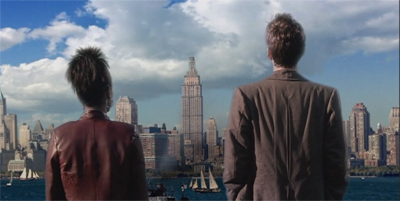
Doctor Who: Daleks in Manhattan (Review)

To celebrate the fiftieth anniversary of the longest-running science-fiction show in the world, I’ll be taking weekly looks at some of my own personal favourite stories and arcs, from the old and new series, with a view to encapsulating the sublime, the clever and the fiendishly odd of the BBC’s Doctor Who.

Daleks in Manhattan originally aired in 2007.

We must evolve! Evolve! Evolve!

– Dalek Sec has perhaps the most out-of-character moment for a Dalek ever

The concept of Daleks in the past is a great idea. However, with the exception of Evil of the Daleks, it is also a bit of a tricky one. Steven Moffat found that out with the first Dalek story of his tenure, Victory of the Daleks, bringing the Daleks to the Second World War. However, Russell T. Davies tried telling a Dalek story set in the past as part of the show’s third season. The Parting of the Ways had featured a Dalek story set in the future, while Doomsday saw the fiends lay siege to modern-day London. Placing the Daleks in 1930s New York seems a staggeringly ambitious proposition.

It's a hell of a town...

It’s a hell of a town…

Continue reading

Doctor Who: Scream of the Shalka (Review)

To celebrate the fiftieth anniversary of the longest-running science-fiction show in the world, I’ll be taking weekly looks at some of my own personal favourite stories and arcs, from the old and new series, with a view to encapsulating the sublime, the clever and the fiendishly odd of the BBC’s Doctor Who.

Scream of the Shalka originally streamed in 2003.

Doctor Who survived its cancellation across a variety of media. There were unofficial videos starring Colin Baker and Sylvester McCoy. There were audio plays. There were mountains of books. The BBC even came up with the clever idea of offering on-line content, with a series of illustrated audio plays, including the Seventh Doctor story Death Comes to Time and the Sixth Doctor adventure Real Time, as well as an adaptation of the aborted Douglas Adams serial Shada. Most of these were little more than powerpoints with sound playing over them. However, for the show’s fortieth anniversary, the BBC came up with an altogether more ambitious idea – a brand new fully animated adventure starring a new Doctor and promising a wave of new adventures, striving boldly forward into the new century.

The Doctor is in…

You can hear the serial, free, here.

Continue reading

Doctor Who: The Vampires of Venice (Review)

To celebrate the fiftieth anniversary of the longest-running science-fiction show in the world, I’ll be taking weekly looks at some of my own personal favourite stories and arcs, from the old and new series, with a view to encapsulating the sublime, the clever and the fiendishly odd of the BBC’s Doctor Who.

The Vampires of Venice originally aired in 2010.

Tell me the whole plan!

One day that will work.

– the Doctor

The Vampires of Venice is interesting because it looks very different in 2013 as compared to when it was originally broadcast in 2010. In 2010, it looked a bit overly familiar, a collection of the tropes and storytelling tricks that we took for granted in the show under Russell T. Davies. The elements felt, at the time, a little over-familiar. Indeed, it seemed like Toby Whithouse’s script owed a great deal to his earlier adventure School Reunion.

However, Doctor Who looks very different in 2013. The show has definitely radically changed, so that these familiar plot points don’t seem quite so familiar any longer. Whereas The Vampires of Venice didn’t feel so strange after five years of Russell T. Davies, it does seem a bit more unique after three years of Steven Moffat. It doesn’t seem so much an attempt to repackage these story elements as it does one final celebration of them, a fond farewell to many of the narrative bits and pieces that we’d come to take for granted.

How times change.

A late-night bite...

A late-night bite…

Continue reading