• Following Us

  • Categories

  • Check out the Archives


  • Awards & Nominations

Star Trek: The Next Generation – Manhunt (Review)

This January and February, we’ll be finishing up our look at the second season of Star Trek: The Next Generation and moving on to the third year of the show, both recently and lovingly remastered for high definition. Check back daily for the latest review.

There’s a strange sense of fatigue as we come towards the end of the second season of Star Trek: The Next Generation, as if the effort of producing Q Who? has really just drained the show of any ambition or drive. To be fair, there are probably more banal motivations at play. The 1988 Writers’ Strike had taken the entire industry by surprise and has been credited with dropping television ratings by ten percent. It damaged the tail end of the first season, causing an improvised conclusion to We’ll Always Have Paris and is probably responsible for the mess that was The Neutral Zone.

The damage also bled into the second season. Even closing with a clip show, Shades of Grey, the second season wasn’t able to meet the average quota of twenty-six episodes per season. The season premiere, The Child, had to be hastily repurposed from an aborted script for Star Trek: Phase II. Even with the shortened orders, the second season of The Next Generation frequently saw episodes coming in behind schedule and above budget. This is one of the reasons that Rob Bowman, despite being responsible for two of the season’s strongest episodes (Elementary, Dear Data and Q Who?), did not become a regular director.
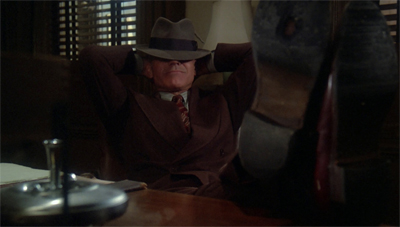
"It's a good time for nap time..."

“It’s a good time for nap time…”

Behind the scenes, the show seemed to be threatening to pull itself apart. Tracy Tormé and Maurice Hurley were frequently at loggerheads with one another over all manner of issues. Tormé was only allowed to register two pseudonyms with the Writers’ Guild of America, he used both on the second season of The Next Generation, protesting over modifications made to his script. It’s no wonder that the writers’ room pretty much exploded at the end of the season, with both Tormé and Hurley departing. When Michael Piller was put in charge on the third season, he had to pretty much start from scratch.

All of which explains why the tail end of the second season seems so lifeless and limp. The Emissary is really the only second season script with any life in it once the show gets past Q Who? Most of the rest of the season seems to trying to limp across the finish line. Still, even with all of that in mind, Manhunt feels a little mean-spirited. It’s an episode designed to mock at Lwaxana Troi, to reduce a middle-aged woman going through a process explicitly compared to menopause to the butt of some particularly harsh joke. It’s hard to find that all that amusing.
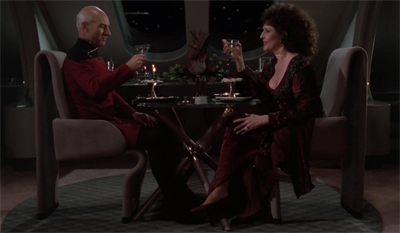
Starlit dinner...

Starlit dinner…

Continue reading

Star Trek – The Wounded Sky by Diane Duane (Review)

This January and February, we’ll be finishing up our look at the second season of Star Trek: The Next Generation and moving on to the third year of the show, both recently and lovingly remastered for high definition. Check back daily for the latest review.

We’ll be supplementing our coverage of the episodes with some additional materials – mainly novels and comics and films. This is one such entry. This is actually supplementary to the first season of the Next Generation, specifically the episode Where No One Has Gone Before.

Diane Duane remains one of the most influential Star Trek tie-in writers ever to work on the franchise. She has been involved in publishing tie-in books pretty consistently since the early days of the publishing line. The Wounded Sky, her first tie-in novel, was lucky number thirteen in the “Pocket TOS” range, published in 1983. Her most recent tie-in novel, The Empty Chair, was published in 2006. As well as a distinguished career outside of Star Trek, she has written novels and comics for the franchise. She even has a television credit, for her work on the teleplay for Where No One Has Gone Before.

There’s a reason that Duane’s contributions to Star Trek fiction are held in such a high regard, and those reasons are quite clear on reading The Wounded Sky. It’s a beautiful and thoughtful piece of prose set within the Star Trek universe, one more concerned with continuing and advancing the spirit of exploration established in the television show than meddling in continuity minutiae or offering generic adventures starring James Tiberius Kirk.

It’s a whole-hearted recommendation for any fan of the original series.

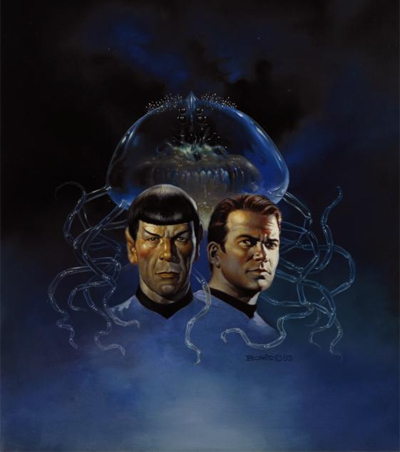
tos-thewoundedsky

Continue reading

Star Trek: Strange New Worlds VI – The Beginning (Review)

This January and February, we’ll be finishing up our look at the second season of Star Trek: The Next Generation and moving on to the third year of the show, both recently and lovingly remastered for high definition. Check back daily for the latest review.

We’ll be supplementing our coverage of the episodes with some additional materials – mainly novels and comics and films. This is one such entry.

The Borg are, quite possibly, the most significant addition to the Star Trek mythos since the Klingons. They are one of the few modern pieces of Star Trek lore that will be instantly recognisable to a broader audience. They have featured, in some way, in all four of the Star Trek spin-off series. They are constantly rumoured and suggested as a viable antagonist for the rebooted film series. The Borg are a pretty big deal.

And yet, like so many pop culture villains, they seem less threatening the more we know about them. One of the more frequent complaints about the use of the Borg in Star Trek: Voyager was that it made the aliens more familiar, more understandable, more relatable. Continuing to build off the premise of the Borg Queen in Star Trek: First Contact, the Borg became an alien species that Janeway would reason and negotiate with, in stark contrast to Q’s characterisation of the collective in Q Who?

Although Star Trek: Enterprise did manage to turn the Borg’s fascination with mankind into a causal loop, televised Star Trek never managed to produce an origin story for those cybernetic monsters. Ever ready to fill in a perceived blank in the canon, the expanded Star Trek universe has actually proposed a number of origins for the Borg.

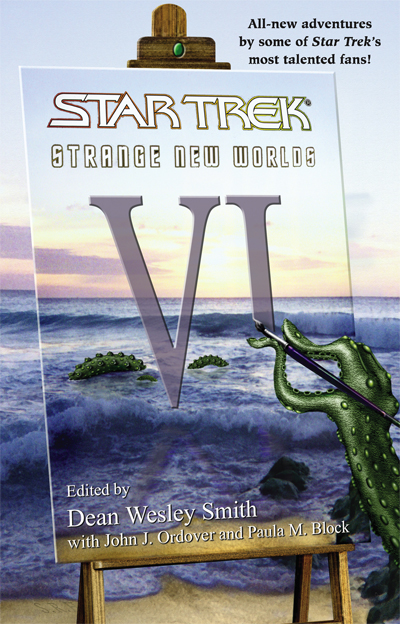
st-strangenewworlds6

Continue reading

Star Trek: The Lost Era – Deny Thy Father by Jeff Mariotte (Review)

This January and February, we’ll be finishing up our look at the second season of Star Trek: The Next Generation and moving on to the third year of the show, both recently and lovingly remastered for high definition. Check back daily for the latest review.

We’ll be supplementing our coverage of the episodes with some additional materials – mainly novels and comics and films. This is one such entry.

In theory, you can probably tell a good story about just about anything. There’s a knack to constructing a narrative and in making particular characters fascinating or compelling. In the right hands, even the most tired and boring premise can generate some measure of excitement and over a glimpse of depth that we never thought was there. For example, I didn’t come out of Star Trek: Generations thinking that I’d ever read a classic story about John Harriman, and then I read the superb Serpents Among the Ruins.

However, some ideas strike you as a little less exciting than others. Some concepts seem a bit riskier to pull off, a bit more daunting in scope. Constructing a compelling narrative around the youth of Commander William T. Riker, probably one of the blandest members of the Star Trek: The Next Generation ensemble, seems like an uphill struggle.

Unfortunately, Jeff Mariote’s Deny Thy Father isn’t up to the task of making the boring father-son relationship glimpsed in The Icarus Factor seem any more exciting.

tng-denythyfather

Continue reading

Star Trek: The Next Generation – The Royale (Review)

This January and February, we’ll be finishing up our look at the second season of Star Trek: The Next Generation and moving on to the third year of the show, both recently and lovingly remastered for high definition. Check back daily for the latest review.

“None of it makes any sense, sir,” Riker succinctly states before the credits role on The Royale. The Royale is a decidedly nonsensical episode of Star Trek: The Next Generation, where an away team find themselves trapped inside an atrocious casino melodrama and have to figure out how to return to the ship. The episode is packed with interesting visuals and a bizarre situations, but it never quite comes together in the end.

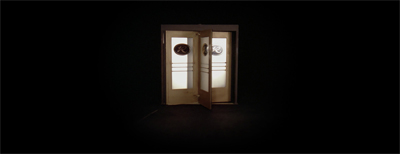
And, yet, despite the obvious problems, The Royale is intriguing. Visually, it’s one of the most striking and memorable episodes of the show’s first two season. The rotating door to nowhere is a beautifully strange image, and the sight of the Enterprise away team wandering around a twentieth century casino is enough to prevent the episode from ever becoming boring. The Royale isn’t the best constructed episode of the show’s first two years, and it has more than its fair share of problems.

However, it’s also a wonderfully bizarre and adventurous piece of science-fiction, as if Riker has beamed into a cheap imitation of The Twilight Zone. That’s enough to make it well worth a watch.

The whole plot revolves around absurdities...

The whole plot revolves around absurdities…

Continue reading

Star Trek: The Next Generation – The Sky’s The Limit: Meet with Triumph and Disaster & Trust Yourself When All Men Doubt You by Michael Schuster & Steve Mollmann (Review)

This January and February, we’ll be finishing up our look at the second season of Star Trek: The Next Generation and moving on to the third year of the show, both recently and lovingly remastered for high definition. Check back daily for the latest review.

We’ll be supplementing our coverage of the episodes with some additional materials – mainly novels and comics and films. This is one such entry. This is actually supplementary to the first season of the Next Generation, specifically the episode Encounter at Farpoint.

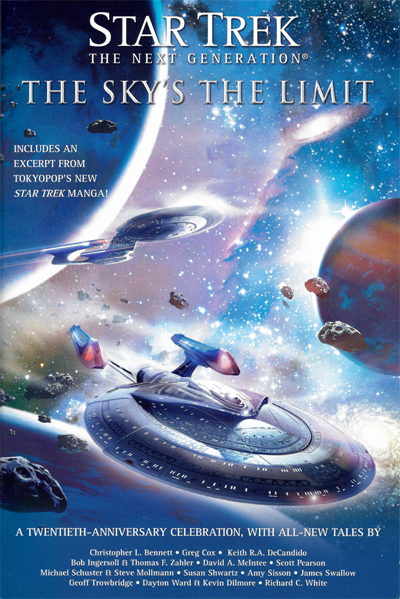
The Sky’s the Limit was an anthology released to celebrate the twentieth anniversary of Star Trek: The Next Generation in 2007. It was a bit of a no brainer, edited by the wonderful Marco Palmieri in the style of anthologies like The Lives of Dax or Prophecy and Change. The goal was to draw together a bunch of talented writers to fashion stories involving the crew and the ship at various stages in the life cycle of the Enterprise. There is a short story for every season of the show, save the fourth, and between each of the movies.

tng-theskysthelimit

Continue reading

Star Trek: The Next Generation – Contagion (Review)

This January and February, we’ll be finishing up our look at the second season of Star Trek: The Next Generation and moving on to the third year of the show, both recently and lovingly remastered for high definition. Check back daily for the latest review.

Contagion is a nice reminder that the average quality of Star Trek: The Next Generation is improving. While the stand-out episodes of the second season of The Next Generation tend to attract a lot of attention, the more solid episodes tend to get a bit lost in the discussion. Contagion doesn’t rank alongside Elementary, Dear Data, A Matter of Honour, The Measure of a Man or Q Who?, but it’s still demonstrating that we’ve reached a point where the show can churn out a pretty good episode without it feeling like a special occasion.

It’s a bit of a shame, then, that Contagion comes from two individuals outside the show’s writers’ room.

The Yamato rests in pieces...

The Yamato rests in pieces…

Continue reading

Star Trek: The Next Generation – Masks by John Vornholt (Review)

This January and February, we’ll be finishing up our look at the second season of Star Trek: The Next Generation and moving on to the third year of the show, both recently and lovingly remastered for high definition. Check back daily for the latest review.

We’ll be supplementing our coverage of the episodes with some additional materials – mainly novels and comics and films. This is one such entry.

Generally, I’ve been looking at novels and tie-ins that are specifically or thematically related to specific episodes of Star Trek: The Next Generation. It’s a valid approach to writing about the show, searching out material that expands or develops themes and concepts and characters lightly touched upon during the episode in question. However, some times it is also worth taking time out to look at what was happening in tie-in fiction at approximately the same time.

Obviously, the scripts written by writers working on the show were the result of a careful creative process drawing input from the writers in general, the producers and the studio. They were crafted with a key eye to shaping the future direction of the show, by the people working on the show. Looking at official tie-in material from the same time allows us to venture a bit outside that circle, and to get a glimpse of what The Next Generation might have looked like to a creator outside the writers’ room as it was going to air.

Masks was published in July 1989, after Shades of Grey had aired and the second season had limped off the screen. While author John Vornholt obviously could not have seen the whole season on submitting his novel, it is interesting to get his view of the sci-fi spin-off in its sophomore season.

tng-masks

Continue reading

Star Trek: The Next Generation – The Dauphin (Review)

This January and February, we’ll be finishing up our look at the second season of Star Trek: The Next Generation and moving on to the third year of the show, both recently and lovingly remastered for high definition. Check back daily for the latest review.

The Dauphin ends what looked like the beginning of a winning streak for the second season of Star Trek: The Next Generation. Both A Matter of Honour and The Measure of a Man represented a significant shift in gear for the show – a demonstration of just what The Next Generation was capable of at the top of its game. The Dauphin, in contrast, is a decidedly generic little episode.

It doesn’t help that it’s a character episode devoted to Wesley Crusher as a teenage protagonist on the Enterprise. Wesley was always a character who posed a bit of a problem for the show. There were times when bad writing and Wheaton’s less-than-nuanced performance saw the character threatening to turn The Next Generation into a plucky teenage science-fiction adventure series. Watch the boy genius save the ship while the trained professionals around him are useless!

While A Matter of Honour teased a way of making Wesley work in the context of the show, The Dauphin falls back into familiar traps. It’s a poorly-written teenage romance with some awful dialogue and two rather wooden leads, using familiar Star Trek trappings.

A rocky relationship?

A rocky relationship?

Continue reading

Star Trek: The Next Generation – The Measure of a Man (Review)

This January and February, we’ll be finishing up our look at the second season of Star Trek: The Next Generation and moving on to the third year of the show, both recently and lovingly remastered for high definition. Check back daily for the latest review.

Ah, The Measure of a Man.

It’s the first point in the run of Star Trek: The Next Generation where we’ve reached an episode that could legitimately be ranked as one of the best that the show would ever produce. Even today, the episode remains a favourite of Star Trek fans around the world, and a superb demonstration of what the series is capable of. Almost half-way into the second season, we get a glimpse of what The Next Generation could be, and how it balance its own identity against the proud philosophical traditions of its parent series.

It’s also quite brilliant.

A Data with destiny...

A Data with destiny…

Continue reading