• Following Us

  • Categories

  • Check out the Archives


  • Awards & Nominations

Star Trek: Khan – Ruling in Hell (Review)

This June, we’re taking a look at some classic Star Trek movie tie-ins and other interesting objects. Check back daily for the latest reviews and retrospectives.

Khan is a massively important figure in the grand mythology of Star Trek.

One need only look to Star Trek Into Darkness as proof of that assertion – a film that trades on how iconic the name “Khan” is, even to the most casual of fans. However, despite the fact that Khan has only appeared in a single episode and two feature films, each spaced apart by more than a decade, the character continues to exert a strong pull over the rest of the franchise. He is arguably more iconic and well-known than any lead character from a show produced after Star Trek: The Next Generation.

War of the supermen...

War of the supermen…

After all, Khan’s influence can be felt on just about every iteration of the franchise. On Star Trek: Deep Space Nine, he haunted the character of Julian Bashir. When the fourth season of Star Trek: Enterprise began its high-profile journey into the franchise’s continuity, Khan became something of a touchstone. The season’s first three-part episode (Borderland, Cold Station 12 and The Augments) was devoted to exploring the legacy of Khan Noonien Singh. Indeed, the show even tied Khan into the origin of the flat-foreheaded Klingons in Affliction and Divergence.

And yet, despite all this, there really is only so much material the character can support. Khan Noonien Singh is an iconic bad guy, but there’s a point where he ends up over-saturated.

The sands of time...

The sands of time…

Continue reading

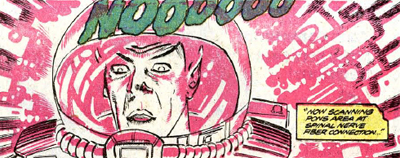
Star Trek II: The Wrath of Khan (IDW, 2009) #1-3 (Review)

This June, we’re taking a look at some classic Star Trek movie tie-ins and other interesting objects. Check back daily for the latest reviews and retrospectives.

Due to bad timing, the Star Trek comic book license was between publishers when Star Trek II: The Wrath of Khan was released into cinemas in 1982. As the license transitioned between Marvel and DC, the movie adaptation got lost in the shuffle. As a result, the film was the only classic Star Trek film without a contemporary comic book adaptation. It remained that way for over a quarter of a century.

However, on the release of JJ Abrams’ rebooted Star Trek, current license holder IDW decided to release an omnibus of the classic movie adaptations as a tie-in. In doing so, they discovered a Wrath-of-Khan-sized hole in the collection, and so set about filling it with a three-issue miniseries that could be included in the omnibus for completeness’ sake.

Stationary orbit...

Stationary orbit…

Continue reading

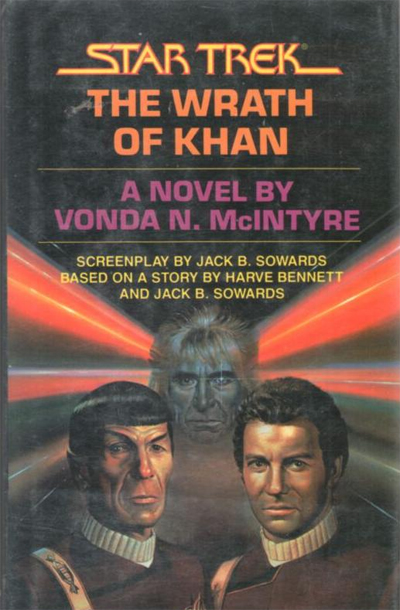
Star Trek II: The Wrath of Khan by Vonda N. McIntyre (Review)

This June, we’re taking a look at some classic Star Trek movie tie-ins and other interesting objects. Check back daily for the latest reviews and retrospectives.

Gene Roddenberry novelised Star Trek: The Motion Picture. While there’s some lingering discussion about whether Roddenberry actually wrote the novelisation, the book reads like the work of a screenwriter turning his hand to prose. It’s more of a manifesto than a novel – an excuse for Roddenberry to expand on his utopian vision for the franchise.

In contrast, Vonda N. McIntyre was hired to write the novelisation of Star Trek II: The Wrath of Khan. Unlike Roddenberry, McIntyre was an experienced and professional novelist. She had been writing since the mid-seventies, and had a wealth of experience in both media tie-ins and her own original work. In fact, McIntyre wrote The Entropy Effect, the book published directly after the publication of The Motion Picture, and only the second Star Trek book published by Pocket Books.

All of this is a very round-about way of explaining that The Wrath of Khan is very much an adaptation in a way that The Motion Picture simply was not.

st-twk-novel

Continue reading

Star Trek – Untold Voyages (Review)

This June, we’re taking a look at some classic Star Trek movie tie-ins and other interesting objects. Check back daily for the latest reviews and retrospectives.

There’s something of a continuity lacuna that exists between Star Trek: The Motion Picture and Star Trek II: The Wrath of Khan. Although the movies were released three years apart, more time appears to have passed for the characters themselves. Some of the changes are quite startling. After fighting so hard to get the Enterprise back in The Motion Picture, Kirk has retired to Earth once again at the start of The Wrath of Khan. After putting the Enterprise back in action in The Motion Picture, it has been converted into a cadet cruiser in The Wrath of Khan.

A lot of stuff has happened, and the gap is relatively under-explored by tie-in material. In contrast, the gap between The Turnabout Intruder (or The Counter-Clock Incident) and The Motion Picture is filled with all sorts of material designed to offer the show the type of closure that it never got on television. The same is true of the gap between The Cage and Where No Man Has Gone Before, with books and comics eager to offer accounts of Pike’s time in command and the transition to Captain James Tiberius Kirk.

Star Trek: Untold Voyages is a five-issue Marvel Comics series published in 1998 designed to bridge The Motion Picture and The Wrath of Khan. Although it wallows a bit in continuity and references, writer Glenn Greenberg uses the series to make some very clever and introspective points about Star Trek as a franchise – in effect, cleverly transitioning from Gene Roddenberry’s “future humans are the best” attitude toward Nicholas Meyer’s more reflective and introspective take on the characters and their world.

Shining star...

Shining star…

Continue reading

Star Trek – The Entropy Effect by Vonda N. McIntyre (Review)

This June, we’re taking a look at some classic Star Trek movie tie-ins and other interesting objects. Check back daily for the latest reviews and retrospectives.

The Pocket Books Star Trek line has to be one of the most stable and successful tie-in book ranges in the world. While the comic book license has bounced from publisher to publisher, Star Trek prose has remained firmly rooted at Pocket Books through the highs and the lows of the Star Trek franchise. This is undoubtedly because Pocket Books is a subsidiary of Simon and Schuster, which has been owned by the company that has owned Star Trek since 1975.

As such, from 1979 until the present day, Pocket Books has produced an incredible amount of tie-in material to support the Star Trek franchise. From reference material through to novels set within the fictional universe, the line has published a wealth of material across all the shows and all the time frames. Indeed, Pocket even launched their own separate spin-off brands run by authors like Peter David or Keith R.A. DeCandido.

While Gene Roddenberry’s novelisation of Star Trek: The Motion Picture was the first official Star Trek novel published by Pocket Books, and the line had published a number of reference books in the interim, Vonda N. McIntyre’s The Entropy Effect is the first original novel published by Pocket Books. In many ways, the influence of McIntyre’s work is still being felt, as she demonstrated how best to approach a Star Trek tie-in novel.

theentropyeffect

Continue reading

Star Trek (Marvel Comics, 1979) #1-3 – The Motion Picture (Review)

This June, we’re taking a look at some classic Star Trek movie tie-ins and other interesting objects. Check back daily for the latest reviews and retrospectives.

What better way to announce the arrival of Star Trek at Marvel Comics than with an adaptation of Star Trek: The Motion Picture? Initially published as a giant Marvel Super-Size issue, the adaptation was subsequently split across the opening three issues of Marvel’s ill-fated Star Trek monthly.

It is worth noting that the franchise’s initial association with Marvel was relatively brief, with the Star Trek monthly series only lasting eighteen issues from 1979 through to 1982. In 1982, the Star Trek comic book franchise moved to DC Comics, where it remained until the nineties. Things became a bit more complicated at that stage, but it was a long-term relationship.

Still, in 1979, Marvel became the second company to publish monthly comics based around the Star Trek license. However, they were a substantially more impressive operation than Gold Key Comics, the previous license-holder. For example, this adaptation of The Motion Picture comes from some very talented creators, and its publication was treated as something of an event.

The light at the end of the tunnel...

The light at the end of the tunnel…

Continue reading

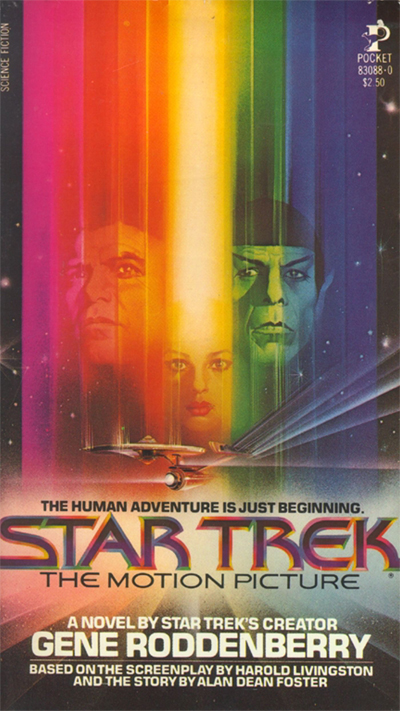
Star Trek: The Motion Picture by Gene Roddenberry (Review)

This June, we’re taking a look at some classic Star Trek movie tie-ins and other interesting objects. Check back daily for the latest reviews and retrospectives.

Star Trek: The Motion Picture is heavily influenced by Gene Roddenberry. It’s a piece of work that serves as an example of Roddenberry’s vision of the franchise – what he felt Star Trek should look like in the late seventies and beyond. Much like the first and second seasons of Star Trek: The Next Generation, there’s a sense that this is the perfect distillation of Roddenberry’s later-day version of Star Trek, distinct from the versions that existed before and afterwards.

Although Roddenberry doesn’t have a writing or story credit on The Motion Picture, his influence is keenly felt; right down to hiring a bona fides science-fiction writer (Alan Dean Foster) to provide the story. (After hearing pitches from other authors like Ray Bradbury, Harlan Ellison and Theodor Sturgeon.) This was in keeping with his work on the early seasons of the show, where he tried to convince published science-fiction authors to contribute to Star Trek.

While Roddenberry doesn’t have a writing credit on the film, he did write the novelisation of the screenplay, which serves as a direct insight into how Roddenberry approached the franchise and how he saw Star Trek in 1979.

st-tmp-roddenberry

Continue reading

Star Trek: Phase II (1978) – In Thy Image (Review)

This June, we’re taking a look at some classic Star Trek movie tie-ins. Check back daily for the latest reviews and retrospectives.

It’s interesting to imagine what might have happened if Star Trek: Phase II had actually made it to television.

The aborted attempt to produce a sequel live-action television show in the late seventies was ultimately scuppered by the success of films like Star Wars and Close Encounters of the Third Kind. Prompted by the success of these big-screen science-fiction epics, Paramount pushed for the franchise to move to the big screen. Star Trek: Phase II was abandoned and the pilot – In Thy Image – was reimagined as the script for Star Trek: The Motion Picture.

Many, including Judith and Garfield Reeves-Stevens, have argued that this was for the best. They wonder whether Phase II could have competed in the saturated science-fiction market of the late seventies. After all, one of the factors that lead to the decline of the franchise in the late nineties was the abundance of similar material out there. Given that the plan was to use Phase II to launch a television network, the obvious point of comparison as Star Trek: Voyager, which is not a favourable comparison.

Still, despite all this, it’s hard not read In Thy Image and wonder at what might have been.

st-iti7

Continue reading

Star Trek: The Next Generation – Brothers (Review)

This January and February, we’ll be finishing up our look at the second season of Star Trek: The Next Generation and moving on to the third year of the show, both recently and lovingly remastered for high definition. Check back daily for the latest review.

Brothers is Star Trek: The Next Generation getting back to business at usual. Well, not quite usual, but close enough. Following the monumental season-bridging epic that was The Best of Both Worlds and the breathing space afforded by Family, Brothers is a good old-fashioned science-fiction adventure story revolving around one of the show’s most popular character and really written to satisfy a laundry list of Star Trek tropes and conventions.

Although its notable for maintaining a thematic consistency that is threaded through the fourth season, and also for affording Brent Spiner to play three different roles, the most striking aspect of Brothers from a production point of view is the fact that it is written by Rick Berman. Berman had been serving as producer on the show since Encounter at Farpoint, but this was his first scripting contribution. He’d only write one more episode of The Next Generation before the show went off the air.

Given Berman’s production style, it feels strangely appropriate that Brothers is so carefully and meticulously structured and constructed.

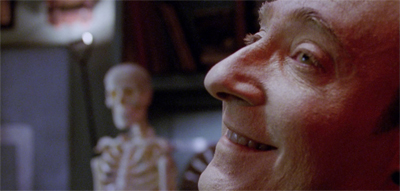
"Let's put a smile on that face..."

“Let’s put a smile on that face…”

Continue reading

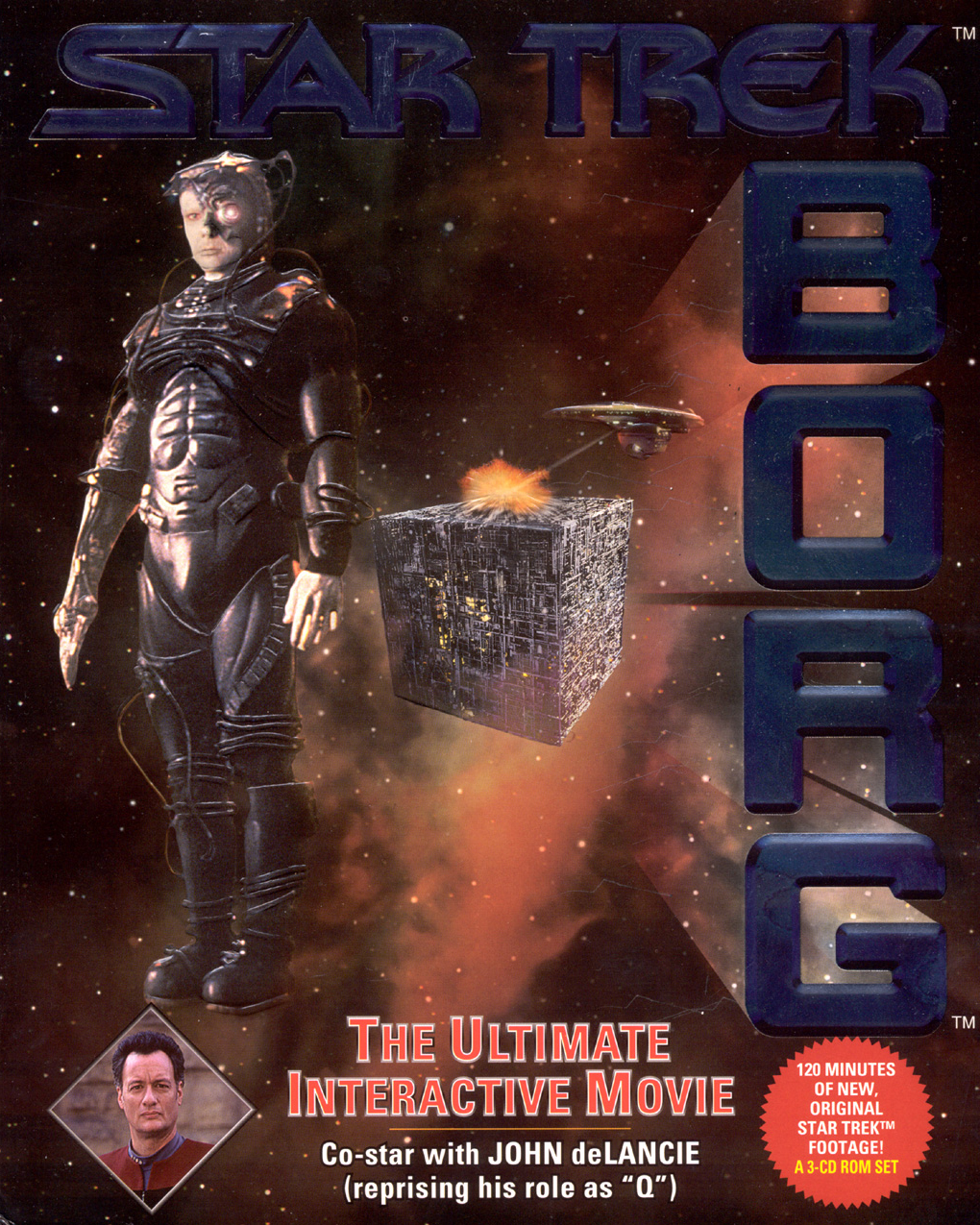
Star Trek: Borg (Review)

This January and February, we’ll be finishing up our look at the second season of Star Trek: The Next Generation and moving on to the third year of the show, both recently and lovingly remastered for high definition. Check back daily for the latest review.

We’ll be supplementing our coverage of the episodes with some additional materials – mainly novels and comics and films. This is one such entry.

The Borg were the breakout aliens of the era surrounding Star Trek: The Next Generation. They appeared in all the spin-offs following The Next Generation – providing a piece of back story for Star Trek: Deep Space Nine and a nice mid-run bump for Star Trek: Voyager. They are probably the only Star Trek alien created in the wake of the original television show that can be identified readily by casual television viewers and movie-goers; ranking with the Klingons or the Romulans.

As such, it’s a surprise that the franchise waited so long to capitalise on them so ruthlessly. Q Who? introduced the Borg, and they appeared in the following season’s cliffhanger finalé. The Best of Both Worlds became something of a minor television phenomenon, and the Borg reappeared a couple of times in the years following. That said, it wasn’t until 1996 and 1997 that the franchise really pushed the Borg to the fore.

With the release of Star Trek: First Contact into theatres, the Borg were everywhere. They got spin-off comic books, a build-up to a cliffhanger appearance in Voyager, and even Star Trek: Borg.

st-borg7

Continue reading