• Following Us

  • Categories

  • Check out the Archives


  • Awards & Nominations

Star Trek: Enterprise – Shockwave, Part II (Review)

Next year, Star Trek is fifty years old. We have some special stuff planned for that, but – in the meantime – we’re reviewing all of Star Trek: Enterprise this year as something of a prequel to that anniversary. This April, we’re doing the second season. Check back daily for the latest review.

Shockwave, Part I was one of the stronger episodes of the first season of Star Trek: Enterprise.

Shockwave, Part II is not one of the stronger episodes of the second season of Star Trek: Enterprise.

"Tell me how many seasons we get!"

“Tell me how many seasons we get!”

Continue reading

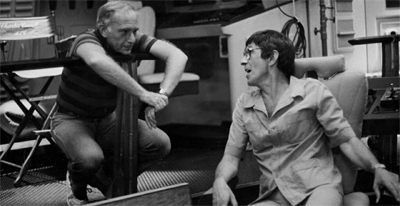
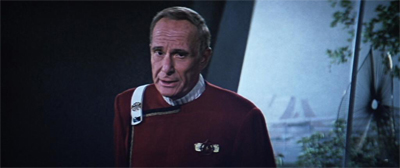
Harve Bennett

Although he will likely be best remembered by genre fans for his work on the Star Trek film franchise, Harve Bennett was a super-producer. His career began in the fifties – with his first credited work on Now is Tomorrow, a television movie starring actors Robert Culp and Sydney Pollack. However, Bennett really came into his own as a producer of seventies television. He helped to create The Mod Squad and The Invisible Man. However, he is perhaps most noted in geek circles for his work on Star Trek II: The Wrath of Khan.

Along with director Nicholas Meyer, Harve Bennett effectively reinvented Star Trek. Taking over the reins from Gene Roddenberry after that creator’s bloated (if ambitious) work on Star Trek: The Motion Picture, Bennett stumbled upon an ingenious idea. Instead of trying to hide the fact that the cast and crew were getting older, he would embrace it. Bennett effectively came up with the idea of allowing the characters to grow older, coming up with an approach that would help to distinguish the Star Trek films from their source material.

harvebennett

It would be too much to suggest that Harve Bennett was the first writer to reinvent Star Trek, paving the way for creators like Michael Piller or Ira Steven Behr or Brannon Braga or Manny Coto. After all, Star Trek had already been reinvented by Gene L. Coon and D.C. Fontana before Bennett come on board. However, Bennett was part of the first creative team to reinvent Star Trek in a very overt and very conscious way. Meyer and Bennett were the first creators to be overt (rather than subversive) in how they were updating and revising the Star Trek canon.

Bennett was part of the creative team that oversaw the first truly seismic transition in what Star Trek actually was, the first without any major behind-the-scenes continuity. In doing so, Bennett was one of the first creators to demonstrate the versitility and the potential of Star Trek. In shepherding the movie franchise, Bennett was a vital part of keeping Star Trek alive long enough for the franchise to prove that it could be self-sustaining and self-perpetuating. Bennett is a much bigger figure in Star Trek history than he is given credit for.

harvebennett3

Continue reading

Leonard Nimoy

Leonard Nimoy passed away today.

Nimoy is an interesting figure. He is an actor and director with a long a prolific career, who seldom wanted for steady work. He did a lot of quality work in front of (and behind) the camera. Nimoy was a series regular on the sixties version of Mission: Impossible, taking over from Martin Landau. He played a major role in the 1978 remake of Invasion of the Body Snatchers with Donald Sutherland. He also directed both Three Men and a Baby. He worked quite regularly and quite frequently. His body stretches over half a century.

leonardnimoy1

However, all of this work (and it is great work) is inevitably overshadowed by a single role. To an entire generation of people – not just fans, not even just casual television viewers – Leonard Nimoy was Spock. With his pointed ears, memorable catchphrases and iconic Vulcan salute, Nimoy was enigmatic half-human half-Vulcan who served as the first officer of the USS Enterprise. His work spans the franchise, from the unbroadcast original pilot (The Cage) to the most recent JJ Abrams feature (Star Trek Into Darkness).

This was the conflict at the heart of Nimoy, the extremely professional performer who worked pretty consistently throughout his life and the one role that he turned into a screen icon across television and film. Nimoy was a complex character. He famously published an autobiography declaring I Am Not Spock, only to follow it up with I Am Spock. It is a credit to the actor’s complexity and nuance that both could seem to be true in the same instant.

tos-amoktime12

Continue reading

Star Trek: Enterprise – Season 1 (Review)

Next year, Star Trek is fifty years old. We have some special stuff planned for that, but – in the meantime – we’re reviewing all of Star Trek: Enterprise this year as something of a prequel to that anniversary. This January, we’re doing the first season. Check back daily for the latest review.

The first season of Star Trek: Enterprise is caught at a crossroads.

On the hand, it needs to be something new and exciting. The first Star Trek show of the new millennium, Enterprise has to find a way of updating the franchise and pushing forward. It has to find a way to challenge audience expectations and demonstrate that – after fourteen consecutive years and twenty-one overlapping seasons – Star Trek still has something fresh and exciting to offer fans. After all, the television landscape had changed significantly since the late eighties. It was time for Star Trek to change with it.

ent-brokenbow3

On the other hand, there’s a clear desire to seek familiar comforts. Star Trek has been on the air consistently for over a decade now. That wouldn’t be the case if the franchise didn’t have its own merits. There’s a sense that the first season of Enterprise is drawn to the idea that it can keep doing what worked before, offering generic Star Trek stories with a new cast and a new theme tune. This is still Star Trek, after all. There’s nothing gained by changing it to the point where it is unrecognisable.

Throughout the first season, these two impulses seem to be at odds with one another, leading to a surreal sense of whiplash. Episodes that feel as unique as Breaking the Ice, Dear Doctor or Shuttlepod One sit alongside generic shows like Civilisation, Sleeping Dogs or Rogue Planet. The show frequently pushes itself in interesting directions, only to pull relent as it approaches the point of committal. The result is a first season that is uneven, but intriguing, one that has great potential – if not necessarily the will to fulfill it.

ent-shockwavepart1m Continue reading

Star Trek: Enterprise – Shockwave, Part I (Review)

Next year, Star Trek is fifty years old. We have some special stuff planned for that, but – in the meantime – we’re reviewing all of Star Trek: Enterprise this year as something of a prequel to that anniversary. This January, we’re doing the first season. Check back daily for the latest review.

Re-watching a television show with the benefit hindsight is a particularly intriguing experience. Knowing that certain plot lines or character threads will or won’t pay off can be a liberating experience. While a disappointing ending to a particular story can undermine a lot of what came before, foreknowledge of the inevitable anticlimax allows the viewer to manage their expectations and temper their enthusiasm. It stops the viewer from getting too involved with threads that lead to dead ends, and heightens appreciations for those that pay dividends.

The Temporal Cold War plot on Star Trek: Enterprise never went anywhere. This is rather obvious in hindsight, given that it has been a decade since the end of the show. However, it’s worth acknowledging that many viewers correctly predicted as much on the initial airing of Broken Bow in late 2001. None of the questions raised will be answered, none of the plot threads will be resolved. It will just sit there, nestled snugly in the heart of this Star Trek spin-off, possibly embodying the show’s unfulfilled potential.

Enterprise isn't quite going to make it to seventh (season) heaven...

Enterprise isn’t quite going to make it to seventh (season) heaven…

While the Temporal Cold War lacks a clear resolution, it does provide the impetus for some pretty good storytelling on its own terms. In many respects, the plot works best when it exists as a driving force in the background of an episode – rather than being pushed to the fore. This is probably why Cold Front and Shockwave, Part I work much better than episodes like Shockwave, Part II – episodes that use the Temporal Cold War as a jumping off point to character work and development, rather than an end of itself.

Shockwave, Part I is notable for ending the first season of Enterprise on a cliffhanger. This was the first time that the opening season of a Star Trek had show had closed on a cliffhanger. The other shows closed out their freshman season with open-ended stand-alone stories, with the last episodes in the first seasons of Star Trek: Deep Space Nine and Star Trek: Voyager emphasising how far their cast had come. In contrast, Shockwave, Part I closes the first year of Enterprise on an honest to goodness “to be continued.” And a good one at that.

Seeking a friend at the end of the world...

Seeking a friend at the end of the world…

Continue reading

Star Trek: Enterprise – Two Days and Two Nights (Review)

Next year, Star Trek is fifty years old. We have some special stuff planned for that, but – in the meantime – we’re reviewing all of Star Trek: Enterprise this year as something of a prequel to that anniversary. This January, we’re doing the first season. Check back daily for the latest review.

To be fair to Two Days and Two Nights, the episode itself isn’t a bad idea.

The stronger episodes of the first season have been those willing to allow the cast a bit of room to define their characters, luxuriating in the human side of mankind’s first real adventure to the stars. Episodes like Breaking the IceCold Front and Shuttlepod One were all built around character moments and interactions, featuring relaxed plotting that left room for the cast to develop their roles.

"So I'm coolin' at a bar, and I'm lookin' for some action.  But like Mike Jagger said, I can't get no satisfaction."

“So I’m coolin’ at a bar, and I’m lookin’ for some action.
But like Mike Jagger said, I can’t get no satisfaction.”

In theory, Two Days and Two Nights does the same thing. Essentially a “holiday episode”, the show features the senior staff of the Enterprise taking two days of vacation time on the surface of Risa. A series of loosely-connected adventures ensue, following members of the main cast as they try to take a break from it all. No points for guessing that very few members of the crew actually get the relaxing vacation they had hoped for.

The problem is that the plot threads all feel a little tired and awkward, coalescing into a Star Trek comedy episode that simply isn’t funny.

It all falls down...

It all falls down…

Continue reading

Star Trek: Enterprise – Desert Crossing (Review)

Next year, Star Trek is fifty years old. We have some special stuff planned for that, but – in the meantime – we’re reviewing all of Star Trek: Enterprise this year as something of a prequel to that anniversary. This January, we’re doing the first season. Check back daily for the latest review.

Desert Crossing is an intriguing episode.

It’s a very thoughtful and insightful teleplay from André Bormanis, brought to life by director David Straiton. This is Straiton’s first credit on Star Trek: Enterprise, and he does a good job bringing the script to screen. Although the second half of the episode struggles to engage with any of the intriguing issues broached in the first half, and while nobody seems able to keep the scenery out of guest star Clancy Brown’s mouth, Desert Crossing is a very ambitious late-season episode.

Oh, Archer. What have you Dune now?

Oh, Archer. What have you Dune now?

Continue reading

Star Trek: Enterprise – Fallen Hero (Review)

Next year, Star Trek is fifty years old. We have some special stuff planned for that, but – in the meantime – we’re reviewing all of Star Trek: Enterprise this year as something of a prequel to that anniversary. This January, we’re doing the first season. Check back daily for the latest review.

Fallen Hero works quite well. While it isn’t sturdy or tight enough to stand with the very best of this first season, it is an engaging diplomatic thriller elevated by a fantastic guest performance, a nice focus on T’Pol and a surprisingly warm approach to the Vulcans. Easily the strongest episode between Shuttlepod One and Shockwave, Fallen Hero is a solid adventure that offers a glimpse of a more promising future.

I'll drink to that...

I’ll drink to that…

Continue reading

Star Trek: Enterprise – Vox Sola (Review)

Next year, Star Trek is fifty years old. We have some special stuff planned for that, but – in the meantime – we’re reviewing all of Star Trek: Enterprise this year as something of a prequel to that anniversary. This January, we’re doing the first season. Check back daily for the latest review.

Vox Sola is a rather sedate late-season instalment of Star Trek: Enterprise. Largely designed as a bottle show, Vox Sola has a rake of interesting ideas, but doesn’t offer any particularly insightful exploration. The alien creature of the week is unique and distinctive, but the episode constructed around it feels rather lacklustre. There’s a sense of late-season fatigue at work here, with Vox Sola feeling rather like a more low-key variation on the strange-space-phenomena-of-the-week story template that Star Trek: Voyager would use routinely.

"It's alive!"

“It’s alive!”

Continue reading

Star Trek: Enterprise – Detained (Review)

Next year, Star Trek is fifty years old. We have some special stuff planned for that, but – in the meantime – we’re reviewing all of Star Trek: Enterprise this year as something of a prequel to that anniversary. This January, we’re doing the first season. Check back daily for the latest review.

Detained is well-meaning, if a little clumsy and awkward.

It is a rather conscious effort to do a “message show” in the grand tradition of the Star Trek franchise, using the show’s science-fiction premise to offer a commentary on current events. Detained is very clearly structured as a response to the 9/11 attacks, even if Archer only explicitly references the internment of Japanese Americans at Manzanar. Detained is full of interesting ideas, and its heart is in the right place, but the execution feels decidedly rushed and haphazard. Detained works much better as a two-line moral than it does as a forty-five minute episode of television.

You can't call him Al...

You can’t call him Al…

Continue reading