• Following Us

  • Categories

  • Check out the Archives


  • Awards & Nominations

Star Trek: The Next Generation – The Sky’s The Limit: Meet with Triumph and Disaster & Trust Yourself When All Men Doubt You by Michael Schuster & Steve Mollmann (Review)

This January and February, we’ll be finishing up our look at the second season of Star Trek: The Next Generation and moving on to the third year of the show, both recently and lovingly remastered for high definition. Check back daily for the latest review.

We’ll be supplementing our coverage of the episodes with some additional materials – mainly novels and comics and films. This is one such entry. This is actually supplementary to the first season of the Next Generation, specifically the episode Encounter at Farpoint.

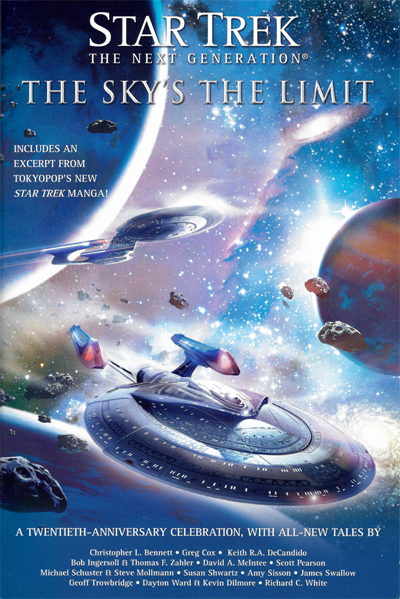
The Sky’s the Limit was an anthology released to celebrate the twentieth anniversary of Star Trek: The Next Generation in 2007. It was a bit of a no brainer, edited by the wonderful Marco Palmieri in the style of anthologies like The Lives of Dax or Prophecy and Change. The goal was to draw together a bunch of talented writers to fashion stories involving the crew and the ship at various stages in the life cycle of the Enterprise. There is a short story for every season of the show, save the fourth, and between each of the movies.
tng-theskysthelimit

Continue reading

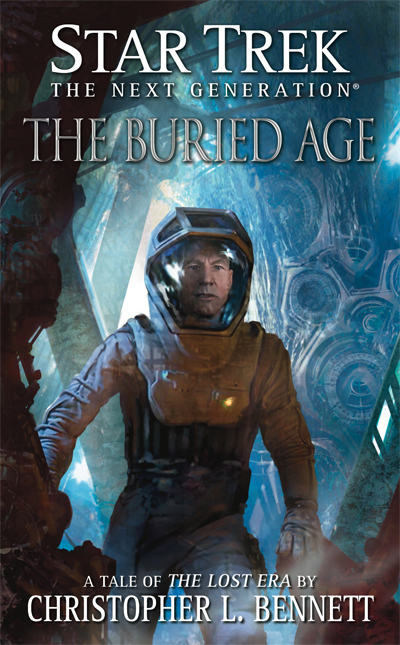
Star Trek: The Lost Era – The Buried Age by Christopher L. Bennett (Review)

This January and February, we’ll be finishing up our look at the second season of Star Trek: The Next Generation and moving on to the third year of the show, both recently and lovingly remastered for high definition. Check back daily for the latest review.

We’ll be supplementing our coverage of the episodes with some additional materials – mainly novels and comics and films. This is one such entry. This is actually supplementary to the first season of the Next Generation, specifically the episode Encounter at Farpoint.

“I’m offering the chance to find something entirely new,” Picard teases at one point in The Buried Age. “To begin filling in a tremendous gap in our understanding of galactic history.” In a way, Picard might as well be addressing the reader, explaining one of the many joys of Christopher L. Bennett’s The Buried Age. It is a chance to delve into the world of Star Trek, exploring the lacuna that exists leading directly into Encounter at Farpoint.

tng-theburiedage

Continue reading

Star Trek: Mirror, Mirror #1 – Fragile Glass (Review)

Star Trek: Deep Space Nine is twenty years old this year. To celebrate, I’m taking a look at the first and second season. Check back daily for the latest review or retrospective.

We’ll be supplementing our coverage of the episodes with some additional materials – mainly novels and comics and films. This is one such entry.

One of the benefits and the curses of tie-in material is the ability to connect the dots – to tie together two parts of continuity separated by time and space, filling in the blanks in some character or plot arc. Often, this feels extraneous at best. In order for the televised stories to work, there must be enough information conveyed effectively to the audience so they can make their own leaps. Trying to plug imaginary and unnecessary holes is seldom satisfying.

On the other hand, there are occasionally gaps that are worth exploring. These are gaps that have been explained on the show, but which are still large enough that creators can fit their own interesting stories between them. The divide between Mirror, Mirror and Crossover is one such gap, as we go from the original Star Trek‘s version of the mirror universe to the very different iteration seen on Star Trek: Deep Space Nine.

Tom DeFalco’s Fragile Glass attempts to sketch in some of the details around this gap. While it’s not entirely satisfying as either a missing link or a story in its own right, it does offer some nice pulpy fun and gets considerable mileage out of the “Spock vs. Kirk” premise.

I am not Spock...

I am not Spock…

Continue reading

Star Trek: Deep Space Nine – Vortex (Review)

Star Trek: Deep Space Nine is twenty years old this year. To celebrate, I’m taking a look at the first season. Check back daily for the latest review or retrospective.

Something very interesting happens in the second half of Star Trek: Deep Space Nine‘s first season. It seems like the writers and producers are making a conscious effort to develop the show’s characters, themes and the world that these inhabit. Plot threads are hinted at, only to be left dangling. Ideas are broached, and tucked away for another day. Given that Star Trek: The Next Generation waited until the third season to broach serialisation in Sins of the Father, the approach taken here is quite striking.

These three episodes are more notable for what they set up rather than what they actually accomplish on their own terms. These adventures lay groundwork, or at least hint at laying groundwork, that will pay off throughout the show’s extended seven-year run. Okay, not exactly. There are some redundant elements here that never actually pay off, but Vortex, Battle Lines and The Storyteller all play into the show’s bigger story arc, even if it seems the writers aren’t entirely sure what those story arcs are.

It's murky out there...

It’s murky out there…

Continue reading

Star Trek: Deep Space Nine – The Passenger (Review)

Star Trek: Deep Space Nine is twenty years old this year. To celebrate, I’m taking a look at the first season. Check back daily for the latest review or retrospective.

And here we hit what amounts to the rock bottom of Star Trek: Deep Space Nine‘s first season. The Passenger and Move Along Home exist as the two weakest stories in this first season, and the point from which Deep Space Nine begins to map a path towards recovery, climaxing in the best final two episodes of any first season in the history of Star Trek. We’re a long way from that, and we seem furthest from it here.

While Move Along Home is a legitimately bad episode, one with flaws that probably should have been spotted in any of the episode’s troubled development history, The Passenger suffers because it is the most bland and generic of the first season Deep Space Nine episodes. It accomplishes nothing, but it feels worse because its ambitions were so low. It’s the kind of story that could easily have been told on any Star Trek show, or any science-fiction series, but with no sense of local colour to give it distinctive flavour.

The Passenger is just as bland as the title makes it sound.

The not-so-good Doctor...

The not-so-good Doctor…

Continue reading

Star Trek: Deep Space Nine – Q-Less (Review)

Star Trek: Deep Space Nine is twenty years old this year. To celebrate, I’m taking a look at the first season. Check back daily for the latest review or retrospective.

And the first season of Deep Space Nine continues its trend towards mediocrity. I feel I should qualify that. The first season of Deep Space Nine is never truly terrible. Even the (very) dodgy Move Along Home is superior to any number of episodes from the first season of Star Trek: The Next Generation, like Code of Honour or Angel One. The first season of Deep Space Nine just winds up feeling like it’s treading water, as if it is trying too hard to emulate The Next Generation, instead of exploring the unique storytelling opportunities offered by the show’s setting.

Q-Less is arguably the most obvious example of these attempts at imitation. While episodes like Babel and The Passenger could have been reworked as episodes of The Next Generation with a minimum of fuss, Q-Less rather cynically takes two recurring guest stars from The Next Generation and allows them to steal focus from an ensemble that is still finding its feet. It feels not only a little ill-judged, but also a bit rude.

Guess Q...

Guess Q…

Continue reading

Star Trek: Deep Space Nine – A Man Alone (Review)

Star Trek: Deep Space Nine is twenty years old this year. To celebrate, I’m taking a look at the first season. Check back daily for the latest review or retrospective.

To be fair to Star Trek: Deep Space Nine, it’s clear that the show’s heart is in the right place. After all, a Star Trek television show isn’t quite the gambit that it was in 1987. The producers expect that the series will be going for quite some time. After all, the regulars signed six-year contracts, one of the reasons that the show managed to make it to its penultimate season without losing a primary cast member.

As such, a lot of the early episodes of Deep Space Nine seem prudent – they effectively amount to good housekeeping. While Star Trek: The Next Generation got its cast together and couldn’t wait to start telling bold Star Trek stories, you can see that Deep Space Nine is laying a lot of groundwork. The ensemble doesn’t gel instantly. Episodes are devoted to little more than set-up for something that will pay off over the coming year. A vast supporting cast is systematically established.

This is world-building, and it’s world-building to a purpose, even if Deep Space Nine doesn’t seem to really know what that purpose is yet. So it’s quite hard to fault these early episodes, even if they feel more like set-up for delayed pay-off.

The writing's on the wall for Odo...

The writing’s on the wall for Odo…

Continue reading

Star Trek – The Ashes of Eden by William Shatner et al (DC Comics) (Review)

This August, to celebrate the upcoming release of Star Trek: Into Darkness on DVD and blu ray, we’re taking a look at the Star Trek movies featuring the original cast. Movie reviews are every Tuesday and Thursday.

We’ll be supplementing our coverage of the movies with tie-ins around (and related to) the films. We’ll be doing one of these every week day. This is one such article.

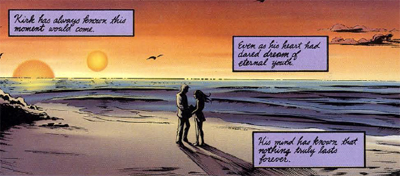
The Ashes of Eden is effectively professionally published Star Trek fan fiction, written by William Shatner. The actor gets some assistance from veteran Star Trek writers Judith and Garfield Reeves-Stevens, but it’s clear that Shatner is the driving force behind The Ashes of Eden. Indeed, an astute reader will spot quite a few thematic overlaps with Shatner’s much-maligned directorial effort, only without the rest of the cast around to temper his efforts to make this a story about Kirk and Kirk alone.

Still, The Ashes of Eden isn’t as bad as it might be. After all, just because something is fan fiction – professionally published or otherwise – says nothing of its quality. The story is probably best read as an exploration between Shatner and his alter ego, but it holds together quite well, providing a much more solid (if still far from perfect) exploration of the themes hinted at in Shatner’s Star Trek V: The Final Frontier.

The dusk of an era...

The dusk of an era…

Continue reading

Star Trek – Season 1 (Review)

To celebrate the release of Star Trek: Into Darkness this month, we’ll be running through the first season of the classic Star Trek all this month. Check back daily to get ready to boldly go. It’s only logical.

That came together rather well, didn’t it? With the current success of Star Trek as a blockbuster movie franchise, it’s fun to speculate about the show possibly returning to television. Being honest, I would be nervous about that. In this cut-throat age where ratings need to solidify (or start rising) almost immediately, I wouldn’t trust the first season of a Star Trek spin-off to rope in viewers quick enough. None of the Star Trek spin-offs, from The Next Generation through to Enterprise, had what could be considered “strong” first years. Occasionally there were a few classic episodes buried in there, as with Deep Space Nine, but it always seems to take a Star Trek show some time to find its “space legs”, so to speak. Time that I am not sure it would be afforded in the current market place.

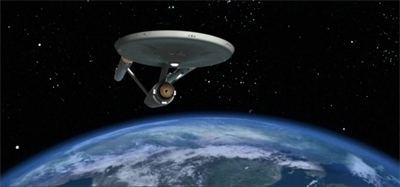
Which makes it all the more spectacular that Star Trek itself started out so phenomenally. The first year of the show (and the franchise) is not only the best first season of any Star Trek show ever, it’s also in the running for the best of the thirty seasons of television that the franchise has produced. Not bad at all, considering that it seems like nobody had any idea what exactly they were doing when they started out.

tos-miri18

Continue reading

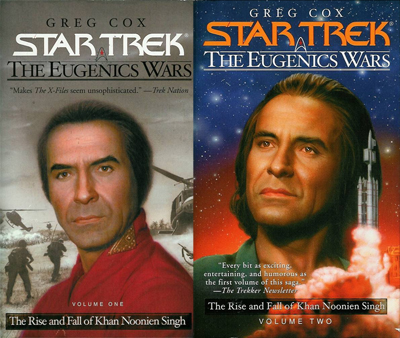
Star Trek: The Eugenics Wars – The Rise & Fall of Khan Noonien Singh, Volumes I & II, by Greg Cox (Review)

To celebrate the release of Star Trek: Into Darkness this month, we’ll be running through the first season of the classic Star Trek all this month. Check back daily to get ready to boldly go. It’s only logical.

We’ll be supplementing our coverage of the episodes with some additional materials – mainly novels and comics and films. This is one such entry.

In 1967, the 1990s must have seemed so very far away. At the height of the Cold War, the prospect that mankind would have made it into twenty-first century without one catastrophic global conflict must have seemed improbable at best. Indeed, the odds that anybody would still be talking about (let alone watching) a kitsch piece of sixties television science-fiction would have appeared remote. So Star Trek seemed perfectly justified sticking a reference to a major war towards the end of the twentieth century into an episode towards the end of the first season.

However, if there’s one thing that Star Trek fans cannot abide, it’s a possible continuity problem. So, when genetically engineered supermen didn’t almost conquer the world during the last decade of the twentieth century, it was only a matter of time before we got a two-volume set dedicated to resolving this particular problem.

tos-theeugenicswars

Continue reading