• Following Us

  • Categories

  • Check out the Archives


  • Awards & Nominations

The X-Files – Apocrypha (Review)

This November (and a little of December), we’re taking a trip back in time to review the third season of The X-Files and the first (and only) season of Space: Above and Beyond.

Eyes are a major recurring motif in Apocrypha.

To be fair, eyes were a frequently recurring motif throughout The X-Files. Rob Bowman managed a couple of beautiful shots of reflections and peeping in 731, for example. It makes sense that The X-Files should place such emphasis on eyes – it is a saga about truth and belief and faith, all of which must be explored through perception. “I want to believe,” Mulder’s iconic poster proclaims. As the cliché goes, seeing is believing.
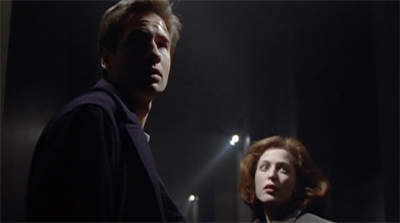
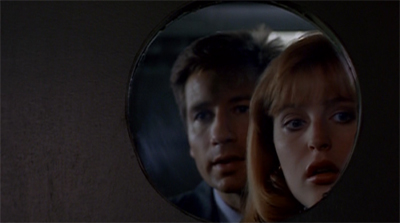
Iconic Mulder/Scully pose!

Iconic Mulder/Scully pose!

That is definitely the case here, with Apocrypha built to a climax where both the audience and the characters are explicitly refused the opportunity to see key moments. Mulder and Scully are escorted out of the North Dakota silo before they can see anything incriminating. The audience doesn’t even get to see the space ship taking off. Even the death of Luis Cardinal takes place off-screen, with Mulder revealing it in a throwaway line in the show’s penultimate scene.

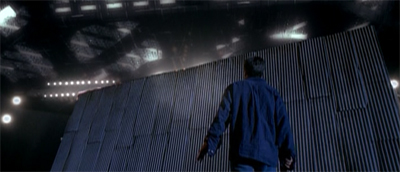
With all of this going on, it makes sense that so much of the imagery in Apocrypha should be built around eyes – with the black oil infection manifesting in its hosts’ eyes, the shooting of the silo as a giant eye staring into space, and even the design of the alien space ship evoking the Eye of Providence.
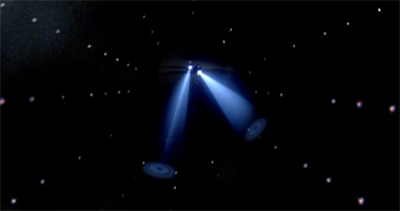
Up in the sky!

Up in the sky!

Continue reading

The X-Files – Paper Clip (Review)

This November (and a little of December), we’re taking a trip back in time to review the third season of The X-Files and the first (and only) season of Space: Above and Beyond.

And now we return to your scheduled viewing.

In many respects, Paper Clip feels like the real third season premiere. It establishes a lot of the recurring themes and ideas for the mythology of the season, from Krycek-on-the-run through to collaboration in the wake of the Second World War. It builds on the successful multi-part formula established by episodes like Ascension or End Game during the show’s second season. It moves things along in a way that The Blessing Way simply refused to. (It even resolves the cliffhanger from the last episode on screen.)

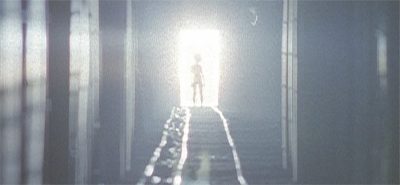
The light at the end of the tunnel...

The light at the end of the tunnel…

Paper Clip demonstrates the strengths of the third season of The X-Files. The third season was the point at which the show really pushed the mythology out, building on earlier implications that there was form to be found in the shadows. The third season also looked to the second season to determine what had worked and what had not worked. Paper Clip is very clearly modelled on the successful aspects of second parts like Ascension or End Game.

It moves. The power of Paper Clip comes from an incredible forward momentum that allows the show to maintain tension and excitement while refusing to allow the audience to catch their breath. Instead of resolving the bigger plot threads from the first episode, questions and hints are thrown out with reckless abandon as the script just drives through set pieces and emotional beats and suspenseful sequences. It is a very meticulously, very cleverly constructed piece of television.

Watching the skies...

Watching the skies…

Continue reading

The X-Files – The Blessing Way (Review)

This November (and a little of December), we’re taking a trip back in time to review the third season of The X-Files and the first (and only) season of Space: Above and Beyond.

The Blessing Way is the first mythology episode of The X-Files that doesn’t really work.

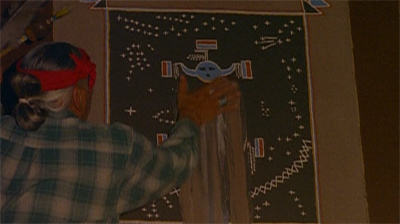
And it doesn’t really work for a lot of the same reasons that some of the later mythology episodes don’t really work. Its pacing is terrible. It wallows in new age mysticism, allocating characters thoughtful monologues that awkwardly state themes and render subtext as supratext. It plays into the deification of Mulder, trying to bend Mulder’s story to fit into an archetypal “chosen one” narrative. More than that, it is very clearly a holding pattern, an effort to eat up time without moving forward.

Wiping it all out...

Wiping it all out…

However, despite the fact that The Blessing Way really doesn’t work, it is still a fascinating episode. It’s a wonderful demonstration of how The X-Files has developed a fleshed-out world inhabited by compelling characters. The best moments in The Blessing Way are character-focused, with Skinner caught between his duty to the government and his loyalty to his agents, the Cigarette-Smoking Man revealed to be middle-management at best, and the implication that even vast sinister government conspiracies are hostage to chaos.

The Blessing Way is an oddity, a rather strange piece of television that is almost endearing in its stubborn refusal to deliver what the audience wants and expects. That doesn’t make it good, but it does make it interesting.

The truth is up there...

The truth is up there…

Continue reading

The X-Files – Colony (Review)

This August (and a little of September), we’re taking a trip back in time to review the second season of The X-Files. In November, we’ll be looking at the third season. And maybe more.

Colony is another second season game changer. As with other episodes in the second season, there’s a sense that the production team are really getting to grips with what works with the show – laying groundwork and defining a template that they can work with into the show’s third season. While the Duane Barry and Ascension two-parter had been an act of desperation to work around Gillian Anderson’s pregnancy, Colony and End Game is a two-parter that the show embraced entirely of its own volition.

These two two-part episodes really set the template for the show going forward. There’s a sense that Chris Carter and his team were really defining what a season of The X-Files should look like, giving them a blueprint that they might build on in the years ahead. From the second season through to the sixth, the show would stick quite rigidly to the idea of two big two-parters in the middle of the season, quite apart from any multi-part stories bridging the seasons.

Lights in the sky...

Lights in the sky…

These two parters were typically broadcast as part of the “sweeps”, and inevitably focused on the show’s alien conspiracy mythology. Even the more stand-alone two-parters like A Christmas Carol and Emily or Dreamland Part I and Dreamland Part II still build off the series’ central mythology. Given those were the points at which the show got the highest exposure, and the point where the show worked hardest to draw in an audience, it’s no surprise that the mythology arc rose to such prominence.

Duane Barry and Ascension undoubtedly set a precedent, but those episodes were prompted by factors outside the control of the creative team. However, Colony and End Game really solidified that precedent into a guiding principle for the show. This two-parter comes to codify and cement a lot of the things that the show’s mythology comes to take for granted. For better and worse.

Quite pointed...

Quite pointed…

Continue reading

The X-Files – Ascension (Review)

This August (and a little of September), we’re taking a trip back in time to review the second season of The X-Files. In November, we’ll be looking at the third season. And maybe more.

Ascension is effectively a giant chase sequence and an epilogue to the first six episodes of the second season. While lacking the tight focus of Duane Barry, Ascension moves fast enough and provides enough plot momentum that it feels like a satisfactory conclusion. For an episode that was essentially written to deal with a cast member’s unexpected pregnancy, it’s a pretty fantastic piece of television.

Keep watching the skiis... er, skies!

Keep watching the skiis… er, skies!

Continue reading

The X-Files – The Host (Review)

This August (and a little of September), we’re taking a trip back in time to review the second season of The X-Files. In November, we’ll be looking at the third season. And maybe more.

The Host and Little Green Men represent a fantastic one-two punch combination to open the second season of The X-Files. It’s very hard to think of two back-to-back standalone stories that most effectively sum up the show, capturing a lot of what makes the series so beautifully compelling and enduring. The two episodes are also quite surprising. It feels strange that Chris Carter didn’t write Little Green Men, given the importance of the premiere to the show. However, in light of that, it also feels strange that Carter did write The Host.

Working on The X-Files, Carter tends to gravitate towards “event” episodes. His name is frequently seen on episodes that push the show forward – in multiple senses. Carter is the architect of the show’s grand mythology, so his name pops up quite frequently on those scripts. However, Carter is also prone to write occasional “big” episodes of a given season. He wrote and directed The Post-Modern Prometheus and Triangle, for example, two of the more unique and distinctive episodes of the fifth and sixth seasons.

Through the looking glass...

Through the looking glass…

So, seeing Chris Carter’s name on the first “monster-of-the-week” of the new year rather than the all-important season premiere feels a little strange – particularly since The Host is an episode that seems a lot less ambitious than Little Green Men. After all, Little Green Men depicted Samantha Mulder’s abduction, revealed the show’s aliens and tried to make Vancouver look like Puerto Rico. In contrast, The Host is about an overgrown mutant worm.

And yet, perhaps that’s the point. The second season of The X-Files was a massively important year for the show. Along with the Fox Network itself, this was the year that The X-Files defined its own identity and really began to aggressively carve out a niche. The show did not make the top 100 shows of the 1993-1994 season, but almost reached the top 50 shows of the 1994-1995 season. That’s a meteoric rise, and the second season is very ruthlessly refining itself.

X marks the spot...

X marks the spot…

To describe The Host as a simple “monster-of-the-week” is to miss the point entirely. The show doesn’t exist yet another entry in a genre that the show established during its first year on the air. Instead, The Host is clearly constructed to be the monster-of-the-week episode. It’s an hour of television that is designed to get a reaction, to push buttons, to get people talking. This is an episode squarely aimed at anybody who heard the buzz over the summer hiatus and wanted to see what the fuss was about.

It works very well in this capacity. There is a reason that The Host as endured as a classic episode of The X-Files, packed with all manner of iconic and memorable imagery. Chris Carter constructed The Host as an example of what The X-Files does very well – and it’s a piece of science-fiction horror that sticks with people. It’s incredibly hard to forget. And that’s the beauty of it.

A monster mash-up...

A monster mash-up…

Continue reading

The X-Files – Tooms (Review)

Tooms offers us the show’s first returning monster, not counting the recurring alien menace that has appeared in episodes like Deep Throat or Fallen Angel or E.B.E. In fact, it arguably offers us two recurring monsters, with Eugene Victor Tooms putting in his second appearance, but also featuring the second official (but third possible) appearance of the Cigarette-Smoking Man.

Appropriately enough, Tooms doesn’t just bring back the eponymous serial killer, it begins to tie various loose ends together, and to fashion a sense of continuity and development from the various character moments and implications of the first season, suggesting that forces are moving in the background, behind the scenes of everything we’ve watched unfold.

They've got him boxed in...

They’ve got him boxed in…

Continue reading