• Following Us

  • Categories

  • Check out the Archives


  • Awards & Nominations

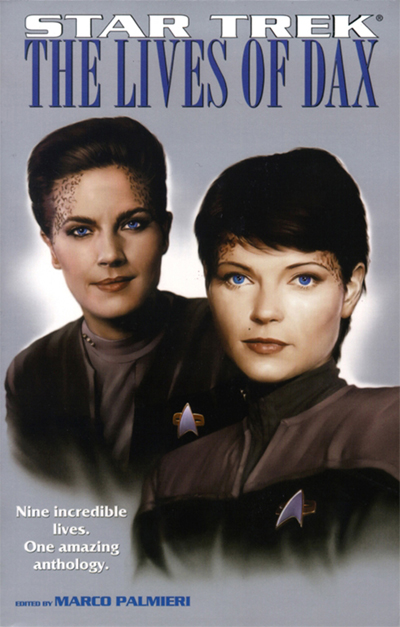
Star Trek: Deep Space Nine – The Lives of Dax: Sins of the Mother (Audrid) by S.D. Perry (Review)

This January and February, we’ll be finishing up our look at the second season of Star Trek: The Next Generation and moving on to the third year of the show, both recently and lovingly remastered for high definition. Check back daily for the latest review.

We’ll be supplementing our coverage of the episodes with some additional materials – mainly novels and comics and films. This is one such entry. This is actually supplementary to the first season of the Next Generation, specifically the episode Conspiracy.

The Star Trek: Deep Space Nine relaunch was the first truly successful attempt to continue a Star Trek television show past its final episode. Of course, there had been novels written before taking place after the finalés of the various shows, but the Deep Space Nine relaunch was the first conscious attempt to directly build upon the events of the series and structure the novels as something of an “eighth season” to the show. If I get through the seven years of Deep Space Nine, I am seriously considering covering the novels.

What’s interesting is that the novels didn’t quite come to be in an instant and decisive sort of way. There was a hazy grey period where books were published after What You Leave Behind, but not necessarily structured as part of that “eighth season.” Two of those books, The Lives of Dax and A Stitch in Time were retroactively welcomed into the relaunch. Indeed, this short story from S.D. Perry proves to pretty essential to the relaunch as a whole.

Like Deep Space Nine itself, the novels picked up and developed on particular themes and plot threads. The entrance of Bajor into the Federation is the most obvious, a plot point set up in Emissary and never completely resolved in the show. However, one particular plot thread seems to have emerged from out of nowhere, stretching back to an aborted arc from the very season of the second generation of Star Trek television shows. The relaunch built heavily on Conspiracy.
ds9-thelivesofdax1

Continue reading

Star Trek – The Wounded Sky by Diane Duane (Review)

This January and February, we’ll be finishing up our look at the second season of Star Trek: The Next Generation and moving on to the third year of the show, both recently and lovingly remastered for high definition. Check back daily for the latest review.

We’ll be supplementing our coverage of the episodes with some additional materials – mainly novels and comics and films. This is one such entry. This is actually supplementary to the first season of the Next Generation, specifically the episode Where No One Has Gone Before.

Diane Duane remains one of the most influential Star Trek tie-in writers ever to work on the franchise. She has been involved in publishing tie-in books pretty consistently since the early days of the publishing line. The Wounded Sky, her first tie-in novel, was lucky number thirteen in the “Pocket TOS” range, published in 1983. Her most recent tie-in novel, The Empty Chair, was published in 2006. As well as a distinguished career outside of Star Trek, she has written novels and comics for the franchise. She even has a television credit, for her work on the teleplay for Where No One Has Gone Before.

There’s a reason that Duane’s contributions to Star Trek fiction are held in such a high regard, and those reasons are quite clear on reading The Wounded Sky. It’s a beautiful and thoughtful piece of prose set within the Star Trek universe, one more concerned with continuing and advancing the spirit of exploration established in the television show than meddling in continuity minutiae or offering generic adventures starring James Tiberius Kirk.

It’s a whole-hearted recommendation for any fan of the original series.

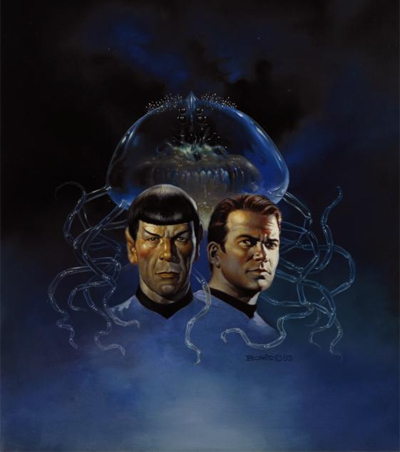
tos-thewoundedsky

Continue reading

Star Trek: The Next Generation – Samaritan Snare (Review)

This January and February, we’ll be finishing up our look at the second season of Star Trek: The Next Generation and moving on to the third year of the show, both recently and lovingly remastered for high definition. Check back daily for the latest review.

To describe Samaritan Snare as a step down from Q Who? feels like an understatement. Q Who? was Star Trek: The Next Generation realising that it needed to improve its game if it ever wanted to measure up to its predecessor, interrogating some aspects of the series that had been taken for granted, calling the crew out on their arrogance and offering an opponent that could really push the Enterprise crew for all that they are worth.

It was really the logical culmination of themes running through the second season, themes that seem to faintly echo into Samaritan Snare, another story about the arrogance and ego of the Enterprise crew. Unfortunately, while it does seem to acknowledge many of the same weaknesses and flaws that Q Who? hit upon, it can’t help but seem a little disappointing. Here, the Enterprise are not thrown against an impossible-to-defeat adversary. Instead, their arrogance turns them into interstellar marks.

His heart just isn't in it...

His heart just isn’t in it…

Continue reading

Star Trek: The Next Generation – The Sky’s The Limit: Meet with Triumph and Disaster & Trust Yourself When All Men Doubt You by Michael Schuster & Steve Mollmann (Review)

This January and February, we’ll be finishing up our look at the second season of Star Trek: The Next Generation and moving on to the third year of the show, both recently and lovingly remastered for high definition. Check back daily for the latest review.

We’ll be supplementing our coverage of the episodes with some additional materials – mainly novels and comics and films. This is one such entry. This is actually supplementary to the first season of the Next Generation, specifically the episode Encounter at Farpoint.

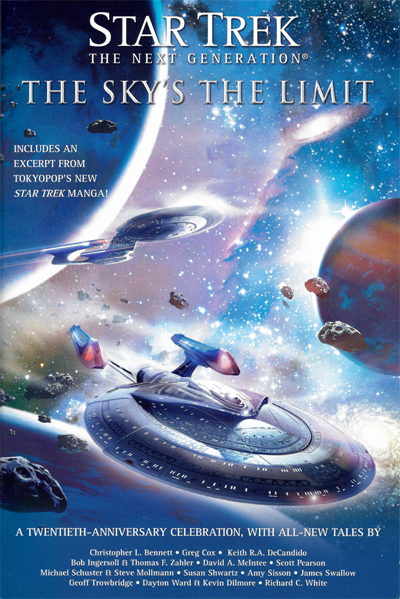
The Sky’s the Limit was an anthology released to celebrate the twentieth anniversary of Star Trek: The Next Generation in 2007. It was a bit of a no brainer, edited by the wonderful Marco Palmieri in the style of anthologies like The Lives of Dax or Prophecy and Change. The goal was to draw together a bunch of talented writers to fashion stories involving the crew and the ship at various stages in the life cycle of the Enterprise. There is a short story for every season of the show, save the fourth, and between each of the movies.

tng-theskysthelimit

Continue reading

Star Trek: The Lost Era – The Buried Age by Christopher L. Bennett (Review)

This January and February, we’ll be finishing up our look at the second season of Star Trek: The Next Generation and moving on to the third year of the show, both recently and lovingly remastered for high definition. Check back daily for the latest review.

We’ll be supplementing our coverage of the episodes with some additional materials – mainly novels and comics and films. This is one such entry. This is actually supplementary to the first season of the Next Generation, specifically the episode Encounter at Farpoint.

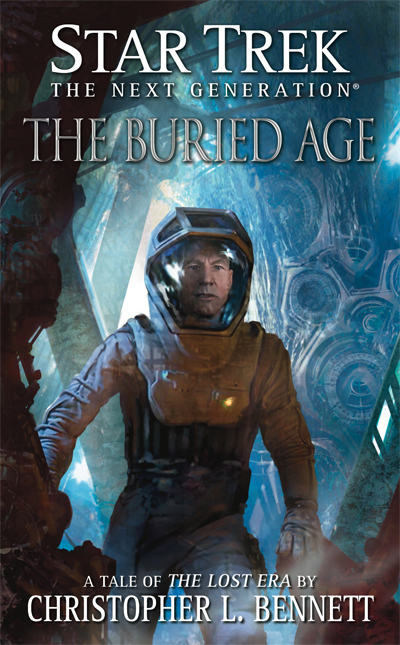
“I’m offering the chance to find something entirely new,” Picard teases at one point in The Buried Age. “To begin filling in a tremendous gap in our understanding of galactic history.” In a way, Picard might as well be addressing the reader, explaining one of the many joys of Christopher L. Bennett’s The Buried Age. It is a chance to delve into the world of Star Trek, exploring the lacuna that exists leading directly into Encounter at Farpoint.

tng-theburiedage

Continue reading

Doctor Who: The Awakening (Review)

To celebrate the fiftieth anniversary of the longest-running science-fiction show in the world, I’ll be taking weekly looks at some of my own personal favourite stories and arcs, from the old and new series, with a view to encapsulating the sublime, the clever and the fiendishly odd of the BBC’s Doctor Who.

The Awakening originally aired in 1984.

The Awakening was the third and final of Peter Davison’s smaller two-part adventures, taken once in each of his three seasons in the title role. Much like Black Orchid and The King’s Demons, it feels like a light and refreshing breather, especially in a final season that was becoming gradually darker and more somber. While Black Orchid allowed the cast and crew to take a somewhat relaxing break before the tragedy of Earthshock, The Awakening feels conspicuously grimmer, but still seems a relatively casual affair when measured against the stories that were to follow.

Malus aforethought…

Continue reading

Doctor Who: The Doctor, The Widow & The Wardrobe (Review)

To celebrate the fiftieth anniversary of the longest-running science-fiction show in the world, I’ll be taking weekly looks at some of my own personal favourite stories and arcs, from the old and new series, with a view to encapsulating the sublime, the clever and the fiendishly odd of the BBC’s Doctor Who.

The Doctor, The Widow & The Wardrobe originally aired in 2011.

I don’t understand. Is this place real, or is it fairyland?

Fairyland? Oh, grow up, Lily.

Fairyland looks completely different.

– Lilly and the Doctor get their geography straightened out

The Doctor, The Widow and the Wardrobe is, like A Christmas Carol before it, a rather wonderful idea. A Christmas Carol mashed up Doctor Who with one of the best-loved Christmas narratives of all time. The Doctor, The Widow and the Wardrobe does something similar, substituting CS Lewis for Charles Dickens. It’s a fantastic idea, given that Doctor Who is the spiritual successor of that peculiarly British thread of childhood fantasy.

The only real problem with The Doctor, The Widow and The Wardrobe is that it can’t quite stretch that good idea across an hour of television.

On the run again...

On the run again…

Continue reading

Doctor Who: The Christmas Invasion (Review)

To celebrate the fiftieth anniversary of the longest-running science-fiction show in the world, I’ll be taking weekly looks at some of my own personal favourite stories and arcs, from the old and new series, with a view to encapsulating the sublime, the clever and the fiendishly odd of the BBC’s Doctor Who.

The Christmas Invasion originally aired in 2005.

Oh, that’s rude. That’s the sort of man I am now, am I? Rude. Rude and not ginger.

– the Doctor

Part of what’s remarkable about The Christmas Invasion is that it’s a great big important episode. Not only is it the first Doctor Who Christmas Special, the beginning of a BBC institution, it’s also the first full-length adventure to feature David Tennant in the title role, and so it comes with a lot of expectations. Whereas most of Davies’ Christmas Specials tended to be relatively light fare – enjoyable run-arounds aimed rather squarely at the kind of people who didn’t tune into the show week-in and week-out – The Christmas Invasion is a pretty big deal.

It’s a vitally important part of Davies’ Doctor Who, and one that really lays out a general blue print for where he wants to take the series over the next few years. The fact that so much of this winds up tying back into the final story of the Davies era – The End of Time – is quite striking on re-watch.

Song for Ten(nant)...

Song for Ten(nant)…

Continue reading

Doctor Who: Born Again (Review)

To celebrate the fiftieth anniversary of the longest-running science-fiction show in the world, I’ll be taking weekly looks at some of my own personal favourite stories and arcs, from the old and new series, with a view to encapsulating the sublime, the clever and the fiendishly odd of the BBC’s Doctor Who.

Born Again originally aired in 2005.

Can you change back?

Do you want me to?

Yeah.

Oh.

Can you?

No.

– Rose and Doctor

Davies revived Doctor Who devoted considerable time to reintroducing the core concepts of the series. Unlike The TV Movie, Davies saw no need to over-complicate Rose by featuring the regeneration from the previous Doctor to the current lead. The Ninth Doctor was introduced as-is to an entire generation of new viewers. Only a quick examination of his features in Rose seemed to hint that he was getting used to his new face.

The prospect of “regeneration” hadn’t been flagged too heavily by the time The Parting of the Ways aired. This makes sense. For one thing, there’s a sense that Eccleston’s departure was not something that the production team had accounted for – which makes it even stranger that the whole first season seems to be building towards his redemption in death. For another thing, it’s very hard to drop “by the way, I change into somebody else when I die” casually into conversation.

So the regeneration at the end of The Parting of the Ways was kind of a big deal, and a huge moment for the series. After all, the classic Doctor Who had enjoyed more than three seasons with its lead character before having to swap him out – Hartnell being the last member of the original ensemble to depart. And, given the rules of television narratives in 2005, there was no way that the show’s first regeneration wasn’t going to be a pretty significant event.

Somebody needs a Doctor...

Somebody needs a Doctor…

Continue reading

Doctor Who: The Twin Dilemma (Review)

To celebrate the fiftieth anniversary of the longest-running science-fiction show in the world, I’ll be taking weekly looks at some of my own personal favourite stories and arcs, from the old and new series, with a view to encapsulating the sublime, the clever and the fiendishly odd of the BBC’s Doctor Who.

The Twin Dilemma originally aired in 1984.

Whatever else happens, I am the Doctor, whether you like it or not. 

– the perfect sentiment on which to enter a nine-month gap

Some mistakes only seem obvious in hindsight. Some errors are easy to judge with the weight of experience and history behind you. Some calls are easy to dismiss and ridicule retroactively, completely divorced from the context in which they were made.

Of course, some mistakes should have been blindingly obvious when they were made in the first place.

Go on, guess which one The Twin Dilemma was.

Hardly a moment of triumph...

Hardly a moment of triumph…

Continue reading