• Following Us

  • Categories

  • Check out the Archives


  • Awards & Nominations

The X-Files – End Game (Review)

This August (and a little of September), we’re taking a trip back in time to review the second season of The X-Files. In November, we’ll be looking at the third season. And maybe more.

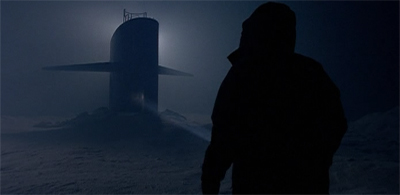
Towards the end of End Game, Mulder stumbles across a nuclear submarine that was attacked in the episode’s teaser. The craft was disabled by a strange craft it picked up in the ocean. Now, following a mysterious alien figure across the world in a quest to find his sister, Mulder approaches the location of the lost American submarine. As he does, he notices the submarine’s coning tower, bursting through the ice.

It’s one of those beautifully iconic television moments. It’s an image that is audacious and stunning and beautiful and breathtaking. It immediately gives End Game (and Colony) a sense of scale. All of a sudden, this isn’t just a bunch of stuff happening under the radar in some small town somewhere. This is the hijacking of a nuclear submarine by a hostile entity. This is Mulder going to the ends of the Earth to get his sister back.

Not so green any longer...

Not so green any longer…

It’s also worth noting that the symbolism is beautiful. Even looking at a picture of Mulder on the ice conjures up all manner of associations. Coupled with the non-linear storytelling employed by Colony and End Game, it calls Frankenstein to mind – Frankenstein serving as a massively influential text on Chris Carter. However, the idea of Mulder finding important existential answers on an Arctic soundstage also evokes Clark Kent’s self-discovery in Richard Donner’s Superman films, playing into the sense that this is an episode framed in cinematic terms.

The rest of the episode could just be dead air, and End Game would still work impressively well. However, End Game remains a fantastic piece of work in its own right, effectively codifying how a two-parter is meant to work.
The truth is out there...

The truth is out there…

Continue reading

The X-Files – Colony (Review)

This August (and a little of September), we’re taking a trip back in time to review the second season of The X-Files. In November, we’ll be looking at the third season. And maybe more.

Colony is another second season game changer. As with other episodes in the second season, there’s a sense that the production team are really getting to grips with what works with the show – laying groundwork and defining a template that they can work with into the show’s third season. While the Duane Barry and Ascension two-parter had been an act of desperation to work around Gillian Anderson’s pregnancy, Colony and End Game is a two-parter that the show embraced entirely of its own volition.

These two two-part episodes really set the template for the show going forward. There’s a sense that Chris Carter and his team were really defining what a season of The X-Files should look like, giving them a blueprint that they might build on in the years ahead. From the second season through to the sixth, the show would stick quite rigidly to the idea of two big two-parters in the middle of the season, quite apart from any multi-part stories bridging the seasons.

Lights in the sky...

Lights in the sky…

These two parters were typically broadcast as part of the “sweeps”, and inevitably focused on the show’s alien conspiracy mythology. Even the more stand-alone two-parters like A Christmas Carol and Emily or Dreamland Part I and Dreamland Part II still build off the series’ central mythology. Given those were the points at which the show got the highest exposure, and the point where the show worked hardest to draw in an audience, it’s no surprise that the mythology arc rose to such prominence.

Duane Barry and Ascension undoubtedly set a precedent, but those episodes were prompted by factors outside the control of the creative team. However, Colony and End Game really solidified that precedent into a guiding principle for the show. This two-parter comes to codify and cement a lot of the things that the show’s mythology comes to take for granted. For better and worse.

Quite pointed...

Quite pointed…

Continue reading

The X-Files – E.B.E. (Review)

While the show was on the air, it seemed like the series’ “mythology arc” – the on-going recurring story arc concerning the government and the Syndicate and the aliens and the colonists and Samantha Mulder – was the best part of the show. Given how The Truth bungled tying up all the loose ends generated over nine years of mythology, hindsight has been somewhat harsh to these episodes. It’s a lot harder to get caught up in Mulder’s cat-and-mouse game against the government when you know the show won’t bother to offer a satisfying conclusion.

And yet, perhaps that isn’t the appeal of these conspiracy episodes. Perhaps these over-arching mythology episodes didn’t grab our attention because they promised long-form storytelling with set-up and pay-off. Certainly, there’s little direct connective tissue between The Pilot, Deep Throat, Fallen Angel and E.B.E., barring the appearance of Deep Throat, who has also guested in shows like Eve or Ghost in the Machine or Young at Heart. At this point in the run, there’s no hint of Mulder’s convoluted familial ties this stretched secret conspiracy, no suggestion the government was complicit in the abduction of Mulder’s sister.

Instead, E.B.E. offers another clever and interesting suggestion about why this government conspiracy plot line appeals to us. It’s nothing to do with a developing story arc, at least not in this place. It’s just a wonderful channel through which we may express our mistrust of authority, the most direct way to focus our well-honed paranoia against those in government, the most straight-forward expression of post Cold War anxiety.

The truth was in here...

The truth was in here…

Continue reading