• Following Us

  • Categories

  • Check out the Archives


  • Awards & Nominations

Doctor Who: Vincent and the Doctor (Review)

To celebrate the fiftieth anniversary of the longest-running science-fiction show in the world, I’ll be taking weekly looks at some of my own personal favourite stories and arcs, from the old and new series, with a view to encapsulating the sublime, the clever and the fiendishly odd of the BBC’s Doctor Who.

Vincent and the Doctor originally aired in 2010.

But you’re not armed.

I am.

What with?

Overconfidence, this, and a small screwdriver. I’m absolutely sorted.

– Vincent and the Doctor

One of the strengths of the revived series has been a willingness to engage with a variety of writers. While Andrew Cartmel may have tried in vain to convince Alan Moore to write for the final years of the classic show, Russell T. Davies and Steven Moffat have managed to draw a wealth of diverse talent to write for the revived series. Sometimes this didn’t always work out (Life on Mars creator Matthew Graham wrote Fear Her), but it did mean that the series could boasts scripts from figures as diverse as Neil Gaiman and Richard Curtis.

There’s something to be said for the diversity the format of the show allows. Vincent and the Doctor is really unlike any other story the show has ever tried to tell, but it still manages to feel like Doctor Who. Which is something pretty spectacular, and worth celebrating. Doctor Who works best as a vehicle for any and all kinds of stories, where the audience isn’t always exactly sure what it is going to get.
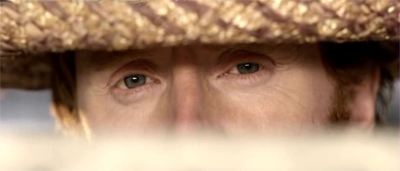
An artist's eyes...

An artist’s eyes…

Continue reading

Doctor Who – School Reunion (Review)

To celebrate the fiftieth anniversary of the longest-running science-fiction show in the world, I’ll be taking weekly looks at some of my own personal favourite stories and arcs, from the old and new series, with a view to encapsulating the sublime, the clever and the fiendishly odd of the BBC’s Doctor Who.

School Reunion originally aired in 2006.

You can tell you’re getting older. Your assistants are getting younger.

– Sarah Jane to the Doctor

Coming at the start of the revived show’s second season, School Reunion changed the way that the show related to its long and complex history, explicitly confirming what had been implied at least as early as Dalek and Aliens of London, that this was indeed the same Doctor who had had all of those adventures for all those years on British television. Bringing back the iconic pepper pots was one thing, as was name-dropping the paramilitary outfit from early in the original show’s run.

However, bringing back the most fondly remembered companion of the classic television show and affirming that she had travelled with this man for several years provides a firm anchor to the past. Looking back now, it’s hard to appreciate how dramatic a shift this was, and just what it represented. However, it’s hard to imagine that Doctor Who could get to the point where the Doctor could recruit a Silurian detective and her Sontaran butler in Victorian England without School Reunion.

It changed the game.

(Anthony Stewart) Head master...

(Anthony Stewart) Head master…

Continue reading

Doctor Who: Smith & Jones (Review)

To celebrate the fiftieth anniversary of the longest-running science-fiction show in the world, I’ll be taking weekly looks at some of my own personal favourite stories and arcs, from the old and new series, with a view to encapsulating the sublime, the clever and the fiendishly odd of the BBC’s Doctor Who.

Smith & Jones originally aired in 2007.

It’s only roentgen radiation. We used to play with roentgen bricks in the nursery. It’s safe for you to come out. I’ve absorbed it all. All I need to do is expel it. If I concentrate I can shake the radiation out of my body and into one spot. It’s in my left shoe. Here we go, here we go. Easy does it. Out, out, out, out, out. Out, out. Ah, ah, ah, ah! It is, it is, it is, it is, it is hot. Hold on.

Done.

You’re completely mad.

You’re right. I look daft with one shoe.

– the Doctor and Martha get off to a good start

I’d argue that Smith & Jones is Russell T. Davies’ most successful season-opener of Doctor Who. By its third year, Davies had firmly established the format of the show, to the point where he could successfully lose both of his leading actors. Christopher Eccleston had been replaced by David Tennant at the end of the first season, and Billy Piper had departed at the end of the second. Davies had demonstrated that the series could survive a cast rotation like that, and there’s a sense of looseness about Smith & Jones that suggests the show has really found its comfort zone.

The reason that Smith & Jones works so very well is not that it has an abundance of ambition. Its goal is relatively modest: to tell an enjoyable modern day adventure while introducing a new companion to the show. The beauty is in the execution. Smith & Jones races along, barely pausing to catch its breath, relying on Tennant’s abundant charisma, a constant flow of clever high concepts and a charming new companion to carry it through.

It works surprisingly well.

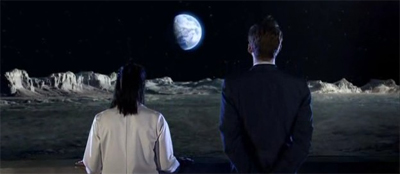
Standing in the Earthlight...

Standing in the Earthlight…

Continue reading

Doctor Who: Terminus (Review)

To celebrate the fiftieth anniversary of the longest-running science-fiction show in the world, I’ll be taking weekly looks at some of my own personal favourite stories and arcs, from the old and new series, with a view to encapsulating the sublime, the clever and the fiendishly odd of the BBC’s Doctor Who.

Terminus originally aired in 1983. It was the second instalment in the Black Guardian Trilogy.

Tegan?

What?

If ever you had to kill someone, could you do it? Could you?

No. I don’t know. If it was important, to save my friend, to defend myself.

But cold-bloodedly?

You’re weird, Turlough.

– Turlough does seem to “get” Tegan, does he?

Terminus gets a bit of a bad wrap, and I can understand why. It’s a very “eighties” production, in all the wrong ways. There’s too much soap opera, there’s bad acting, there’s a wealth of high concept ideas that are never properly exploited, the monster looks absolutely terrible, and the budget shows in the worst possible manner. Still, despite all these (very significant) flaws, I still kinda like it, admiring the story more for the ambition than for the execution.

The serial has some pretty big garn-damn problems...

Continue reading

Doctor Who: Arc of Infinity (Review)

To celebrate the fiftieth anniversary of the longest-running science-fiction show in the world, I’ll be taking weekly looks at some of my own personal favourite stories and arcs, from the old and new series, with a view to encapsulating the sublime, the clever and the fiendishly odd of the BBC’s Doctor Who.

Arc of Infinity originally aired in 1983.

We know who you are.

That changes nothing.

– the Doctor and Omega set one thing straight

There really should be a bare minimum threshold of enjoyment for a Doctor Who story set on Gallifrey. I mean, these are beings who claim to control the whole of time and space. Their guards look like they modelled themselves on Adam Strange, replacing his jetpack with a cape, and there’s always an excuse for some good old-fashioned science-fiction ray-gun-related fun. How hard can it be to entertain an audience for four episodes in that particular setting?

Unfortunately, Arc of Infinity answers that question. Quite boring indeed, it seems.

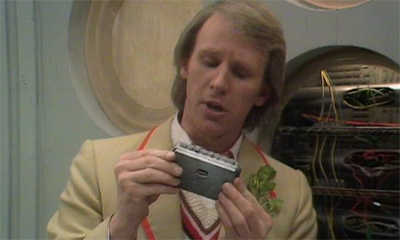
Going around in circuits...

Going around in circuits…

Continue reading

Doctor Who: The Name of the Doctor (Review)

How do we get down there? Jump?

Don’t be silly. We fall.

– Clara and the Doctor set things straight

Like The Wedding of the River Song, The Name of the Doctor suggests that Moffat might be better served by reverting to the Davies-era model of two-part season finalés. The strongest season ender of the Moffat era (and probably the best season finalé of the revived show) was The Big Bang, because it felt like Moffat had enough space to allow his ideas to breathe. The Name of the Doctor is a lot sharper and a lot more deftly constructed than any of the closing episodes from Russell T. Davies’ seasons, but it feels a little too compact, a little too tight for its own good.

To be fair, Moffat is has very cleverly structured his season. The mystery of Clara was seeded as early as Asylum of the Daleks and hints have been scattered throughout the past year of Doctor Who. Even the build-up to the final line of the episode feels like an idea that Moffat has been toying with since The Beast Below. Despite all this, it still feels like The Name of the Doctor could do with a little more room to elaborate and develop the concepts at the core of the story.

Journey to the centre of the Doctor?

Journey to the centre of the Doctor?

Continue reading

Doctor Who: The Crimson Horror (Review)

I’m the Doctor, and you’re nuts.

– the Doctor making friends, as usual

The Crimson Horror, much like Cold War before it, feels like a Mark Gatiss episode. Perhaps due to the fact he has been one of the most consistent contributors to the revived television show, Gatiss has developed his own technique and tropes, favouring particularly elements of Doctor Who, which tend to shine through in his scripts from The Unquiet Dead through to this latest instalment. While I’d be reluctant to name Gatiss among the strongest writers to contribute to the television show, it’s clear that he’s cracked a formula that works for him.

While The Crimson Horror feels a little too familiar in places, a little too conventional, it’s a solid instalment – much like Gatiss’ earlier addition to the season, Cold War.

He's got the formula down at this point...

He’s got the formula down at this point…

Continue reading

Doctor Who: Castrovalva (Review)

To celebrate the fiftieth anniversary of the longest-running science-fiction show in the world, I’ll be taking weekly looks at some of my own personal favourite stories and arcs, from the old and new series, with a view to encapsulating the sublime, the clever and the fiendishly odd of the BBC’s Doctor Who.

Castrovalva originally aired in 1982.

Welcome aboard. I’m the Doctor. Or will be if this regeneration works out.

– the Doctor greets Adric

Tom Baker did seven years of Doctor Who. That is impressive. No matter which way you look it, and no matter how cynical you might be, it’s hard to argue that Baker’s departure wasn’t a fundamental and radical change to the series. In fact, his influence is so great that Castrovalva even opens with a rare pre-credits sequence, just to make sure that the viewers know that Baker is gone. (Despite the fact that John Nathan Turner apparently asked that the scene be shot so that the new season could open without having to show Tom Baker.)

Baker was going to be a tough act to follow. In fact, to many people, Tom Baker is still the Doctor. I don’t mean that in a sort of “stubborn fans refusing to acknowledge change” sort of way. I mean that in a “when The Simpsons make a Doctor Who reference they use Tom Baker” sort of way. He cast one hell of a shadow, and it’s hard to truly fathom how daunting it must have been to try and step out from that show.

That Peter Davison manages to do so is nothing short of amazing. Equally impressive is the fact that Castrovalva manages to be its own story. While it suffers – as with so many Bidmead scripts – from the fact that the technical limitations of the show can’t keep pace with his ideas, there’s still a lot to love here. And not just Peter Davison. Though he helps.

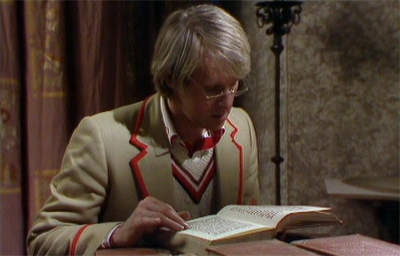
“Oh! The brainy specs!”

Continue reading

Doctor Who: The Ribos Operation (Review)

To celebrate the fiftieth anniversary of the longest-running science-fiction show in the world, I’ll be taking weekly looks at some of my own personal favourite stories and arcs, from the old and new series, with a view to encapsulating the sublime, the clever and the fiendishly odd of the BBC’s Doctor Who.

The Ribos Operation originally aired in 1978. It was the first part of The Key to Time saga.

Your name!

What about my name?

It’s too long… by the time I’ve called out “Look out Romanadv…” – what’s your name again?

Romanadvoratrelundar!

By the time I’ve called that out you could be dead! I’ll call you Romana.

I don’t like Romana!

It’s either Romana or Fred!

All right, call me Fred!

Good! Come along Romana!

The Key to Time was a rather ambitious project for the time – the idea being that an entire series of the show would centre around one core arc, suggested in the first story, developed through the rest of the season, and tied up at the end of the year. It helps, when you’re doing something like that, to have an experienced hand at the reins. While The Ribos Operation doesn’t stand as Robert Holmes’ finest contribution to the series, it’s a suitable introduction to the adventure.

Time Lord and Lady...

Continue reading

Doctor Who: The Last of the Time Lords (Review)

To celebrate the fiftieth anniversary of the longest-running science-fiction show in the world, I’ll be taking weekly looks at some of my own personal favourite stories and arcs, from the old and new series, with a view to encapsulating the sublime, the clever and the fiendishly odd of the BBC’s Doctor Who.

The Last of the Time Lords originally aired in 2007.

I just need you to listen.

No, it’s my turn. Revenge!

– the Doctor and the Master

I like quite a lot of The Last of the Time Lords. I think, for example, that Russell T. Davies does an exceptional job creating a version of the Master that manages to remain true to the character’s pantomime roots, while also seeming a credible threat and dark mirror to the Doctor. I also think that Martha’s character arc has a fairly logic and fluid conclusion. On the other hand, there’s a great deal about the resolution to The Last of the Time Lords that feels a bit rushed, a bit convenient, a bit tidy.

I’m quite fond of Davies’ writing style, but I’ll concede that he tends to favour theme and character over plot and structure. The Last of the Time Lords does an excellent job illustrating this, providing a bunch of fascinating thematic and character-based moments, but positioning them in a plot that doesn’t really work.

You know, for once I actually feel sorry for the Master...

You know, for once I actually feel sorry for the Master…

Continue reading